Tag Archives: Siobhan Fallon Hogan

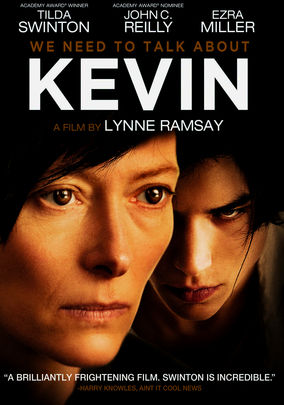
We Need to Talk About Kevin-2011

We Need to Talk About Kevin-2011

Director Lynne Ramsay

Starring Tilda Swinton, Ezra Miller, John C. Reilly

Scott’s Review #785

Reviewed July 9, 2018

Grade: A

We Need to Talk About Kevin (2011) is a tremendously disturbing independent drama with eerie similarities to the infamous Columbine school shooting massacre.

The point of view of the film is from the perspective of Eva (Tilda Swinton), a haggard, troubled mother doubting her love for her violent teen son.

Swinton was shamefully overlooked for an Academy Award nomination despite her brilliant and breathtaking role. The overall film itself is equally astounding and powerful.

Adapted from a Lionel Shriver novel, the events of the film begin in present times after tragedy has occurred. Eva, once a successful, writer of affluent means, now lives alone in a rundown house near a prison where she frequently visits her son Kevin (Ezra Miller).

She is now reduced to working a mundane job in a travel agency while terrorized by neighbors who blame her for her son’s machinations. Chillingly, Eva ponders the warning signs Kevin exhibited throughout his childhood and tortures herself with thoughts of what she could have done differently to prevent the shootings and the death of her loved ones.

Uniquely, the film segues to before Kevin was even born. Eva and her husband Franklin (John C. Reilly), happily welcome their baby boy, but he is immediately “not right” and difficult and cold towards her.

This behavior continues over the years as Kevin is distant towards Eva, but warm and adoring towards his father, leading to mental games and the death of a pet. When Eva and Franklin have another child things get progressively worse leading to tragic events.

The film is a pure masterpiece with riveting acting performances all around (especially Swinton) and a slow, plodding pace. This is a perfect aspect of the film because there is a continuous gloomy and moody vibe.

Director, Lynne Ramsay, reveals all in the beginning moments of the film so we know how events will transpire, but the pure enjoyment is the development of the characters.

Dad, Franklin, and daughter, Celia, are around, but the film belongs to the characters of Eva and Kevin and their relationship with each other.

Many questions will be asked throughout the film (I know I asked myself these questions).

Should any blame be cast upon Eva or is she purely innocent? How about Franklin? Is Kevin just a “bad kid”? Was Eva wrong for breaking Kevin’s arm in anger, or justified? Should Eva have never had kids because of her earlier doubts? Should she have been more proactive in getting treatment for Kevin?

Swinton delivered her career-best performance and while she was recognized with a Golden Globe nomination, the ultimate gold statuette (Oscar) alluded to her. I find this to be troubling especially since she won for 2007’s Michael Clayton, a very good performance, but not on the same level as Eva.

Swinton is one of the great modern actresses and hopefully, great roles will continue to follow this treasured star.

Almost on par with Swinton is a young talent, Ezra Miller. A relative newcomer in 2011 he appeared in the indie gem The Perks of a Wallflower (2012) and in later years traversed into more mainstream fare like Trainwreck (2015) and Suicide Squad (2016).

We Need to Talk About Kevin remains his best and most challenging effort.

One of the best sequences occurs during the school massacre scene. Shot at night time (and in my adopted hometown of Stamford, Connecticut!) the sequence involves flashing police lights and chaos as Eva approaches the school in horror. With no dialogue, we see Kevin enter the school and render the doors useless as an escape route.

Terrified students are murdered as Kevin erupts with maniacal rage. The scene is downright chilling and incredibly effective.

2017’s The Killing of a Sacred Deer reminds me quite a bit of We Need to Talk About Kevin in tone and style, so much so that I wonder if the latter was watched and studied before the former.

Either way, the duo could be watched subsequently for a double-dose of teenage maniacs.

With a bleak and dark tone, We Need to Talk About Kevin (2011) offers a story that has a clear message. Never discussing the hot topic of gun control, guns are not used in the slaughter, a bow is, weapon restrictions will nevertheless be an obvious discussion point.

This film is one to be observed, savored, dissected, and thought about after the finale, and is one to be remembered as a great piece of cinema.

Dancer in the Dark-2000

Dancer in the Dark-2000

Director Lars von Trier

Starring Björk

Scott’s Review #365

Reviewed January 9, 2016

Grade: A

Dancer in the Dark is, in my opinion, one of the most important, inventive films of the 2000s and is proudly one of my favorites of all time.

However, the film is not pleasant to watch and is quite painful and depressing, if the truth be told.

But the relevance and sheer emotion the film elicits are more than enough reason to be exposed to it, if only once, perhaps.

Director Lars von Trier is a master of creative and disturbing, dreamlike films that are odd, non-linear, or otherwise open to interpretation.

He has directed such gems as 2011’s Melancholia and 1996’s Breaking the Waves, to name but two.

In Dancer in the Dark, he uses handheld cameras, which add a lot of grit to the film, giving it an almost documentary-style, grainy, shaky look.

The addition of musical numbers mostly written and performed by the star, Björk, is a wonderful touch.

Speaking of Björk, words cannot express what a brilliant performance she gives in the film, and the raw emotion she expresses in her starring role is awe-inspiring.

So great was the stress of filming Dancer in the Dark that, to my knowledge, she has never made another film.

She was shamefully overlooked in the Best Actress Oscar category- an omission that is one of the biggest fails in Oscar history.

Tensions were reportedly high on the set of Dancer in the Dark, as Björk reportedly despised her director, never missing a chance to tell him so, disappeared from the set for days on end, and spat in his face.

Co-star Deneuve, a former French megastar, reportedly did not get along with Björk.

Despite all the drama, the stars managed to pull together a masterpiece.

Björk plays Selma, a Czech immigrant living in Seattle with her young son. The year is 1964. Selma is poor, struggling to survive by working in a clothing factory alongside her best friend, Cvalda (Deneuve).

Selma and Cvalda escape their dull lives by watching classic musical films at their local cinema. To make matters worse, Selma is suffering from a degenerative eye disease, causing her to lose her sight gradually.

She struggles to save enough for surgery for her son, who is sure to suffer the same fate without it.

Selma frequently imagines musical numbers in her day-to-day life involving friends and co-workers. When a tragic event occurs, and Selma is accused of a crime, the film takes a very dark turn.

The conclusion of the film will always require handkerchiefs as it is as powerful as it is gloomy.

The aspect I love most about Dancer in the Dark is that it smashes barriers about what film art is and throws all of the rules out the window.

Lars von Trier, famous for this, created a dreamy, independent hybrid musical-drama, a dynamic, tragic, emotional experience all rolled into one great film.

Oscar Nominations: Best Original Song-“I’ve Seen It All”

Independent Spirit Award Nominations: 1 win-Best Foreign Film (won)

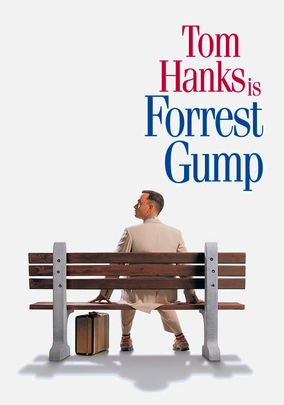
Forrest Gump-1994

Forrest Gump-1994

Director Robert Zemeckis

Starring Tom Hanks

Scott’s Review #362

60000724

Reviewed January 9, 2016

Grade: A

Awarded a bevy of Academy Awards in 1994, Forrest Gump is a film that is ingrained in many people’s memories, as it was a monster hit in the mid-1990s.

Some complained that the film’s unrealistic nature was silly and the story too saccharine. Still, it is an innocent, sweet piece about a simple-minded man’s journey through life and the insurmountable success he achieves.

I adore the film largely from a sentimental standpoint and for the memories it conjures up when I watch it years later.

I find the film to be a comfort.

Zemeckis, a feel-good film director (Back to the Future, 1985, Who Framed Roger Rabbit?, 1988), carves a whimsical tale of a fellow, Forrest Gump (played brilliantly by Tom Hanks), a slow-witted, but gentle soul, from Alabama, and his decades-long journey through life.

His lifelong love is Jenny (played by Robin Wright), a troubled girl who relies on Forrest throughout their decades-long friendship.

Forrest is always in the right place at the right time and influences historical events in his innocent way.

Forrest Gump is unique in its clever use of editing to incorporate Forrest into real-life historical events, which is a big part of the film’s appeal.

In one instance, Forrest meets with Richard Nixon and reveals the Watergate scandal. He also met President John F. Kennedy after winning a football scholarship.

And who can ever forget the numerous lines made famous from the film- “Stupid is as stupid does”, and “Life is like a box of chocolates. You never know what you are going to get.”, to name just two.

What I love most about the film is its heart, and the relationships Forrest shares with the central characters in his life are rich in depth. Forrest’s haggard but kind mother (Sally Field) loves her son, and they share a tender, emotional relationship.

When Forrest enlists in the Army during the Vietnam War, his grizzled commanding officer, Lt. Dan Taylor (an Oscar-nominated performance by Gary Sinise), surprisingly becomes one of Forrest’s closest friends.

The film takes a darker turn when we begin to see a more human side to Taylor after a horrible accident, which leaves him without legs. To counterbalance this tragedy, Forrest is comically wounded in the buttocks.

I am not sure whether I love or loathe Jenny as a character.

Wright is perfect at giving her some vulnerability, and her terrible upbringing can excuse some of her actions and lead her to take advantage of Forrest, arguably for her own gain.

Still, she has Forrest’s heart, so she cannot be all that bad.

A favorite scene takes place in Washington, where Forrest speaks at an anti-war rally. Jenny, in the crowd, recognizes Forrest, and their reunion is sweet. Jenny, now a hippie and expelled from school, returns to Forrest’s life.

The fates of both Jenny and Mrs. Gump are scenes that will undoubtedly require tissues to get through, as they are tender and emotional as can be.

Zemeckis’s Forrest Gump (1994) has emotion, sweetness, and heart, and those are nice qualities for a film to have.

It is not too sappy, overwrought, or manipulative; instead, it provides an honest story.

Oscar Nominations: 6 wins-Best Picture (won), Best Director-Robert Zemeckis (won), Best Actor-Tom Hanks (won), Best Supporting Actor-Gary Sinise, Best Screenplay Based on Material Previously Produced or Published (won), Best Original Score, Best Sound Effects Editing, Best Sound, Best Art Direction, Best Cinematography, Best Makeup, Best Film Editing (won), Best Visual Effects (won)