Tag Archives: Robert Longstreet

Halloween Kills-2021

Halloween Kills-2021

Director David Gordon Green

Starring Jamie Lee Curtis

Scott’s Review #1,190
Reviewed October 31, 2021

Grade: B+

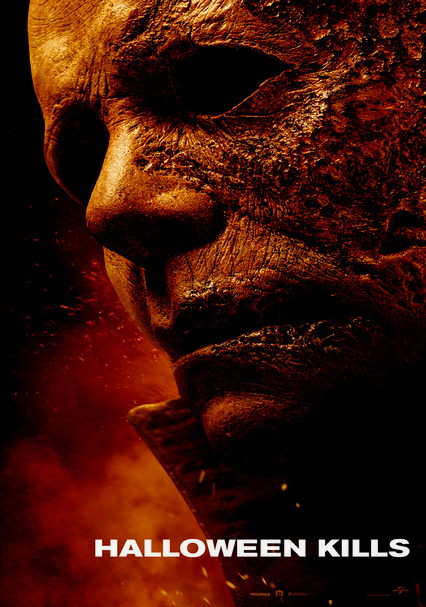
The second installment in a planned trilogy of the iconic Halloween franchise, which began in 1978, Halloween Kills (2021) is a frightfully effective “middle sibling”.

Bridging the gap between Halloween (2018) and the highly anticipated Halloween Ends (2022), the film has enough gory kills and bloodletting to satisfy any horror fan.

The plot is furthered, and the groundwork is laid for the next installment.

The nods to history, with several actors reprising their characters from the original film, are an enormous treat for fans and a true pleasure to see.

The historical writing is excellent, and it effectively weaves these characters into the story alongside newer ones. Jamie Lee Curtis, of course, stars as the terrorized Laurie Strode.

Picking up where Halloween-2018 left off on Halloween night (naturally), a wounded Laurie (Curtis) is whisked away to Haddonfield Hospital to recover while confident that she has finally killed her nemesis, Michael Myers, by burning him to death.

She is joined by her daughter Karen (Judy Greer) and granddaughter Allyson (Andi Matichak) since the trio left the masked maniac caged and burning in Laurie’s basement. Or so they thought.

Spoiler alert: Michael is far from dead.

Continuing his ritual bloodbath held on Halloween night, Michael roams the quiet streets of Haddonfield. At the same time, the fed-up townspeople rise against their unstoppable monster and form a vigilante mob led by Tommy Doyle (Hall).

They continue to chant “Evil dies tonight” in anticipation of Michael’s demise.

Kyle Richards (Lindsey Wallace), Nancy Stephens (Nurse Marion Chambers), and Charles Cyphers (Sheriff Brackett) return to the action with prominent supporting roles.

Their additions are a significant win for me, and presumably, for any fan of the franchise. It’s like welcoming old friends back into your life with open arms after a long absence.

The fact that they provide a historical background is the icing on the cake. Brackett’s daughter, Annie, one of the first of Michael’s victims, is celebrated and shown via flashbacks.

The film also mentions Marion’s close friendship with Michael’s doctor, Sam Loomis (Donald Pleasence). He appears in computer-animated flashbacks to 1978.

Director/writer David Gordon Green, along with co-writers Scott Teems and Danny McBride, frequently revisits the events of 1978 in an uncompromising, relevant way, reminding longtime fans of the story’s history and teaching newcomers how the dots connect.

It’s a brilliant decision.

The diversity offered in Halloween Kills is a breath of fresh air and progressive.

An interracial couple, a same-sex couple, and a black couple are added with respect, dignity, and without stereotypes. They are everyone’s neighbors and an accurate representation of the community.

As residents of the cursed Myers house, Big John and Little John are portrayed as tough and intelligent, avoiding the comic relief that often shadows gay characters.

A few death scenes are extended to show the victim’s pain and suffering instead of the usual quick and easy slice ’em and dice ’em style. This will make the squeamish a bit nervous, but that’s half the fun of horror films, right?

The typical throat-slashing and eye-gouging are included, but many of the minor characters are likable, witty, and clever, and not written as complete morons.

In contrast to the original Halloween, the residents of Haddonfield now seem more blue-collar and red necks than upper-middle-class.  I chuckled when Laurie yelled “sheep” at the venomous residents chasing a man assumed to be Myers (he wasn’t).

I surmised the filmmakers might have been sticking it to the dolts who blindly follow political leaders in a cultish way, without thinking.

Before anyone thinks that Halloween Kills (2021) is a work of art, it isn’t. There is enough silly dialogue to make anyone snicker, but that’s what slasher films are all about. They are meant to be fun, and this Halloween installment doesn’t disappoint.

The film is sheer entertainment done well and makes me anticipate the next and “final” Halloween chapter. But as long as the movie remains a hit at the box office, the killings will go on and on and on and on.
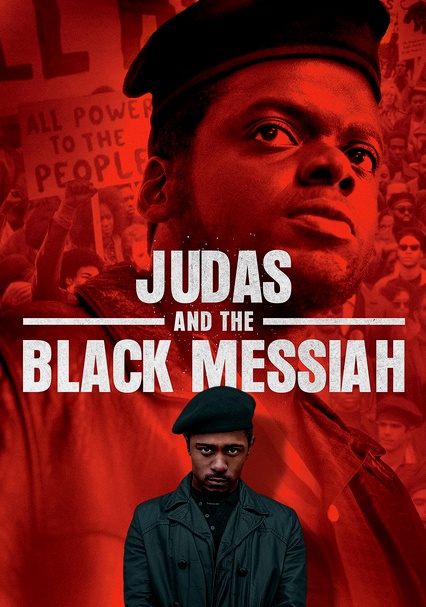
Judas and the Black Messiah-2021

Judas and the Black Messiah-2021

Director Shaka King

Starring Daniel Kaluuya, Lakeith Stanfield, Jesse Plemons

Scott’s Review #1,176

Reviewed September 9, 2021

Grade: B+

I wanted to love Judas and the Black Messiah (2021).

I still champion the importance of the story, however, and the timeliness of its release. The film has some moments of glory where a bombastic scene occurs that immediately reins the viewer back into the fold.

However, other parts drag and feel fragmented or otherwise confusing, to the point where the film sometimes bored me, and I hate admitting that.

I teetered back and forth between a B+ grade and a B grade, and, perhaps channeling my political side, I finally settled on a very generous B+ determination. Before I watched the film, I would have bet on an A or an A-. Alas, it was not to be.

That the film was made and exposed a mass audience to the trials and tribulations of the late 1960s Chicago racial tensions that helped create the Black Panthers organization is, of course, a huge win.

But I wanted more. Much more.

A major gripe is that the song from the film, winner of the Best Original Song Oscar, only appears over the end credits and has nothing to do with the film. Having a tacked-on feel, the song, performed by H.E.R. and others, is not particularly memorable either.

The title is “Fight for You”, possessing images of battle and courage, which fit the theme of the film, but the song itself is pretty lackluster.

The plotline is a challenge to follow, but goes something like this. The FBI recruits small-time Chicago thief Bill O’Neal (LaKeith Stanfield) to infiltrate the Illinois Black Panther Party and is tasked with keeping tabs on their charismatic leader, Chairman Fred Hampton (Daniel Kaluuya).

At first, O’Neal enjoys the danger of manipulating both his comrades and his FBI primary contact, Special Agent Roy Mitchell (Plemons). Hampton’s political power grows as he falls in love with fellow revolutionary Deborah Johnson (Dominique Fishback).

To complicate matters, she becomes pregnant.

Meanwhile, O’Neal becomes conflicted. Does he align with The Panthers and where his heart lies, or thwart Hampton’s efforts by any means necessary, as FBI Director J. Edgar Hoover (Martin Sheen) commands?

The acting is fantastic, and along with the message, it is the film’s best part. Justified controversy ensued over the placement of Kaluuya and Stanfield in the Supporting Actor category at the Oscars; both received nominations, and Kaluuya was the victor.

It’s evident to me that Stanfield is the lead character, so it’s a shame he wasn’t nominated for a Best Actor award.

With Chadwick Boseman positioned to be the clear winner for Ma Rainey’s Black Bottom (2020) and shockingly losing to Anthony Hopkins for The Father (2020), was the thought that another black actor in the category might ruin Boseman’s chances?

We’ll probably never know.

Kaluuya and Stanfield are both mesmerizing, and I look forward to their subsequent projects, especially Kaluuya, whom I fell in love with after his turn in Get Out (2017).

A heavily made-up Martin Sheen is a treat to see in a woefully too-small role as J. Edgar Hoover.

The rest of the film is pretty good. The climax is thrilling and almost bumped the movie up a grade for me. Without giving too much away, it involves a bloody shoot-out, a real-life interview, and highlight footage. I love the reality the latter provides.

But then I remembered the snail’s pace it took to get to this point and how the other good scenes paled in comparison with a plodding pace.

I adored the characters and fell in love with the sweet, though doomed, romance between Hampton and Deborah. I yearned for them to live happily ever after, even after my hunch told me this was not in the cards for them.

My hunch was correct.

The intent was to evoke outrage in the audience at the unfairness that people of color endured in the late 1960s.  I was angrier still at the realization that they are still being maltreated in the time of George Floyd and others.

Judas and the Black Messiah (2021) receives hands-down significant praise for its intent and acting, but disappoints in terms of delivery and final product. It is not equal to the sum of all its parts.

Oscar Nominations: 2 wins-Best Picture, Best Supporting Actor-Daniel Kaluuya (won), Lakeith Stanfield, Best Original Screenplay, Best Cinematography, Best Original Song-“Fight for You” (won)

Take Shelter-2011

Take Shelter-2011

Director Jeff Nichols

Starring Michael Shannon, Jessica Chastain

Scott’s Review #1,150

Reviewed June 9, 2021

Grade: B+

Michael Shannon is a great actor. Appearing mostly in supporting roles and breaking out big time in 2008’s Revolutionary Road, he gets the lead in Take Shelter (2011) and is more than up to the task of creating a great character.

The ambivalence and uncertainty his character feels are central to the film’s enjoyment.

It’s a slow burn with an unsatisfying payoff, but I mean that as a compliment.

The plot is set in a small rural town in Ohio.

Curtis LaForche (Shannon) is a working-class husband, father, and provider for his wife, Samantha (Jessica Chastain), and young daughter, Hannah.

Curtis begins to have scary apocalyptic dreams, which he keeps from his family.

He decides to build a storm shelter in his backyard, which raises Samantha’s concerns. His strange behavior creates a strain on his family. As he builds the shelter, Curtis is afraid of his dreams, or rather, afraid that they are a premonition and will come true.

Is he going crazy, or will his dreams become a devastating reality?

Curtis, Samantha, and the entire audience will ponder this note throughout the film.

An interesting add-on is that Hannah is deaf, so the way her parents embrace and accept her disability is a nice nod to the inclusiveness of people with disabilities.

Take Shelter is delightful to revisit and discuss ten years following its release.

In 2011, both Shannon and Chastain were up-and-coming stars and only barely on the cusp of A-list status, so it’s fun to see them in an independent film that showcases their acting chops.

They would go on to become big stars and showcase their talents in many other roles, so it’s fun to see them in early-career performances.

Shannon is careful not to outshine Chastain, but Curtis focuses on what is going on inside. His conflict is palpable and written all over his face in quiet scene after quiet scene after quiet scene as he gazes at the luminous skies.

He wonders what is coming next.

His dreams, hallucinations, and auditory experiences involving swarms of blackbirds are creepy and well-made on a small budget. A clue is when it is revealed that Curtis’s mother had paranoid schizophrenia at roughly the same age that Curtis is.

A drained Curtis seeks counseling but still cannot shake his feelings of impending doom. I felt completely empathetic to his plight and never saw Curtis as crazy or out of control.

He possesses controlled restraint.

Director Jeff Nichols does an exceptional job of making the film largely quiet and peaceful, with a gnawing, foreboding dread, as if the expected apocalypse might come upon the lonely town.

Take Shelter is the debut by Nichols, who followed up this gem with two other low-key but critically acclaimed films, Mud (2012) and Loving (2016).

He knows how to get to the core of his characters’ deepest thoughts and feelings.

He wrote each of these works and received praise for fine writing.

The film is about the relationship between the characters and the possibility that Curtis is going insane. I’m not sure Take Shelter provides a neatly wrapped conclusion, but boy is it an edge-of-your-seat thrill.

And why does it need to?

Shannon’s best scene occurs at a Lions Club community event. With most of the town gathered in the hall for a delicious dinner of potluck dishes, things go bad when Curtis loses his temper and verbally berates the townspeople. He warns them that they are unprepared for the doom.

They look at him as if he belongs in a padded cell, and Shannon’s explosion is frightening and frighteningly good.

As good as Shannon is, Chastain must not be dismissed. She barely holds it together as a woman with a special needs child and an unbalanced husband. When they lose their health insurance, she nearly comes apart at the seams.

I love the ending because Nichols leaves the truth of reality a mystery to the audience. This may dissatisfy some, but I thought it’s how Take Shelter should be.

Unclear, just like the thoughts of its main character.

Take Shelter (2011) succeeds with a powerhouse performance by its star Michael Shannon, wonderful direction, and a refined imbalance.

The quiet and thoughtful cinema fan will be most endeared to this film.

Doctor Sleep-2019

Doctor Sleep-2019

Director Mike Flanagan

Starring Ewan McGregor

Scott’s Review #1,026

Reviewed May 22, 2020

Grade: B

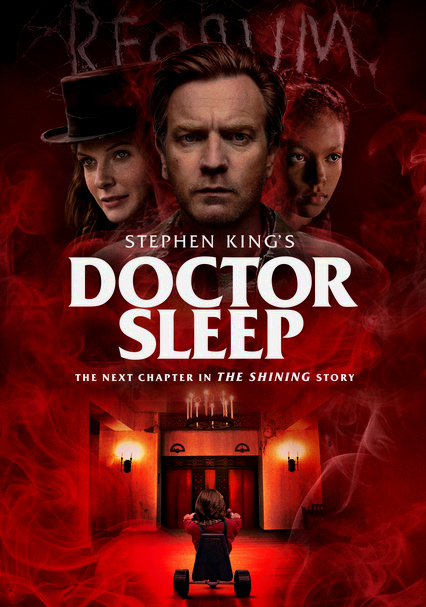
Based on the 2013 novel of the same name written by Stephen King, a sequel to his own 1977 novel The Shining, Doctor Sleep (2019) is also a direct sequel to the film adaptation of The Shining (1980).

Events are set several decades after the original events and incorporate elements from the 1977 novel as well. A fun fact is that King hated the film version of The Shining but approved of the script for Doctor Sleep.

The first and last parts of the film are superior to the rest, mainly succeeding when elements of The Shining are incorporated.

The rest meanders and teeters too much into supernatural and computer-generated imagery territory, taking away from the haunting ghost story elements that made the original The Shining such a frightening treasure.

Ewan McGregor plays Danny Torrance, the little kid scarred from the trauma he suffered when his father Jack went mad at the looming Overlook hotel decades earlier.

Danny, now a grown man and a suffering alcoholic, lives a life that is out of control, suppressing his “shining” gifts that allow him to possess psychic abilities.

Hitting rock bottom, Dan moves to a tiny town in New Hampshire and befriends Billy Freeman (Cliff Curtis), who sponsors him in AA. Dan is regularly visited by the spirit of Dick Hallorann, the deceased chef from the hotel who teaches Dan how to contain his demons.

Meanwhile, the True Knot, a cult of psychic vampires led by Rose the Hat (Rebecca Ferguson), extend their lifespans by consuming “steam”, a psychic essence released as they torture and kill those who have the shining.

They primarily feed on young children and pursue Abra Stone (Kyleigh Curran), a young girl whose shining is even more potent than Dan’s. She communicates telepathically with him and forms a pact to destroy Rose and her cronies.

Let’s take the good with the bad.

The film gets off to a perfect start with the recreation of scenes from The Shining when Danny rides his big wheel throughout the winding 1970’s 1970s-style hallways of The Overlook and gazes at the forbidden Room 237.

The synth musical score that made The Shining atmospheric and unforgettable is also included as the bass-infused heartbeat is showcased amid overhead camera angles, a clear ode to The Shining.

The finale of Doctor Sleep comes full circle as Dan and Abra travel from New Hampshire to snowy Colorado and revisit the Overlook, now tattered and ill-forgotten from decades of abandonment.

The showdown between Dan, Abra, and Rose treats fans to clips of Jack Nicholson and Shelly Duvall.

Visits from familiar characters and sets, such as the ghostly bartender, the conjoined twins, the wrinkled, old, naked woman, the gushing elevator blood, and the hedge maze, make their return, providing a lovely feeling of nostalgia.

Unfortunately, between the first thirty minutes and the final thirty minutes, there are another ninety minutes of screen time that don’t always work. For starters, a running time of two hours and thirty-two minutes feels too long for a horror film, and the filler lying in between is that much more apparent.

The action meanders, especially given the anticipated final battle, which is inevitable.

Taking nothing away from either Ferguson or Curran, who are fine in their respective roles of Rose and Abra, neither is the most interesting aspect of Doctor Sleep. They are new characters in the novel and therefore the film but are secondary to Dan and his intricate relationships with Jack, Wendy, and Dick.

The only parts of the story that were interesting to me were the connections and thoughts Dan had to experiences forty years earlier.

The battle scenes between Rose, Abra, and other characters do nothing for the story and take the film too far in the direction of the supernatural and slick technological aspects that The Shining didn’t need.

Since Doctor Sleep was adapted from the successful recent King adaptations of It Chapter Two (2019) and Pet Sematary (2019), perhaps this is the reason for the modern additions.

If Doctor Sleep (2019) could be sliced and diced to eliminate the middle and keep the bookends of the beginning and finale, the result would have paid proper homage to The Shining (1980); instead, we get only halfway there.

The film has some nice elements and stays true to its history, but it contains a few unnecessary additions that detract from its overall quality. And how can a film ever compare to the greatness of The Shining (1980)?

The Old Man & the Gun-2018

The Old Man & the Gun-2018

Director David Lowery

Starring Robert Redford

Scott’s Review #945

Reviewed October 11, 2019

Grade: B

Quiet films centered on older characters are not the norm in youth-obsessed Hollywood, where profits are always in fashion.

The Old Man & the Gun (2018) spins a tale offering adventure and a good old-fashioned love story, with appealing stars. The film is slow-moving and not groundbreaking, but it possesses a fine veneer and a snug plot that gives viewers a fuzzy feeling of watching something wholesome.

The script is loosely based on David Grann’s 2003 article “The Old Man and the Gun”, which was later collected in Grann’s 2010 book The Devil and Sherlock Holmes.

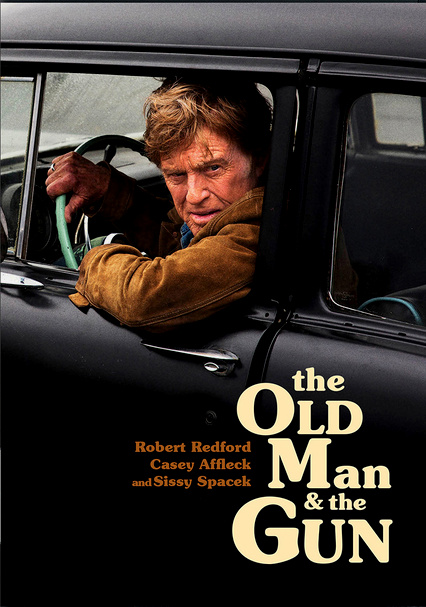
Career criminal Forrest Tucker (Robert Redford) is wanted for his daring escape from San Quentin State Prison in 1979. The current period is 1981.

Addicted to petty bank robberies for relatively small dollar amounts because he is addicted to the rush. A charmer, he is unassuming and unsuspecting. As he flees the scene of a recent heist, he meets a kind widowed woman named Jewel (Sissy Spacek), whose truck has broken down.

The pair have lunch at a diner and quickly bond.

Forrest is in cahoots with two other bank robbers as the trio makes their way across the southwest United States, garnering a reputation. Detective John Hunt (Casey Affleck), a Dallas detective, is tasked with finding and arresting Tucker until the FBI takes the case away.

Hunt cannot give up the search, and the duo embarks on a cat-and-mouse chase across the area, sometimes crossing paths in the local diner.

Where The Old Man & the Gun succeeds is any scene featuring Forrest and Jewel together. Their chemistry is radiant during calm scenes of the couple eating pie and sipping coffee at the diner, simply getting to know each other organically.

During their first encounter, Forrest slips her a note, adding mystery to their bond. It is unclear whether he reveals his shady career to her, but it is alluded that he has confessed something that she is not sure she believes.

Redford carries the film as if he were still a leading man from his 1970s and 1980s blockbuster days, which is a testament to his Hollywood staying power.

With his charismatic smile and still dashing good looks, it is little wonder that the bank tellers he holds up describe him as friendly and polite, easily wooing the folks into his good graces.

A crowning achievement for the actor, he narrowly missed an Academy Award nomination but did score a Golden Globe nod.

The film suffers from predictability during the final act, when one of his accomplices turns him in to the police, and a chase ensues between Forrest and Hunt.

This is not the film’s best part, and it feels like dozens of other crime dramas. Affleck looks to be in a role he didn’t particularly enjoy; at least, that is how it seems to me watching the film.

The actor is an Oscar winner playing cops and robbers and second fiddle to Redford. Can you blame him for looking glum?

Speaking of misses, Hunt is in an interracial relationship with Maureen, a beautiful black woman who has a mixed-race daughter.

Rural Texas in 1981 must have posed racial issues for the family, but this is never mentioned. Maureen and her daughter also look straight out of 2019 with fashionable hairstyles and clothes.

The relationship is progressive, a plus, but it is written unrealistically.

Although rumored to be retiring from the film industry (we’ll see if that happens), Robert Redford gives a terrific turn as a man who reflects upon his life and treats the audience to the same effect.

Spacek is a delicious role and a crowning achievement for a great career and is a perfect cast and a treasure to have along for the ride, celebrating two fantastic careers.

The Old Man & the Gun (2018) is a touching, romantic bank heist film with more positives than negatives.

She’s Lost Control-2014

She’s Lost Control-2014

Director Anja Marquardt

Starring Brooke Bloom

Scott’s Review #299

70305205

Reviewed December 14, 2015

Grade: B+

She’s Lost Control (2015) is a dark, independent drama and Anja Marquardt’s directorial debut.

This film is one reason I proudly support independent film, as it is otherwise a film that most would not know about, and will never know about, if not for good word of mouth and award recognition- think Indie Spirit Awards.

Hopefully, Marquardt will one day be a household name.

The film is heavy yet intriguing and a character study.

It is a dark and dreary experience- some might argue depressing, centering on Ronah (Brooke Bloom)- a young, female, college student, aspiring towards her master’s degree in psychology, who works as a sexual surrogate in Manhattan.

The film explores her experiences with various clients, specifically a disturbed, volatile man she takes on as a client.

As she gets to know Johnny, they forge a special bond, but will romantic feelings and jealousy get in the way of the therapy assigned to both parties?

The tale focuses on how each of them explores their feelings, and clearly, those feelings are not peaches and cream.

Ronah is not a prostitute, and there is very little sex that goes on, albeit the implication is there. She is nurturing, emotionally invested, and intends to become a psychiatrist one day.

It is unclear whether her “boss,” a shady-seeming character, is her pimp or simply an employer. His role and motivations are unclear.

The most interesting aspect of the film is the title, and throughout my viewing of the film I wondered about the title more and more- are any of Ronah’s experiences in her mind? Is she stable, or does she have some emotional or mental issues?

She befriends a kind neighbor around her age who invites her for dinner- they bond. The neighbor invites her out to dance, but Ronah declines.

She also has an older female confidant- a former surrogate who gives Ronah tips and suggestions. Still, Ronah is lonely.

Again, we wonder if perhaps all is not what it seems. This is a fascinating aspect of the story. One must watch to find answers to questions like these.

New York City can be a tough, unkind world, and She’s Lost Control doesn’t sugarcoat an individual’s difficult existence when they aren’t blessed with family money, strings, or some other advantage.

Ronah lives in a dump with holes in her shower and cramped quarters. On top of that, she is constantly kept up to date on problems involving her brother and mother back home in upstate New York.

Quite simply, Ronah is overwhelmed by her life. Might she be spinning out of control?

The film’s dreary aspect isn’t so much the sexual content. Ronah is a therapist, and everything is consensual.  Unfortunately, she is challenged by some of the people she encounters in her profession.

I admire She’s Lost Control (2014) quite a bit for its insight, thoughtfulness, and compelling story of a woman with a difficult life, trying to make ends meet, and aspiring to something worthwhile.

She is brave, troubled, and interesting all rolled up in one fascinating lead character.

Independent Spirit Award Nominations: Best First Screenplay, Best First Feature