Category Archives: Action

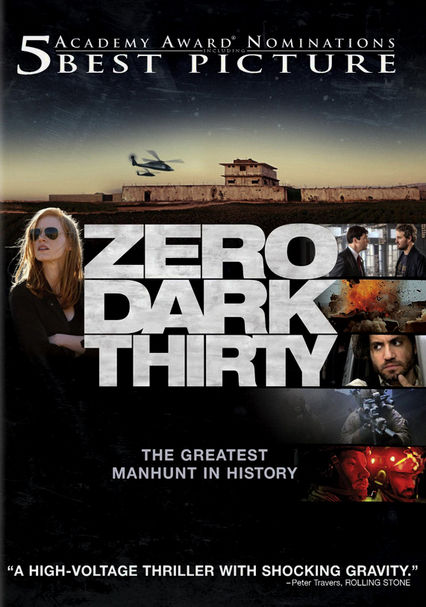
Zero Dark Thirty-2012

Zero Dark Thirty-2012

Director Kathryn Bigelow

Starring Jessica Chastain

Scott’s Review #1,133

Reviewed April 14, 2021

Grade: A-

Director Kathryn Bigelow, not far removed from her Oscar win for The Hurt Locker (2008), returns with a similar style of film centering around war and more specifically about the emotional tolls and psychological effects from not just the battlefields but from dangerous missions.

The main character suffers from many conflicts and inevitably the viewer will as well.

Zero Dark Thirty (2012) is unique for the genre by having a female in the lead role and star Jessica Chastain is front and center and terrific.

She is calm, restrained, and in control. She is tough to rattle and a powerful and inspirational character to be admired.

Chastain exudes cool in the face of danger.

Chastain does have a brilliant emotional scene at the end of the film. Her character, Maya, boards a military transport back to the U.S., as the sole passenger. She is asked where she wants to go and begins to cry. The emotion finally gets the better of her as it would to anyone.

The film is not all Chastain’s to brag about and there is little wrong with the film.

Beautifully directed, Bigelow layers her film with enough tension and magnificence to enshroud the moral questions viewers will ask, specifically about torture.

It’s somewhat fictionalized, and in fact, Chastain’s character is made up, but Zero Dark Thirty is a gem nonetheless.

But we also know the events happened.

The film starts incredibly well and immediately grabs the viewer’s attention with a brilliant first scene. Amidst a dark screen and soundtrack of actual calls made to the 911 operator from inside the World Trade Center Towers on 9/11, the scene is about as powerful an opening as a film can have and bravely sets the stage for what follows.

These include many scenes of Arab detainees being interrogated (that is, tortured) for information about Al Qaeda. Is this justified or unnecessary abuse?

The viewer is immediately saddened and in tears and conflicted about whether the torture is justified having just heard the 911 calls.

I know I was.

From there, the viewer also is told a summary story putting the pieces of the first scene together.

After the terrorist attacks of Sept. 11, 2001, Osama bin Laden becomes one of the most wanted men on the planet. The worldwide manhunt for the terrorist leader occupies the resources and attention of two U.S. presidential administrations.

This is the crux of the film and the story told.

Ultimately, it is the work of a dedicated female operative  (Chastain) that proves instrumental in finally locating bin Laden. In May 2011, Navy SEALs launched a nighttime strike, killing bin Laden in his compound in Abbottabad, Pakistan.

We all know this but troubling is the use of torture. I keep coming back to this point.

I think what I like most about the film besides the riveting pacing, action sequences, and psychological appeal is the controversy that surrounds it.

The fact that it ruffled feathers at the CIA and in Congress about whether the info was leaked to the filmmakers makes me think that at least some of it is based on facts, despite what other reviewers (likely with a strong political bias) might claim to the contrary.

But as a political junkie that’s just my belief.

The film’s reproduction of enhanced interrogation techniques is brutal. Some critics, in light of the interrogations being depicted as gaining reliable, useful, and accurate information, considered the scenes pro-torture propaganda.

Acting CIA director Michael Morell felt the film created the false impression that torture was key to finding bin, Laden. Others described it as an anti-torture exposure of interrogation practices.

I guess we may never know the truth. But the film compels and provokes feeling.

Bigelow is at the top of her game with Zero Dark Thirty (2012) crafting a genre film (the war one) way too often told from only a masculine “us versus them” mentality and leaving behind the fascinating nuances that can make the genre a more interesting and less one-note one.

The masterful director does just that and makes us think, ponder, and squirm uneasily.

Oscar Nominations: 1 win-Best Picture, Best Actress-Jessica Chastain, Best Original Screenplay, Best Sound Editing (won), Best Film Editing

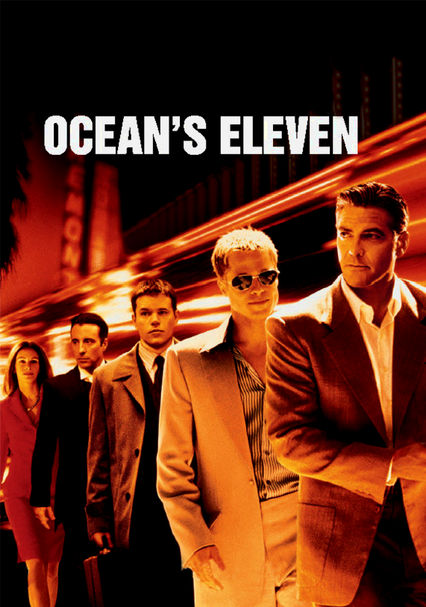
Ocean’s Eleven-2001

Ocean’s Eleven-2001

Director Steven Soderbergh

Starring George Clooney

Scott’s Review #1,105

Reviewed January 28, 2021

Grade: A-

Steven Soderbergh was awarded the Best Director Academy Award for his exceptional direction in Traffic (2000), one of my all-time favorite films.

He follows up that gem with a slick, commercial film that is stylish and looks cool.

It’s fast-paced, with quick editing, and is set in the dangerously appealing world of casinos, as a group of sophisticated thieves attempts to steal $160 million from a casino owner with whom they have a vendetta.

I expected a film of this type to be generic and by-the-numbers, but instead it’s unpredictable and unexpected.

Ocean’s Eleven (2001) is the first (and best) installment of the popular Ocean’s franchise and a remake of the 1960 Rat Pack film of the same name.

George Clooney was in his film prime and led the pack of A-list stars like Brad Pitt, Julia Roberts, and Matt Damon in a packed and brimming two-hour entertainment fest.

A nice touch is inviting two stars from the original, Henry Silva and Angie Dickinson, to appear as themselves.

Clooney leads the charge and embraces his status as a leading man with charm, polish, and style. He plays a handsome Danny Ocean, a man with a plan.

Less than one day into his parole from a New Jersey penitentiary, the thief is already traveling to California to plot his next move with his partner in crime, Rusty (Brad Pitt).

It’s tinged with revenge.

They abide by three rules: Don’t hurt anybody, don’t steal from anyone who doesn’t deserve it, and play the game like you’ve got nothing to lose.

Danny orchestrates his charges to pull off the most sophisticated, elaborate casino heist in history. And it will take place in glitzy Las Vegas on the night of a boxing match.

Providing the rules makes me think fondly of a similar proclamation in David Fincher’s 1999 film Fight Club, where Danny and the gang immediately feel sympathetic to me.

After all, they don’t intend to hurt anyone, and the money stolen will be from folks who are dastardly and might even deserve to be penniless.

Didn’t Jigsaw from the Saw films only kill those who harmed other people? Suddenly, their motives are clear and justified, making them the good guys.

As a bonus, the “victim” of the heist is the unlikable Terry Benedict (Andy Garcia), who owns three casinos and is worth billions.

Making the bad guys the heroes and Benedict the bad guy is clever and situates the players properly, so the audience knows who to root for.

As if the film doesn’t have enough treats, some drama is thrown in. Danny’s ex-wife, Tess (Julia Roberts), is Benedict’s girlfriend. Is she loyal to Danny or Benedict, or might she be playing both sides?

Loyalties are tested and questioned, and the intricate bank heist sequence is titillating and an edge-of-your-seat thrill ride.

The Las Vegas backdrop, with the casino’s bright lights, bells, and other elements, cements Ocean’s Eleven as one of the best in its genre.

It’s also tough not to root for Clooney, Pitt, and Damon in or out of character.

Ted Griffin writes the screenplay and adds some nice characters, more than one-note bank robbers or thieves.

Along with Soderbergh’s direction, which adds the nice atmospheric trimmings like the razzle-dazzle casino scenes, they make a great pair.

I love how Danny and Rusty recruit a team with specialized skills like mechanics, pickpockets, and an electronics and surveillance specialist. There’s even an acrobat!

This seems like an ode to the 1960s television series Mission: Impossible, as the team is carefully selected for their skills.

A highly entertaining popcorn film just perfect for a summer night, Ocean’s Eleven (2001) is sure to satisfy. The intention is to sit back and enjoy what is offered, and all the elements come together perfectly.

The culminating main event boxing match and subsequent twist catapult the film from pure entertainment to something more nuanced and exciting.

The film was a success at the box office and with critics, leading to two Soderbergh-directed sequels and a spin-off with an all-female lead cast, released in 2018.

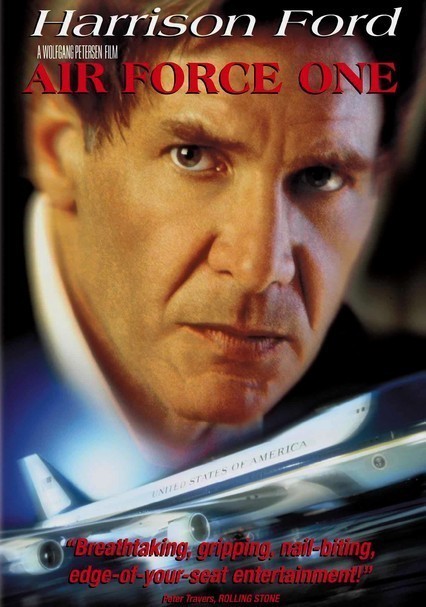
Air Force One-1997

Air Force One-1997

Director Wolfgang Petersen

Starring Harrison Ford

Scott’s Review #1,085

Reviewed November 21, 2020

Grade: B+

If ever a straight-ahead, summer blockbuster, popcorn flick existed, Air Force One (1997) is it.

Surprisingly, this is not a bad thing. It’s not cerebral, but it’s never dull.

The film has hooks and muscle and assembles a thrill ride, edge-of-your-seat action fest. Some would say this is just what the doctor ordered, and they’d be right, provided the mood is for a mind-escaping, meat-and-potatoes affair.

Air Force One is pure Americana.

With a patriotic musical score and a clear hero and villain, it’s easy to know who to root for. Suspension of disbelief is mandatory since some scenes are as implausible as Santa Claus shimmying down a chimney on Christmas Eve, but the film is entertaining.

The action is non-stop.

At the tail end of his prime action-star years (the 1980s and 1990s), Harrison Ford plays James Marshall, the president of the United States of America.

After making a bombastic speech in Moscow vowing never to negotiate with terrorists, a group of them led by the dastardly Ivan (Gary Oldman) hijacked Air Force One with the president and his family on board.

Marshall, a former soldier, hides in the cabin of the plane and races against time to save his family and those aboard the flight from the terrorists.

The plot is implausible and hokey, and it reeks of plot points meant to carry the story along, but surprisingly, the film works. There is no way a president would ever race around performing stunts aboard an airplane, conquering the villains like clockwork.

But Ford has the charisma to make us believe it could happen, and his character is a family man, a Vietnam veteran, and a Medal of Honor recipient.

Can this guy be any more perfect?

Oldman, always reliable as a villain, is perfectly cast. His character’s motivations are simplistic and nationalistic. Ivan believes that the collapse of the Soviet Union has ruined his country, and somehow it’s the fault of the United States.

The reasoning is silly, but it’s in keeping with the patriotic nature of Air Force One- the ‘us versus them’ mentality. The United States is good; Russia is bad.

It’s what middle America wants, and the target audience of this film is clear, back to the Cold War.

Wolfgang Petersen, who directs the film, knows his way around the action genre. After all, he crafted the memorable Das Boot (1981) and Outbreak (1995). The film has a Tom Clancy-Patriot Games meets Die Hard (1988) style.

Petersen meshes the score with the quick editing style to layer the film with more action than slowed-down conversational scenes. We know how it’s going to end, but enjoy the ride.

On closer inspection, the film is not just for the guys.

Glenn Close is cast as a female Vice President and a strong gender-twisting presence. Kathryn Bennett is a bold, careful woman, and the implication is that she is more than capable of taking over should anything happen to the president.

Her scenes mostly take place in the White House Situation Room and provide a nice calm as she is pressured by the Defense Secretary (Dean Stockwell) to declare the president incapable.

The scenes between Stockwell and Close are very strong.

Air Force One (1997) is a cliché-riddled and mainstream Hollywood creation to the max. Both the pacing and the pulsating style make the film a guilty pleasure and quite enjoyable.

When the mood strikes to kick back and relax with a fun, action-packed affair, this one is your choice. Just don’t dissect the details too much or expect real-life to mimic art.

Oscar Nominations: Best Sound, Best Film Editing

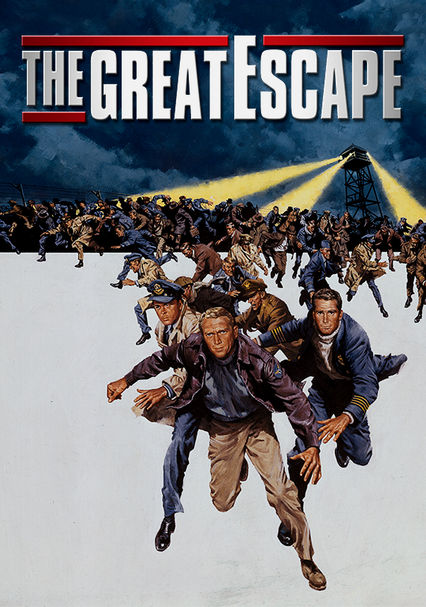
The Great Escape-1963

The Great Escape-1963

Director John Sturges

Starring Steve McQueen, James Garner, Richard Attenborough

Scott’s Review #1,053

Reviewed August 17, 2020

Grade: B

Often heralded as one of the great World War II action films of all time, there is little great about the first half of the interminable two-hour and fifty-three-minute running time.

With enough military silliness to make television’s Hogan’s Heroes seem like high drama, the first half of The Great Escape (1963) would be graded a mediocre C or a C- and that’s being generous.

The final hour is entirely different. The film kicks into high gear when the actual “great escape” is launched. Not only does the action begin, but the characters become more layered, emotional, and compelling.

Killer location shots of Germany and Switzerland occur at a zooming pace, and the comedy soon turns to tragedy.

I don’t understand why the decision was made to save all the goodies for the final act instead of dispersing them throughout the film, but I am glad it took off.

Directed by John Sturges, known for creating a similarly masculine and muscular offering from 1960, The Magnificent Seven,  he once again is lucky to cast several of Hollywood’s then hot, young stars like Steve McQueen and James Garner, and more relatable character actors like Donald Pleasence and Richard Attenborough who provide the acting grit.

While not on my list of great World War II films (Schindler’s List (1993) gets top honors), the film is recommended for the enthralling finale alone.

The film is based on Paul Brickhill’s 1950 nonfiction book of the same name, a firsthand account of the mass escape by British Commonwealth prisoners of war from German POW camp Stalag Luft III in Nazi Germany.

Unsurprisingly and shockingly, the actual events are significantly modified from the historical record, depicting a starkly fictionalized version of the escape, including Americans among the escapees.

Let’s discuss both portions, warts and all.

The changes are most irritating and done to make it more “Americanized” and, therefore, more appealing to mainstream audiences. This manipulation gnawed at me during most of the film since it’s factually incorrect.

There is a brief disclaimer at the beginning with a note saying the story is a work of fiction save for the escape portion, but this will inevitably be unnoticed or forgotten by the casual viewer.

Most of the first arc action is spent within the confinement of a massive, high-security, prisoner-of-war camp where the group of men is huddled, having escaped other camps or prisons. You would think the camp would be the equivalent of Alcatraz, but besides some barbed wire and not-so-threatening German soldiers with guns they rarely use, it’s not so intimidating.

Nonetheless, the group plots their elaborate, mostly underground escape upon arriving.

Whoever composed the musical score for the first section wanted to create a campy, situational comedy-style tone with brassy, patriotic tunes worthy of Gilligan’s Island.

This does nothing to create tension or danger, nor do the Nazi soldiers.

The men would be terrifying and rely on torture, but there is none of that to be found. Safe, but trying to be stern, this does not work as the German soldiers are played more like foils than those to be feared.

When the “great escape” is upon us, The Great Escape gets an A-plus for its thrills, action, and emotion.

A harrowing plane ride by Robert Hendley (Garner) and Colin Blythe (Pleasence) is juicy with tension and atmosphere. The plane exhibits trouble as the duo flies low across the German terrain, heading over the Swiss Alps for safety.

Meanwhile, Hilts (McQueen) steals a motorcycle and traverses the Germany/Switzerland border in a frantic chase scene while the Germans are in hot pursuit.

In a third sequence, other men flee via train in a cat-and-mouse pursuit.

Seventy-six POWs flee the camp, and a startling fifty are killed. Twenty-three are returned to the camp, and only three successfully escape.

If Sturges had built around the final hour and reduced the silly comedy style, probably attempting a contrasting theme to make the drama more imbalanced, he might have had a masterpiece.

Instead, The Great Escape (1963) is a twofold experience.

The comedy develops into a nail-biting, edge-of-your-seat thriller but suffers from too much historical inaccuracy to reach the depths of cinematic greatness.

Oscar Nominations: Best Film Editing

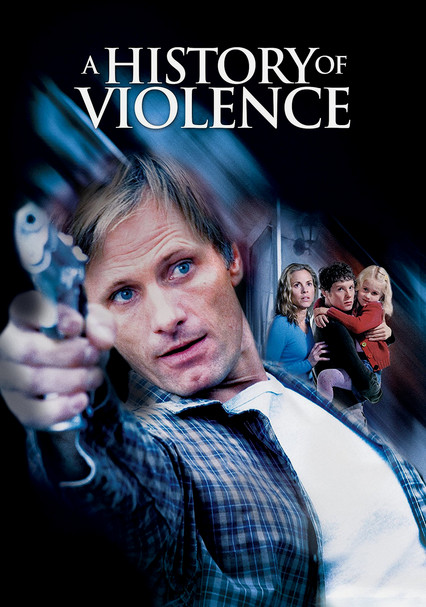
A History of Violence-2005

A History of Violence-2005

Director David Cronenberg

Starring Viggo Mortensen

Scott’s Review #1,016

Reviewed April 28, 2020

Grade: B+

David Cronenberg has directed films such as Videodrome (1983), The Fly (1986), and Crash (1996), stories safely classified as “off the beaten path”.

With A History of Violence (2005), he creates a film that, on the surface, appears conventional and even wholesome at the onset, a family drama or thriller that turns sinister and bloody as it lumbers along.

The Christian-like small Indiana town is the perfect backdrop for quietly inflicting mayhem and terror on its characters.

Stars Viggo Mortensen and Ed Harris give tremendous portrayals.

Tom Stall (Mortensen) lives a quiet midwestern life and owns a quaint little diner nestled in the center of town. He is a popular man and quite neighborly, befriending the many patrons who visit his lovely eatery.

At his side are his adoring wife Edie (Maria Bello) and children, Jack and Sarah.

If they owned a golden retriever and resided in a house with a white picket fence, they would define the all-American family.

Late one night, two men attempt to rob the restaurant, and when they attack a server, Tom kills both robbers with surprising ease and skill, barely blinking at his violent tendencies.

He is professed a hero by the townspeople, and the incident makes him a local celebrity.

Tom is then visited by the frightening, scarred gangster Carl Fogarty (Harris), who insists that Tom is a notorious Philadelphia gangster named Joey Cusack. Tom is perplexed and vehemently denies the claims, but Fogarty begins to stalk the Stall family.

Because of the pressure, Tom’s family life hits crisis mode.

As the film ticks along, the plot thickens, and the puzzle pieces are rife with mystery.

Is Fogarty merely a liar, holding a vendetta against the person who killed his men? Does Tom suffer from amnesia, having forgotten his past life due to an accident?

Has Tom fled the criminal life seeking refuge and a new life in middle America, safely leaving his troubles behind? Does the truth lie somewhere in the middle of these possibilities?

Bello is cast as Edie, Tom’s loyal wife. Bello is a stellar actor and does a wonderful job in the complicated role.

Far too often, especially in thrillers, the wife’s role is as lacking in challenge as it is in glamour. The ever-supportive wife must be a drag to play with, but pays the bills.

Edie is different, and as soon as the viewer has her figured out, she acts out of the blue, which will surprise the viewer about this type of character. This has a lot to do with Bello’s pizzazz and acting chops.

I adore the film’s setting.

A far cry from the bustling City of Brotherly Love, Philadelphia, the rural setting of Indiana becomes even more important as the action eventually flows to the city.

The quiet mornings, the imagined smell of fresh-brewed coffee, the sizzle of bacon on the grill at Tom’s Diner, and, finally, crickets chirping in the distance all evoke the potent atmosphere and surroundings that work in this film.

A History of Violence (2005) is a superior film that contains excellent writing, the best aspect of the rich experience.

A top-notch screenplay by Josh Olson leaves the viewer not only with mounting tension but also with the mystery of what will happen next and what the truth is.

Mortensen, commonplace in recent Cronenberg films, has found his niche playing complex yet humanistic characters, which must be a challenge for the actor and a splendid reward for the audience.

Oscar Nominations: Best Supporting Actor-William Hurt, Best Adapted Screenplay

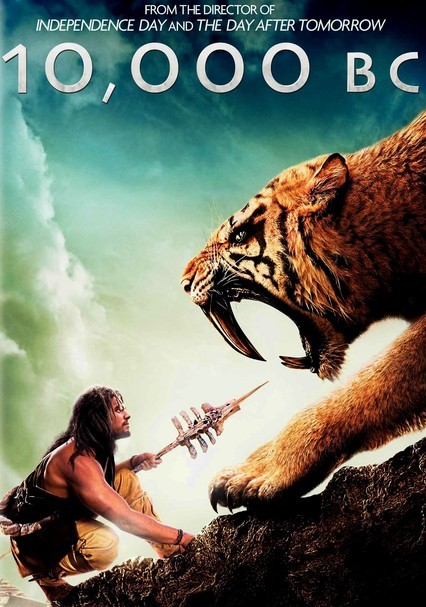
10,000 B.C.- 2008

10,000 B.C.- 2008

Director Roland Emmerich

Starring Steven Strait, Camilla Belle

Scott’s Review #988

Reviewed February 11, 2020

Grade: F

10,000 B.C. (2008) is a by-the-numbers adventure/action hybrid film that attempts to be slick and modern with catchy visual elements, but instead bottoms out, resulting in a terrible example of filmmaking.

The CGI usurps all other qualities, offering no historical accuracy and a ridiculous 2008 feel rather than the time at hand.

Those involved had only the film’s box-office returns in mind when the film was created.

An irritating formulaic quality and poor acting across the board leave this one dead on arrival.

Fierce, masculine mammoth hunter D’Leh (Steven Strait) sets out on an impossible journey to rescue the woman he loves, Evolet (Camilla Belle), from an evil warlord and save the people of his village.

While venturing into the unknown and frightening territories, D’Leh and his fellow warriors discover an amazing civilization rife with possibilities.

Predictably, the warriors are attacked and slaughtered, leaving the young man to protect the remaining group while winning the heart of a princess, well above his station in life.

The story is complete schmaltz and easy to predict from nearly the very beginning of the film.

Powerful invaders force the hunters of D’Leh’s tribe into slavery and accost the princess in such a fashion that the setup is all put neatly in place for the viewer, providing nothing out of the ordinary.

When the young and naive boy has an epiphany and realizes he is the only one who can save his tribe from extinction, it is all too much.

The film is riddled with cliché after cliché after cliché.

A tough ask to lead a film with summer blockbuster written all over it, newcomers Strait and Belle do their best, which only enhances how poor their acting is.

Cast for their good looks, they can offer little else. For audience delight, Strait is costumed with a bad wig, dripping sweat, and bulging muscles.

Belle is also victimized as she pouts and sulks while wearing skimpy clothing.

The result is a standard boy-meets-girl story: the boy loses the girl, and the boy becomes a man to clean up the girl’s mess. Inexplicable is how they meet and fall in love before ever speaking or getting to know each other.

If only the bad acting were the only negative, the film might be fair to middling, but nothing good is ever offered. All the hunters and tribe members look like modern people dressed to look like people from a different period.

The endless battle scenes borrow from the legion of action and adventure films that have come before it. The animals prance across the screen in obviously timed moments, providing little in the way of authenticity.

Director, Roland Emmerich, known for films such as Independence Day (1996) and The Day After Tomorrow (2004) has a knack for creating large epic adventures to please mainstream audiences.

There is nothing wrong with a conventional film if it manages to teach the viewer something or offer something of merit. With a target audience of pubescent boys and girls yearning to learn, Emmerich misses a golden opportunity to present an imaginative prehistoric moment and provide a lesson.

Complete with a bad story and bad acting, the drivel conjured up is nearly too much.

The over-stylish visuals cannot save 10,000 B.C. (2008) because they are so phony that one cannot even fathom any credibility.

The good-looking main stars look straight out of a glossy magazine and hardly from the prehistoric era presented.

With a little attempt at giving audiences anything of substance, this film is an epic fail to be missed.

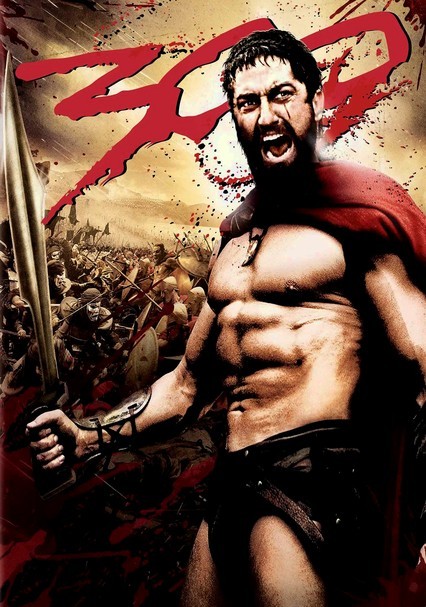
300-2007

300-2007

Director Zack Snyder

Starring Gerard Butler

Scott’s Review #977

Reviewed January 7, 2020

Grade: D

On paper, 300 (2007) could have been a good or even a great film under different circumstances, if a historical realism or a message of some kind had existed.

Unfortunately, what sounds like an interesting premise is met with a cartoon quality, overacting, and cheesy testosterone-laden bombast.

Little more than drivel, the film is saved slightly by a charismatic lead, male flesh, and potent homo-eroticism, but this is no Magic Mike (2012), and the content fails because it is intended to be taken seriously.

The result is a silly affair, with predictability and stereotypes for miles.

The story is based on a 1998 comic series of the same name, a fictionalized retelling of a battle in the Persian War.

The flimsy plot revolves around King Leonidas (Gerard Butler), who leads 300 Spartans into battle against the Persian “God-King” Xerxes (Rodrigo Santoro) and his invading army of more than 300,000 soldiers (hence the title).

As the battle rages on, Queen Gorgo (Lena Headey) attempts to rally support in Sparta for her husband (Leonidas) and conquer the army.

Butler is the only slight positive worth mentioning as he preens and prances in little more than a loincloth with chiseled abs during the battle scenes, ferociously bellowing at his enemy.

A fine-looking man, he is unarguably charismatic and poised, so the audience is strongly encouraged to root for him, and naturally for the Spartans.

Leonidas makes for a powerful leader and is great to look at, but that is where any positives to this film end.

The scantily clad gimmick is not intended to draw female viewers to the film, or at least the intent doesn’t seem to be there unless the marketing is botched.

There is enough male nudity to go around, and the beefcake and machismo are clear in most of the characters.

Laughable that the Spartans all have washboard abs and appear freshly waxed. Did they have access to state-of-the-art fitness centers in 479 BC?

The Persians are mostly face-pierced and sneering, the clear enemy, which does nothing to diminish racist overtones. Spartan-good, Persian-bad.

Zack Snyder’s (Dawn of the Dead, 2004) motivation seems to be to market this film to pubescent teenage males or the low-IQ crowd, so the stereotypes are not the best thing to witness, nor will they leave anyone feeling very liberated or united.

The characters are either cookie-cutter or grizzled and violent, which is in tune with most of the film- bloody, but without reason, substance, or merit.

One-note character after one-note character appears through each scene.

Most bothersome is the intent to stir a pro-war stance, not helpful given the target audience.

300 was filmed mostly using a superimposition chroma key technique to replicate the imagery of the original comic book, which only makes the film look like a high-energy video game.

The product is quite stylized, with gloomy battleground scenes and a dire, bleak tone, and adopts a graphic novel or comic book approach, but lacks any subtle qualities or pretty much anything else interesting from a cinematography perspective.

The battle scene finale is by the numbers and should come as no surprise who the inevitable victor is.

The film requires little thought or attention span, and one can immerse oneself on a cushion and absorb the nonsense, couch-potato-style.

Battle after battle erupts with cliched earnestness and a bevy of blood-spurting wounds and kills. This would be okay if there existed any point or good plot twist.

Any character development is missing.

300 (2007) is a weak offering and decidedly boring, a surprise since much of the action takes place on the battleground, where the pace is a mile a minute.

The experience is forgettable, and a legion of other action-fueled films exist with more meat and potatoes on their plate.

The sinister and stereotypical aspects make the resulting film less than fun, and the big, loud, dumb product is only marginally cinematic.

We can do better.

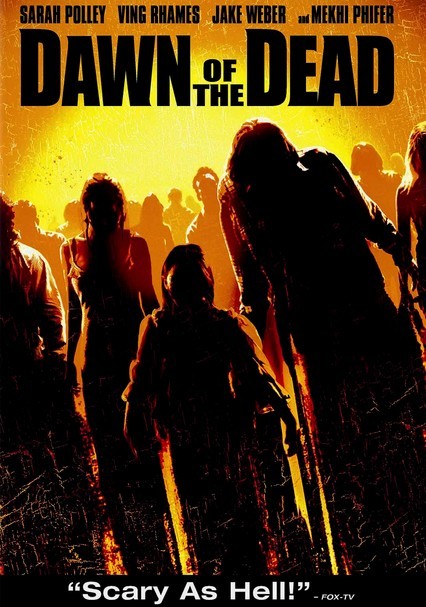
Dawn of the Dead-2004

Dawn of the Dead-2004

Director Zack Snyder

Starring Sarah Polley

Scott’s Review #956

Reviewed November 8, 2019

Grade: C+

Dawn of the Dead (2004) is a remake of the original horror-comedy-satire film by legendary George Romero.

What the original provided in intrigue and concept is lacking in the much bloodier remake- the freshness is not there.

The film was made pre-television phenomenon The Walking Dead, but watching it now, with the zombie obsession in a steady decline, it feels tired and dated.

The film feels patterned after the successful and fresh 28 Days Later (2002).

Now set in Wisconsin (the original was in Pittsburgh, Pennsylvania), Ana (Sarah Polley) returns from a shift at the local hospital, where she works as a nurse.

She soon learns that massive bulletins alert to a sudden zombie plague, where former human beings have turned into cannibalistic corpses.

Her husband a victim, Ana joins a small group of survivors at the local shopping mall and attempts to stay alive while being encircled by the creatures and other not-so-nice people.

The main group includes a grizzled police sergeant, Kenneth (Ving Rhames); electronics salesman Michael; petty criminal Andre and his pregnant wife, Luda; and three guards, C.J., Bart, and Terry.

They are later joined by others who arrive via delivery truck.

The large group befriends another survivor, Andy, who is stranded in his gun store across the zombie-infested parking lot.

The rest of the film off the characters one by one in traditional horror style, while the remaining few try to figure out an escape route.

The main problem with Dawn of the Dead is that the characters are poorly written, making them one-note, not particularly interesting, and quite stereotypical.

Examples of this are the angry and defiant guards, who make trouble for the rest of the group for no other reason than to serve as a weak plot device to create drama beyond the zombies.

Kenneth is an angry cop, a lone-wolf type of character who frequently postures and preaches. Again, there is no interesting reason behind his personality.

Finally, Steve is an oversexed playboy who keeps recordings of his sexual shenanigans for repeated viewings.

The character meant to root for is Ana. We sympathize with her for her husband’s gruesome death and her struggle to stay alive, so she is the film’s hero. Her character is likable, and Polley is a worthy actress, but I wonder if a name star would have been better in this circumstance.

Polley did not last long in Hollywood, acting anyway, which only makes the film feel more dated than it already does. Many viewers will not know who the actress is.

Another irritant is the decision to make the zombies move faster. Part of the beauty of the zombies is that they are slow and brooding, unable to think, just existing in a mummy-like haze.

Suddenly, they are fast, making them harder to escape. This attempt at a modern approach, by changing too much, does not work.

Dawn of the Dead is not all dour.

Props must be given to the mall setting, updated for 2004 shopping inclusiveness. Trendy and timely stores are added, and it feels like a mall of its time. This is one aspect of the film that works and feels interesting.

Eagle-eyed viewers may spot some of their favorite stores from this decade.

The strongest part of an otherwise mediocre film is the brilliant incorporation of the heavy-metal band Disturbed’s aggressive song “Down with the Sickness” from 1999.

The song is incorporated over the stylistic end credits, and a summary of what happens to the survivors is provided over the lyrically brutal song.

Unfortunately, it is at the very end of the film where it finally hits a home run.

Since this is a remake, it is impossible not to compare it to the 1978 version in many ways.

The characters in the original had more salt, and a romance added a bit of complexity. The original also felt fun, whereas the 2004 version seems hardened and angry.

The originality that made the original fresh is lacking in this retread, limiting the unique social context and thought-provoking nature it contained.

With little reason to watch Dawn of the Dead (2004), unless it was still 2004, the original 1978 Romero version is far superior. A fun tip might be to watch them in sequence to notice differences in style and pacing, and for general comparison’s sake.

The final musical score is a win, but much of the rest is dull and dated.

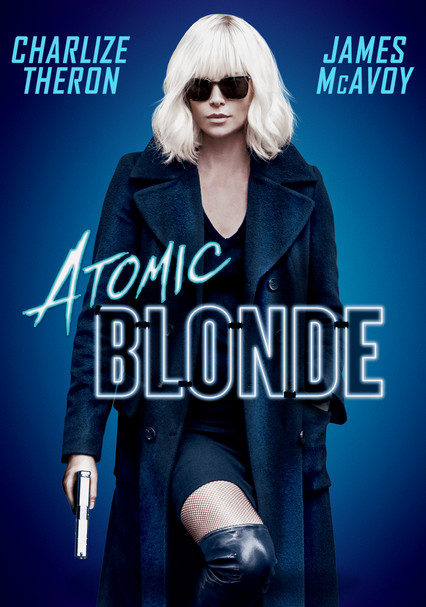
Atomic Blonde-2017

Atomic Blonde-2017

Director David Leitch

Starring Charlize Theron, James McAvoy

Scott’s Review #857

Reviewed January 19, 2019

Grade: B+

Atomic Blonde (2017) is a female-empowering action/spy film directed by David Leitch, a former stuntman. The film plays similarly to James Bond, but with the genders reversed.

The film is visually stylish, featuring dynamic music and cold, crisp location sequences of Europe.

The story is not the main appeal and cannot always be followed, but thanks to a great performance by Charlize Theron in the title role, the film is pleasant and recommended for fans of either the spy or action genres.

Based on the 2012 graphic novel The Coldest City, the film is set in Berlin in 1989, and its central theme is the collapse of the Berlin Wall amid a spy story and the Cold War backdrop.

A grizzled female MI6 agent, Lorraine Broughton (Charlize Theron), is quizzed about events that occurred during her recent time spent in the German city investigating the death of a fellow spy.

She recounts her mission via flashbacks and the whereabouts of a mysterious list that reveals the names of MI6 and KGB Russian agents. Lorraine deals frequently with David Percival (James McAvoy), an odd colleague who may or may not be trusted.

The plot and subsequent story are hardly the finer points of Atomic Blonde, and the title—a play on the words “atomic bomb”—is too cute to be taken seriously.

The novice director is a former stuntman, so one should not expect high art or exceptional writing material. The largest issue besides the plot holes and implausibility of the story is that it is not engaging. After thirty minutes of trying to ascertain who had “the list,” I gave up and tried not to follow too closely, instead enjoying the film’s other qualities.

Theron is well cast as bleached blonde vixen Lorraine—harsh as nails and badass. With icy eyes and a sneer that makes the most formidable opponents cringe, the actress has the charisma to make the role her own.

The tall and fit woman endures too many fight scenes to count, but her pizzazz and wherewithal make the character believable. Her toned physique is not dissimilar to that of her character in Mad Max: Fury Road (2015).

Bisexual, Lorraine has a brief romantic escapade with Delphine Lasalle (Sofia Boutella), a young French agent, until the woman is murdered.

Any advEuropean adventurer can be enamored for, logistically speaking, the exciting locales featured heartily in Atomic Blonde.

Sleek and modern, the photography and cinematography departments do a fantastic job of giving the film authenticity and audacity to reveal the terrific nooks and crannies the best cities offer.

Given the number of high-speed car chase scenes and a fantastic underwater sequence, London, Paris, and Berlin are all given their just due.

The feminist overview that Atomic Blonde possesses is worthy of praise. Able to tangle with the best of them, Lorraine takes no prisoners and is determined to battle until the end or until she is too bloody to fight back. She is tough yet sensitive and puts up with no nonsense.

Still, she has a heart, as evidenced by not only the violent death of her girlfriend and her subsequent reaction but also her calm despair at being unable to save a drowning man’s life. Lorraine’s calm and resilience, instead of over-dramatic emotional outrage, make her a character that has developed very well and is a role model for young women everywhere.

McAvoy is cute as a button as David adds comic relief and sly witticisms to many scenes. He often appears shirtless, exposing his lean and muscular physique. As a fan of sexual dalliances, he is both combative and flirtatious with Lorraine, though he never beds her.

A yin to her yang and sparring partners throughout, David is a nice addition to a cast containing mostly serious characters.

The 1980s-themed musical score features nostalgic songs peppered throughout the film, seemingly every few moments.

Atomic Blonde plays like a bold music video with intelligently penned songs, not disposable crap. The inclusion adds a genuine celebration of the decade of decadence crafted thoughtfully.

Treats such as the masterful “Voices Carry” by ‘Til Tuesday, “London Calling” by The Clash, and “Der Kommissar” by After the Fire is placed perfectly during relevant scenes.

With a ballsy lead character and enough action to envelope a nearly two-hour action thriller Atomic Blonde (2017) is a gift in the atmosphere and great ambiance. Forget bothering to deep-dive into the complex story too much- it isn’t worth it.

Admittedly, the coveting style over substance can be forgiven because the nice elements overshadow the negatives.

Atomic Blonde (2017) best serves as a kickback and enjoy the ride experience.

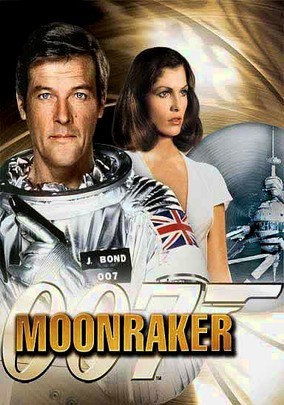
Moonraker-1979

Moonraker-1979

Director Lewis Gilbert

Starring Roger Moore

Scott’s Review #770

Reviewed June 8, 2018

Grade: A-

Moonraker (1979) is an installment in the James Bond film franchise, not usually well regarded and rarely appearing on critics’ top-ten lists.

Perhaps a reason for this is the film’s timing, hot on the heels of the late 1970’s Star Wars craze. Plans for a different Bond film were scrapped in favor of an outer space story.

Regardless, I adore most of Moonraker, save for the final thirty minutes when the plot gets way too far-fetched for anyone’s good.

The rest of the film is a superior entry and holds up quite well in the modern age of all things Bond.

Many of the familiar elements remain intact following the successful and lavish The Spy Who Loved Me (1975). An even heftier budget featuring gorgeous locales like Venice, Rio de Janeiro, and the Amazon rainforest is on display, as is a capable, intelligently written “Bond girl”.

The villains, compelling and suave, including the return appearance of Jaws (Richard Kiel), and handy, dandy gadgets make Moonraker a treat for fans.

Therefore, I find the non-love for the film rather mystifying.

The action begins when a jumbo jet carrying a Drax Industries Moonraker space shuttle is hijacked midair, causing the plane to crash and the shuttle to disappear.

Since the space shuttle was on loan to the United Kingdom from the wealthy and powerful Hugo Drax (Michael Lonsdale), 007 (Roger Moore) is tasked with finding its whereabouts. He visits the grand shuttle-manufacturing plant in California, where he learns that Drax and his bodyguard Chang are sinister and plotting global destruction.

Bond befriends the gorgeous and highly intelligent Dr. Holly Goodhead (Lois Chiles), an astronaut who works at the facility, and Corinne Dufour (Corinne Clery), the beautiful personal pilot of Drax.

As events roll along, Jaws returns to the story seeking revenge on Bond and subsequently serves as Drax’s new bodyguard.

Of course, treasured favorites like M (Bernard Lee), Q (Desmond Llewelyn), and Miss Moneypenny (Lois Maxwell) return to the fold.

To explain the weakest portion of the film first, producers were attempting to capitalize on the tremendous success of 1977’s Star Wars by featuring a space exploration theme.

Only in the final half-hour does this come into play, as Bond and Goodhead, and nearly the entire cast, don bright yellow spacesuits. Drax’s evil plan is to eradicate all humankind and begin a new world with only beautiful people existing and reproducing.

The inevitable final battle scenes take place in a sprawling space station amid laser guns shooting bright beams- a direct rip-off from Star Wars.

The entire sequence is too long and quite reminiscent of my criticism of the tedious finale from the otherwise brilliant The Spy Who Loved Me, Moonraker’s predecessor.

Otherwise, the film is top-notch.

Fantastic sequences involve Bond’s midair fight with a bad guy and a dangerous struggle for a parachute, a fight scene high atop a Cable Car during Rio Carnival, vicious sparring in a Venice museum, and a female character chased and torn to bits by Drax’s carnivorous dogs, all of which make for great action sequences.

The highlight, though, may very well be Bond’s harrowing ordeal inside an out-of-control centrifuge chamber.

The return of Jaws is certainly a highlight of Moonraker, especially as the popular villain turns “good” and finds a love interest! When he sees the cute blonde girl with pigtails and glasses, both characters’ eyes light up in a “love at first sight” moment.

As Jaws realizes Drax’s plans for both of them to exterminate his alliances have suddenly switched, a touching scene unfolds between the two over champagne.

Moore and Chiles have tremendous chemistry as the MI-6 agent teams with the capable female CIA agent. Holly Goodhead is portrayed exceptionally well: female, intelligent, gorgeous, and savvy.

Impressive (and progressive) is how Goodhead takes charge as she and 007 make a harrowing journey back to planet Earth and then work nicely together to destroy Drax’s deadly missiles.

Sure, the romance is there, but also the mutual respect between the two.

Fondly recalling childhood memories of watching this film numerous times, I have good memories of Moonraker (1979).

More importantly, it possesses wonderful Bond qualities that will enchant many Bond fans seeking fun and entertainment.

The film has a ludicrous plot that attempts to fit the times, but thanks to lavish sets and a competent main Bond girl, it is quite memorable.

Oscar Nominations: Best Visual Effects

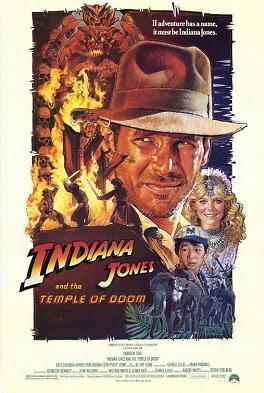
Indiana Jones and the Temple of Doom-1984

Indiana Jones and the Temple of Doom-1984

Director Steven Spielberg

Starring Harrison Ford

Scott’s Review #759

Reviewed May 17, 2018

Grade: A

The second in the trilogy (I refused to acknowledge the middling Kingdom of the Crystal Skull in 2008), Indiana Jones and the Temple of Doom (1984) is easily my favorite of the group.

Much darker than its predecessor, Raiders of the Lost Ark, it is also better, with more flair and pizzazz.

All three (1989’s The Last Crusade added) could be watched in sequence and easily enjoyed as companion pieces for a slice of 1980’s nostalgia.

A prequel to Raiders of the Lost Ark, the action picks up a few years prior as our hero narrowly escapes the clutches of a crime boss in Shanghai, China.

Indiana Jones (Harrison Ford), along with sidekick eleven-year-old Short Round (Ke Huy Quan) and nightclub singer Willie Scott (Kate Capshaw), embarks on an adventure to retrieve a stolen sacred stone.

The poor villagers have also lost their children to a lavish palace where they are forced to work as enslaved people.

Wisely in keeping with the continuity of the first story, director Steven Spielberg and writer George Lucas return to the fold. This enriches the experience, as both men are attuned to Indiana Jones’s character and do not try to change him.

His familiar wittiness and charismatic nature return, and the dashing hero shows more skin this time around with more than one shirtless scene.

To cement the good character, Harrison Ford returns to the role he created and made famous.

Indiana Jones and the Temple of Doom is layered with positive aspects and holds special childhood memories for me. I vividly recollect going to the movie theater and excitedly watching the film on the big screen, clutching a tub of buttery popcorn.

For a young boy, this is the best- an adventure story for the ages with thrills and edge-of-your-seat sequences.

The film is perfect for the entire family.

Many gorgeous exterior sequences abound throughout the film. A prime example is when the trio encounters deadly assassins on a precarious rope bridge high atop a crocodile-infested, murky river.

This scene is fraught with tension and “how will he ever get out of this?” thinking when the killers corner dear Indie.

With lightning-quick thinking, he severs the bridge, resulting in a dangling escapade. As numerous bodies fall into the river, they are chopped to bits by the hungry reptiles. The fact that the action is all shot outdoors in lush scenery only adds to the enjoyment.

The film is admittedly filled with dark and scary aspects, necessitating a PG-13 rating rather than a PG one. As Indie, Willie, and Short Round are held hostage in the evil palace, a dangerous sacrifice occurs.

One poor man is chosen to give his life by being burned alive in a roaring fire. Indie is then forced to drink the potion and presumably suffer the same fate.  Other bloody moments include a bad guy meeting his fate after being flattened like a pancake by a steamroller.

The tone of the film is much darker than that of Raiders of the Lost Ark.

To offset the blood, guts, and voodoo, the film occasionally parleys into humor, mostly at the expense of Willie, the film’s comic relief.

Accustomed to the glamour of costumes and luxurious hotels, the singer is forced to fend for herself amid snakes, elephants, and other creatures. As she hungrily sits down for what she thinks is a scrumptious dinner, she is served soup with monkey brains and bulging eyeballs, deemed Indian delicacies.

Readily apparent, watching the film now, are glaring negative stereotypes associated with the Indian culture. As I am sure the intent was not to insult, some stereotypes do abound with the hokey cuisines and the severe poverty.

The underlying image of tribal Indians as being weird or out of touch is prevalent, to say nothing of the odd religious overtones.

Kate Capshaw as Willie is the complete opposite of the central female character, Marion, in Raiders of the Lost Ark. Whereas Marion is intelligent and serious, Willie is pampered, rich, and gullible.

I find the camaraderie between Indie and Willie much more palpable than between Indie and Marion, and the romantic overtures appealing.

Who can forget the famous “bug scene” in the palace?

Conjuring up wonderful and exciting childhood memories, Indiana Jones and the Temple of Doom (1984) is a treasure for the eyes and the strongest entry in the bunch.

If you are in the mood for a good, fun-filled experience with a healthy dose of Indian culture, adventurous antics, and a slice of darkness, this one is a must-see.

Oscar Nominations: 1 win-Best Original Score, Best Visual Effects (won)

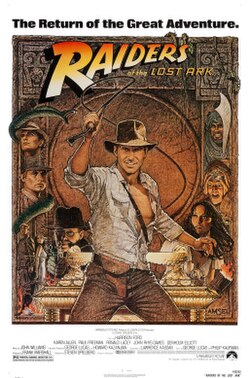
Raiders of the Lost Ark-1981

Raiders of the Lost Ark-1981

Director Steven Spielberg

Starring Harrison Ford, Karen Allen

Scott’s Review #757

Reviewed May 15, 2018

Grade: A

A film that kicked off the tremendously successful and ever-so-fun 1980s trilogy, Raiders of the Lost Ark (1981), is a treasure in the adventure genre time capsule.

Director Steven Spielberg embarks on the journey of one of the most highly visible film heroes in the form of Indiana “Indie” Jones, a swashbuckling, aw-shucks kind of guy.

Harrison Ford is perfectly cast in a role that perfectly fits him and, besides Han Solo, defined him during the decade- the best role of his career if you ask me.

Wonderful to watch in sequence with the even more superb Indiana Jones and the Temple of Doom (1984), these two films are a pure pleasure as our hero faces dangerous obstacles at every turn, either being chased by or pursuing sinister robbers and other undesirables.

All the while, Indie keeps his familiar sly grin and numerous jokes to entertain audiences.

Raiders of the Lost Ark has it all with superior writing, editing, cinematography, art direction, sound, and visual effects.

They reaped many Oscar nominations, quite uncommon for an adventure tale, but the merits were warranted. Atypical compared to other films of this type, the film is not overly saturated with phony machismo or unnecessary “guy” stuff, but rather appealing and genuine.

The time is 1936, and archaeologist Indiana Jones works as a professor at a University. Known for retrieving ancient artifacts, he is contacted by Army intelligence officers who ask him to help stop the Nazis from acquiring the Ark of the Covenant, which they believe will make their armies invincible and allow them to conquer the world in a sinister fashion.

Events lead Indie to Marion (Karen Allen), who harbors resentment towards him for a failed past romance.

The rest of the film follows the pair through Nepal and Cairo as they attempt to recover the Ark before the Nazis do.

Raiders of the Lost Ark contains all the elements of a successful “hit” movie and has “blockbuster” written all over it. This is not a slight against the film, but rather a testament to all involved.

Led by the successful Spielberg, who knows how to connect all the dots, Ford, first and foremost, infuses his character with charisma so that the audience enjoys his sensibilities and desire for the truth.

Indie is intent on protecting humankind, so Spielberg carves a “good versus bad” approach- making the villainous Nazis the antithesis of Jones, which creates a clear rooting value.

My favorite scene in the film is nicknamed the “face-melting scene” and contains state-of-the-art special effects that compelled and mesmerized me, and also led to light nightmares for any kid under the age of twelve.

The way that the bad guys see swirling, benevolent ghosts- first beautiful and peaceful, but soon turning deadly- causes their faces to melt off or shrivel. The scene is both inventive and dramatic.

Not to be dismissed as trite or fluff are the exciting and memorable scenes dubbed “the snake scene” and “the rolling boulder scene”.  In the former Indie, wryly admits his fear and trepidation of snakes as he must traverse a huge pit filled with thousands of them, and he comes face to face with a deadly King Cobra.

In the latter scene, Indie must outrun a speeding boulder as he takes an ancient artifact from a sacred spot inside a cave, causing boulders to collapse around him.

Both scenes are enormous fun and the immeasurable edge-of-your-seat sequences.

I never sensed much chemistry between actors Ford and Allen. Still, writing the characters of Indie and Marion as former lovers adds a good bit of tension and sparring between the characters- this provides some good fodder and humorous situations.

Thankfully, the romance between the two is neither the focal point of the film nor all that important, but rather, in the safety that 1980’s cinema afforded, merely a necessity.

Raiders of the Lost Ark (1981) is a superb adventure film that holds up better than it should, decades beyond its release. The film is rich with good old-fashioned action, a charismatic hero, thrills, intrigue, and a good history lesson for those interested in the build-up to World War II.

The accounts are fictional, of course, but Spielberg offers a fine 1980s cinematic experience that’s got it all.

Oscar Nominations: 4 wins-Best Picture, Best Director-Steven Spielberg, Best Original Score, Best Sound (won), Best Art Direction (won), Best Cinematography, Best Film Editing (won), Best Visual Effects (won)

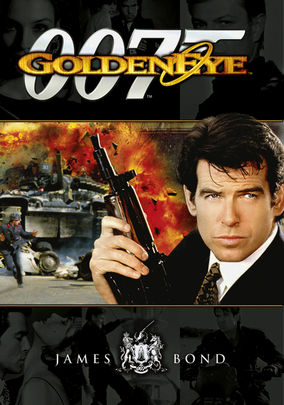
GoldenEye-1995

GoldenEye-1995

Director Martin Campbell

Starring Pierce Brosnan

Scott’s Review #717

Reviewed January 19, 2018

Grade: B

By 1995, after a record six years between films, the James Bond franchise re-emerged with energy, with Pierce Brosnan assuming the role of the MI6 agent and breathing fresh life into the character.

The charming and suave Irish actor gave the role a new direction, last played by Timothy Dalton, who gave Bond a more brooding quality. The resulting GoldenEye offers mixed results, though the casting is a vast improvement over its predecessor.

GoldenEye sees other monumental roles recast- that of Judi Dench as M and Samantha Bond as Miss Moneypenny.

The film has a slick look and a compelling story, but at times, it is tough to follow, and overall, despite containing all the elements, something seems to be missing.

Or maybe I refer to the other Bonds more? Still, the offering is far from a bad watch.

GoldenEye kicks off with, in hindsight, a major clue to the story as Bond  (Brosnan) and fellow 00 agents, Alec Trevelyan (Sean Bean), infiltrate a Soviet facility in northern Russia in 1986, searching for chemical weapons.

Sinister Soviet General Ourumov tragically kills Alec, and Bond mourns the loss of his friend.

The action resumes in present times (1995) as, now in gorgeous Monte Carlo, Bond follows the beautiful and sadistic Xenia Onatopp, a crime syndicate member known for crushing men with her thighs.

Xenia and Ourumov travel to Siberia, where they destroy a bunker holding GoldenEye satellites and kill everyone except the computer programmer, Boris (Alan Cumming), and the lone survivor, Natalya  (Izabella Scorupco).

In a clever twist, it is revealed that Alec has betrayed British Intelligence and is himself leading the crime syndicate.

In one of the quietest and best scenes, Bond and M have an interesting exchange in her office as M (a woman) calls Bond out on his arrogance and chauvinism, saying it is a new day.

Dench adds a ton of modern female sensibility to the role (about time in 1995), as Bond now reports to a woman. The scene is important as it leads the two characters to achieve mutual respect and arguably parleys the franchise into a new, more female-empowering direction.

A great positive to GoldenEye is the setting, which I think does wonders for the film as a whole- the bitter, blustery, Siberian set gives a soothing feeling, especially while watching the film during the ravages of winter, snug with a warm blanket and heaters.

Regardless, the sets are realistic, never cheesy, and loaded with atmosphere- so the film itself looks wonderful.

Issues abound with the frenetic pacing of the film- at times, I found myself losing track of the action or the sequence of events.

Understandably, as in many Bond films, events circle the globe and, surely, London, Russia, and Monte Carlo are great locations, but especially within the film’s final climax, I suffered from sensory overload.

Furthermore, Brosnan is not one of my favorite Bonds. Sure, he has the charisma, the looks, and the charm to pull off the role, but something about him does not measure up to Sean Connery, Roger Moore, George Lazenby, or Daniel Craig- certainly, he supersedes Timothy Dalton.

Don’t get me wrong- I do not despise him as Bond, but nothing stands him out against the others either.

The villains in GoldenEye are perfectly adequate if not spectacular. Sean Bean gives Alec a sly, ” aw, shucks appeal and defines good-looking, but his motivations for switching sides are not very exciting- something about Nazis in World War II, the Cossacks, and revenge are quickly mentioned, but it doesn’t much matter.

General  Ourumov is effective- with his sinister look, he is the perfect Bond villain. Xenia is little more than a cartoon character (with the name to boot), and her gimmick quickly wears thin.

Finally, Cummings, as the programmer, is played only for laughs, and his final chant of “I am invincible!” as he freezes into solid ice is mildly humorous.

The title theme song, “GoldenEye”, performed by Tina Turner, is forgettable at best and one of the most lackluster in the illustrious musical catalog.

GoldenEye features many of the standard Bond elements and is a decent entry in the franchise.

With the debut of a new Bond, the film has a fresh, very modern, and technical feel that, along with a fantastic setting, overlooks some flaws in the storytelling.

Filled with bombast and a crowd-pleasing method, GoldenEye (1995) is hardly the best Bond film, but not the worst.

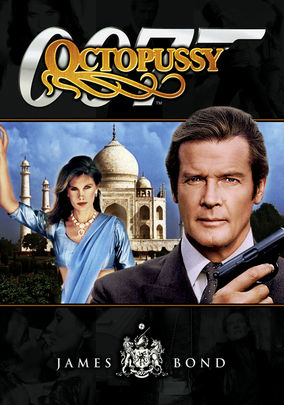
Octopussy-1983

Octopussy-1983

Director John Glen

Starring Roger Moore

Scott’s Review #716

Reviewed January 17, 2018

Grade: A-

Hardly regarded as one of the most stellar of entries in the James Bond franchise, 1983’s Octopussy is nonetheless a guilty pleasure of mine.

This is undoubtedly because the film was the first installment I was allowed to see in the movie theater, and it is filled with exciting memories.

As the film stands in the current days, it is perfectly fine, containing all of the enjoyable elements necessary for a good Bond film- interesting villains, solid action, and gorgeous women.

Perhaps at times a bit silly, Octopussy is still quite the fantastic watch.

Roger Moore, admittedly looking slightly aged and sagging, returns to the fold as 007, the shaken, but not stirred action hero known as James Bond. However, he is, true to form, as witty and suave as he always is with witty one-liners and a mischievous smirk.

Moore ritualistically infuses the character with a measure of comedy- a wink of the eye or a raised eyebrow adds humor to the character so that any other actor who has portrayed Bond.

In this installment, Faberge eggs, clowns, and gorilla suits are featured.

Attempting to escape from East Berlin to West Berlin, 009- dressed as a circus clown- is murdered on the estate of a British Ambassador while attempting to deliver a fake Faberge egg.

Assuming the Soviets are involved, MI6 instructs Bond to investigate the matter, and a complex smuggling ring is uncovered- featuring a gorgeous female smuggler named Octopussy (Maud Adams), along with sinister Afghan exiled prince Kamal Kahn (Louis Jourdan), and his bodyguard, Gobinda.

Watching the film in 2018, even though it was made in 1983, Octopussy does not suffer from the dreaded “1980s look” that so many other films do; it seems surprisingly clean and fresh.

The colors are vibrant- especially in the prevalent circus and clown scenes, and the best two scenes- the airplane and train scenes- still bristle and crackle with good action.

As the climax to Octopussy culminates, the inevitable heroine and main Bond girl- Adams’s “Octopussy”- has been bound and gagged and taken hostage by the baddies in a fleeing airplane, Bond grabs hold of the fuselage, and begins a harried flight over the mountains of remote India, clinging for dear life.

The scene climaxes with an exciting fight scene atop the rooftop of the speeding plane as Bond and Gobinda fight to the death, as Kamal unsuccessfully attempts to twist and turn the plane and rid themselves of pesky Bond.

The scene is still compelling and loses none of its appeal over the years, never appearing dated.

The train sequence is still relevant but does suffer from a small dose of silliness.

The action is plentiful as Bond races against time to prevent a Russian missile from detonating and killing thousands of American citizens, and worthy of note is the timely Cold War subject matter of the Russians versus the Americans, plentiful in American cinema during this time.

As Bond dons a phony-looking gorilla outfit- embarrassing even for the comical Roger Moore- he can successfully take off the costume and sneak out of a train car, all before the three seconds that it takes for Gobinda to turn around and slice the head off of the gorilla, thinking it is Bond.

Suspension of disbelief is required.

Impressive is the female empowerment slant evident. From the strong businesswoman character that Adams portrays- she is decisive, intelligent, and savvy, she is neither cowering nor impressionable, and cannot be bullied or pushed around.

Albeit her name, “Octopussy”, does teeter on male chauvinism. Be that as it may, her gang of feminist followers, all wielding assault rifles, are quite inspiring and, at this point, unusual for a Bond film- typically masculine leaning.

Octopussy (1983) is an overlooked, under-appreciated, too easily dismissed slice of goodness served up with a bit of comedy, plenty of action, and good, solid villains- everything that makes a Bond film a Bond film.

The film is worthy of a viewing.

Grindhouse: Planet Terror-2007

Grindhouse: Planet Terror-2007

Director Robert Rodriguez

Starring Rose McGowan, Freddy Rodriguez

Scott’s Review #692

Reviewed October 15, 2017

Grade: B-

The umbrella title “Grindhouse” is part of a 2007 double feature: one film directed by Quentin Tarantino (Death Proof) and the other by Robert Rodriguez (Planet Terror).

The gimmick was part of an attempt at something novel and also bookending fictional trailers within the films.

The term “grindhouse” refers to a cinematic specialty of either B movies or exploitation films, largely during the 1970s.

While Planet Terror gets credit for being unique and fun, it is often too cartoon-like and rather over the top throughout.

The premise of Planet Terror is not one to be taken seriously- as our heroine, Cherry Darling (Rose McGowan), quits her stripper job, vowing to move on to bigger and better things.

She runs into her ex-boyfriend, El Wray (Freddie Rodriguez), and the two team up to lead a group of rebels, who are fleeing for their lives after a vicious zombie outbreak.

The attack was caused by a group of military officials, led by the vicious Lieutenant Muldoon (Bruce Willis).

The film contains an undeniable retro feel- the sets and the props traverse back to the 1970s in style and look; however, characters do use cellular phones.

Rodriguez attempts to make the film an homage or a throwback to a different time in cinema- this feat is quite impressive, and the film is a marvel from a stylized perspective.

Another positive is that the film, through its camera styles and angles, is reminiscent of a 1970s film, with grainy elements and a comforting old-style texture, which works.

The plot, though, is the source of frustration, and many aspects of the film are just plain silly.

The actors play way over the top, as Rodriguez probably directed them to, but the result is too much like watching a cartoon rather than a piece of art.

Rodriguez appears to be copying many aspects of Quentin Tarantino films- specifically, the mixture of violence with camp, although these attempts do not always work.

The acting and casting are fine.

Bruce Willis shines in the lead villain role, playing demented to the hilt. Unquestionably “borrowed” by Rodriguez through Tarantino, Willis, who was dynamic in Pulp Fiction, knows how to do his thing well in films such as this.

Muldoon is quite a different character from boxer Butch Coolidge in 1994’s masterpiece, Pulp Fiction, but the acting style is the same.

Stars such as Josh Brolin, Kurt Russell, and Rosario Dawson also make appearances, so the film is assuredly a star-studded affair.

The casting of McGowan and Freddy Rodriguez as the leads is acceptable, and the pair make a decent screen couple.

Still, her artificial leg, which doubles as a deadly machine gun, and his maniacal persona seem somewhat forced and, again, way over the top.

Planet Terror was a moderate box office success upon release in 2007, but watching the film in 2017, ten years later, unfortunately, some of the clusters have been tarnished, and the gimmick is not as catchy as it was at the time of release.

Still, a decent offering in the horror, cartoon, and campy genres, but there are many better films, like anything by Tarantino.

White Chicks-2004

White Chicks-2004

Director Keenen Ivory Wayans

Starring Shawn Wayans, Marlon Wayans

Scott’s Review #647

Reviewed May 29, 2017

Grade: D

Anything but high art, though at the time of release (2004), it seemed like a clever yet silly slapstick farce, White Chicks was a film I found rather enjoyable.

Watching the film in 2017, however, some thirteen years later, it feels dated beyond belief and as dumb as can be.

The film also contains Paris Hilton’s gimmick characters and racial overtones that were lost on me when I first saw the film.

Influenced by the drag comedy (and classic) from 1959, Some Like It Hot, the premise sounds interesting and comical.

Kevin and Marcus Copeland (played by the comical Wayans brothers) are a pair of black,  masculine, F.B.I. agents who bungle an undercover investigation and are given one last chance to redeem themselves before being booted from the bureau for good.

They are assigned the task of protecting the mega-rich cruise-line heiresses, Brittany and Tiffany Wilson, who are in town (at the Hamptons) from a planned kidnapping plot over Labor Day weekend.

Kevin and Marcus don blonde wigs, and freakish makeup, and awkwardly pose as the Wilson sisters to save their jobs.

As the story goes on, Kevin and Marcus (as Brittany and Tiffany) develop relationships with various characters, including millionaire Latrell Spencer (Terry Crews), who takes an interest in Marcus (thinking he is Tiffany, and white).

Other antics unfold as the “girls” try their best to form friendships with the heiress’s snotty friends while attempting to foil the kidnapping plot.

Similarities to the classic Wilder hit, Some Like It Hot, are tough not to notice, and director Keenen Ivory Wayans is smart to borrow from a film considered one of the greatest comedies of all time.

Just as Joe and Jerry (Tony Curtis and Jack Lemmon) go on the lam to escape mafia figures out of desperation, Kevin and Marcus are desperate to keep their jobs, causing both sets of “impersonators” to suffer from dire circumstances.

Also worth mentioning are similar conclusions in both films: love interest Osgood Fielding III, also a millionaire, as is Spencer in White Chicks; each is not fazed by the “big reveal” as the men are de-masked as actually being men.

Clever in 2004, the incorporation of celebrity Paris Hilton in 2017 now seems dated and of the past.

In real life, being a hotel heiress, characters Brittany and Tiffany (cruise line heiresses) mirror Hilton as spoiled, self-centered, and oblivious to everyone around them.

The aspect was a good idea at the time of the release of the film, but now it is irrelevant, not even as a nostalgia gag- perhaps in the year 2037, White Chicks might be appreciated more, but I would not hold my breath.

The overall tone of White Chicks is also fraught with silliness and with one gag after another. Rather than being believable as females, the Wayans brothers look downright frightening and robotic as Brittany and Tiffany.

In comedies, suspension of disbelief is required, but the producers should have done a bit more to feminize the characters instead of playing them as goofs.

The ending of the film is no-frills and formulaic, with no real twist or surprise ending to speak of.

The ridiculous misunderstandings involving Kevin and Marcus’s real significant others, who foolishly believe the men are having affairs with other women, seem forced and amateurish.

Predictably, when the men profess their love for the girls earnestly, they fall for it hook, line, and sinker, and the film wraps in disappointing, standard fashion.

Cute and fresh at the time, White Chicks (2004) now feels stale and tired, with racial overtones that were deemed amusing back in the day but now seem mean-spirited and unnecessary.

The film is an attempt at recreating a classic comedy for a younger audience. Still, I would recommend seeing the original Some Like It Hot (1959) instead- it is much more enjoyable.

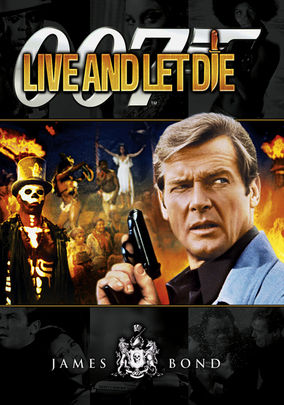
Live and Let Die-1973

Live and Let Die-1973

Director Guy Hamilton

Starring Roger Moore

Scott’s Review #646

Reviewed May 25, 2017

Grade: A-

When Live and Let Die was released in 1973, it began a new chapter in the James Bond film franchise with the introduction of a new Bond.

Sean Connery refused to do any more Bond pictures, and Roger Moore was crowned the new film hero and successfully made the role his own during his tenure.

My personal favorite Bond from top to bottom- I enjoyed the wry humor Moore added- he makes Live and Let Die more than it otherwise might have been with a less charismatic actor.

The story and the subsequent elements of the film have issues, but this installment holds a soft spot for me because it was one of my first exposures to the mountainous franchise that is Bond, and I adore the mid-1970s period.

Bond (Moore) is summoned to duty by his leader, M, after three MI6 agents are simultaneously killed in the Caribbean, New Orleans, and at the United Nations in New York City. Bond is then tasked with figuring out who killed these agents and how the deaths are connected.

The adventure takes Bond from Harlem to an unnamed island in the Caribbean, and back to the bayous of southern Louisiana as he tangles with a heroin drug lord, Dr. Kananda.

Bond’s main love interest in the film is the virginal tarot card reader, Solitaire, played by Jane Seymour.

Live and Let Die is a breakthrough in some ways, though the film admittedly contains both positives and negatives worth discussing.

Since the film was made in 1973, following a successful run of “Blaxploitation” films like 1971’s Shaft and 1972’s Super Fly, it has been influenced by those films’ style (for better or worse).

This means that all of the villains are black, from the main villain, Kananga, to various henchmen and even background criminals, growing the massive amounts of heroin shipped to the United States for distribution.

Having such representation among a minority group is fantastic and feels cutting edge, but stereotypes such as derogatory racial epithets, a pimpmobile, and the addition of weird voodoo exist.

Another major flaw in the film, and despite my overall warmth for Live and Let Die, is the goofiness it takes on towards the end.

At a certain point, the film feels like a different film from what it starts as, which becomes quite jarring. The introduction of Sheriff J.W. Pepper during a Louisiana chase scene turns the film into more of a cheesy Dukes of Hazzard episode, with bumbling law enforcement officials, rather than a quality film, and the southern stereotypes run rampant.

Why does a throwaway scene of a speedboat racing through an outdoor wedding feature all high society white folks with nary a black character existing other than as servants?

Some diversity in this scene would have been welcome, given that the film goes out of its way to feature black characters.

Still, many positives do exist. Live and Let Die has the honor of featuring the first-ever black Bond girl, the CIA double agent Rosie Carver, who, sadly, meets a grisly end far too soon.

Gloria Hendry’s chemistry with Roger Moore is readily apparent, though the film chooses to make the character inept rather than a true equal. The smoldering sex scenes between the duo are wonderful and groundbreaking to watch, so the film gets major props for pushing the envelope in this way.

Memorable is the terrific title theme song, “Live and Let Die”, by Paul McCartney and Wings. The success of this hit song, especially decades later, does wonders to elevate the film and keep it relevant in pop culture.

Also great to see are the location sequences and good action car chase scenes along the West Side Highway in New York City and into Harlem.

A treat for this retro fan is the inclusion of early 1970s Chevrolet Impalas and Chevy Novas throughout the entire feature film- was Chevy a financial backer?

Classic cars are a major inclusion in Live and Let Die, which, as a current-day viewer, is a cool treat and quite retro.

In terms of the primary villain and primary Bond girl, the film misses. Jane Seymour is a dud as Solitaire, a character that really should have been played by a black actress. Seymour and Moore have zero chemistry, and her character is weak and simpering, lacking any backbone.

Similarly, Yaphet Kotto as Dr. Kananga seems miscast, with no real qualities that make him devious or dangerous, and his inevitable swan song underwhelms.

Live and Let Die (1973) is not the greatest in the Bond collection and suffers from some problematic, now-dated aspects, racial issues, and a silly overtone, but, perhaps more so as a terrific childhood memory, I hold a particular fondness toward this film despite many negatives.

Oscar Nominations: Best Song-“Live and Let Die”

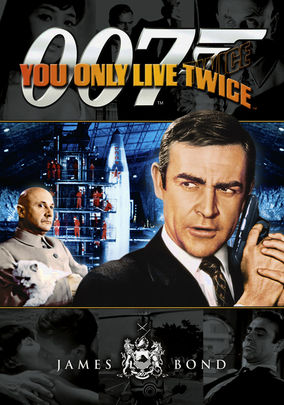
You Only Live Twice-1967

You Only Live Twice-1967

Director Lewis Gilbert

Starring Sean Connery

Scott’s Review #636

Reviewed April 23, 2017

Grade: B+

You Only Live Twice (1967) is the fifth in the James Bond film franchise and the fifth to star iconic Bond, Sean Connery, in the lead role.

Reportedly growing bored with the role and eager to move on to meatier acting challenges, Sean Connery is not quite as mesmerizing in the role this time around, but is still indisputably charismatic and sexy with his delivery of one-liners and various affairs with women.

You Only Live Twice is the last to feature Connery until he is coaxed back into the role four years later with 1971’s Diamonds Are Forever.

The film is not among my favorite Bond films of all time, nor is it even in the top ten, for that matter, but it is still quite an enjoyable watch, and the Japanese locales are undoubtedly the highlight.

The film as a whole suffers from a silly story, dated special effects, and a completely lackluster villain, but it does have Connery to rescue it and a nice little romance between Bond and the main girl, Aki, played by Japanese actress Akiko Wakabayashi- that is, until she is unceremoniously poisoned.

The plot involves the hijacking of an American NASA spacecraft by another mysterious spacecraft. The Americans suspect the Russians of the action, and the British suspect the Japanese since the aircraft landed in the Sea of Japan.

MI6 (Bond) fakes his death in Hong Kong and subsequently begins to investigate who is responsible. His search brings him to Tokyo, where he investigates Osato Chemicals and stumbles upon evidence.

He is aided by both Aki and Tiger Tanaka, leaders of the Japanese Secret Service. Soon, it is revealed that the mastermind is SPECTRE villain Ernst Stavro Blofeld, in this installment played by Donald Pleasence.

Mr. Bond must destroy his enemy and inevitably save the world from a global nuclear war.

Though a timely storyline since 1967 was in the midst of the Cold War, the plot seems somewhat forced and a bit uninteresting. The countries blame each other for the hijacked ship, but this comes across as extremely plot-driven and secondary.

The “swallowing” of the aircraft seems cheesy and preposterous, even given the year the film was made, and the writing is not as rich as in some of the preceding Bond films, like From Russia With Love or Thunderball.

The film also has an overall “cheap” look. However, the film does have plenty of positives worth mentioning.

The gadgets that James Bond fixture, Q (the MI6 technical wizard) creates are state-of-the-art and fun. The mini-flying helicopter Bond uses is creative and offers even more views.

Bond faking his death in the opening sequence is a treat (albeit having been done before), and ceremoniously being cast off into the sea in a coffin, only to be wearing a suit and an oxygen mask inside the casket, is clever and light.

Donald Pleasence, a storied, fantastic actor, is not well cast as the main villain, Stavros, and I am not entirely sure why. The fact that his face is not shown until the last act is not helpful, and the character (though seen in other Bond films) is not compelling and is underutilized.

I would have liked the character to be a bit more visible, though surprisingly, the character was highly influential in the 1990s spoof Austin Powers films. Adorable yet creepy is Stavros, only being seen clutching and stroking a gorgeous white cat.

As for the Bond women, the Aki mentioned above is the best of the bunch. Gone too soon in the story, she is replaced by Kissy Suzuki, who is rather unappealing. Mostly clad in a skimpy white bikini and heels, and wearing a black wig, the character is forgettable and serves no purpose.

Conversely, villainous Helga Brandt, SPECTRE assassin, is very well cast and shares good chemistry with Connery. After an unsuccessful attempt to kill Bond, she is fated with a date with killer Piranhas as payment for her failure.

You Only Live Twice (1967) has a myriad of ups and downs, but it is worth watching for fans of the franchise, and specifically, fans of the classic Bond films featuring Sean Connery.

Some will argue that the film feels dated and chauvinistic, and to some degree, they are correct, but it is also a large part of a treasured franchise and a fun experience.

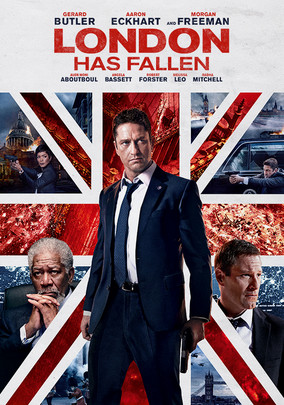
London Has Fallen-2016

London Has Fallen-2016

Director Babak Najafi

Starring Gerard Butler, Aaron Eckhart

Scott’s Review #608

Reviewed January 13, 2017

Grade: D

Save for many enjoyable, incredible London shots of mostly aerial views, London Has Fallen (2016) is a complete drivel of an experience.

The film’s attempt at being a red-blooded, patriotic film comes across as insulting and racist, with a machismo that is cringe-worthy.

The dialogue is terrible, and the “us against them” mantra has been done to death in film, mainly in the 1980s and 1990s. To quote one reviewer, “London Has Fallen is Donald Trump in film form.”

I don’t understand how the film convinced such a talented cast to appear (it must have been money), and several parts are so small (Robert Forster, Melissa Leo, Jackie Earle Haley) that they are nearly glorified extras.

The plot is painfully contrived, to say nothing of the ludicrous nature of the entire story.

To retaliate against a drone strike killing a Pakistani leader, terrorists take advantage of the death of the UK Prime Minister to assassinate several world leaders who have gravitated to London to attend funeral services.

The President of the United States (played by Aaron Eckhart) is naturally in attendance, and his murder is thwarted by top Secret Service official Mike Banning (Gerard Butler), our film’s hero.

The rest of the film involves the President and Mike running throughout London, attempting to catch the terrorists and bring them to justice while avoiding death.

The London locales are superb, but sadly, they mainly appear at the film’s beginning and end. The London Eye, the Thames River, the Underground, and various metro stations are featured.

The numerous London bridges also get some exposure.

The best part is how the film showcases London’s vastness, not just the up-close shots of historic places like Westminster Abbey or Buckingham Palace.

Undoubtedly, London is known for those gems, but the aerial views give the viewer an appreciation of all London offers.

I loved only this aspect of the film.

The supporting roles are abysmal, and given the more artistic parts they’ve received in the past; one imagines the actors cringing as they read the scripts for some of them.

I hesitate to think what possessed Leo, Forster, and Haley to accept meaningless roles save for a hefty paycheck. Each played a member of the President’s staff and was reduced mainly to reactionary shots.

As an ill-fated Secret Service Director, Angela Bassett and Radha Mitchell, as Banning’s weary-looking, pregnant wife, get more screen time but are treated to equally uninteresting roles.

Overall, the performances are forgettable. Respectable actors Butler and Eckhart merely phone in their vapid, dull lines, failing to make any of them believable.

The film never bothers with character development or anything beyond fundamental good and evil roles. Every character is either 100% good or 100% bad.

It is made crystal clear that the Americans are the good guys, and the foreigners (all Middle Eastern or Asian actors, of course) are simply the bad guys.

The motivations of the “bad guys” are never explained, and one cheesy line after another is written for the “good guys.”

During the finale, Banning professes that “we have been here for thousands of years and always will be” as he beats a lousy guy senselessly. Good grief. I’ve seen better dialogue on a network television drama.

And there is never any doubt about how the film will end. There is an American mole who has used his power to enable all of the assassinations, but when the mole is revealed, it is a character we have never seen before, so who cares?

Indeed, the film will soon be forgotten for its poor story, cliche-ridden script, and numerous stereotypes, but the fantastic London shots were inspiring and lovely.

I would have been happy with one hour and forty minutes of those.

Snakes on a Plane-2006

Snakes On A Plane-2006

Director David R. Ellis

Starring Samuel L. Jackson

Scott’s Review #607

Reviewed January 11, 2017

Grade: B

Snakes on a Plane, the surprise internet bruhaha sensation of 2006, has much to criticize.

The plot is inane, the acting way over the top, and the subject portrayed in such a dumb manner that I could see the results being horrific, but there is just something I enjoyed about the film, too, as admittedly stupid as it is.

I could not help but sit back and enjoy it.

I enjoyed the setting of an airplane- trapped at 35, 000 feet, in peril, has always enamored me (think Airport disaster films of the 1970s).

The story involves a plot to release hundreds of deadly snakes on a passenger flight, to kill a witness to a murder trial.

Of course, innocent passengers meet their dire fates as the cartoon-like characters are offed one by one, in a horror-film style.

Sadly, the film did not live up to expectations, commercially or critically, and was considered something of a dud after all the hype, but I rather enjoyed it for what it was.

Hardly high art, it entertained me.

Tropic Thunder-2008

Tropic Thunder-2008

Director Ben Stiller

Starring Ben Stiller, Robert Downey, Jr., Jack Black

Scott’s Review #593

Reviewed January 8, 2017

Grade: D-

Tropic Thunder (2008) was a ridiculous film that I found to be harsh, tedious, and very loud. Attempting to be a satire of sorts, it fails on almost every level.

The main issue was with the characters, who are abrasive and unlikable.

The only redeeming qualities are Robert Downey Jr.’s and Tom Cruise’s portrayals, though they both play idiotic characters.

The plot is something of an ode to 1979’s Apocalypse Now, in that the plot throws back to the Vietnam War.

A group of narcissistic actors is filming a Vietnam memoir on location in the jungles of Southeast Asia when they are abandoned and forced to fend for themselves amid a group of drug lords.

The film’s attempt at humor fell flat for me. It just seemed like a group of crazed guys running around the jungle acting wild, and the film held little point for me.

Cruise’s part was interesting but way too small.

Directed by, and starring Ben Stiller, who should stick to acting (if that).

How Downey, Jr. scored an Oscar nomination for this drivel is beyond me, despite his acting being one of the better efforts in the film.

Oscar Nominations: Best Supporting Actor-Robert Downey Jr.

Sherlock Holmes-2009

Sherlock Holmes-2009

Director Guy Ritchie

Starring Robert Downey, Jr., Jude Law

Scott’s Review #575

Reviewed December 31, 2016

Grade: B-

From a technical perspective. Sherlock Holmes, a 2009 attempt at revitalizing the famous detective story into something of a modern franchise for the masses, achieves a measure of success in style and editing.

The film ultimately fails in character development or story.

Traditionalist fans of the detective and his partner will undoubtedly be displeased with this film.

This film is very well made, with snappy editing, fast-paced wit, and attempts at humor, but it does not work all that well when put together as a film.

The rebirth of Sherlock Holmes was made to entice modern audiences.

Director Guy Ritchie even brings in superhero elements to Sherlock Holmes. Suddenly he can kick ass as well as solve a complex mystery, which is so far removed from the original character.

Downey Jr. and Jude Law as Sherlock Holmes and his partner Watson have some humorous moments, but the chemistry is not wholly there. It appears they are both trying too hard to create some magic where there is none.

All in all, though a well-made, entertaining two hours well spent, the story and characterization ultimately do not work.

Downey Jr. gives a great performance and shows why he is one of today’s most versatile actors, but this cannot ultimately make the entire film a success.

Oscar Nominations: Best Original Score, Best Art Direction

Clash of the Titans-2010

Clash of the Titans-2010

Director Louis Leterrier

Starring Sam Worthington, Liam Neeson

Scott’s Review #566

Reviewed December 27, 2016

Grade: B

Though I went to the theater begrudgingly to see Clash of the Titans-2010, (fantasy blockbusters are not typically my cup of tea), I have to confess to being moderately impressed by this film.

I had no real expectations other than it is a tale loosely based on the Greek myth of Perseus.

I have heard some people compare it to the original in an unfavorable way, but I have not seen the original- released in 1981 so any comparisons are a moot point.

At one hour and fifty minutes, the film is a perfect length and does not drag.

The plot is basic and focused. Perseus (Sam Worthington)  must save the life of the beautiful Princess Andromeda, as he leads a team of warriors into battle against vicious enemies.

Some of the creatures they meet along the way are fascinating.

Clash of the Titans (2010) is not fine cinema, and the acting is not spectacular, but the effects are worth mentioning and the look of the film is impressive.

My only real criticisms are the way Medusa is portrayed (said to be ugly, she really is a beautiful woman with snakes on her head) and the 3-D, which was pretty much unnecessary- this is probably an attempt by the studios to capitalize for profit.

Inception-2010

Inception-2010

Director Christopher Nolan

Starring Leonardo DiCaprio, Elliot Page

Scott’s Review #558

Reviewed December 22, 2016

Grade: A-

Inception (2010) is the type of film that will leave you astounded, baffled, confused, bewildered, and many other adjectives. To put it more simply, this film needs to be pondered after the fact.

This is a high compliment as it is tough to remember such a complex (in a good way!), savory film.

Inception is visionary and meant to be processed.

A highly intelligent film, of sorts, that will leave you thinking afterward. The story is immeasurably complex and will leave many completely confused, but just go with it.

In a nutshell, it tells the story of a man who intercepts people’s subconscious minds through dreams. Different layers of their minds are revealed as the film goes along. There are also virtual levels to each person’s mind- complex, yes.

The film reminds me quite a bit of The Matrix- but better.

The film has many twists and turns throughout and will keep the viewer both perplexed and fascinated. My only slight criticism is the dream sequences do not feel like dreams at all but are highly stylized action sequences.

Many props have been given for being so inventive, though.

Oscar Nominations: 4 wins-Best Picture, Best Original Screenplay, Best Original Score, Best Sound Editing (won), Best Sound Mixing (won), Best Art Direction, Best Cinematography (won), Best Visual Effects (won)

Salt-2010

Salt-2010

Director Phillip Noyce

Starring Angelina Jolie

Scott’s Review #522

70118402

Reviewed November 20, 2016

Grade: B+

Salt (2010) is a very good, fast-paced, political thriller starring Angelina Jolie as a woman accused of being a Russian sleeper agent, who must go on the run to clear her name, all the while being chased by officials attempting to accost her.

The film offers nothing that has not been seen countless times before in movies like this, but seeing Jolie in a role typically played by a male (the role was originally written for Tom Cruise), is cool and makes the film unique in itself.

She is great in the role.

There are some twists and surprises along the way that keep the viewer on edge- numerous action and car chase scenes abound and will keep the action flick viewer quite pleased.

It is quite fast-paced and very big budget.

On the downside, I couldn’t help but think are they making movies about the United States vs. Russia again?

They are, but I could not help but enjoy it for what it was.

Oscar Nominations: Best Sound Mixing