Tag Archives: Maria Bello

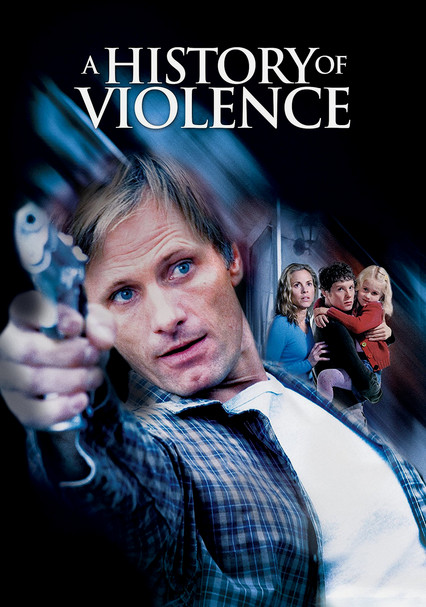
A History of Violence-2005

A History of Violence-2005

Director David Cronenberg

Starring Viggo Mortensen, Mario Bello, Ed Harris

Scott’s Review #1,016

Reviewed April 28, 2020

Grade: B+

David Cronenberg has directed films such as Videodrome (1983), The Fly (1986), and Crash (1996), stories safely classified as “off the beaten path”.

With A History of Violence (2005), he creates a film that on the surface appears conventional and even wholesome at the onset, a family drama or thriller, that turns sinister and bloody as it lumbers along.

The Christian-like small Indiana town is the perfect backdrop to quietly inflict mayhem and terror on its characters. Stars Viggo Mortensen and Ed Harris give tremendous portrayals.

Tom Stall (Mortensen) lives a quiet mid-western life and owns a quaint, little diner nestled in the center of town. He is a popular man and quite neighborly, befriending the many patrons who visit his lovely eatery. At his side are his adoring wife Edie (Maria Bello), and children, Jack and Sarah.

If they owned a golden retriever and resided in a house with a white picket fence, they would define the all-American family.

Late one night, two men attempt to rob the restaurant and when they attack a waitress, Tom kills both robbers with surprising ease and skill barely blinking at his violent tendencies. He is professed a hero by the townspeople and the incident makes him a local celebrity.

Tom is then visited by the frightening scarred gangster Carl Fogarty (Harris), who insists that Tom is a notorious gangster from Philadelphia named Joey Cusack. Tom is perplexed and vehemently denies the claims, but Fogarty begins to stalk the Stall family.

Because of the pressure, Tom’s family life hits crisis mode.

As the film ticks along the plot becomes thicker and thicker as the puzzle pieces are rife with mystery. Is Fogarty merely a liar, holding a vendetta against the person who killed his men? Does Tom suffer from amnesia, having forgotten his past life due to an accident?

Has Tom fled the criminal life seeking refuge and a new life in middle America, safely leaving his troubles behind? Does the truth lie somewhere in the middle of these possibilities?

Bello is cast in the role of Edie, Tom’s loyal wife. Bello is a stellar actor and does a wonderful job in the complicated role. Far too often, especially in thrillers, the wife role is as lacking in the challenge as it is in glamour. The ever-supportive wife must be a drag to play but pays the bills.

Edie is different, and as soon as the viewer has her figured out, she acts out of the blue which will surprise this type of character. This has a lot to do with Bello’s pizzazz and acting chops.

I adore the setting of the film. A far cry from the bustling City of Brotherly Love, Philadelphia, when the action eventually flows to the city, the rural setting of Indiana becomes even more important.

The quiet mornings, the imagined smell of fresh-brewed coffee, the crackling of sizzling bacon on the grill at Tom’s Diner, and finally, crickets chirping in the distance, all provoke the potent atmosphere and surroundings that work in this film.

A History of Violence (2005) is a superior film that contains excellent writing, the best aspect of the rich experience. A top-notch screenplay written by Josh Olson leaves the viewer not only with mounting tension but the mysterious unknown as to what will happen next and what the truth is.

Mortensen, commonplace in recent Cronenberg films, has found his niche playing complex yet humanistic characters, which must be a challenge for the actor and a splendid reward for the audience.

Oscar Nominations: Best Supporting Actor-William Hurt, Best Adapted Screenplay

Giant Little Ones-2019

Giant Little Ones-2019

Director Keith Behrman

Starring Josh Wiggins, Darren Mann

Scott’s Review #1,000

Reviewed March 13, 2020

Grade: B+

Giant Little Ones (2019) is an independent LGBTQ film about both coming to terms with one’s sexuality and accepting and embracing other people for whom they love, and how they wish to spend their life.

It’s an honest and resilient coming-of-age story, most reminiscent (but rawer) of the recent Love, Simon (2018), told from a teenager’s perspective and the pressures and emotions of youth.

The subject matter has been explored to death in cinema, but there is still something fresh and meaningful that is offered.

High school chums Franky Winter (Josh Wiggins) and Ballas Kohl (Darren Mann) have been best friends since diapers. They joke around, go bike-riding, and knock back a six-pack together.

They are handsome, integral parts of the swim team, and popular with girls. Each has a steady girlfriend with who they anticipate soon going all the way. Any teenage girl would love to trade their life with the boys.

On the night of Franky’s seventeenth birthday party, Franky and Ballas get drunk together and spend the night crashing in the same bed. An unclear incident of a sexual nature occurs, altering and damaging their friendship.

Each boy has one sister and a set of parents, but Franky’s are more prominent, with a story of their own. His father, Ray (Kyle MacLachlan) divorced Franky’s mother, Carly (Mario Bello) after coming to terms with being gay.

While the focal point is on the teenage set, and Franky more than Ballas, it’s nice to see parents in these types of films with more to do than just pour coffee or offer unheeded advice.

MacLachlan and Bello are fascinating to watch, carefully distant from each other, but also have mutual respect. Both characters’ struggles are pointed out by Carly angrily lashing out that Ray was certainly not gay when she married him; Ray experiences guilt at wounding Franky emotionally.

The film is careful, admiringly so, to include two high school students who are already outwardly gay. The characters are not ridiculed or repressed, and one, Franky’s best friend Mouse (Niamh Wilson), is assumed to be slowly coming to terms with being transgender.

The other is a popular boy on the swim team. These representations are strong, though both characters face some level of opposition, so their plights are not easy.

The most heartfelt and poignant scene is when Franky and Ray reconnect as father and son in a treasured dialogue, where Ray explains how he met his partner. The beautiful moment blossoms because it’s Franky who asks Ray how he and his partner met.

Any LGBTQ person can attest to the powerful and heartwarming moment when they are asked about their significant other. The proud look in Ray’s eyes and the quiet cadence with which he carefully warns Franky not to label himself, but rather stick with those he connects to, is lovely and sentimental.

I like how Giant Little Ones is not a love story between the two boys and ambiguous is not only whether their friendship can be fixed, but whether one or both is gay, bi-sexual, curious, or merely experimenting with their sexuality.

The film avoids labels and boasts no clear-cut angle, steering clear of anything too preachy or defined. This supports its overall point.

A minor criticism is that, despite the boys being best friends and on equal footing, Franky becomes the central character, while Ballas is not explored thoroughly. Ballas borders on sociopathic behavior and has a ton of anger, but why? Is it only his sexuality?

The character remains mostly a mystery, and I was eager to learn more about him and what drives him.

Giant Little Ones (2019) is a heartfelt and intimate coming-of-age story about friendship, self-discovery, and the power of love without labels. The young actors are all natural, believable, and earnest, and the seasoned supporting cast lends credibility to a tiny, low-budget picture.

The LGBTQ community will embrace this film, while anyone else will be touched by its honesty and poignancy.

Prisoners-2013

Prisoners-2013

Director Denis Villeneuve

Starring Hugh Jackman, Jake Gyllenhaal

Scott’s Review #75

70273235

Reviewed June 27, 2014

Grade: B+

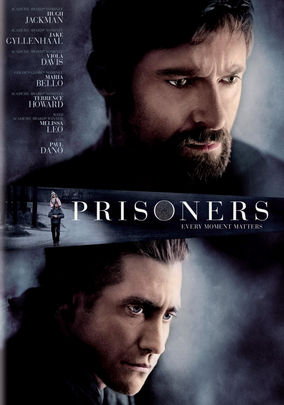
The film Prisoners (2013) weaves a gripping, taught, psychological tale amid a well-acted stellar cast of Hugh Jackman, Jake Gyllenhaal, Maria Bello, Viola Davis, and Paul Dano for starters.

That is what separates it from other similar, yet mediocre thriller types.

The gray, somber, Pennsylvania town is a perfect backdrop for a story involving child abduction and a father that seeks a confession from the presumed kidnapper.

The mood and cinematography are impressive and the bleakness is perfect for the tone- a cold Thanksgiving holiday weekend in a working-class, steel town.

At two hours and twenty-six minutes, the film is lengthy, but on the edge of your seat.

What intrigued me most was the audience conflict of whom to root for. Is the father purely innocent? Is the kidnapper guilty? Is someone else involved?

These questions go through the viewer’s mind during the film.

Prisoners possess a major drawback in the high number of plot holes and questions asked after the film.

The kidnapper’s motivations are weak and never fully explained. Portions of the story do not add up and make little sense.

The film is similar in style to Zodiac (2006) and Mystic River (2003).

Prisoners (2013) is an intense, thrill ride to be enjoyed, but not over-analyzed.

Oscar Nominations: Best Cinematography