Tag Archives: Julius Harris

Looking for Mr. Goodbar-1977

Looking for Mr. Goodbar-1977

Director Richard Brooks

Starring Diane Keaton, Tuesday Weld, Richard Gere

Scott’s Review #1,485

Reviewed July 25, 2025

Grade: A-

Diane Keaton won the Academy Award for Best Actress in 1977 for Annie Hall, an excellent film by Woody Allen, but as has happened in Oscar history, she won for the wrong role.

She delivers her best acting performance of her distinguished career in Looking for Mr. Goodbar (1977), a raw crime drama in which she plays Theresa, a liberated and carefree young schoolteacher living in a metropolitan area.

The film, directed by Richard Brooks (Cat on a Hot Tin Roof, 1967, and In Cold Blood, 1968), is based on Judith Rossner’s 1975 best-selling novel. The setting is inexplicably changed from New York City to San Francisco, but it feels exactly like the troubled urban metropolis during its late 1970s crime-ridden period.

I nearly felt as if Theresa’s dingy, windowless apartment was a character in itself.

The musical soundtrack is a significant win, featuring disco anthems from the time, such as ‘Don’t Leave Me This Way’ by Thelma Houston and ‘Love Hangover’ by Diana Ross.

Film lovers familiar with Taxi Driver (1976) and Cruising (1980) (both set in New York City) will notice similarities and draw parallels.

Theresa (Diane Keaton) teaches deaf children during the day and cruises singles bars and discos at night. Despite being raised a devout catholic ‘good girl’, she favors quick nights of passion with random suitors, ignoring the advances of well-meaning but nerdy social worker James (William Atherton).

She pursues the likes of Tony (Richard Gere), whose threatening knife and swagger excite her. As the film progresses, Theresa becomes increasingly entangled in perilous encounters, putting her life in danger.

Despite a jarring shift in story direction towards the end of the film and the geographical change, I found more than enough to merit a superior rating, especially Keaton’s performance.

Keaton flawlessly carries the film as an unapologetic, progressive character. She lives life, enjoys life, and sees nothing wrong with her chosen lifestyle. Keaton is fearless, delivering a likable character we probably shouldn’t like.

She can be cutting, self-centered, and moody, but takes sheer delight in teaching deaf kids who have problems at home, almost fostering them as her own.

Richard Kiley and Priscilla Pointer play Theresa’s parents in rather one-note performances. They are devout Irish Catholics, but too much time is spent showcasing their traditional values.

Theresa’s sister, Katherine, played by Tuesday Weld, is more like Theresa but more needy, and clinging to any man she meets. The sisters are close, even living in the same building, and constantly have each other’s backs.

Looking for Mr. Goodbar perfectly depicts life in an inner city in the mid-1970s: booze, sex, parties, and drugs.

Rinse and repeat.

The male characters that Theresa interacts with are of different types. Her first fling is with her married professor, whom she fantasizes about living with. When this doesn’t work out, she has urges for more dangerous experiences.

Tony (Gere) is sexy, unreliable, and dangerous, and Theresa is titillated. It’s with him when she teeters over the brink.

The film transitions from a sexual thriller into a deadly final sequence, leaving my mouth hanging open with surprise. The ending will leave audiences on the edge of their seats and may not please those seeking a happily-ever-after story.

Is the audience supposed to learn a lesson? Does Theresa get what she deserves? How dare she live her life as she sees fit? These are questions easily worthy of further discussion.

The introduction of Gary (Tom Berenger), a tortured gay man Theresa meets in a bar, comes so late in the film that there is barely time to get to know the character. But, he doesn’t put the LGBTQ+ community in such a positive light.

Still, the gay men who yearn to be straight cannot be dismissed since this was commonplace when the story was created.

With a spot-on atmosphere filled with juicy late 1970s coolness and danger, and a brilliant starring turn by Diane Keaton, Looking for Mr. Goodbar (1977) has more than enough to warrant a watch and a follow-up chat.
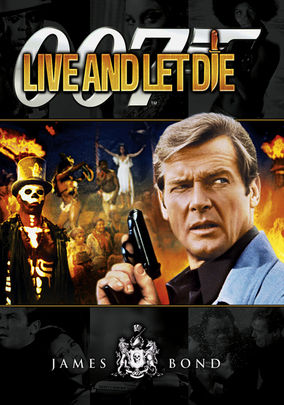
Live and Let Die-1973

Live and Let Die-1973

Director Guy Hamilton

Starring Roger Moore, Jane Seymour, Yaphet Kotto

Scott’s Review #646

Reviewed May 25, 2017

Grade: A-

When Live and Let Die was released in 1973, it began a new chapter in the James Bond film franchise with the introduction of a new Bond.

Sean Connery refused to do any more Bond pictures, and Roger Moore was crowned the new film hero and successfully made the role his own during his tenure.

My personal favorite Bond from top to bottom- I enjoyed the wry humor Moore added- he makes Live and Let Die more than it otherwise might have been with a less charismatic actor.

The story and the subsequent elements of the film have issues, but this installment holds a soft spot for me because it was one of my first exposures to the mountainous franchise that is Bond, and I adore the mid-1970s period.

Bond (Moore) is summoned to duty by his leader, M, after three MI6 agents are simultaneously killed in the Caribbean, New Orleans, and at the United Nations in New York City. Bond is then tasked with figuring out who killed these agents and how the deaths are connected.

The adventure takes Bond from Harlem to an unnamed island in the Caribbean, and back to the bayous of southern Louisiana as he tangles with a heroin drug lord, Dr. Kananda.

Bond’s main love interest in the film is the virginal tarot card reader, Solitaire, played by Jane Seymour.

Live and Let Die is a breakthrough in some ways, though the film admittedly contains both positives and negatives worth discussing.

Since the film was made in 1973, following a successful run of “Blaxploitation” films like 1971’s Shaft and 1972’s Super Fly, it has been influenced by those films’ style (for better or worse).

This means that all of the villains are black, from the main villain, Kananga, to various henchmen and even background criminals, growing the massive amounts of heroin shipped to the United States for distribution.

Having such representation among a minority group is fantastic and feels cutting edge, but stereotypes such as derogatory racial epithets, a pimpmobile, and the addition of weird voodoo exist.

Another major flaw in the film, and despite my overall warmth for Live and Let Die, is the goofiness it takes on towards the end.

At a certain point, the film feels like a different film from what it starts as, which becomes quite jarring. The introduction of Sheriff J.W. Pepper during a Louisiana chase scene turns the film into more of a cheesy Dukes of Hazzard episode, with bumbling law enforcement officials, rather than a quality film, and the southern stereotypes run rampant.

Why does a throwaway scene of a speedboat racing through an outdoor wedding feature all high society white folks with nary a black character existing other than as servants?

Some diversity in this scene would have been welcome, given that the film goes out of its way to feature black characters.

Still, many positives do exist. Live and Let Die has the honor of featuring the first-ever black Bond girl, the CIA double agent Rosie Carver, who, sadly, meets a grisly end far too soon.

Gloria Hendry’s chemistry with Roger Moore is readily apparent, though the film chooses to make the character inept rather than a true equal. The smoldering sex scenes between the duo are wonderful and groundbreaking to watch, so the film gets major props for pushing the envelope in this way.

Memorable is the terrific title theme song, “Live and Let Die”, by Paul McCartney and Wings. The success of this hit song, especially decades later, does wonders to elevate the film and keep it relevant in pop culture.

Also great to see are the location sequences and good action car chase scenes along the West Side Highway in New York City and into Harlem.

A treat for this retro fan is the inclusion of early 1970s Chevrolet Impalas and Chevy Novas throughout the entire feature film- was Chevy a financial backer?

Classic cars are a major inclusion in Live and Let Die, which, as a current-day viewer, is a cool treat and quite retro.

In terms of the primary villain and primary Bond girl, the film misses. Jane Seymour is a dud as Solitaire, a character that really should have been played by a black actress. Seymour and Moore have zero chemistry, and her character is weak and simpering, lacking any backbone.

Similarly, Yaphet Kotto as Dr. Kananga seems miscast, with no real qualities that make him devious or dangerous, and his inevitable swan song underwhelms.

Live and Let Die (1973) is not the greatest in the Bond collection and suffers from some problematic, now-dated aspects, racial issues, and a silly overtone, but, perhaps more so as a terrific childhood memory, I hold a particular fondness toward this film despite many negatives.

Oscar Nominations: Best Song-“Live and Let Die”