Tag Archives: Charles Dance

Frankenstein-2025

Frankenstein-2025

Director Guillermo del Toro

Starring Oscar Isaac, Jacob Elordi, Mia Goth

Scott’s Review #1,510

Reviewed January 15, 2026

Grade: A

Guillermo del Toro, known for his astounding production and art design in his films, hits a home run with a remake of Frankenstein (2025) based on Mary Shelley’s 1818 novel, unmasking a beautifully crafted film.

He pulls out all the stops to achieve an exquisite gothic look that is hard not to be mesmerized by. It reminds me of the HBO series Penny Dreadful (2014-2016) in both its subject matter and its visual style.

I worried that the sets and designs would usurp the story, but especially in the final act, the film becomes very character-driven, especially the Creature, played by Jacob Elordi. It is easy to garner sympathy for his character as the story progresses and he goes from bald and alien-like to disheveled and wild-looking.

The film is divided into three chapters: Prelude, Victor’s Tale, and The Creature’s Tale, so the pace is structured with shifting perspectives. This is a wise move.

Victor Frankenstein (Oscar Isaac) is a brilliant but egotistical scientist who brings a creature to life in a monstrous experiment that ultimately leads to the undoing of both the creator and his tragic creation.

The inclusion of Victor’s brother, William (Felix Kammerer), Elizabeth (Mia Goth), and the Blind Man (David Bradley) adds interesting and potent supporting characters who help reveal the intentions of the more prominent characters.

Mesmerizing are the sequences in the dark, evening settings, and especially within the grandiose walls of the estate where William and Elizabeth are to be married.

The cool blueish hues amongst the glowing burning candlelight provide a warm yet gruesome tone. As Elizabeth, clad in her pale white wedding dress, is carried down the bold staircase by the creature, her abdomen is caked in scarlet red blood, amid falling flower petals, another example of the powerful visuals.

In contrast, the daytime sequences usually take place amid a blustery snowstorm or in frigid, barren wastelands, with a very white color palette. Del Toro doesn’t even need to use wind sounds to portray the frigid landscape perfectly.

Lastly, the costumes are award-worthy. From the seventeenth-century wedding outfits the attendees wear to the filthy rags the Creature dons, all are well defined by societal class. The kindly Blind Man wears modest attire and lives in a barren forest area.

While both are superior in excellence and storytelling, 2025’s Frankenstein is vastly different from the 1931 version directed by James Whale and starring legendary horror actor Boris Karloff. Made nearly one hundred (gasp!) years apart, they are dissimilar in ways, and the former is more faithful to Shelley’s novel.

Elordi deserves kudos for infusing the Creature with humanity and sympathy, a character that many perceive as nothing more than a monster.  His kindness and compassion mask the torture and pain he feels, wishing for death at nearly every turn.

The hulking actor is a perfect fit from a physical perspective, lumbering along the terrain and brooding with pain. His tentative relationship with Elizabeth is touching to see, and the future possibilities are endless, were it not for tragedy.

Isaac and Goth are also impressive. As the true film villain, Isaac’s Frankenstein is also tortured but turns to lies and deception to mask his pain. Goth, parlaying from indie horror into mainstream cinema, is one to watch as she chooses her next roles.

The lovely male relationship between the creature and the blind man is a true testament to kindness and what friendship is all about.

With his legendary visual touch, Guillermo Del Toro resurrects Frankenstein (2025) with a magnificent, nearly operatic offering that’s gloriously gothic and heartbreaking, with exceptional performances and visual mastery.

In this case, his story matches his visuals.

Oscar Nominations: 3 wins-Best Picture, Best Supporting Actor-Jacob Elordi, Best Adapted Screenplay, Best Cinematography, Best Costume Design (won), Best Makeup & Hairstyling (won), Best Original Score, Best Production Design (won), Best Sound
Gosford Park-2001

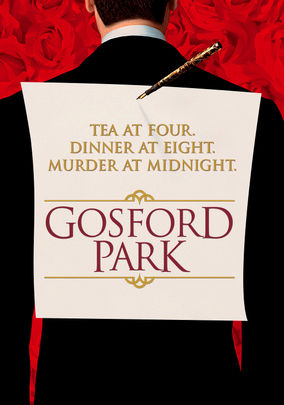
Gosford Park-2001

Director Robert Altman

Starring Maggie Smith, Helen Mirren, Ryan Phillippe

Top 250 Films #105

Scott’s Review #350

60021796

Reviewed January 9, 2016

Grade: A

Somewhere between the brilliant PBS series of the 1970s and the ultra-modern cool of Downton Abbey (also PBS) lies the masterpiece that is Robert Altman’s 2001 gem, Gosford Park.

It’s ironic that the creator, writer, and executive producer of Downton Abbey, Julian Fellowes, wrote the screenplay of Gosford Park.

No wonder, combined with Altman’s direction, they created genius.

The period is 1932, and the wealthy, along with their servants, flock to the magnificent estate of Gosford Park, a grand English country home.

The guests include both Americans and Brits, and everyone is gathered for a shooting weekend- foreshadowing if ever there was.

Following a dinner party, a murder occurs. The remainder of the film follows the subsequent police investigation, and the perspectives of the guests and the servants as a whodunit ensues.

Many of the characters’ lives unravel as secrets are exposed.

Sir William, the murder victim, is a powerful industrialist. After he announces he will withdraw an investment, the ramifications affect many of the guests, so that the setup is spelled out for the audience.

At the risk of seeming nothing more than a plot device, it is so much more than that.

During a pheasant shoot, Sir William receives a minor wound thanks to a stray birdshot- is this intentional or merely an accident? When Sir William meets his fate that evening, the potential suspects pile up.

If there are two compelling aspects to a great film, they are a good old-fashioned whodunit and an enormous cast, all potential suspects.

What makes Gosford Park exceptional is that every character is interesting in some way, and all are well written.

Secrets abound for miles in this film and are revealed with delicious detail. Torrid affairs, sexuality secrets, and blackmail abound as revelations make their way to the surface, and Altman knows exactly how to cast doubt or suspicion on many of his characters.

The compelling relationship between American film producer Morris Weissman and his valet, Henry Denton (Ryan Phillippe), along with the domineering head housekeeper, Mrs. Wilson (Helen Mirren), is my favorite character and dynamic.

How clever that Maggie Smith would play similar roles as stuffy aristocrats in both Gosford Park and Downton Abbey.

Rich in texture is the balancing between the haves and the have-nots, and how those characters mix (sometimes in secret rendezvous!)

Typical of Altman films, the character dialogue commonly overlaps, and the actors largely improvise the script. In addition to being an actor’s dream, this quality gives a dash of realism to his films, and Gosford Park is no exception.

Since there are so many characters and so many plots and subplots going on at once, my recommendation is to watch the film at least twice to fully comprehend the layers of what’s going on.

Gosford Park (2001) will be increasingly appreciated.

Oscar Nominations: 1 win-Best Picture, Best Director-Robert Altman, Best Supporting Actress-Helen Mirren, Maggie Smith, Best Screenplay Written Directly for the Screen/Original Screenplay (won), Best Art Direction, Best Costume Design

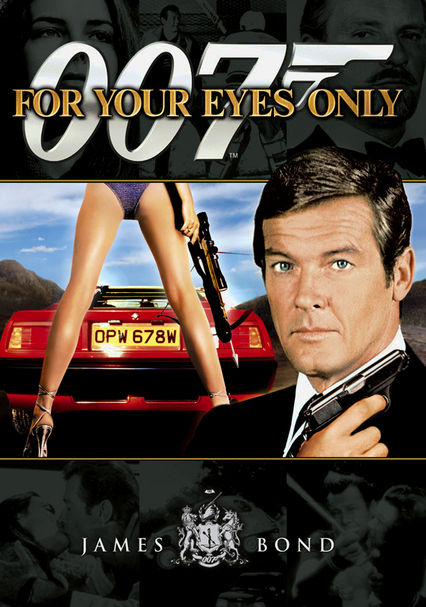
For Your Eyes Only-1981

For Your Eyes Only-1981

Director John Glen

Starring Roger Moore

Scott’s Review #1,185

Reviewed October 10, 2021

Grade: B+

Following the outrageousness of 1979’s Moonraker, a film I nonetheless find enjoyable, the decision was made to bring James Bond back to earth in the next chapter.

For Your Eyes Only (1981) has matured well over the years and is an above-average entry among my all-time James Bond list.

The main Bond girl and the villain are not as top-notch as other Bond films, but the action, suspense, and nods to Bond history are fantastic, as is the grittier look and feel.

And, the locales of Italy and Greece are breathtaking.

The title song, a sleek and syrupy love ballad performed by Sheena Easton, is a favorite of mine and is instantly recognizable in association with the film. It charted at number one and sold a gazillion copies.

The plot is typical of a James Bond film.

After a British ship is sunk in foreign waters, the world’s superpowers begin a feverish race to find its cargo: a nuclear submarine control system.

And 007 (Roger Moore) is thrust into the middle of the action as he aligns with Melina Havelock (Carole Bouquet), Milos Columbo (Topol), and others to thwart the fiendish plans of the villainous Kristatos (Julian Glover).

The story is rather secondary to the enjoyment of the film, and I quickly stopped trying to follow every plot point or detail. It’s not that important to know who every bad guy is or what their motivations are.

There is a plot to take over the world, and there you have it.

I adore the opening sequence when Bond visits the gravestone of his deceased wife, Teresa. This tender moment immediately made me reflect on the merits of On Her Majesty’s Secret Service (1969) and the humanistic tone the film conveyed.

Bond then engages in a thrilling helicopter chase with arch-rival Blofeld, which parleys into the opening credits with the title song as a backdrop.

This first sequence has nothing to do with the rest of the film, but the London shots of Big Ben and other historical treats are fabulous. And it’s just dessert to see Blofeld dumped into a massive chimney and presumably to his death.

Bond historians will love this.

The film is recommended to be watched in the winter months, as the snowy and icy scenes work better then. It could be a warm-up act to On Her Majesty’s Secret Service or From Russia With Love (1963), also cold-feeling Bond films.

I didn’t perceive much chemistry between Moore and Bouquet, but their lack of it didn’t ruin the film for me. The thirty-year age difference didn’t help matters, but at least James Bond had the decency not to bed the horny underage figure skater, Bibi Dahl (Lynn-Holly Johnson).

Her character is played for laughs, and her schoolgirl crush on Bond is cute.

Kristatos isn’t the most memorable villain either. His true colors aren’t revealed until late in the game, and his motivations are a stretch. I didn’t buy him as a former war hero and an ally-turned-smuggler.

Nonetheless, Glover plays him straightforwardly, and a compelling sequence occurs when he attempts to kill Bond and Melina with his massive boat and hungry sharks.

Topol, well-known for his role as Tevye in Fiddler on the Roof (1971), is great to see as one of Bond’s allies. The actor’s distinctive voice is tough to miss, though I half-expected him to break into “If I Were a Rich Man” at any moment.

The final sequence atop the Monastery of the Holy Trinity, an Eastern Orthodox monastery in Greece, is terrific and quite justifiably the highlight.

Bond dangles for his life as a henchman slowly breaks each of Bond’s rock climbing stakes, which is a nail-biting and suspenseful scene, even though you know that Bond will find his escape.

Flying under the radar, For Your Eyes Only (1981) is delightful for the locales and action sequences alone.

Dragging slightly midway and lacking a memorable Bond girl or villain, it offers a darker story and fewer cheeky moments. This is refreshing following a silly trip to the moon.

The villains are more dangerous than cartoonish, and the extreme locales and historical throwbacks make this an appreciated effort.

Oscar Nominations: Best Original Song-“For Your Eyes Only”

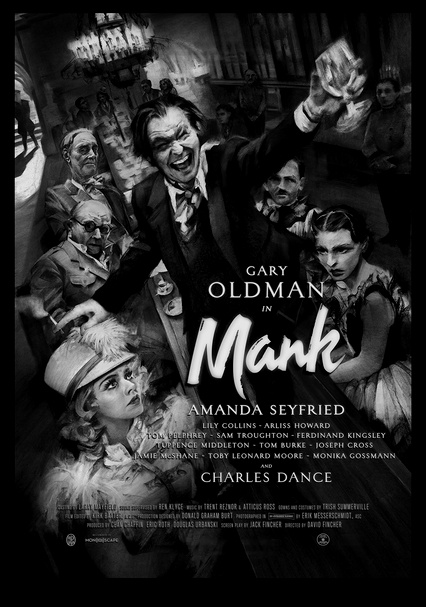
Mank-2020

Mank-2020

Director David Fincher

Starring Gary Oldman, Amanda Seyfried, Tom Pelphrey

Scott’s Review #1,110

Reviewed February 9, 2021

Grade: A

Everyone knows that Citizen Kane (1941) is one of the greatest films ever made. Well, I hope so anyway. Almost always appearing at the top of ‘best of’ lists, its merits are justified, and its creativity astounding. In a word, it’s groundbreaking.

The visual beauty, tone, and lighting are exceptional, to say the least. But this review is not meant to kiss the ass of that treasured masterpiece.

Mank (2020) is a film that is a love letter to the Golden Age of Hollywood. For those unfamiliar with Citizen Kane, please see the movie immediately, or the beauty of Mank will be missed.

The film celebrates the brilliance of Citizen Kane by offering new fans a glimpse into the creation of the movie while breathing life into the 1930s and 1940s film for new and younger fans to experience.

It also gives classic film fans something to sink their teeth into and a reaffirmation of their passion for the cinema. Film lovers will adore Mank.

The project stems back to the 1990s when director David Fincher’s father, Jack, began work on the film. It never came to fruition, and Jack Fincher died in 2003.

Eventually, the project was officially announced, and filming took place around Los Angeles from November 2019 to February 2020.

The film is about Citizen Kane specifically, but is so much more than that.

It’s part biography about alcoholic screenwriter Herman J. Mankiewicz (Gary Oldman) as he scrambles to finish writing Citizen Kane, given a tight deadline while also trying to recover from a broken leg. He is hired by the famous Orson Welles (director and star of Citizen Kane) to pen the script without any credit.

As terrific as Oldman is, as he always is, Mank also explores and dissects the politics of California of that time, the impending Nazi regime that soon led to World War II, and the rich and powerful producers.

It harkens back to the 1930s so genuinely that I felt I was living this important decade through my cinematic eyes. How different Hollywood was then!

Oldman is the star of a large cast with many actors being given small yet important roles. Nearly unrecognizable with a bloated beer belly and stringy hair, Herman is a lifelong boozer.

Mank spans ten years, from 1930 to 1940, and goes back and forth between the years. Mankiewicz dictated dialogue to his secretary, Rita (Lily Collins), in one scene while visiting the set of films made in the early 1930s.

Fun fact- Collins is the daughter of British pop artist Phil Collins and is on the cusp of a big career.

With his wit and humor, never afraid to call a spade a spade, or insult billionaire American businessman William Randolph Hearst (Charles Dance), he offends glamorous starlets over an extravagant dinner, forcing them to depart one by one as he gets drunker and drunker.

Never a big fan of Amanda Seyfried, the actress impresses with a fabulous performance, the best of her career. Playing Marion Davies, the inspiration for a character in Citizen Kane, she befriends Mankiewicz platonically, and the pair become close.

Seyfried nails it with a giving performance.

Tom Pelphrey plays Herman’s handsome brother, Joseph, on the cusp of becoming a famous writer and director, and the actor is terrific.

The look of Mank is delicious. The black and white cinematography pays homage to Citizen Kane, employing a stark contrast of dark and light in a gorgeous form.

Two great scenes come to mind- In 1933, Herman and Marion go for a stroll in a lavish courtyard, where they bond over discussions on politics and the film industry. It’s a benevolent and sweet scene where many topics are explored and embraced, and it is a definite ode to Hollywood.

The other takes place within the Hearst Mansion, directly before the scene as mentioned above, where a drunken Herman lets loose on some of the Hollywood elite. He insults Louis B. Mayer, founder of the famous MGM studios, the most famous and influential of all studios.

A gem is the addition of so many historic Hollywood figures, a treasure chest for fans of old cinema. Joan Crawford, Great Garbo, and Bette Davis are featured, although if you blink, you’ll miss them.

A terrific suggestion is to work double-time and follow up a viewing of Mank with Citizen Kane (I did!) for further appreciation of the film. A gift is realizing how the characters who appear in the classic film are based on real-life characters in Mankiewicz’s world.

Mank (2020) should be appreciated and revered for its lovely hybrid of crisp dialogue and wry comedy based on a real-life Hollywood director, and its cinematography and visual appreciation of a long-ago era of cinema.

I hope this inspires some to appreciate and salivate over films created almost a hundred years ago.

Oscar Nominations: 2 wins-Best Picture, Best Director-David Fincher, Best Actor-Gary Oldman, Best Supporting Actress-Amanda Seyfried, Best Production Design (won), Best Cinematography (won), Best Costume Design, Best Makeup and Hairstyling, Best Original Score, Best Sound

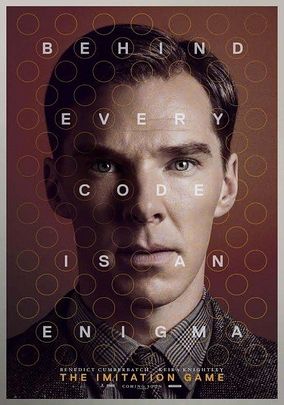
The Imitation Game-2014

The Imitation Game-2014

Director Morten Tyldum

Starring Benedict Cumberbatch, Keira Knightley

Scott’s Review #213

70295172

Reviewed January 15, 2015

Grade: A

The Imitation Game (2014) tells the story of Alan Turing, a confident and brilliant British mathematician who was responsible for cracking Nazi Germany’s Enigma code, which led to the Allied forces winning World War II.

The film also delves into Turing’s complex and sad personal life and the audience grows to know his upbringing largely told via flashbacks as a small boy at boarding school.

The film is tragic yet wonderfully made and is a powerful viewing experience in human storytelling.

The film has two aspects going on. The first is the hiring of Turing by the Government Code and Cypher School at Bletchley Park to crack the code and the numerous struggles faced in accomplishing this feat.

Turing is not easy-going. He is arrogant, quick-witted, and even smug. However, through his friendship with Joan (Keira Knightley), an intelligent woman on the team of scholars, we see a human side to him as they forge a lifelong bond.

The other is of his personal life which is a bit more mysterious and comes into play during the second half. Keeping a secret about his personal life, he is homosexual, which in the time the film is set (1940’s England), is illegal.

Alan and Joan agree to marry, in large part to appease her parents, but circumstances change these plans.

Benedict Cumberbatch, who portrays Turning, deserves praise for his impressive portrayal. He successfully gives depth and a wide range of emotions to the character.

He begins as a self-centered man but becomes layered, guarded, and protective due to his private life of which he is forced to hide a great deal.

Keira Knightley’s character supports Cumberbatch’s character of Alan as she becomes engaged to him and later in life becomes his biggest champion. Her character, besides being quite intelligent, is also kind and giving.

The ending will give the viewer many tears and cause to think of the enormity of World War II in terms of the vast amount of casualties. The facts listed just before the credits roll are awe-inspiring and gut-wrenching.

The Imitation Game is not a war movie per se since it does not deal with battle scenes. It is more of a drama dealing with the effects of war. Many figures are presented and some characters are affected.

For instance, in one scene, the group (led by Turing) must make a heartbreaking decision not to stop an impending attack, which will cause many deaths- including a character’s brother- instead of choosing to keep mum to save thousands more.

It is a powerful scene.

The Imitation Game (2014) successfully and heartbreakingly tells the story of a heroic figure who received no accolades while living, instead of being ostracized, and not until posthumously, did he receive his due.

Sadly, this was too little too late.

Oscar Nominations: 1 win-Best Picture, Best Director-Morten Tyldum, Best Actor-Benedict Cumberbatch, Best Supporting Actress-Keira Knightley, Best Adapted Screenplay (won), Best Original Score, Best Production Design, Best Film Editing