Tag Archives: Clifton James

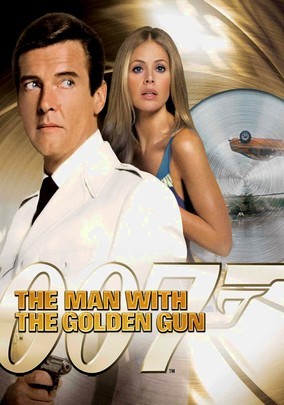
The Man with the Golden Gun-1974

The Man with the Golden Gun-1974

Director Guy Hamilton

Starring Roger Moore, Christopher Lee, Britt Ekland

Top 250 Films #142

Scott’s Review #346
28370063

Reviewed January 9, 2016

Grade: A

Though not typically regarded as one of the more appealing of James Bond films, and the second chapter to feature Roger Moore, Sean Connery’s replacement, The Man with the Golden Gun (1974) is one of my favorites, firmly placed in my top 5 of 007 offerings.

This could be the result of the film being one of my first introductions to the world of 007 as a child.

Moore seems more comfortable in the role than he did in the uneven Live and Let Die, released in 1973.

Qualities that make The Man with the Golden Gun a success include the wonderful casting of Christopher Lee, a famed horror film icon, in the central role of Francisco Scaramanga, the title character, and nemesis of Bond.

Who cannot think of Count Dracula while watching Lee act- his dark, swarthy looks, angular face, and his deep baritone voice make for a perfect villain.

Known in large part for participation in Hammer Horror films opposite another legend, Peter Cushing, this is casting at its finest and a true high point of the film.

To summarize the story, MI6 receives a golden bullet with “007” sketched on the side, a clear threat to the life of James Bond. It is assumed to have been sent by the famed assassin, Scaramanga, whose trademark is a deadly golden gun.

Bond is ordered to remove himself from his current mission, but he pays no mind and sets out to find Scaramanga on his own, leading him into a mystery involving a stolen solar energy weapon feared to destroy the world.

The adventure takes Bond to a bevy of gorgeous locales such as Hong Kong, Thailand, Macau, and the South China Sea where our villain resides on a private island reached only by helicopter.

I found the main locale of the sunny deserted island and Scaramanga’s dwarf sidekick, Nick Nack, great aspects of the film. Majestic caves, sandy beaches, and a gorgeous array of water set the tone with gorgeous fantasy elements.

Servant Nick Nack is sinister, but with a sweet smile, one almost trusts him as he serves lunch or expensive champagne to guests sure to be killed afterward.

The secret maze of mirrors that Bond finds himself in is made perfect by Nick Nack’s taunting and cackling. And the flying car that Scaramanga and Nick Nack drive-in, though gimmicky, is a real hoot.

A demerit to The Man with the Golden Gun that I have always been able to look past since other factors usurp her importance is the miscasting of Britt Eklund as Bond’s assistant, Mary Goodnight.

The writer’s pen Goodnight as simpering, silly, and a big goof. An attempt at comic relief falls flat as the character epitomizes a blonde bubblehead- constantly screwing up everything.

Scaramanga’s girlfriend and co-Bond girl, Andrea Anders, played by Maud Adams is much better, though we do not get to know the character very well before she is offed.

Fortunately, Adams would return to star in Octopussy in 1983.

Perhaps middling at times and suffering from some negative characteristics, The Man with the Golden Gun (1974) is a love of mine, a trip down memory lane to a time as a child when I was first discovering my love and zest for James Bond films.

This offering cemented my love of Roger Moore in the central role and I still adore watching this film.
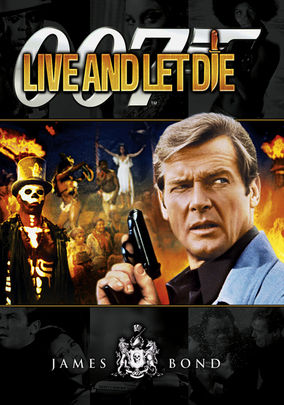
Live and Let Die-1973

Live and Let Die-1973

Director Guy Hamilton

Starring Roger Moore, Jane Seymour, Yaphet Kotto

Scott’s Review #646

Reviewed May 25, 2017

Grade: A-

When Live and Let Die was released in 1973, it began a new chapter in the James Bond film franchise with the introduction of a new Bond.

Sean Connery refused to do any more Bond pictures, and Roger Moore was crowned the new film hero and successfully made the role his own during his tenure.

My personal favorite Bond from top to bottom- I enjoyed the wry humor Moore added- he makes Live and Let Die more than it otherwise might have been with a less charismatic actor.

The story and the subsequent elements of the film have issues, but this installment holds a soft spot for me because it was one of my first exposures to the mountainous franchise that is Bond, and I adore the mid-1970s period.

Bond (Moore) is summoned to duty by his leader, M, after three MI6 agents are simultaneously killed in the Caribbean, New Orleans, and at the United Nations in New York City. Bond is then tasked with figuring out who killed these agents and how the deaths are connected.

The adventure takes Bond from Harlem to an unnamed island in the Caribbean, and back to the bayous of southern Louisiana as he tangles with a heroin drug lord, Dr. Kananda.

Bond’s main love interest in the film is the virginal tarot card reader, Solitaire, played by Jane Seymour.

Live and Let Die is a breakthrough in some ways, though the film admittedly contains both positives and negatives worth discussing.

Since the film was made in 1973, following a successful run of “Blaxploitation” films like 1971’s Shaft and 1972’s Super Fly, it has been influenced by those films’ style (for better or worse).

This means that all of the villains are black, from the main villain, Kananga, to various henchmen and even background criminals, growing the massive amounts of heroin shipped to the United States for distribution.

Having such representation among a minority group is fantastic and feels cutting edge, but stereotypes such as derogatory racial epithets, a pimpmobile, and the addition of weird voodoo exist.

Another major flaw in the film, and despite my overall warmth for Live and Let Die, is the goofiness it takes on towards the end.

At a certain point, the film feels like a different film from what it starts as, which becomes quite jarring. The introduction of Sheriff J.W. Pepper during a Louisiana chase scene turns the film into more of a cheesy Dukes of Hazzard episode, with bumbling law enforcement officials, rather than a quality film, and the southern stereotypes run rampant.

Why does a throwaway scene of a speedboat racing through an outdoor wedding feature all high society white folks with nary a black character existing other than as servants?

Some diversity in this scene would have been welcome, given that the film goes out of its way to feature black characters.

Still, many positives do exist. Live and Let Die has the honor of featuring the first-ever black Bond girl, the CIA double agent Rosie Carver, who, sadly, meets a grisly end far too soon.

Gloria Hendry’s chemistry with Roger Moore is readily apparent, though the film chooses to make the character inept rather than a true equal. The smoldering sex scenes between the duo are wonderful and groundbreaking to watch, so the film gets major props for pushing the envelope in this way.

Memorable is the terrific title theme song, “Live and Let Die”, by Paul McCartney and Wings. The success of this hit song, especially decades later, does wonders to elevate the film and keep it relevant in pop culture.

Also great to see are the location sequences and good action car chase scenes along the West Side Highway in New York City and into Harlem.

A treat for this retro fan is the inclusion of early 1970s Chevrolet Impalas and Chevy Novas throughout the entire feature film- was Chevy a financial backer?

Classic cars are a major inclusion in Live and Let Die, which, as a current-day viewer, is a cool treat and quite retro.

In terms of the primary villain and primary Bond girl, the film misses. Jane Seymour is a dud as Solitaire, a character that really should have been played by a black actress. Seymour and Moore have zero chemistry, and her character is weak and simpering, lacking any backbone.

Similarly, Yaphet Kotto as Dr. Kananga seems miscast, with no real qualities that make him devious or dangerous, and his inevitable swan song underwhelms.

Live and Let Die (1973) is not the greatest in the Bond collection and suffers from some problematic, now-dated aspects, racial issues, and a silly overtone, but, perhaps more so as a terrific childhood memory, I hold a particular fondness toward this film despite many negatives.

Oscar Nominations: Best Song-“Live and Let Die”

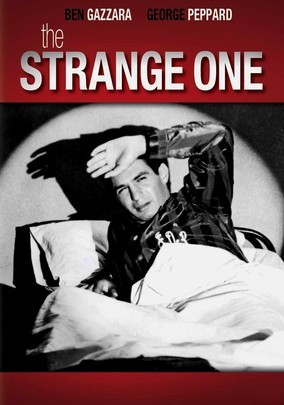
The Strange One-1957

The Strange One-1957

Director Jack Garfein

Starring Ben Gazzara, Pat Hingle

Scott’s Review #129

70118583

Reviewed July 23, 2014

Grade: B

The Strange One is a strange (no pun intended) obscure psychological drama from 1957 starring a very young Ben Gazzara and George Peppard.

The setting is a military academy where bullying and intimidation run rampant between the young cadets and some of the staff.

The sadistic lead bully is Gazzara, who is mesmerizing in his low-key yet frightening portrayal of a macho guy who gets what he wants and decides to destroy his victims.

The film reminds me of an extended Twilight Zone episode. It feels like a television thriller but is effective as a black-and-white shot.

Gazzara stands out in the cast as a charming, sadistic bully in a military academy who terrorizes and manipulates anyone in his path.

One flaw is there is no explanation for his behavior. How did he become so terrorizing? Was he abused? What is his motivation?

In a sense, however, this makes it all the more fascinating.

Some homoerotic scenes are surprising to find in films in 1957 when the Production Code was so strict.

The Strange One is an interesting little film.