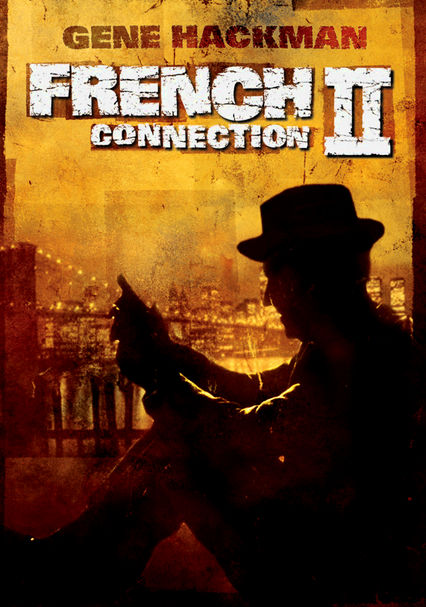
French Connection II-1975
Director John Frankenheimer
Starring Gene Hackman
Scott’s Review #1,148
Reviewed June 2, 2021
Grade: B
The French Connection, the winner of the coveted Best Picture Academy Award for 1971 releases, is a brilliant film that holds up well as a cream-of-the-crop cop film.
An action film winning an Oscar is as rare as a horror film winning one. It’s rare.
The decision to make a sequel is debatable, but French Connection II (1975) stands as a decent action crime thriller, though hardly on par with the original.
Is anyone surprised?
Sequels rarely usurp their predecessors, especially when The French Connection is such a superior genre film. In a way, Part II didn’t have much of a chance to measure up against Part I.
Films like The Godfather (1972) only come around once in a lifetime.
Unfortunately, William Friedkin did not return to the fold to direct, replaced by John Frankenheimer, best known for the nail-biting The Manchurian Candidate (1962).
Thankfully, Gene Hackman did return. He helps the film from an acting perspective and gives his all in a tough role. His partner, played by Roy Scheider, doesn’t appear or get mentioned.
Picking up a couple of years after the first one ended, Detective “Popeye” Doyle (Hackman) is still hot on the heels of cagey and sophisticated drug trafficker Charnier (Fernando Rey).
Doyle hops a flight to lovely Marseilles, France. Away from his familiar New York City territory, he struggles to assimilate himself into a strange city and conquer the drug ring to bring Charnier down.
Doyle is accosted and spends time as a dreary heroin addict in rough confines before being tossed away and forced to recover cold turkey style. He becomes even more determined to bring the bad guys to justice- dead or alive.
As a stand-alone action film, French Connection II is not a bad experience. It is certainly better than the still-to-come 1980s doldrums, like the Die Hard and Lethal Weapon cop/buddy films, that marginalized the genre into cookie-cutter popcorn fare.
The equally compelling French landscape replaces the gripping New York City. Gorgeous locales like the French Riviera and the Mediterranean Sea are featured, but Marseilles is not Paris.
A certain seediness and dirtiness helps the film a bit.
Hackman acts his ass off, especially as a drug addict. I shudder to think of a weaker actor trying to pull off this acting extravaganza.
From scenes featuring his withdrawals to his drug cravings, it is exciting to watch and showcases Hackman’s wonderful acting chops.
But the intent is to produce a good action film, and that effort is mediocre.
French Connection II is not as compelling as The French Connection, and despite some decent chase scenes and a cool finale where Doyle gets his satisfaction, there is little else but by-the-numbers activity.
The final fifteen minutes are the film’s best part.
Remember the frightening car-chasing-a-subway sequence? Or the delicious cat-and-mouse subway sequence between Doyle and Charnier?
Brilliant scenes like this don’t happen often.
A few clichés are bothersome. Predictably, Doyle stands out like a sore thumb in France, and his hot-headedness emerges quickly, offending or pissing off the French authorities.
He is not the most likable character, and I frequently found myself rooting for the bad guys!
I don’t think I was supposed to.
Other implausibilities occur, like the boneheaded decision to send Doyle to Marseilles in the first place. Was he the only detective, including the French authorities, capable of catching Charnier?
What was the point of the old-lady heroin addict stealing Doyle’s watch?
A shadow of The French Connection, the dull-titled French Connection II (1975) is a weaker effort but still respectable compared to other genre films.
This is mostly due to the French landscape and Gene Hackman’s return.
Golden Globe Nominations: Best Actor- Drama- Gene Hackman