Tag Archives: Joe Don Baker

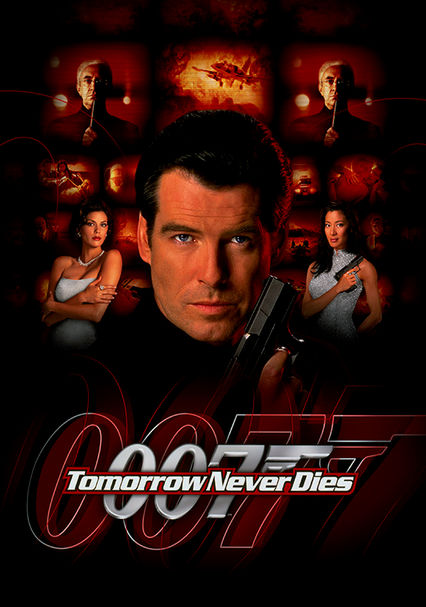
Tomorrow Never Dies-1997

Tomorrow Never Dies-1997

Director Roger Spottiswoode

Starring Pierce Brosnan, Michelle Yeoh, Jonathan Pryce

Scott’s Review #1,394

Reviewed August 28, 2023

Grade: B

Pierce Brosnan made four appearances as the legendary film character, James Bond. While he gets a marginal thumbs up as a whole and is not my favorite Bond he has the ‘look’ and suave charisma.

This works in his favor and makes him purely believable with every ridiculous one-liner or flat dialogue.

Tomorrow Never Dies (1997) is the second chapter in the Brosnan book and is only marginally superior to GoldenEye made two years earlier in 1995. All bets are that the two subsequent Bond films starring Brosnan nosedive quickly.

All good Bond films must contain specific qualities like a good villain, a sexy yet strong ‘Bond girl’, dazzling stunts and chase scenes, a memorable theme song, and more than one exotic locale.

It’s just what the blueprint is and must never be broken.

Therefore, Tomorrow Never Dies feels more like the producers, and director, Roger Spottiswoode, and writer, Bruce Feirstein sought a check box checking off exercise rather than creating anything brilliant or memorable.

I deem this film rather ordinary. Not bad but not superior either falling middle of the road when compared to other Bond franchise films.

Media mogul Elliot Carver, played completely over the top by actor Jonathan Pryce wants his news empire to reach every country on the globe, but the Chinese government will not allow him to broadcast there.

Carver then decides to use his media empire to wreak war between the Western world and China. Thankfully, James Bond (Brosnan) is on the job and travels to China to stop him with the help of Chinese secret agent Wai Lin (Michelle Yeoh).

Anyone who knows a Bond film knows that the plot is secondary to the aforementioned necessary characteristics. The story either got too complicated as the film progressed or I lost interest because at some point all I recollect was a news media tycoon wanting to start World War III over television ratings.

Yeoh is an exceptional ‘Bond girl’ though the dose of progressivism, diversity, and female empowerment she brings to the table makes the term beneath her. Her charisma, and martial arts chops, make her a kick-ass rival though she naturally ends up head over heels for Bond.

Still, the lengthy scenes between Yeoh and Brosnan do contain strong chemistry as they decimate the bad guys and save the world together.

I expected a bit more from Teri Hatcher’s character of Paris Carver, a former girlfriend of Bond who is now Carver’s trophy wife. The setup was superior and the love triangle could have gone further than killing off her character after just a couple of scenes.

As great as an actor as Pryce is it’s tough to believe he’s the same actor who made films like Two Popes (2019) and The Wife (2017) so good. He turns Elliot into a caricature dead set on controlling the world proving that an actor can’t always bring a mediocre script to life.

Tomorrow Never Dies brings the viewers to lavish locations like Bangkok, China, Hamburg, Germany, and in and around London. The tone has a definitively Asian feel which works like You Only Live Twice did in 1967.

Finally, the title theme song and opening performed by Sheryl Crow is abysmal but oddly sounds much better in the version that plays over the ending credits.

I marginally recommend Tomorrow Never Dies (1997) mostly for those in the Brosnan camp which I am aware there are many.  Its best quality lies in the level of equality between Bond and the main female character Wai Lin which is another proof of how relevant the franchise remains.
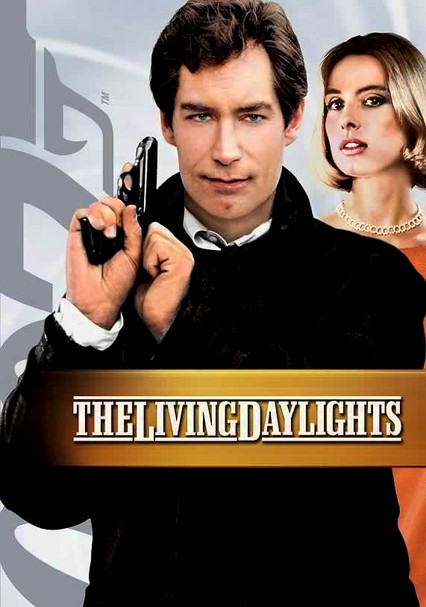
The Living Daylights-1987

The Living Daylights-1987

Director John Glen

Starring Timothy Dalton, Maryam d’Abo

Scott’s Review #1,194

Reviewed November 12, 2021

Grade: B+

It’s 1987, and Timothy Dalton is the new James Bond, having replaced the aging Roger Moore. Moore made seven Bond films.

Dalton’s reign was brief, and he made only two films: The Living Daylights (1987) and License to Kill (1989).

The Living Daylights is a fine Bond film ranking somewhere midstream with Best Of lists.

I completely agree with this sentiment, as it mostly borrows from other Bond films or stays true to the course, delivering a quality action film with all the typical trimmings a fan would expect from the franchise.

Nothing wrong with that.

This is unsurprising since director John Glen is at the helm once again. Responsible for directing the three prior Bond films- For Your Eyes Only (1981), Octopussy (1983), and A View To A Kill (1985)- he knows how to create a decent picture, and he does just that.

The main issue is with Dalton himself. Handsome, dashing, and British, he doesn’t quite possess the charisma that other Bonds like Moore, Connery, or Lazenby had. There is a seriousness to the actor and a lack of a smirk or wink in his eye that makes fans melt like putty in his hands.

The action commences with British secret agent James Bond (Dalton) helping KGB officer Georgi Koskov (Jeroen Krabbé) defect during a symphony performance. A mysterious blonde woman who plays cello immediately catches Bond’s attention for more than one reason.

She is Russian assassin Kara Milovy (Maryam d’Abo). Predictably, as events unfold, they become madly in love (or lust).

Koskov reveals that the new KGB head has instated a policy of assassinating defectors, Leonid Pushkin (John Rhys-Davies). But as Bond explores this threat, a counterplot surfaces, involving a shady American arms dealer (Joe Don Baker). Bond must thwart the evildoer’s fiendish plans and save the world from disaster.

The plot is secondary and difficult to follow, but the gist is the same as any other Bond film.

The fun (for me, anyway) is in enjoying the exquisite locales the film takes Bond to.

I salivated at the gorgeous concert hall and the surrounding areas of Czechoslovakia (pre-Czech Republic) and was mesmerized as the action moved to the stark desert lands of Afghanistan and Morocco, and finally into historic Austria.

The pre-title sequence was filmed on the Rock of Gibraltar and is utterly fabulous.

With every Bond film, this is a real treat and a major source of enjoyment. The Living Daylights doesn’t disappoint in this regard.

The finale aboard a speeding airplane is pulsating, edge-of-your-seat fun. Fights, ticking time bombs, and impending peril keep the action moving at a breakneck speed.

The villains lack much gusto, save for a hunky blonde assassin named Necros (Andreas Wisniewski), who enjoys prancing around in skimpy swimwear and who may or may not be gay.

In a more progressive Bond, they might have had a dalliance.  The main antagonists, Brad Whitaker, an arms-dealing General, and Koskov, are too goofy to pose any real danger or feel diabolical.

Also forgettable is the main Bond girl. Maryam d’Abo is an okay actress, but lacks much chemistry with Dalton. Their adventures are appealing, but more as buddies, and the romance didn’t work for me. He does respect her more than other Bonds would, so that is a win.

Delightful is the title theme song performed by the band A-Ha, which is catchy enough to stick in my head as I write this review. It is exotic and upbeat. Its standard inclusion in the opening credits makes the cheesy sequence more bearable.

Undoubtedly intended to launch a long and storied career as the new James Bond, Dalton lasted only briefly in the role.

The Living Daylights (1987) presents a Cold War theme that remains relevant but feels slightly tired by today’s standards. As usual, unless we’re talking about one of the superior Bond films, the locales are the real highlight.

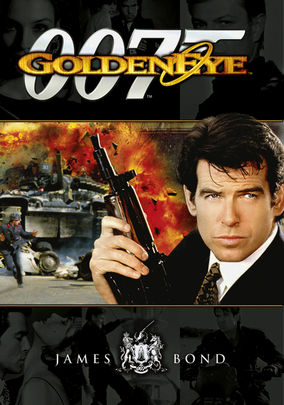
GoldenEye-1995

GoldenEye-1995

Director Martin Campbell

Starring Pierce Brosnan, Sean Bean, Izabella Scorupco

Scott’s Review #717

Reviewed January 19, 2018

Grade: B

By 1995, after a record six years between films, the James Bond franchise re-emerged energetically with Pierce Brosnan assuming the role of the MI6 agent-, and breathing some fresh life into the character.

The charming and suave Irish actor gave a new direction to the role last played by Timothy Dalton-an an actor who gave Bond more of a brooding quality. The resulting GoldenEye offers mixed results, though the casting is a vast improvement over its predecessor.

GoldenEye sees other monumental roles recast- that of Judi Dench as M and Samantha Bond as Miss Moneypenny.

The film has a slick look, and a compelling story, but at times is tough to follow, and overall- despite containing all the elements- something seems missing.

Or maybe I just prefer the other Bonds more? Still, the offering is far from a bad watch.

GoldenEye kicks off with, in hindsight, a major clue to the story as Bond  (Brosnan) and fellow 00 agents, Alec Trevelyan (Sean Bean), infiltrate a Soviet facility in northern Russia in 1986, searching for chemical weapons.

Alec is tragically killed by sinister Soviet General Ourumov and Bond mourns the loss of his friend.

The action resumes in present times (1995) as, now in gorgeous Monte Carlo, Bond follows the beautiful and sadistic Xenia Onatopp, a  crime syndicate member known for crushing men with her thighs. Xenia and Ourumov travel to Siberia where they destroy a bunker holding GoldenEye satellites and kill everyone except the computer programmer, Boris (Alan Cumming), and the lone survivor, Natalya  (Izabella Scorupco).

In a clever twist, it is revealed that Alec has betrayed British Intelligence and is himself leading the crime syndicate.

In one of the quietest, and best scenes, Bond and M have an interesting exchange in her office as M (a woman) calls Bond out on his arrogance and chauvinism, and states that it is a new day.

Dench adds a ton of female modernism into the role (about time in 1995) as Bond now reports to a woman. The scene is important as it leads the two characters to achieve mutual respect and arguably parlays the franchise into a new, more female-empowering direction.

A great positive to GoldenEye is the setting, which I think does wonders for the film as a whole- the bitter, blustery, Siberian set gives a soothing feeling, especially while watching the film during the ravages of winter, snug with a warm blanket and heaters.

Regardless, the sets are realistic, never cheesy, and loaded with atmosphere- so the film itself looks wonderful.

Issues abound with the frenetic pacing of the film- at times I found myself losing track of the action or the sequence of events.

Understandably, as in many Bond films, events circle the globe and, surely London, Russia, and Monte Carlo are great locations, but especially within the film’s final climax, I suffered from sensory overload.

Furthermore, Brosnan is not one of my favorite Bonds. Sure, he has the charisma, the looks, and the charm to pull off the role, but something about him does not measure up to Sean Connery, Roger Moore, George Lazenby, or Daniel Craig- certainly he supersedes Timothy Dalton.

Don’t get me wrong- I do not despise him as Bond, but nothing stands him out against the others either.

The villains in GoldenEye are perfectly adequate if not spectacular. Sean Bean gives Alec a sly, aww shucks appeal and defines good-looking, but his motivations for switching sides are not very exciting- something about Nazis in World War II, the Cossacks, and revenge are quickly mentioned, but it doesn’t much matter.

General  Ourumov is effective- with his sinister look, he is the perfect Bond villain. Xenia is little more than a cartoon character (with the name to boot) and her gimmick quickly wears thin.

Finally, Cummings as the programmer is played only for laughs, and his final chant of “I am invincible!” as he freezes into solid ice is mildly humorous.

The title theme song, “GoldenEye”, performed by Tina Turner is forgettable at best and one of the most lackluster in the illustrious musical catalog.

GoldenEye has many of the standard Bond elements within its frames and is a decent entry in the franchise. With the debut of a new Bond, the film has a fresh and very modern and technical feel to it that, along with a fantastic setting, overlooks some flaws in the storytelling.

Filled with bombast and a crowd-pleasing method, GoldenEye (1995) is hardly the best Bond film, but not the worst.