Tag Archives: Stellan Skarsgård

Sentimental Value-2025

Sentimental Value-2025

Director Joachim Trier

Starring Renate Reinsve, Stellan Skarsgård, Elle Fanning

Scott’s Review #1,506

Reviewed December 22, 2025

Grade: A

Sentimental Value (2025) is a Norwegian art film with powerful themes of love and loss, suicide, intergenerational connections, family relationships, and cinema. The intertwining of the components makes the film both dark and hopeful, thanks to beautiful, layered performances.

It is brooding, thought-provoking, and relatable in many ways, mostly showcasing quality writing and excellent acting. Not as much of Norway’s majestic countryside is shown, especially in Oslo, where the film is set, as I had hoped.

Right off the bat, the audience receives narration about a house and the generations of events, some happy and some tragic, that have occurred over the years. The house, while changed, has persevered and has become a character in the film.

One could correlate the struggles of the house with those of life; in the film, the characters are deeply flawed and troubled, suffering from alcoholism and paranoia.

After their mother dies, two sisters, Nora (Renate Reinsve) and Agnes (Inga Ibsdotter Lilleaas), reunite with their estranged father, the charismatic Gustav (Stellan Skarsgård), a once-renowned director who offers stage actress Nora a role in what he hopes will be his comeback film.

The film is personal about Gustav’s frailty following his mother’s death by suicide.

When Nora turns it down, she soon discovers Gustav has given her part to an eager, yet cerebral, young Hollywood star played by Elle Fanning, who is a new fan of Gustav’s older work.

The past and deeply harbored secrets come to the surface as the characters struggle to maintain balance between their emotions and their interpretations of various life events.

An early sequence set in a theater sets the tone. Nora, a fabulous stage actor, suffers from severe stage fright, nearly rendering her unable to take the stage. The crew backstage scurries to calm her nerves and convince her to perform seconds before her cue. They’ve been through this before.

Nora is neurotic and, in fact, attempted suicide, which worries Agnes whenever there is a lapse in communication with her sister.

Other complexities, such as Gustav’s return, an unsuccessful relationship, and insecurities, affect Nora, especially when Rachel, the starlet, enters the picture.

But the winning formula is that Sentimental Value is not ‘the Nora show’. Agnes, Gustav, and Rachel are equally showcased and explored, making the film an ensemble piece.

Agnes, who starred in one of Gustav’s films as a young girl, is now married with a child and has left the industry far behind. Does she harbor regrets?

An aging Gustav has seen the cinematic world change from grand, theater-style film work to television-style streaming platforms like Netflix, taking over. Has the world left him behind?

And young Rachel is frustrated by her limited acting roles, which have made her a star but don’t showcase her true talent or love of her craft. Does she even have talent, she wonders?

As a cinemaphile, Sentimental Value left me pondering the state of cinema in a time of limited theatergoers and the popularity of watching films at home on a television, or worse, on a mobile phone.

But the success and emotion of Sentimental Value come through its characters, Nora, Agnes, Gustav, and Rachel.

The importance of the house also amazed me. As in life, things constantly evolve and change, setbacks are experienced, life and death come and go, and the cycle of life continues.

Sentimental Value (2025) is a fantastic film with main themes about life and forgiveness. It is also a stark reminder, without being preachy, about the monumental importance of mental wellness and the crippling effects mental illness can have on people.

Oscar Nominations: Best Picture, Best Director-Joachim Trier, Best Actress-Renate Reinsve, Best Supporting Actor-Stellan Skarsgård, Best Supporting Actress-Elle Fanning, Inga Ibsdotter Lilleaas, Best Original Screenplay, Best International Feature, Best Film Editing

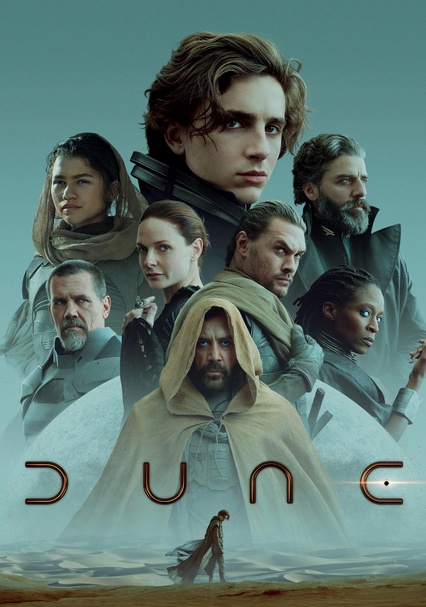
Dune-2021

Dune-2021

Director Denis Villeneuve

Starring Timothee Chalamet, Rebecca Ferguson, Oscar Isaac

Scott’s Review #1,282

Reviewed July 29, 2022

Grade: B

Dune (2021) is a film that, under normal circumstances, I would not have seen. I’m not a massive fan of blockbuster, fantasy films. If not for the slew of Oscar nominations the film received, ten to be precise, Dune probably would have flown under my radar.

I needed to see what all the fuss was about.

Paul Atreides (Timothee Chalamet), a brilliant and gifted young man born into a destiny that he doesn’t wholly understand, must travel to the most dangerous planet in the universe to ensure the future of his family and his people.

As malevolent forces explode into conflict over the planet’s exclusive supply of the most precious resource in existence, only those who can conquer their own fear will survive.

My assessment of the film before even viewing it proved correct. It’s an epic-length, science-fiction, fantasy type of adventure film all rolled into one. I liken it to the unwieldy Lord of the Rings (2001-2003) trilogy in tone and content, and it shares a peculiar reminiscence with the popular television series Game of Thrones (2011-2019).

For most of Dune, my attention was squarely glued to the story as well as the astounding cinematic grandiose trimmings. I knew if I didn’t pay close attention, I would quickly be out in a left field (I’ve made this mistake before).

Overall, I admired Dune and struggled to grade it either a B or a B+, finally deciding on the latter. The visuals are astounding and cleverly show off what can be done with enough CGI to make a film a marvelous spectacle.

But, for me, there needs to be more, and I struggled with the plot after a while.

The story is too confusing.

Why do fantasy or epic films often have overly complex plots with too many characters to keep track of? It started okay, and I was clear who Paul’s family is, and more or less who the good guys are. But then other groups like the Fremen (who I think are good) and House Harkonnen (who are all bald and I think are bad) are introduced, and a battle over valuable spice ensues.

To complicate matters, Paul suffers from strange dreams/visions mostly involving a young girl and some battle scenes involving Paul’s connection to a mysterious sword. He can also command without speaking, somehow.

I had no prior history to draw from, which in retrospect did me a disservice. Dune, a novel written by Frank Herbert in 1965, was adapted into a 1984 film directed by David Lynch, which was deemed a disaster.

I probably should have read the book.

The acting is quite good, especially by Chalamet and Isaac, utterly believable as father and son. Their connection and chemistry are pliable, but there is not enough of it; instead, the primary focus is on Paul’s relationship with his mother, played by Rebecca Ferguson.

Chalamet, already an Oscar-nominated actor for Call Me By Your Name (2017), has the chops to carry a film.

Other worthy turns are by legendary British actress Charlotte Rampling as a Reverend Mother, and Javier Bardem as Stilgar, leader of the Fremen tribe.

Despite running for over two and a half hours, Dune does not drag. The bright, sweeping desert scenes featuring a pulsating underground worm were well balanced with darker scenes in the Harkonnen’s lair.

Dune (2021) is incredibly healthy and is a clear spectacle. I found it too similar to other genre films to give it a thumbs up unless you are already a fan of the novel, but this style of cinema may not really be my cup of tea.

Villeneuve, who directed Blade Runner 2049 in 2017, knows his way around the fantasy genre and is perfectly capable. He is directing Dune: Part II to be released in 2023, so I’d expect more of the same.

Oscar Nominations: 6 wins-Best Picture, Best Adapted Screenplay, Best Original Score (won), Best Costume Design, Best Sound (won), Best Film Editing (won), Best Makeup and Hairstyling, Best Cinematography (won), Best Production Design (won), Best Visual Effects (won)

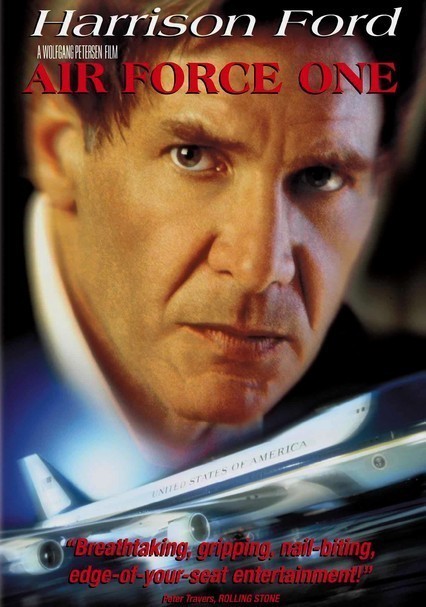
Air Force One-1997

Air Force One-1997

Director Wolfgang Petersen

Starring Harrison Ford, Gary Oldman, Glenn Close

Scott’s Review #1,085

Reviewed November 21, 2020

Grade: B+

If ever a straight-ahead, summer blockbuster, popcorn flick existed, Air Force One (1997) is it. Surprisingly, this is not a bad thing. It’s not cerebral, but it’s never dull.

The film has hooks and muscle and assembles a thrill ride, edge-of-your-seat action fest. Some would say this is just what the doctor ordered, and they’d be right, provided the mood is for a mind-escaping, meat-and-potatoes affair.

Air Force One is pure Americana. With a patriotic musical score and a clear hero and villain, it’s easy to know who to root for. Suspension of disbelief is mandatory since some scenes are as implausible as Santa Claus shimmying down a chimney on Christmas Eve, but the film is entertaining.

The action is non-stop.

At the tail end of his prime action star years (the 1980s and 1990s), Harrison Ford stars as the president of the United States of America, James Marshall.

After making a bombastic speech in Moscow vowing never to negotiate with terrorists, a group of them led by the dastardly Ivan (Gary Oldman) hijacked Air Force One with the president and his family on board.

Marshall, a former soldier, hides in the cabin of the plane and races against time to save his family and those aboard the flight from the terrorists.

The plot is implausible and hokey and reeks of plot points to carry the story along, but surprisingly, the film works. There is no way a president would ever race around performing stunts aboard an airplane, conquering the villains like clockwork.

But Ford has the charisma to make us believe it could happen, and his character is a family man, a Vietnam veteran, and a Medal of Honor recipient. Can this guy be any more perfect?

Oldman, always reliable as a villain, is perfectly cast. His character’s motivations are simplistic and nationalistic. Ivan believes that the collapse of the Soviet Union has ruined his country and somehow it’s the fault of the United States.

The reasoning is silly, but it’s in keeping with the patriotic nature of Air Force One- the ‘us versus them’ mentality. The United States is good; Russia is bad. It’s what middle America wants, and the target audience of this film is clear. Back to the Cold War.

Wolfgang Petersen, who directs the film, knows his way around the action genre. After all, he crafted the memorable Das Boot (1981) and Outbreak (1995). The film has a Tom Clancy-Patriot Games meets Die Hard (1988) style.

Petersen meshes the score with the quick editing style to layer the film with more action than slowed-down conversational scenes. We know how it’s going to end but enjoy the ride.

Looking closely, the film is not just for the guys.

Glenn Close is cast as a female Vice President and a strong gender-twisting presence. Kathryn Bennett is a bold, careful woman and the implication is that she is more than capable of taking over should anything happen to the president.

Her scenes mostly take place in the White House Situation Room and provide a nice calm as she is pressured by the Defense Secretary (Dean Stockwell) to declare the president incapable.

The scenes between Stockwell and Close are very strong.

Air Force One (1997) is a cliché-riddled and mainstream Hollywood creation to the max. Both the pacing and the pulsating style make the film a guilty pleasure and quite enjoyable.

When the mood strikes to kick back and relax with a fun, action-packed affair, this one is your choice. Just don’t dissect the details too much or expect real-life to mimic art.

Oscar Nominations: Best Sound, Best Film Editing

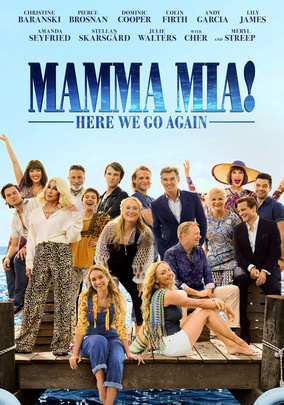
Mamma Mia! Here We Go Again-2018

Mamma Mia! Here We Go Again- 2018

Director Ol Parker

Starring Lily James, Amanda Seyfried

Scott’s Review #797

Reviewed July 31, 2018

Grade: B+

My expectations for Mamma Mia! Here We Go Again (2018) was not lofty, nor was I anticipating drivel. I expected (and was in the mood for) a summer popcorn musical flick with fun and dancing, and little in the way of analysis or requiring too much thought.

I can proudly say that this film fulfilled my expectations —it delivers its intent, and sometimes, that is exactly what the doctor ordered.

The film is enthusiastic and lively, with the musical numbers serving as the standouts.

In an immediate plot twist, it is revealed that the main character, Donna (Meryl Streep), died a year earlier, and her daughter Sophie (Amanda Seyfried) is planning a lavish reopening of her hotel on the beaches of Greece.

The film serves as both a sequel and a prequel, as events also go back to 1979 when a young Donna (Lily James) graduates from college and embarks on a journey to “find herself”.

She travels extensively and meets her three beaus (anyone who saw the 2008 original will be familiar with this plot), and the film is excellent at pleasingly connecting the events of both films.

Mamma Mia! Here We Go Again is hardly high art and not intended to be. Truthfully, it is a bit sub-par to the original, as some of the musical numbers are “secondary” ABBA songs. The biggest hits were used in the 2008 film.

The overall plot feels a bit forced and not exactly compelling, especially since we know the eventual result of Donna’s relationships. The story seems geared towards a bombastic finish.

But the sheer fact that the song and dances are interspersed throughout the film makes it enjoyable enough.

The film plays more like someone’s fantasy than a real-life sequence, and liberties must certainly be taken.  Everything always seems to go Donna’s way, and events merely fall into place- if only real life were that way!

The introduction of Donna’s mother (Sophie’s grandmother)—explained to be a rich and famous singer residing in Las Vegas—is a way to add the legendary Cher to the story. Disappointingly, the star does not appear until the end of the film, more like a cameo appearance.

This leads me to the film’s best parts, which occur during the final thirty minutes. As Sophie’s grand hotel reopening party comes to fruition (a devastating storm thrown into the story is purely for dramatic effect), all details fall into place in magical form.

Hundreds of party guests show up, Donna’s beaus reunite, and the aforementioned absentee grandmother (Ruby) makes a grand entrance via helicopter (in stiletto heels naturally).

In this way, the grand finale is superior to the rest of the film.

Cher, still looking gorgeous at age seventy-two, is the pure highlight of the film, and it kicks into high gear when she appears. Considering all of the hype and press surrounding a film reunion between Cher and Meryl Streep- they starred together in 1983’s Silkwood- it should be no real surprise that Streep’s deceased Donna appears.

The two best scenes come at the end of Mamma Mia! Here We Go Again! As much as the lavish Cher demands the grand finale in terms of glamour and song, Streep’s touching duet with Sophie will bring tears to the viewer’s eyes and capture the emotional element of the film.

As Streep and Seyfried churn out a gorgeous rendition of “My Love, My Life,” the actresses’ mother-daughter relationship is lovely and will fondly remind audiences of the chemistry in the 2008 film.

Regarding Cher, the revelation that Ruby is a long-lost lover of the hotel manager, Fernando (Andy Garcia), is sweet and romantic. Despite limited screen time, the duo shares fantastic on-screen chemistry, so much so that I yearned to know the back story of their relationship.

Do we only know that they were madly in love in 1959? Why did it not work out?  Regardless, Cher’s version of the song “Fernando” is both appropriate and enchanting.

Mamma Mia! Here We Go Again (2018) is a summer film sure to please audiences eager for a fluffy musical.

With bright and cheerful Greek island locales, lavish oceans, and bombastic feel-good pop sensibilities, this film was marketed well and shares enough connection with 2008’s Mamma Mia! to enrapture and please audiences who enjoyed the first version.

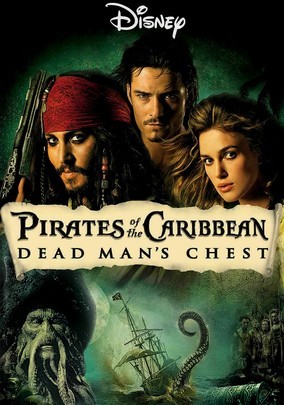
Pirates of the Caribbean: Dead Man’s Chest-2006

Pirates of the Caribbean: Dead Man’s Chest-2006

Director Gore Verbinski

Starring Johnny Depp, Orlando Bloom

Scott’s Review #606

Reviewed January 11, 2017

Grade: B-

Pirates of the Caribbean: Dead Man’s Chest is the follow-up to the original Pirates of the Caribbean: The Curse of the Black Pearl, from 2003.

The sequel is decent but inferior to Curse of the Black Pearl.

The visual effects are spectacular, and the budget is very high, but the story isn’t there. The film drags along at times as well as being a bit confusing.

Johnny Depp gives his all to his role of Jack Sparrow, performing with gusto, and is the highlight of the franchise.

The supporting characters, Bloom as Will Turner, and Keira Knightley as Elizabeth Swann, are fine, but not on the level of Depp.

Otherwise, the performances are all okay, but just a carbon copy of the first film.

Story-wise, Will and Elizabeth are arrested for aiding Jack Sparrow’s escape execution, and the plot involves the attempts at locating Sparrow along with the typical adventure aspects of a film like this and the stock character villains, with grimaces, heavy makeup, and over-acting, but I expected as much.

Not a bad sequel, certain to entertain the masses, and guaranteed to make a ton of money, inevitably ensuring another sequel will be made, with little doubt of being even less compelling.

Oscar Nominations: 1 win-Best Sound Editing, Best Sound Mixing, Best Art Direction, Best Visual Effects (won)

Dancer in the Dark-2000

Dancer in the Dark-2000

Director Lars von Trier

Starring Björk, Catherine Deneuve

Scott’s Review #365

60002276

Reviewed January 9, 2016

Grade: A

Dancer in the Dark is in my opinion one of the most important, inventive films of the 2000s and proudly is one of my favorites of all time.

However, the film is not pleasant to watch, and is quite painful and depressing, if the truth be told. But the relevance and sheer emotion the film elicits is more than enough reason to be exposed to it- if only, but perhaps, once.

Director, Lars von Trier, is a master at creative and disturbing, dream-like films that are either odd, non-linear, or otherwise open to interpretation in some way.

He has directed such gems as 2011’s Melancholia and 1996’s Breaking the Waves, to name but two.

With Dancer in the Dark, he uses handheld cameras which add much grit to the film so it almost feels documentary style, and a grainy, shaky look.

The addition of musical numbers mostly written and performed by the star, Bjork, is a wonderful touch.

Speaking of Bjork, words cannot express what a brilliant performance she gives in the film, and the raw emotion she expresses in her starring role is awe-inspiring.

So much was the stress of filming Dancer in the Dark, that she, to my knowledge, has never made another film.

She was shamefully overlooked in the Best Actress Oscar category- an omission that is one of the biggest fails in Oscar history.

Tensions were reportedly high on the set of Dancer in the Dark, as Bjork reportedly despised her director, never missing a chance to tell him so, disappeared from the set for days on end, and spat in his face. Co-star Deneuve, a former French mega-film star, reportedly did not get along well with Bjork.

Despite all the drama, the stars managed to pull together a masterpiece.

Bjork plays Selma, a Czech immigrant, living in Seattle with her young son. The year is 1964. Selma is poor, struggling to survive by working in a clothing factory along with her best friend Cvalda (Deneuve).

Selma and Cvalda escape their dull lives by watching classic musical films at their local cinema. To make matters worse, Selma is suffering from a degenerative eye disease causing her to gradually lose her sight. She struggles to save enough for surgery for her son, who is sure to suffer the same fate without it.

Selma frequently imagines musical numbers in her day-to-day life involving friends and co-workers. When a tragic turn of events occurs and Selma is accused of a crime, the film goes in a very dark direction.

The conclusion of the film will always require handkerchiefs as it is as powerful as it is gloomy.  The aspect I love most about Dancer in the Dark is that it smashes barriers about what film art is and throws all of the rules out the window.

Lars von Triers, famous for this created a dreamy, independent hybrid musical and drama, a dynamic, tragic, emotional experience all rolled up into one great film.

Oscar Nominations: Best Original Song-“I’ve Seen It All”

Independent Spirit Award Nominations: 1 win-Best Foreign Film (won)