Tag Archives: Vincent Cassel

Eastern Promises-2007

Eastern Promises-2007

Director David Cronenberg

Starring Viggo Mortensen, Naomi Watts

Top 250 Films #193

Scott’s Review #205

70059994

Reviewed December 15, 2014

Grade: B+

Eastern Promises is a 2007 Russian mafia thriller directed by David Cronenberg (The Fly, A History of Violence) that stars Viggo Mortensen, Naomi Watts, and Vincent Cassel.

The film is an uneven experience, seemingly meshing two stories together- one fascinating, one unnecessary.

Watts plays a British-Russian midwife named Anna, who works at a London hospital. She attempts to find the family of Tatiana, a fourteen-year-old girl who died during childbirth, leaving a diary written in Russian along with her newborn.

Anna struggles to unravel the mystery surrounding the girl, which ultimately involves the mafia.

Mortensen plays Nikolai, the mysterious chauffeur to crime lord Semyon, and Cassel plays Kirill, the disturbed, alcoholic son of Semyon.

The plot segues into a story of a somewhat romantic relationship between Nikolai and Anna that is not quite romantic, and also a much more intriguing relationship between Nikolai and Kirill as a brotherhood of sorts develops between them.

This relationship is complex- Kirill wants Nikolai to prove he is a straight male by having sex with one of several female prisoners he and his father keep as part of a sex trafficking group.

During this scene, and a few others, the two men seem close, almost too close, given the sexual nature of what is happening during the scene, so this relationship is left vague, but intriguing nonetheless.

The latter story holds more interest to me, whereas the former seems contrived and rather uninteresting. Was the intention of the film to imply a romantic interest between Anna and Nikolai?

I found zero chemistry between the two and wondered whether the audience was supposed to root for them as a couple.

The four principal characters in Eastern Promises are interesting to unravel. I found the characters of Nikolai and Kirill complex and interesting.

Not so much with the character of Anna. Why did I not find her so compelling? Besides a skimmed-over mention of how she lost a baby, what vested interest did she have in mixing with the Russian mafia and putting her mother and uncle in harm’s way?

Sure, anyone would want to find an orphaned baby’s family, but why not just call the police? This seems like a large plot hole. Conversely, Nikolai is a fascinating, layered character, wonderfully played by Mortensen.

What are his true motivations? Is he a good guy or a bad guy? His attempts at being accepted by Semyon and the family to join the mob family make him seem dangerous, but his kindness towards one of the Ukrainian prostitutes is sweet.

Kirill is a despicable character, but what is his sexuality? Does that make him get so drunk and angry? How does one explain his conflict over the baby, which shifts his character too sympathetically?

Ultimately, Nikolai and Kirill are complicated- Anna and Semyon are more one-note.

I would have preferred the story to revolve solely around the mafia family and the Godfather-type scenes, specifically the two throat-slashing scenes, violently done, and perhaps leave out Watts’s character and story altogether.

A gritty scene set in a steam room pits Nikolai against two rival mafia men. The scene is long and intense. Mortensen performs the scene completely naked, which adds to the rawness and the brutality of the fight.

It is one of the most masculine scenes I can remember watching.

At times compelling, but riddled with plot holes and requiring some suspension of disbelief, Eastern Promises (2007) is an entertaining Russian mafia film that remains a decent watch.

Oscar Nominations: Best Actor-Viggo Mortensen
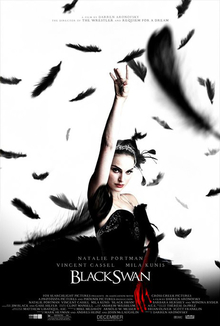
Black Swan-2010

Black Swan-2010

Director Darren Aronofsky

Starring Natalie Portman, Winona Ryder, Barbara Hershey

Top 250 Films #221

Scott’s Review #735

Reviewed March 22, 2018

Grade: A

Darren Aronofsky, the director famous for the psychological and bizarre, most notably 2000’s Requiem for a Dream, 20008’s The Wrestler, and 2017’s mother!, can easily add 2010’s Black Swan to this category as he weaves an unsettling tale involving the world of ballet centered around the Tchaikovsky work Swan Lake.

The film is dark, eerie, perverse, and utterly mind-blowing in its creativity- in short, Black Swan is a masterpiece.

The film reaped several Academy Award nominations, including a win for Natalie Portman as Best Actress.

In the competitive New York City ballet company, art director, Thomas Leroy (Vincent Cassel), is preparing to open the season with the compelling and complex, Swan Lake.

Deemed “too old”, star ballerina Beth McIntyre (Winona Ryder) is forced into retirement, much to her chagrin, allowing others to audition for the coveted lead role.

Aspiring talent, Nina Sayers (Portman) gives a flawless audition as the White Swan but lacks the depth to succeed as the Black Swan. Despite this point, Nina wins the role and slowly becomes psychotic as she begins to embody the Black Swan in her quest for perfection.

Center stage, Portman embodies her character with mystique as we never know if she is living her dual role or if someone is messing with her.

As strange events begin to occur, Nina is insecure and on edge throughout- as she desperately wants to give testament to White Swan/Black Swan she does not feel confident in the skin of Black Swan and she eventually teeters toward the edge of insanity.

Deserving the Oscar statuette she won, Portman delivers the best role of her career.

Black Swan would not have been the success that it was without the talents of the three most prominent supporting characters- Cassel, Mila Kunis (at the time unknown), as Lily/Black Swan, and legendary talent Barbara Hershey as Nina’s the supportive yet haggard mother, Erica.

Just as Nina grows both suspicious of and distrustful of each of these character’s motivations, so does the audience.

Is Lily a trusted friend? What does Nina know of her? Is Cassel’s Thomas manipulating Nina for a great performance or does he have sexual designs on her?

Is Erica a loyal confidante, a jealous bitch, vengeful about her stalled career?

The final scene of the film is a masterpiece in itself and perfectly wraps up the film in a perplexing, grotesque style. As the big night finally arrives and doubt is cast on whether or not Nina will perform successfully, the entire scene is a riveting, climactic experience.

One will never forget the final shot of Nina, gushing with blood, and a grimace caked in stage makeup, as she professes a perfect performance to her musical director and castmates.

With this scene, we are left wondering whether she will ever recover from this performance.

The fabulous musical score is haunting and effective and each piece is perfectly placed within the appropriate scene. The heavy use of violins gives the soundtrack a frightening, almost horrific screeching quality, and the Chemical Brothers’ electronic songs, importantly used during Nina and Lily’s wild night out clubbing, are tremendously effective.

The 1948 masterpiece The Red Shoes, directed by the controversial Michael Powell, must have been an influence on Aronofsky.

Both contain similar subject matters of ballet and dancing on the edge of sanity, I can hardly think of two better films to serve as companion pieces, watched in tandem, than these two timeless greats.

Darren Aronofsky, along with a perfectly cast company with stellar, bombastic actors, and a classical music score by the great Tchaikovsky, with electronic elements mixed in, delivers a piece that works in spades.

2010’s chilling Black Swan is a modern-day classic that will be discussed as much as it is remembered as an incredibly important film.

Oscar Nominations: 1 win-Best Picture, Best Director-Darren Aronofsky, Best Actress-Natalie Portman (won), Best Cinematography, Best Film Editing

Independent Spirit Award Nominations: 4 wins-Best Feature (won), Best Director-Darren Aronofsky (won), Best Female Lead-Natalie Portman (won), Best Cinematography (won)

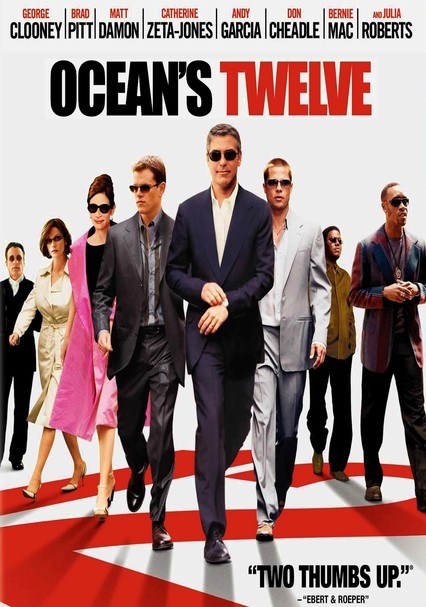
Ocean’s Twelve-2004

Ocean’s Twelve-2004

Director Steven Soderbergh

Starring George Clooney

Scott’s Review #1,157

Reviewed June 30, 2021

Grade: B-

The casino heist gang is back together again for more action and adventure in a film that was only made because of the success of its predecessor, Ocean’s Eleven (2001).

The uninspiring title of the film, Ocean’s Twelve (2004), is a letdown compared to the fantastic and enthralling 2001 film.

What felt like a purely original idea, even though it was a remake, now feels like stale bread that was fresh only yesterday.

Thankfully, Steven Soderbergh returns to the fold, adding some style and solid direction.

The story is slow to kick off and provides an implausible and unconventional ending that doesn’t work, nearly negating most of the previous activity.

There is something a bit irritating about watching a film knowing it was made for only one reason, and that the plot seems rushed and poorly thought out.

But that’s Hollywood.

Undoubtedly, George Clooney, Brad Pitt, Matt Damon, Julia Roberts, Catherine Zeta-Jones, and other top talent enjoyed hefty paychecks.

This is also concerning, as the performances come across as ho-hum and seem to be driven by the big bucks being deposited into big bank accounts for services rendered.

The inauthenticity all around is evident in lazy acting and writing.

The foil and mark, Terry Benedict, once again played by Andy Garcia, realizes that the gang has robbed him of millions and demands the money back with interest.

Unfortunately, much of it has already been spent.

Unable to come up with the cash, the crew must come together to pull off another series of heists, this time in Europe.

Presumably, they are not well known there.

Being “forced” to do what the career criminals love to do is far-fetched.

Danny (George Clooney) and the gang hatch a plan to swap a Fabergé Imperial Coronation Egg for a holographic recreation. Linus (Damon) comes up with a second plan involving Danny’s wife, Tess (Julia Roberts), posing as a pregnant woman to get close to the Egg and swap it.

They are foiled by Lahiri (Catherine Zeta-Jones), and coincidentally, Bruce Willis, and the rest of the group is captured.

While it’s slightly clever having Willis and Roberts appear as themselves, especially when Julia Roberts plays another character in the film, it doesn’t work as well as it sounds on paper.

The story is way too convoluted, and Ocean’s Twelve quickly turns into the sort of film you tune out of, enjoying the non-story points more than the written word. In this case, that’s not a positive aspect.

The film’s successes, mainly the return of the A-list cast, are also negative.

While it’s fun to reconnect with familiar characters like Danny Ocean, Rusty (Pitt), and Linus, we know the characters too well, and they become caricatures. Meaning they behave exactly as one would expect.

Still, it is admittedly juicy and exciting to witness so many A-listers on one big screen, especially when there is trickery, scheming, and just a hint of romance to be had.

I’ll also take part in just about any film that goes on location in Paris, Rome, Monte Carlo, and Amsterdam. It’s an orgy of European history and goodness, adding cultural trimmings to a sub-par storyline.

Particularly inviting are the villa scenes set in the lush Lake Como.

Ocean’s Twelve (2004) will please only those who are obsessed enough with the franchise to enjoy what is a retread of the 2001 film, set in various parts of Europe rather than Las Vegas.

It isn’t nearly enough for me, as most cleverness and bright, crisp writing are gone.

A Dangerous Method-2011

A Dangerous Method-2011

Director David Cronenberg

Starring Keira Knightley, Viggo Mortensen, Michael Fassbender

Scott’s Review #1,009

Reviewed April 9, 2020

Grade: B+

A literal psychological-themed drama, if ever there was one, director David Cronenberg uses popular actors of the day to create a film based on a non-fiction book.

Famous psychoanalysts, Sigmund Freud and Carl Jung share a tumultuous relationship when they catch the eye of the first female psychoanalyst, who was a patient of each.

Thanks to a talented cast and an independent feel, the result is a compelling piece and a history lesson in sexual titillation, jealousy, passion, and drama, among real-life elite sophisticates.

Set on the eve of World War I in Zurich, Switzerland, a young woman, Sabina Spielrein (Keira Knightley), suffering from hysteria begins a new course of treatment with the young Swiss doctor Carl Jung (Michael Fassbender).

He uses word association, dream interpretation, and other experimental methods as part of his approach to psychoanalysis and finds that Spielrein’s condition was triggered by the humiliation and sexual arousal she felt as a child when her father spanked her naked.

They embark on a torrid affair.

Jung and friend and confidante, Sigmund Freud (Viggo Mortensen) explore various psychoanalytical methods, but cracks appear in their friendship as they begin to disagree more frequently on matters of psychoanalysis.

When Spielrein, now a student, meets Freud, she confides her relationship with Jung to him, which leads to animosity between the men. Spielrein embarks on other lovers as she attempts to reconcile the geniuses, to allow for their psychoanalysis studies to continue to develop with relevancy.

The film is intelligently written and for any viewer fascinated with psychology or sexual interest, a wonderful marvel. Since Freud and Jung are two of the most recognizable names in behavioral science and Spielrein is one of the most influential women in the field, the production is as much a historical and biographical study as it is dramatic enjoyment.

Spanking, bondage, and sexual humiliation for gratification and pleasure, strong taboos at the turn of the twentieth century, are explored and embraced in delicious and wicked style.

Given that Fassbender, Mortensen, and Knightley are easy on the eyes provide further stimulation than if less attractive actors were cast. Nonetheless, what the actors provide in eye candy is equally matched by their acting talent as each one immerses themselves into each pivotal role.

Cleverly and uniquely, the film is not a trite romantic triangle or giddy formulaic genre movie. Rather, the sets, costumes, and cinematography are fresh and grip the audience.

Carl Jung is the central figure as both his personal and professional experiences are given plenty of screen time. He wrestles between remaining committed to his wife or giving in to his deepest desires with Speilrein- we can guess how this turns out!

The early scenes between Fassbender and Knightley crackle with passion and will make many blush and smirk with naughtiness.

The title of the film is bold but doesn’t always live up to the subject matter. More sensual, fun, and intelligent than dangerous, the film is hardly raw or gritty, surprising given it’s an independent project. It is softer to the touch, especially during scenes between Jung and Speilrein than hard-edged.

Many early psychoanalytical ideas of approach and remedy are discussed and explored making the film more of a study than a thriller.

A Dangerous Method (2011) received stellar reviews and year-end awards consideration, but unsuccessful box-office returns. Hardly a popcorn film and deeply accepting of its indie roots, the film ought to be shown in high-school or academic psychology classes- whether in abnormal or general studies remains a question.

With a fascinating story that risks making the prudish blush or turn away, the film will please those independent thinkers, sexual deviants, or those aching for an expressive and satisfying film.

Irréversible-2002

Irréversible-2002

Director Gaspar Noé

Starring Monica Bellucci, Vincent Cassel

Top 10 Most Disturbing Films #4

Scott’s Review #375

60026141

Reviewed February 7, 2016

Grade: C+

As I ponder my review of Irréversible,  a 2002 French thriller and “art film”, I am attempting (as I always do) to look at the film critically, from a story and a technical standpoint, as well as a myriad of other aspects that make up a film.

This is admittedly a toughie.

On the surface, I despised the film wholeheartedly (more on that later), but from a critical standpoint, I found characteristics to admire and give credit to.

One thing is for certain- I never want to see this film again.

The story is told in a non-linear style, begins after the story, and works backward, which I credit the film for, giving it a unique storytelling experience, cleverly done.

Two Parisian friends, Marcus and Pierre, go on a rampage after Marcus’s girlfriend is brutally raped and beaten.

In panic mode, they learn the name of the attacker (Le Tenia) and go to a gay BDSM club aptly named “The Rectum”, a place the attacker requests, where they fervently search for him all the while beating club-goers and cause havoc.

Since the story is told in reverse, the audience is initially in a state of confusion at the events transpiring, and the jagged, shaky camera work, a very creative technique, only adds to the chaos.

We only know that two maniacs are running rampant, destroying everything in their path.

Slowly, we realize what their motivation is as we work backward.

We are introduced to Alex, a beautiful young woman- in the early stages of pregnancy, who is Marcus’s steady, but used to date, Pierre. They are all very good friends.

We see the romance between Marcus and Alex, and, working even further backward, we see Alex sitting alone in a park, reading a novel, and enjoying a bright, pleasant day in the park.

This peaceful closing scene contrasts drastically with the rest of the dark film. The film then becomes a flashing, frenetic, black-and-white experience, which I do not understand.

The film is quite bizarre and intensely brutal. The rape of Alex in a dark, gloomy underpass is one of the most intense and disturbing scenes I have ever witnessed in the film, and at one point I needed to leave the room briefly.

The scene is ten minutes in length and Alex is anally raped and then beaten into a comatose state. It is a sickening scene and we witness her pain, misery, and humiliation.

When Pierre and Marcus avenge her rape on who they think is Le Tenia, the scene is also extremely brutal.

After (supposed) Le Tenia is captured by them, he attempts to rape Marcus, and Pierre grabs a fire extinguisher and bashes the victim to death as the face is repeatedly destroyed in full detail.

It is a tough scene to watch.

I question the motivations of the director wholeheartedly and wonder if he intended to story-tell, or simply make as gruesome and shocking a film as possible.

I have read that when the film was shown at the Cannes Film Festival, many people walked out of the auditorium in disgust- I can see why.

Irréversible is severely homophobic, with repeated gay slurs being used throughout the gay club scenes, and is also anti- Asian as evidenced by Pierre’s and Marcus’s racial slurs directed at a taxi driver.

The motivations of the character of Le Tenia make no sense to me as it is revealed he is a gay man. Why a gay man would brutally rape a female is unclear to me.

This, combined with the extreme brutality, anti-gay, anti-minority, and anti-women, renders the film rather pointless from a story perspective.

My assumption after processing the film is that the director wants us to sympathize with nobody in the film, except Alex. Pierre, Marcus, and Le Tenia are all hateful characters.

It is interesting how, at first, since the beginning is the end, the motivations of the characters are unclear and confused.

My admiration of Irréversible (2002) comes solely from the unique camera work, the clever pacing of the film in the form of backward chapters, and the frenetic style of the opening work.

However, the homophobia, racism, and brutality left me cold and I could not shake the feeling that this film is shocking for the sake of being shocking, and one that I ultimately cannot applaud.