Tag Archives: Stephen McHattie

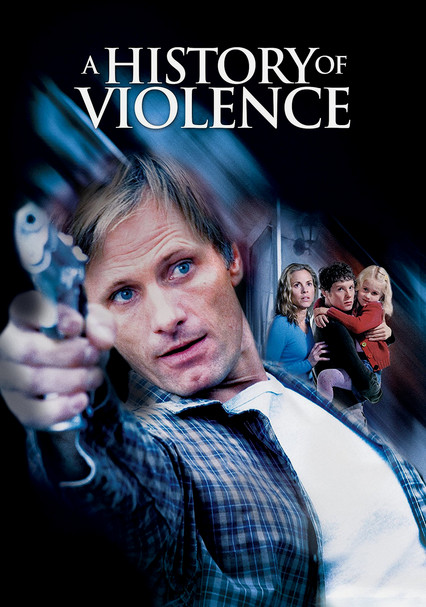
A History of Violence-2005

A History of Violence-2005

Director David Cronenberg

Starring Viggo Mortensen

Scott’s Review #1,016
Reviewed April 28, 2020

Grade: B+

David Cronenberg has directed films such as Videodrome (1983), The Fly (1986), and Crash (1996), stories safely classified as “off the beaten path”.

With A History of Violence (2005), he creates a film that, on the surface, appears conventional and even wholesome at the onset, a family drama or thriller that turns sinister and bloody as it lumbers along.

The Christian-like small Indiana town is the perfect backdrop for quietly inflicting mayhem and terror on its characters.

Stars Viggo Mortensen and Ed Harris give tremendous portrayals.

Tom Stall (Mortensen) lives a quiet midwestern life and owns a quaint little diner nestled in the center of town. He is a popular man and quite neighborly, befriending the many patrons who visit his lovely eatery.

At his side are his adoring wife Edie (Maria Bello) and children, Jack and Sarah.

If they owned a golden retriever and resided in a house with a white picket fence, they would define the all-American family.

Late one night, two men attempt to rob the restaurant, and when they attack a server, Tom kills both robbers with surprising ease and skill, barely blinking at his violent tendencies.

He is professed a hero by the townspeople, and the incident makes him a local celebrity.

Tom is then visited by the frightening, scarred gangster Carl Fogarty (Harris), who insists that Tom is a notorious Philadelphia gangster named Joey Cusack. Tom is perplexed and vehemently denies the claims, but Fogarty begins to stalk the Stall family.

Because of the pressure, Tom’s family life hits crisis mode.

As the film ticks along, the plot thickens, and the puzzle pieces are rife with mystery.

Is Fogarty merely a liar, holding a vendetta against the person who killed his men? Does Tom suffer from amnesia, having forgotten his past life due to an accident?

Has Tom fled the criminal life seeking refuge and a new life in middle America, safely leaving his troubles behind? Does the truth lie somewhere in the middle of these possibilities?

Bello is cast as Edie, Tom’s loyal wife. Bello is a stellar actor and does a wonderful job in the complicated role.

Far too often, especially in thrillers, the wife’s role is as lacking in challenge as it is in glamour. The ever-supportive wife must be a drag to play with, but pays the bills.

Edie is different, and as soon as the viewer has her figured out, she acts out of the blue, which will surprise the viewer about this type of character. This has a lot to do with Bello’s pizzazz and acting chops.

I adore the film’s setting.

A far cry from the bustling City of Brotherly Love, Philadelphia, the rural setting of Indiana becomes even more important as the action eventually flows to the city.

The quiet mornings, the imagined smell of fresh-brewed coffee, the sizzle of bacon on the grill at Tom’s Diner, and, finally, crickets chirping in the distance all evoke the potent atmosphere and surroundings that work in this film.

A History of Violence (2005) is a superior film that contains excellent writing, the best aspect of the rich experience.

A top-notch screenplay by Josh Olson leaves the viewer not only with mounting tension but also with the mystery of what will happen next and what the truth is.

Mortensen, commonplace in recent Cronenberg films, has found his niche playing complex yet humanistic characters, which must be a challenge for the actor and a splendid reward for the audience.

Oscar Nominations: Best Supporting Actor-William Hurt, Best Adapted Screenplay
300-2007

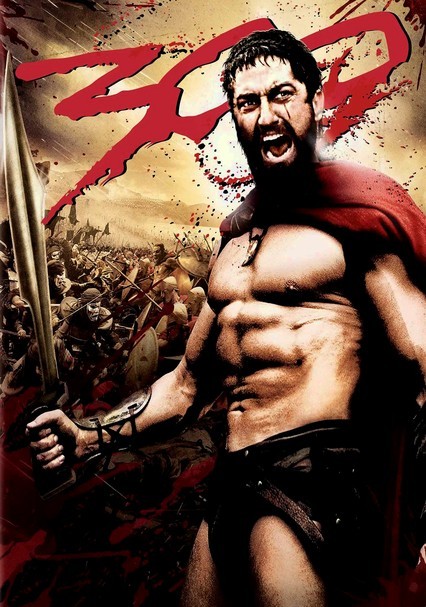
300-2007

Director Zack Snyder

Starring Gerard Butler

Scott’s Review #977

Reviewed January 7, 2020

Grade: D

On paper, 300 (2007) could have been a good or even a great film under different circumstances, if a historical realism or a message of some kind had existed.

Unfortunately, what sounds like an interesting premise is met with a cartoon quality, overacting, and cheesy testosterone-laden bombast.

Little more than drivel, the film is saved slightly by a charismatic lead, male flesh, and potent homo-eroticism, but this is no Magic Mike (2012), and the content fails because it is intended to be taken seriously.

The result is a silly affair, with predictability and stereotypes for miles.

The story is based on a 1998 comic series of the same name, a fictionalized retelling of a battle in the Persian War.

The flimsy plot revolves around King Leonidas (Gerard Butler), who leads 300 Spartans into battle against the Persian “God-King” Xerxes (Rodrigo Santoro) and his invading army of more than 300,000 soldiers (hence the title).

As the battle rages on, Queen Gorgo (Lena Headey) attempts to rally support in Sparta for her husband (Leonidas) and conquer the army.

Butler is the only slight positive worth mentioning as he preens and prances in little more than a loincloth with chiseled abs during the battle scenes, ferociously bellowing at his enemy.

A fine-looking man, he is unarguably charismatic and poised, so the audience is strongly encouraged to root for him, and naturally for the Spartans.

Leonidas makes for a powerful leader and is great to look at, but that is where any positives to this film end.

The scantily clad gimmick is not intended to draw female viewers to the film, or at least the intent doesn’t seem to be there unless the marketing is botched.

There is enough male nudity to go around, and the beefcake and machismo are clear in most of the characters.

Laughable that the Spartans all have washboard abs and appear freshly waxed. Did they have access to state-of-the-art fitness centers in 479 BC?

The Persians are mostly face-pierced and sneering, the clear enemy, which does nothing to diminish racist overtones. Spartan-good, Persian-bad.

Zack Snyder’s (Dawn of the Dead, 2004) motivation seems to be to market this film to pubescent teenage males or the low-IQ crowd, so the stereotypes are not the best thing to witness, nor will they leave anyone feeling very liberated or united.

The characters are either cookie-cutter or grizzled and violent, which is in tune with most of the film- bloody, but without reason, substance, or merit.

One-note character after one-note character appears through each scene.

Most bothersome is the intent to stir a pro-war stance, not helpful given the target audience.

300 was filmed mostly using a superimposition chroma key technique to replicate the imagery of the original comic book, which only makes the film look like a high-energy video game.

The product is quite stylized, with gloomy battleground scenes and a dire, bleak tone, and adopts a graphic novel or comic book approach, but lacks any subtle qualities or pretty much anything else interesting from a cinematography perspective.

The battle scene finale is by the numbers and should come as no surprise who the inevitable victor is.

The film requires little thought or attention span, and one can immerse oneself on a cushion and absorb the nonsense, couch-potato-style.

Battle after battle erupts with cliched earnestness and a bevy of blood-spurting wounds and kills. This would be okay if there existed any point or good plot twist.

Any character development is missing.

300 (2007) is a weak offering and decidedly boring, a surprise since much of the action takes place on the battleground, where the pace is a mile a minute.

The experience is forgettable, and a legion of other action-fueled films exist with more meat and potatoes on their plate.

The sinister and stereotypical aspects make the resulting film less than fun, and the big, loud, dumb product is only marginally cinematic.

We can do better.

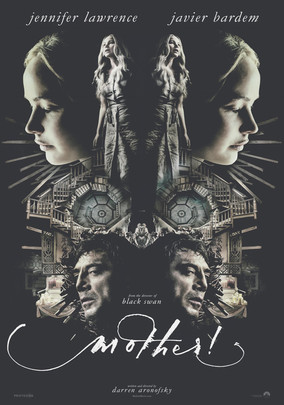
Mother!-2017

Mother! -2017

Director Darren Aronofsky

Starring Jennifer Lawrence, Javier Bardem

Scott’s Review #687

Reviewed October 4, 2017

Grade: A

Mother! is an intense, disturbing, and brilliant 2017 work by acclaimed director Darren Aronofsky.

Having crafted left-of-center works such as 2000’s Requiem for a Dream, 2008’s The Wrestler, and 2010’s Black Swan, I shudder to think this film rivals the other in the insanity department.

With four principal characters portrayed by Hollywood mainstays, this film generated much buzz upon its release.

The film is thought-provoking and analytical, and we will discuss it after the conclusion. I appreciate the complex watches and Mother! succeeds in spades.

The film is set entirely within the confines of one enormous house in the middle of a vast field of land. Aronofsky never reveals the location, adding mystery to the already intriguing premise.

A young couple known only as Him (Javier Bardem) and Mother (Jennifer Lawrence) cheerfully enjoy married life together and seem very much in love. He is a renowned author suffering from writer’s block, and his mother fixed the house after it had burned long ago.

One day, a Man (Ed Harris) arrives looking for a place to stay. While Him is delighted by the visitor and encourages Man to stay, the mother is not as pleased.

When Man’s wife, Woman (Michelle Pfeiffer) arrives, the houseguests turn Him and mother’s lives upside down. This is merely the beginning of a complex puzzle.

As the plot unfolds, Mother! is oozing with one bizarre event after the other. Mother witnesses unsettling images such as a beating heart within the walls and a bloodstain on the floor that will not go away.

When relatives of a Man and a Woman overtake the house, and a violent event occurs, things go from dark to downright chaotic.

Giving too many plot points away would ruin the element of surprise, making Mother! a difficult film to review. The film is polarizing and mesmerizing, and each of the principal characters’ motivations can be analyzed and questioned.

Why do he and his mother react differently to the visitors? What manifests their resentment towards the mother?

Each actor gives a compelling turn, and Aronofsky admits that the mother’s character is the one he most relates to. Logically, one might assume that Bardem’s Him might receive that honor since the character is a famous writer. How strange, and this revelation by the director will only result in more character analysis.

How wonderful to see Michelle Pfeifer back in the forefront of a Hollywood film—it seems eons have passed since we last saw her grace the silver screen, and she is back with a vengeance.

Her bitchy portrayal is purely delicious, and she encompasses Woman with the perfect amount of venom, toughness, and mystery. As she icily quizzes mother about her intentions of starting a family, she slowly immerses herself in mother’s life without missing a beat.

The film is unconventional and layered with symbolism and differing interpretations. Is Aronofsky’s message biblical? Is it political? Or could it reference the obsessions everyday folk have with celebrities?

After much pondering, all three possibilities came to mind. The biblical message seems the most solid and plausible explanation, but with Aronofsky films, the pleasure is in the analysis.

The film’s final act is particularly macabre, as the action has exclusively focused on the four principal characters until this point, and the setting is mainly bright.

A slow burn, if you will, suddenly, all hell breaks loose as mobs, blood, fire, death, and darkness take over. The brutality and cannibalism involved will churn anyone’s stomach.

Quickly note the lurid closeups of Jennifer Lawrence’s face during most scenes. Indeed, the camera loves her, but more is happening here. Is the intention to make the viewer focus more on her character or to sympathize more with her character?

Mother! has stirred controversy among film-goers. Some have ravished its elements and themes, while others have reviled and revolted against it.

Time will tell if Mother! (2017) holds up well, but my hope and guess would be that it will become a film studied in film schools everywhere.

The Tall Man-2012

The Tall Man-2012

Director Pascal Laugier

Starring Jessica Biel

Scott’s Review #457

70242985

Reviewed July 30, 2016

Grade: B-

The Tall Man (2012) is a horror/thriller/message movie that stars Jessica Biel as Julia Denning, a nurse living in rural Washington.

The town’s children begin disappearing and are abducted by a mysterious creature named “The Tall Man”.

Is he a legend or a reality? When Julia’s son is the next victim, she sets out to solve the mystery.

The aging mining town of Cold Rock is the setting for the film, and it is perfect, with all the necessary elements: a remote, secluded location and creepy townspeople.

Additionally, The Tall Man has an interesting premise, and the ending is somewhat of a surprise, though rushed, so it’s an interesting experience.

The plot is so far-fetched and convoluted at times that it is tough to follow and take seriously.

I am not a fan of Jessica Biel, and I find her acting subpar, but she is adequate in her starring role and delivers a compelling performance as a haggard mom.

Given the actress’s good looks, I didn’t buy her as a blue-collar, small-town type.

Throughout the film, I felt something was missing, but I couldn’t put my finger on it.

A decent thriller, but nothing more.