Tag Archives: Amrish Puri

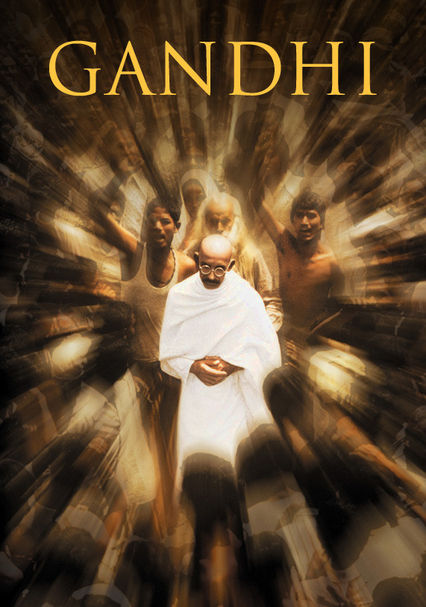
Gandhi-1982

Gandhi-1982

Director Richard Attenborough

Starring Ben Kingsley

Scott’s Review #1,189
Reviewed October 30, 2021

Grade: A

Ben Kingsley delivers an astonishing performance as Mahatma Gandhi,  the steady-handed lawyer who stood up against British rule in India and became an international symbol of nonviolence and peaceful understanding until his tragic assassination in 1948.

Entitled simply Gandhi (1982), the film is directed by Richard Attenborough, who had previously created masculine offerings such as The Great Escape (1963) and The Sand Pebbles (1966).

Calmly, the director creates a grandiose epic, but one that is thought-provoking and introspective in its humility.

I was incredibly affected by this picture.

As beautiful as the cinematography and other trimmings are, the message stands out to me most. One man’s spirit and thirst for fairness and human equality are beyond inspiring decades after the film was made.

Thanks to Kingsley, the biography infuses an infectious sense of what being a human is all about and makes human decency the desired goal.

The film belongs to Kingsley. Despite hosting a cast of literally thousands, he is the only name worth mentioning. He is that superior.

Attenborough, who teams with screenwriter John Briley, presents major events in the life of Mohandas Gandhi (Kingsley).

The film starts suddenly in January 1948, when an elderly Gandhi is on his way to an evening prayer service and is shot point-blank in the chest in front of a large number of dumbfounded greeters and admirers.

His state funeral is shown, the procession attended by millions from all walks of life, with a radio reporter speaking eloquently about Gandhi’s world-changing life and projects.

The film then returns decades earlier, when Gandhi, a young man, has a violent and racist experience. He vows to dedicate himself to nonviolent resistance. Initially dismissed, Gandhi was eventually internationally renowned, and his gatherings of passive protest moved India towards independence.

Gandhi has been criticized for its extraordinary length with a running time of three hours and ten minutes. A suggestion is to watch the film in multiple sittings, though the best recommended approach would be to see it on the big screen.

Unfortunately, I didn’t, but I fantasized about the massive sequences and how gorgeous they would appear at the cinema.

The story, acting, production, and pretty much everything else about Gandhi is a ravishing spectacle.

It’s worth its weight to sit back and watch Kingsley completely immerse himself in the role. The actor deservedly won the Best Actor Academy Award and, despite his oodles of other film roles, is best remembered for this one.

I’m half-surprised that it didn’t typecast him, since he is so identifiable in the role.

I want to mention two aspects that some might notice less than others, but that are simply astounding. The cinematography of India’s deserts, towns, and cities is rich in detail and accuracy. If one cannot go on a trip to India, the next best thing is to watch this film instead. You’ll get a good dose of realism.

South Africa is also featured.

The costumes brilliantly showcase Indian flair and culture, so much so that I felt I had been to an interesting country at the time the film portrayed the events, nestled amid the luxurious colors and good taste.

Post-1982, the epic film genre exists rarely, if ever, anymore.

Long gone are the days of brilliance like Gone With the Wind (1939) or Lawrence of Arabia (1962), which are truly a delight to lay one’s eyes on.

Gandhi deserves to be appreciated as much as those other films, despite being released in a less-than-artistic decade in cinema.

Gandhi (1982) is a wonderfully tragic film that leaves the viewer feeling sad but also inspired to carry the torch that one brave man picked up.

A history lesson is also a lesson in humanity and in the courageous fight one man waged. Military power is not the way to achieve change in the world.

Oscar Nominations: 7 wins-Best Picture (won), Best Director-Richard Attenborough (won), Best Actor-Ben Kingsley (won), Best Screenplay-Written Directly for the Screen (won), Best Art Direction, Best Cinematography (won), Best Costume Design (won), Best Film Editing (won), Best Makeup, Best Original Score, Best Sound
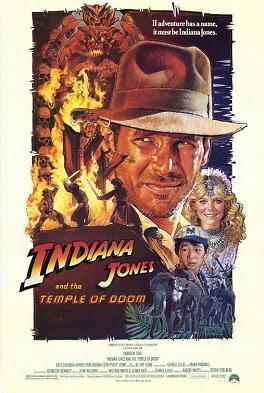
Indiana Jones and the Temple of Doom-1984

Indiana Jones and the Temple of Doom-1984

Director Steven Spielberg

Starring Harrison Ford

Scott’s Review #759

Reviewed May 17, 2018

Grade: A

The second in the trilogy (I refused to acknowledge the middling Kingdom of the Crystal Skull in 2008), Indiana Jones and the Temple of Doom (1984) is easily my favorite of the group.

Much darker than its predecessor, Raiders of the Lost Ark, it is also better, with more flair and pizzazz.

All three (1989’s The Last Crusade added) could be watched in sequence and easily enjoyed as companion pieces for a slice of 1980’s nostalgia.

A prequel to Raiders of the Lost Ark, the action picks up a few years prior as our hero narrowly escapes the clutches of a crime boss in Shanghai, China.

Indiana Jones (Harrison Ford), along with sidekick eleven-year-old Short Round (Ke Huy Quan) and nightclub singer Willie Scott (Kate Capshaw), embarks on an adventure to retrieve a stolen sacred stone.

The poor villagers have also lost their children to a lavish palace where they are forced to work as enslaved people.

Wisely in keeping with the continuity of the first story, director Steven Spielberg and writer George Lucas return to the fold. This enriches the experience, as both men are attuned to Indiana Jones’s character and do not try to change him.

His familiar wittiness and charismatic nature return, and the dashing hero shows more skin this time around with more than one shirtless scene.

To cement the good character, Harrison Ford returns to the role he created and made famous.

Indiana Jones and the Temple of Doom is layered with positive aspects and holds special childhood memories for me. I vividly recollect going to the movie theater and excitedly watching the film on the big screen, clutching a tub of buttery popcorn.

For a young boy, this is the best- an adventure story for the ages with thrills and edge-of-your-seat sequences.

The film is perfect for the entire family.

Many gorgeous exterior sequences abound throughout the film. A prime example is when the trio encounters deadly assassins on a precarious rope bridge high atop a crocodile-infested, murky river.

This scene is fraught with tension and “how will he ever get out of this?” thinking when the killers corner dear Indie.

With lightning-quick thinking, he severs the bridge, resulting in a dangling escapade. As numerous bodies fall into the river, they are chopped to bits by the hungry reptiles. The fact that the action is all shot outdoors in lush scenery only adds to the enjoyment.

The film is admittedly filled with dark and scary aspects, necessitating a PG-13 rating rather than a PG one. As Indie, Willie, and Short Round are held hostage in the evil palace, a dangerous sacrifice occurs.

One poor man is chosen to give his life by being burned alive in a roaring fire. Indie is then forced to drink the potion and presumably suffer the same fate.  Other bloody moments include a bad guy meeting his fate after being flattened like a pancake by a steamroller.

The tone of the film is much darker than that of Raiders of the Lost Ark.

To offset the blood, guts, and voodoo, the film occasionally parleys into humor, mostly at the expense of Willie, the film’s comic relief.

Accustomed to the glamour of costumes and luxurious hotels, the singer is forced to fend for herself amid snakes, elephants, and other creatures. As she hungrily sits down for what she thinks is a scrumptious dinner, she is served soup with monkey brains and bulging eyeballs, deemed Indian delicacies.

Readily apparent, watching the film now, are glaring negative stereotypes associated with the Indian culture. As I am sure the intent was not to insult, some stereotypes do abound with the hokey cuisines and the severe poverty.

The underlying image of tribal Indians as being weird or out of touch is prevalent, to say nothing of the odd religious overtones.

Kate Capshaw as Willie is the complete opposite of the central female character, Marion, in Raiders of the Lost Ark. Whereas Marion is intelligent and serious, Willie is pampered, rich, and gullible.

I find the camaraderie between Indie and Willie much more palpable than between Indie and Marion, and the romantic overtures appealing.

Who can forget the famous “bug scene” in the palace?

Conjuring up wonderful and exciting childhood memories, Indiana Jones and the Temple of Doom (1984) is a treasure for the eyes and the strongest entry in the bunch.

If you are in the mood for a good, fun-filled experience with a healthy dose of Indian culture, adventurous antics, and a slice of darkness, this one is a must-see.

Oscar Nominations: 1 win-Best Original Score, Best Visual Effects (won)