Tag Archives: Henry Silva

Alligator-1980

Alligator-1980

Director Lewis Teague

Starring Robert Forster, Robin Riker, Michael V. Gazzo

Scott’s Review #1,491

ΒΈΓΆ.

Reviewed August 18, 2025

Grade: B-

Alligator (1980) capitalizes on the Jaws (1975) and Jaws 2 (1978) craze with a similarly themed ‘creature that attacks humans’ idea.

The film’s musical score is essentially the same as Jaws’, and it includes a copied underwater camera shot of a victim in peril trying to reach a boat.

The late-night offering is adequate, though amateurish and cheaply made, with enough stock characters to make for a comical offering, whether intentional or unintentional.

The romantic chemistry between the two leads, Robert Forster and Robin Riker, is surprisingly genuine and sweet, which barely lifts this effort above mediocrity.

The kills are underwhelming and quickly become redundant as a leg or arm is chomped off a victim with little more than systematic style as the doomed person desperately attempts to escape being the giant alligator’s next meal.

Set in Chicago, the film follows Detective David Madison (Forster) and a reptile expert, Dr. Marisa Kendall (Riker), who team up to track an enormous, ravenous man-eating alligator flushed down the toilet years earlier as a baby.

The reptile terrorizes and attacks residents without capture after escaping from the city’s toxic sewers.

An inane explanation is provided, involving the alligator mutating to a humongous size due to feeding on animals used as test subjects for an experimental growth formula intended to increase agricultural livestock meat production.

The plot-driven story assuredly pairs David and Marisa as romantic counterparts from the get-go, so there is little doubt they will wind up together. A weak attempt at a spat between the couple is perplexing and a waste of time.

Thank goodness the actors have a decent amount of chemistry, which keeps things compelling during scenes when they traverse the metropolis trying to catch the reptilian murderer.

Marisa is well written as a self-assured, intelligent female doctor, though inexplicably, she lives with her overbearing mother. David has a mediocre backstory involving an incident in which he should have saved his partner’s life but failed to do so.

The death setups are outrageously satisfying as cookie-cutter stock characters quickly get their comeuppance. For example, the villainous Slade (Dean Jagger), an influential local tycoon responsible for the experiments, is crushed by a car flattened by the alligator.

This follows Slade’s selfish attempt to save his skin at the expense of another character, whom he locks out of his car.

Interestingly, Alligator features Jagger, an Oscar-winning actor (for 1949’s Twelve O’Clock High) and Oscar-nominated actor Michael V. Gazzo (for The Godfather Part II, 1974).

The grand finale is delicious, B-movie-style. The alligator goes on a rampage through a high-society wedding hosted at Slade’s mansion, eating a maid serving guests at the reception and killing Slade, the mayor, and Slade’s chief scientist for the hormone experiments, who was also his intended son-in-law.

The shrieking women and scrambling guests hilariously try to outrun the creature amid flying champagne glasses, wedding cakes, and delicate dining dishes.

This scene is worth the price of admission.

The rest of the experience is ludicrous, as the alligator goes unnoticed in a city of millions. He crawls down urban streets and hides in dark alleys at whim, occasionally eating a villain or two.

Like any horror film of the 1970s or 1980s, Alligator perfectly sets up a sequel, a la Alien (1979), with a spawn hatching in the sewers.

Playing more like a light comedy than a scary film, Alligator (1980) has moments of satisfaction. But most of it is an attempt to capitalize financially on an idea that has been used before, making it feel more like a ripoff movie than anything original.
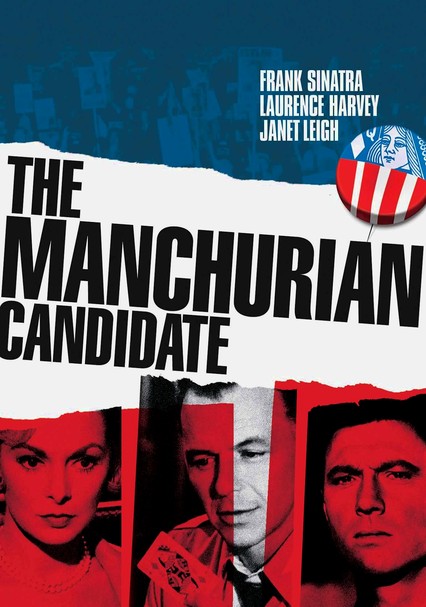
The Manchurian Candidate-1962

The Manchurian Candidate-1962

Director John Frankenheimer

Starring Frank Sinatra, Laurence Harvey, Janet Leigh

Top 250 Films #195

Scott’s Review #852

Reviewed January 3, 2019

Grade: A

The Manchurian Candidate (1962) is an enthralling film that perfectly captures the political landscape of its time and remains relevant to present-day politics.

Taut, mysterious, and filled with great twists and turns, the film flows smoothly and culminates in a shocking crescendo.

With compelling performances by all and a brilliant musical score, the film fires on all cylinders and can be watched and enjoyed repeatedly.

Events begin in 1952 during the bloody Korean War. A United States platoon consisting of several men is accosted by the Soviets and sent to communist China for experimentation.

Three days later, the men return as if nothing had happened, and Sergeant Raymond Shaw (Laurence Harvey) is hailed a hero and awarded the Medal of Honor for saving their lives.

When the war ended, the men returned to the United States to resume their everyday lives.

Years later, Captain Bennett Marco (Frank Sinatra) suffers from recurring nightmares in which Shaw murders two missing soldiers in front of a panel in a bizarre brainwashing demonstration.

When another soldier in the platoon has the same nightmares, Army Intelligence begins an investigation.

Further complicating the plot is Raymond’s ambitious mother, Eleanor Iselin (Angela Lansbury), and her attempt to use any means necessary to guide her husband, Senator Iselin (James Gregory), to further power.

The Manchurian Candidate is a film that requires attention to appreciate and understand.

The plot is highly complex, but that is a testament to the film’s composition and hardly a complaint. The viewer must stay on course to appreciate the intricate details.

Director John Frankenheimer is fantastic at adding unique dramatic effects and imaginative filmmaking.

A prime example is the brainwashing sequence, as dialogue is interspersed between what the soldiers think is happening (a peaceful grandmotherly horticulture demonstration) and reality (a dastardly experiment involving murder and programming).

Despite Sinatra being billed as the lead in the film, the most treasured props go to Lansbury as Eleanor and Harvey as Shaw. Raymond is the most developed character, with several sides.

He is primarily a loner who appears cold and harsh because he is programmed to assassinate.

A sequence involving the love of his life, Jocelyn (Leslie Parrish), and a romantic summer they share is beautiful and innocent, contrasting with the dismal and manufactured “new Raymond.”

Lansbury has never been cast in a more challenging role. Eleanor is determined to stop at nothing to ensure her husband reaches the presidency, and she connives and cheats her way to the top.

Still, the part is written this way to avoid making her a one-note character despite her ways.

In an eerie scene close to the finale, she vows payback for what has been done to Raymond and then plants an incestuous kiss on his lips. An odd and disturbing moment, the scene also, in her mind, justifies the lengths she has gone to get what she wants.

The musical score is lovely and contradicts the dour backstabbing and espionage throughout. Romantic and sweet melodies abound, and classic hymns like The Twelve Days of Christmas and The Star-Spangled Banner are included in the film.

As a result, The Manchurian Candidate’s score feels multi-faceted, patriotic, and artistic with enchanting results.

The Manchurian Candidate (1962) is a stellar film, blending thrills, deceit, politics, and creative filmmaking into a bold classic. The final sequence is jaw-dropping in its finality and brutality.

Remade in 2004 with a great cast but a poor script; avoid that one at all costs and enjoy the power and lasting effects of the original.

Oscar Nominations: Best Supporting Actress-Angela Lansbury, Best Film Editing

Golden Globe Nominations: 1 win- Best Director-Motion Picture-John Frankenheimer, Best Performance by an Actress in a Supporting Role in any Motion Picture-Angela Lansbury (won)

Ocean’s Eleven-2001

Ocean’s Eleven-2001

Director Steven Soderbergh

Starring George Clooney

Scott’s Review #1,105

Reviewed January 28, 2021

Grade: A-

Steven Soderbergh was awarded the Best Director Academy Award for his exceptional direction in Traffic (2000), one of my all-time favorite films.

He follows up that gem with a slick, commercial film that is stylish and looks cool.

It’s fast-paced, with quick editing, and is set in the dangerously appealing world of casinos, as a group of sophisticated thieves attempts to steal $160 million from a casino owner with whom they have a vendetta.

I expected a film of this type to be generic and by-the-numbers, but instead it’s unpredictable and unexpected.

Ocean’s Eleven (2001) is the first (and best) installment of the popular Ocean’s franchise and a remake of the 1960 Rat Pack film of the same name.

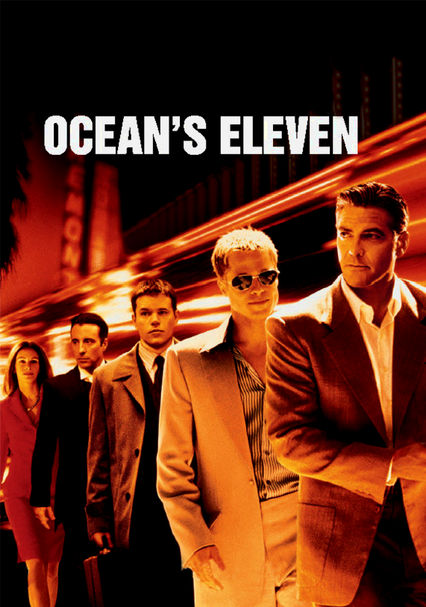
George Clooney was in his film prime and led the pack of A-list stars like Brad Pitt, Julia Roberts, and Matt Damon in a packed and brimming two-hour entertainment fest.

A nice touch is inviting two stars from the original, Henry Silva and Angie Dickinson, to appear as themselves.

Clooney leads the charge and embraces his status as a leading man with charm, polish, and style. He plays a handsome Danny Ocean, a man with a plan.

Less than one day into his parole from a New Jersey penitentiary, the thief is already traveling to California to plot his next move with his partner in crime, Rusty (Brad Pitt).

It’s tinged with revenge.

They abide by three rules: Don’t hurt anybody, don’t steal from anyone who doesn’t deserve it, and play the game like you’ve got nothing to lose.

Danny orchestrates his charges to pull off the most sophisticated, elaborate casino heist in history. And it will take place in glitzy Las Vegas on the night of a boxing match.

Providing the rules makes me think fondly of a similar proclamation in David Fincher’s 1999 film Fight Club, where Danny and the gang immediately feel sympathetic to me.

After all, they don’t intend to hurt anyone, and the money stolen will be from folks who are dastardly and might even deserve to be penniless.

Didn’t Jigsaw from the Saw films only kill those who harmed other people? Suddenly, their motives are clear and justified, making them the good guys.

As a bonus, the “victim” of the heist is the unlikable Terry Benedict (Andy Garcia), who owns three casinos and is worth billions.

Making the bad guys the heroes and Benedict the bad guy is clever and situates the players properly, so the audience knows who to root for.

As if the film doesn’t have enough treats, some drama is thrown in. Danny’s ex-wife, Tess (Julia Roberts), is Benedict’s girlfriend. Is she loyal to Danny or Benedict, or might she be playing both sides?

Loyalties are tested and questioned, and the intricate bank heist sequence is titillating and an edge-of-your-seat thrill ride.

The Las Vegas backdrop, with the casino’s bright lights, bells, and other elements, cements Ocean’s Eleven as one of the best in its genre.

It’s also tough not to root for Clooney, Pitt, and Damon in or out of character.

Ted Griffin writes the screenplay and adds some nice characters, more than one-note bank robbers or thieves.

Along with Soderbergh’s direction, which adds the nice atmospheric trimmings like the razzle-dazzle casino scenes, they make a great pair.

I love how Danny and Rusty recruit a team with specialized skills like mechanics, pickpockets, and an electronics and surveillance specialist. There’s even an acrobat!

This seems like an ode to the 1960s television series Mission: Impossible, as the team is carefully selected for their skills.

A highly entertaining popcorn film just perfect for a summer night, Ocean’s Eleven (2001) is sure to satisfy. The intention is to sit back and enjoy what is offered, and all the elements come together perfectly.

The culminating main event boxing match and subsequent twist catapult the film from pure entertainment to something more nuanced and exciting.

The film was a success at the box office and with critics, leading to two Soderbergh-directed sequels and a spin-off with an all-female lead cast, released in 2018.