Tag Archives: Philippe Léotard

The Day of the Jackal-1973

The Day of the Jackal-1973

Director Fred Zinnemann

Starring Edward Fox, Michael Lonsdale

Scott’s Review #1,155

Reviewed June 22, 2021

Grade: A

Political thrillers can run the gamut from taut plots involving espionage, assassinations, and car chases to the political landscape. They often risk being overly complicated and losing their audience through too much wordiness and not enough meat and potatoes.

The Day of the Jackal (1973), telling the story of an assassination attempt on a world leader, is perfectly paced and intriguing, offering some titillating elements and nothing run-of-the-mill. It’s not lazy and can be classified as a thinking man’s film.

I loved it.

Certain complexities and trysts experienced by the deadly title character add extra pizazz and spiciness to the already compelling plot.

And the sequences of Paris and its lovely metropolis can aid any film.

A cagey and intelligent underground French paramilitary group is determined to execute President Charles de Gaulle (Adrien Cayla-Legrand). Still, when numerous attempts on his life fail, they resort to hiring the infamous hitman known as “The Jackal” (Edward Fox).

As he plots to assassinate de Gaulle, he takes out others who stand in his way. Meanwhile, Lebel (Michel Lonsdale), a Parisian police detective, begins to solve the mystery of the killer’s identity.

The film is not in French but in English.

Fox is the major draw. Charismatic, handsome, and athletic, he hardly looks like a fiend.  But that’s just the point. A lesser film would have cast an actor who looks like a killer. With Fox, we get many more intricacies. He beds women…..and men.

Think- a bisexual James Bond.

This is enchanting to see in 1973, though the film is British, and sometimes the Brits were well ahead of American filmmakers in this regard.

The director, Fred Zinneman, is Austrian, and boy, can he direct.

I wasn’t sure how engaged I would be. After all, the history books can tell us how the assassination attempt ended. It failed. What was the motivation for watching a film, especially one destined to be complicated? I quickly realized that The Day of the Jackal had that special sauce. It’s more than engaging, it’s enthralling.

The audience is meant to root for Lebel to beat Fox, but there is so much more bubbling under the circumstances. The villain is mysterious, and we know almost nothing about him. The ambiguity continues after the film ends.

This is a positive for the character and, by extension, for the film.

Meanwhile, the hero of the film, the guy after the “Jackal”, is your average, everyday Joe. He is unexciting but very smart and determined to capture Fox.

Lebel is quite likable for his savviness alone, but I still argue many will root for Fox to escape the clutches of Lebel. I know I did.

Great scenes occur in a swanky hotel when Fox becomes intrigued by Madame de Montpellier, played by Delphine Seyrig. He picks up the rich and mysterious woman as they chat in the dining room. He later sneaks into her room and gets the girl.

Whoever cast this woman must have seen the Hitchcock classic Frenzy (1972) because she’s a dead ringer for Brenda Blaney (Barbara Leigh-Hunt).

Is it an accident that both meet grisly ends?

Not to be satisfied with merely bedding rich women, he goes to a Turkish bath to avoid the police and picks up a French gentleman. It is implied they have a romantic date before the gentleman catches onto Fox’s identity (he is now on the run from the police) and meets his maker in his kitchen.

The Day of the Jackal (1973) is a meticulously crafted film that should be the blueprint for anyone intent on creating a political thriller. It avoids hokey stereotypes or predictability, instead offering an edge-of-your-seat experience with nuances for miles.

It’s exceptional on all levels.

Oscar Nominations: Best Film Editing

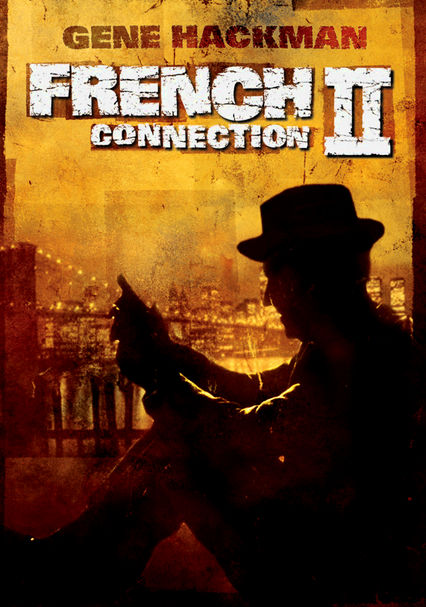
French Connection II-1975

French Connection II-1975

Director John Frankenheimer

Starring Gene Hackman, Fernando Rey

Scott’s Review #1,148

Reviewed June 2, 2021

Grade: B

The French Connection, the winner of the coveted Best Picture Academy Award for 1971 releases, is a brilliant film that holds up well as a cream-of-the-crop cop film.

An action film winning an Oscar is as rare as a horror film winning one. It’s rare.

The decision to make a sequel is debatable, but French Connection II (1975) stands as a decent action crime thriller, but hardly on par with the original.

Is anyone surprised?

Sequels rarely usurp their predecessors, especially when The French Connection is such a superior genre film. In a way, Part II didn’t have much of a chance measured up against Part I.

Films like The Godfather (1972) only come around once in a lifetime.

Unfortunately, William Friedkin did not return to the fold to direct, replaced by John Frankenheimer, best known for the nail-biting The Manchurian Candidate (1962).

Thankfully, Gene Hackman did return. He helps the film from an acting perspective and gives his all in a tough role. His partner, played by Roy Scheider, does not appear and is not mentioned.

Picking up a couple of years after the first one ended, Detective “Popeye” Doyle (Hackman) is still hot on the heels of cagey and sophisticated drug trafficker Charnier (Fernando Rey).

Doyle hops a flight to lovely Marseilles, France. Away from his familiar New York City territory, he struggles to assimilate himself in a strange city and conquer the drug ring to bring Charnier down.

Doyle is accosted and spends time as a dreary heroin addict in rough confines before being tossed away and forced to recover cold turkey style. He becomes even more determined to bring the bad guys to justice- dead or alive.

As a stand-alone action film, French Connection II is not a bad experience. It is certainly better than the still-to-come 1980s doldrums, like the Die Hard and Lethal Weapon cop/buddy films, that marginalized the genre into cookie-cutter popcorn fare.

The equally compelling French landscape replaces the gripping New York City. Gorgeous locales like the French Riviera and the Mediterranean Sea are featured, but Marseilles is not Paris. There exists a seediness and dirtiness that helps the film a bit.

Hackman acts his ass off, especially as a drug addict. I shudder to think of a weaker actor trying to pull off this acting extravaganza. From scenes featuring his withdrawals to his drug cravings, it is exciting to watch and showcase Hackman’s wonderful acting chops.

But the intent is to produce a good action film after all, and that effort is mediocre. French Connection II is not as compelling as The French Connection, and despite some decent chase scenes and a cool finale where Doyle gets his satisfaction, there is little else but by-the-numbers activity.

The final fifteen minutes are the best part of the film.

Remember the frightening car chasing a subway sequence? Or the delicious cat-and-mouse subway sequence between Doyle and Charnier?

Brilliant scenes like this do not exist.

A few clichés are bothersome. Predictably, Doyle stands out like a sore thumb in France, and his hot-headedness emerges quickly, offending or pissing off the French authorities. He is not the most likable character, and I frequently found myself rooting for the bad guys!

I don’t think I was supposed to.

Other implausibilities occur, like the boneheaded decision to send Doyle to Marseilles, to begin with. Was he the only detective, including the French authorities, capable of catching Charnier?

What was the point of the old-lady heroin addict stealing Doyle’s watch?

A shadow of The French Connection, the dull titled French Connection II (1975) is a weaker effort but still respectable compared to other genre films.

This is mostly due to the French landscape and Gene Hackman’s return.