Tag Archives: Kate Burton

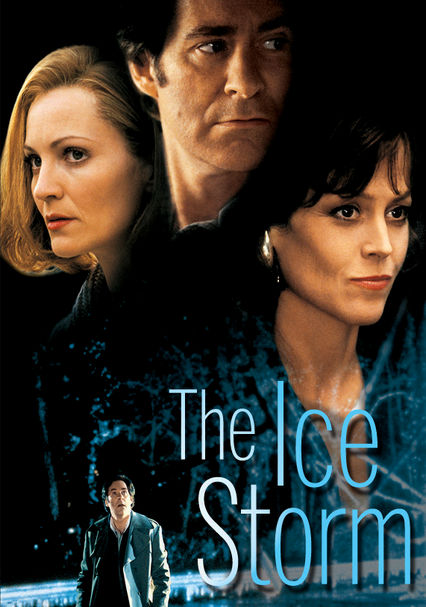
The Ice Storm-1997

The Ice Storm-1997

Director Ang Lee

Starring Kevin Kline, Joan Allen, Sigourney Weaver

Top 250 Films #60

Scott’s Review #850
Reviewed January 1, 2019

Grade: A

The Ice Storm (1997) is a brilliant film directed by Ang Lee of Crouching Tiger, Hidden Dragon (2000) and Brokeback Mountain (2005) fame.

The film is based on a 1994 novel of the same name, written by Rick Moody.

The brilliance lies in the rich way the characters are written, with coldness, repression, and loneliness being central themes.

The film is astonishingly genuine and fresh with an authenticity rarely felt so wholly in adult family dramas.

The period is 1973, and the events take place in New Canaan, Connecticut, a wealthy suburban town.

Two dysfunctional families, the Hoods and the Carvers, co-exist during the Thanksgiving weekend as each deals with repression and escapism amid alcohol and sexual experimentation.

Both the adults’ and the children’s lives are prominently featured in the story. Ben and Elena Hood (Kevin Kline and Joan Allen) and Jim and Janey Carver (Jamey Sheridan and Sigourney Weaver) head the families.

While Ben and Janey carry on a secret affair, Elena lives an unfulfilled existence, craving more from life but not knowing how to get more and reduced to consulting self-help books for support.

Wendy Hood (Christina Ricci) enjoys sexual escapades with multiple boys. At the same time,e Paul Hood (Tobey Maguire), home from boarding school, takes the train into New York City to see a rich classmate, Libbets Casey (Katie Holmes).

The most wonderful aspect of the film is that the story is a slice of life, but with clever nuances. Since the families are rich, why should the viewer feel sympathy for any of the characters, let alone root for them?

Ben and Janey lounge in bed after sex; he is chatty about nonsense, and she is bored and depressed.

During a holiday neighborhood gathering, a kinky “key party” develops, where participants swap spouses for the night, resulting in titillation and excitement.

The bold and controversial writing is exactly why The Ice Storm scores so many points. The characters are cold and frozen, unlikable and selfish, but might that be the point?

All seem unhappy and tired of their dull, small-town existence, craving whatever little excitement they can muster.

Written similarly to American Beauty (1999) the films could be watched in tandem for evenings of Gothic and macabre story-telling.

My favorite character is Elena, as she has the most sensibility. She is lonely and ignored by her husband, dutifully going about her day with little emotion.

She feels temporarily excited when she develops a romantic crush on a neighbor, only to quickly realize the most she can ever hope for with this man is a fling.

Her character is fleshed out as she yearns for more than she has. The other characters are largely selfish and pampered.

The film’s conclusion, however, is monumental as it changes the perceptions of some characters and softens them. A tragic death brings characters together in a powerful way.

Again, the writing in The Ice Storm is the most interesting and compelling appeal.

The acting among the entire cast is professional, heartfelt, and brazen, but the written dialogue and interesting situations make this film rise above others of a similar genre.

Lee’s direction is brilliant, as the blustery winter atmosphere is central to the story in more ways than we might initially think. The frozen power lines and slick, windy country roads evoke a cozy feeling, as if harboring family secrets and scandals.

The bitter yet beautiful ambiance is a soothing and compelling aspect of the film, and Lee portrays it with precision.

As an independent drama, The Ice Storm has a low budget and features big-name stars. The film could easily be performed as a play, but its cinematic elements and fantastic writing make it a memorable, storied piece of filmmaking.

Ang Lee frequently incorporates astounding character development in his works, and The Ice Storm (1997) has all the qualities of a masterpiece.

Unfaithful-2002

Unfaithful-2002

Director Adrian Lyne

Starring Diane Lane, Richard Gere

Scott’s Review #1,278

Reviewed July 21, 2022

Grade: A-

Unfaithful (2002) is an American version of the brilliant 1969 French film The Unfaithful Wife, directed by Claude Chabrol.

Directed by Adrian Lyne, best known for the smoldering, creepy Fatal Attraction (1987), which earned him an Academy Award nomination for directing, Unfaithful is unsurprisingly brimming with the same eroticism and sexual ferocity.

What’s exceptional about it is the character development and the empathy felt for the characters and their convictions.

This makes Unfaithful work.

To say it’s watered down from the Chabrol version is a bit unfair, because it has an identity all its own. However, his version is superior in terms of suspense and, naturally, more French from a cinematic perspective.

Lyne’s film is slicker and wrapped up tighter, and much more mainstream-it does the job well and provides compelling entertainment.

In both films, the subject matter of guilt runs rampant.

Edward (Richard Gere) and Connie (Diane Lane) live seemingly happily in their upper-middle-class Westchester County, New York neighborhood.

When Edward learns that Connie has lied to him about an affair, suspicion leads him to uncover the devastating truth about her infidelity with Paul (Olivier Martinez), the hunky man who has captured her heart.

He confronts Connie’s ‘boy toy,’ which results in a deadly accident caused by Edward’s surprising rage. Edward must cover up the truth as detectives question both him and Connie about their involvement with Paul.

Can their marriage survive the damage?

The Hallmark television movie’s premise gains tremendous credibility thanks to the fantastic performances by Lane, Gere, and Martinez.

The standout is Lane, whom the audience may relate to a bit more than the other two. She gives Connie a tired, weary tone. She appreciates her good life but is nonetheless bored with it.

Some may relate to her, but others will shame her for her infidelity.

Each character provides their motivation for their character’s actions. The stoic chemistry between Lane and Gere’s characters perfectly balances the lusty dynamic between Lane and Martinez.

Wisely, the story is one that most married couples can deem true. When the romance wanes, sometimes the doldrums result.

Connie doesn’t set out to cheat on Edward, but the repetition of raising their eight-year-old son and of casserole Wednesdays leads her to seize an unexpected opportunity.

The rainy, windy setup with a sexy young French artist at her fingertips is smoldering with intrigue. The lusty scenes between Connie and Paul are rich with sex, like when they bathe together and make love in Paul’s hallway.

The titillating chemistry works well.

A clever scene in a coffee shop is daringly good. Connie’s girlfriends drool with delight as Paul walks by them, completely unaware that he is Connie’s new beau. How jealous they’d be if they knew the truth.

The face-off scene between Edward and Paul is shrouded with machismo as both struggle for the upper hand, toying with each other for power.

The tone shifts to one of Hitchcockian intrigue as Edward and Connie must forge an alliance and cover up their actions.

Not trusting each other, they have an interesting dynamic among themselves about what they tell and what they keep hidden from the flocking detectives.

After all, an upstanding white couple couldn’t possibly be involved in murder, could they, the detectives ponder?

Easily serving as the opening act to the more famous Lyne offering, Fatal Attraction, Unfaithful (2002) draws parallels with it.

They successfully manipulate the audience in a good way, using intrigue, thrills, and flesh to elicit a ‘glued to their seats’ result.

Sometimes, a good, old-fashioned thrill ride is just what the doctor ordered.

Oscar Nominations: Best Actress-Diane Lane

127 Hours-2010

127 Hours-2010

Director Danny Boyle

Starring James Franco

Scott’s Review #967

Reviewed December 13, 2019

Grade: A

A biography of epic proportions, 127 Hours (2010) provides a stunning account of one man’s journey and near-tragic fate.

If not for his resolve and determination, this would surely have been the result.

Director Danny Boyle casts the charismatic James Franco in the role of the hiker who was forced to amputate his arm after being pinned by a rock.

The effective title gives a non-stop active feel, a five-day in-life production if you will, and a pulsating ninety minutes of crafty filmmaking.

The film opens with the eerie story of an excited mountaineer, Aron Ralston (Franco), who prepares to embark on a long-awaited adventure.

The time is April 2003.

His goal is to enjoy a few days of hiking, reveling in the freedom the fresh Utah air offers him. Somewhat of a daredevil, he happily anticipates adventure as he begins his journey.

He meets two attractive young women, Kristi (Kate Mara) and Megan (Amber Tamblyn), and the trio swims in an underground pool before going their separate ways.

Had 127 Hours been a horror film, there would be a sense of suspicion or dread surrounding the female hikers, but the scene is enchanting and pure innocence.

Once again on his own, Aron suddenly slips and falls, knocking over a boulder that crushes his right hand and wrist against the wall. He calls for help but realizes that he is alone.

Aron begins recording a video diary and reflects on his past, for example, forgetting to leave a note about his whereabouts as he becomes more and more desperate to escape.

Most of 127 Hours is set within a state of claustrophobic peril in the tiny walls of the rocks that Ralston is trapped between. The film quickly becomes an emotional and personal experience as the camera is focused on Franco, mostly in close-up.

At times the shots are too close for comfort, but this is a necessary way for the viewer to experience events the way that Aron did; the style is tremendously effective.

At the risk of diminishing the amazing direction, editing, and cinematography offered, the film belongs to Franco.

As Aron faces peril, growing frantic with each passing hour, but trying to remain calm and focused, Franco does a tremendous job of balancing and revealing the proper emotions.

He whimsically recounts memories while forbidding himself to lose sight of escape, rationing what little food and water he has.

The gruesome amputation scene is gory and powerful and may necessitate closing one’s eyes.

The remaining elements come together perfectly. The editing, cinematography, and pacing of the story are all spot-on. The musical soundtrack is key to the film’s pacing.

At first energetic and excitable, the music slowly becomes darker and more subdued, while at the end it is low-key.

Aron is thankful to be alive as he walks a lonely walk to help as the film concludes.

Since the real-life figure is still very much alive, the historical accuracy of the experience is preserved, as confirmed by the hero. He only showed Kristi and Megan basic climbing moves, and they never swam together, but the remainder is a brilliant documentary-style film experience.

The real Ralston himself, along with his wife and son, make cameo appearances at the end of the film, providing good authenticity.

127 Hours (2010) scores big, creating an experience that is breathtaking, disturbing, and real. Inspiration will be given to each viewer, and a lesson in endurance and perseverance will resonate in their own life.

The film deservedly received Oscar nominations for Best Picture, Best Actor, Best Adapted Screenplay, Best Original Score, Best Original Song, and Best Film Editing, but sadly came up empty-handed.

Oscar Nominations: Best Picture, Best Actor-James Franco, Best Adapted Screenplay, Best Original Score, Best Original Song-“If I Rise”, Best Film Editing

Independent Spirit Award Nominations: 1 win-Best Feature, Best Director-Danny Boyle, Best Male Lead-James Franco (won)

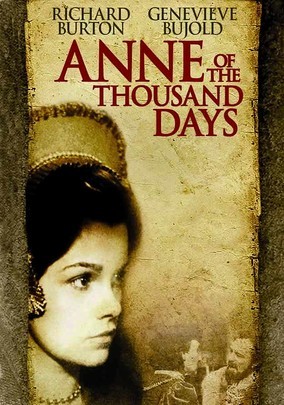
Anne of the Thousand Days-1969

Anne of the Thousand Days-1969

Director Charles Jarrott

Starring Richard Burton, Geneviève Bujold

Scott’s Review #56

60010091

Reviewed June 22, 2014

Grade: A-

Anne of the Thousand Days (1969) is one of the better historical dramas I have seen.

One could become absorbed in the history of royalty and learn much. It has a clear Shakespearean quality to it (tragedy) and is compelling in many ways.

It tells the true story of the tumultuous relationship between Henry VIII of England and his second wife, Anne Boleyn, whose union produced one of the most famous queens, Elizabeth I. Henry VIII’s first wife, Katherine, was discarded amid much controversy and political intrigue.

The drama is part of what makes this film so enjoyable, along with the historical element. It is dramatic, but not a soap opera, and the acting is superior.

The film has gorgeous costumes and cinematography, too.

Unfortunately, the finale of the beheading left too much to the imagination, and a more graphic scene would have put it over the top.

The film is near excellent, though.

Oscar Nominations: 1 win-Best Picture, Best Actor-Richard Burton, Best Actress-Geneviève Bujold, Best Supporting Actor-Anthony Quayle, Best Screenplay Based on Material from Another Medium, Best Original Score for a Motion Picture (Not a Musical), Best Sound, Best Costume Design (won), Best Art Direction, Best Cinematography