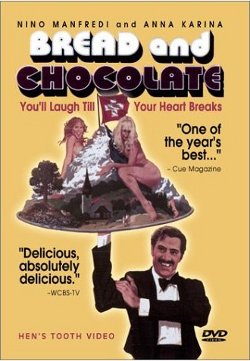
Bread and Chocolate-1974

Bread and Chocolate-1974

Director Franco Brusati

Starring Nino Manfredi, Anna Karina

Scott’s Review #996
Reviewed March 6, 2020

Grade: B

Bread and Chocolate (1974), known in Italian as Pane e cioccolata, is a mixed dramatic and comedic offering by Franco Brusati, a well-known Italian screenwriter and director.

The film is charming and tells of one man’s trials and tribulations trying to make it as a migrant worker in a foreign country- in this case, neighboring Switzerland. He is conflicted by the opportunities presented and the catastrophic way his life is screwed up at every turn.

The film is meaningful and poignant, but sometimes has no clear path. A commonality is the representation of differing cultures.

Nino (Nino Manfredi) is a hard-working Sicilian man who heads for Switzerland in search of a better life- the time is the 1960s or the 1970s, when this was a common occurrence. Despite his best efforts to fit in with his neighbors, he never quite seems to make it, haplessly going from one situation to the next.

He befriends a Greek woman named Elena, a refugee who harbors secrets, and is supported by her for a time. He forages a career as a waiter and befriends a busser.

As his luck dwindles, he is reduced to finding shelter with a group of Neapolitans living in a chicken coop, surviving on the same chickens they tend.

With bizarre gusto, they frequently emulate the chickens, strangely parading around their quarters like animals.

The main character, Nino, reminds me of the character Roberto Benigni played in the 1997 gem Life Is Beautiful. In that film, Guido tries to shelter his son from the horrors of war.

In Bread and Chocolate, Nino has a zest for life, using humor to survive and get through daily situations, slowly realizing his dire straits.

Both characters are scrappy and daring: Nino humorously urinating on a tree or awkwardly stumbling upon a dead body in the woods.

The film’s theme centers on the conflict between staying in Switzerland to find a better life and returning in shame to his homeland, Italy, which is assumed to be a failure. Nino constantly wrestles with this quandary and discusses this point with his family photos in his bedroom.

In two instances, he nearly gets on a train headed back to Italy but changes his mind. The film does not do a great job explaining or showing what is so awful back in Italy.

Bread and Chocolate is difficult to categorize because it is neither a straight-ahead comedy nor pure drama. As the film progresses, it loses some of its situational comedy in favor of melancholy and sadness.

I am not sure this is a great decision, as we often wonder whether we should laugh with Nino or feel bad for him. Perhaps both?

The film scores big on comedy, as evidenced by several laugh-out-loud restaurant scenes. Nino, clearly not knowing what he is doing, struggles to peel an orange properly to serve a guest. He emulates another waiter with hilarious results.

Later, he offends a snobbish, sophisticated woman after she blames him for causing her to fall to the floor.

The strangest scene occurs when the chicken people spy on four gorgeous Swiss siblings bathing in a nearby river. Gorgeous and tranquil, they are the definition of stunning and lush.

Charmed by the idyllic vision of the group, Nino decides to dye his hair and pass himself off as a local. The images of the cackling and dirty Italian people, with their snickering and drooling, set against the peaceful family, are both beautiful and odd.

The scene could almost be featured in an Ingmar Bergman art film.

Bread and Chocolate (1974) is a film about a man’s journey that can be classified as an adventure, drama, art film, or comedy, and sometimes crosses genres too much.

The comedic antics draw rave reviews, but the film slips a bit when it ventures into dramatic territory, becoming middling and overly preachy.

Actor Nino Manfredi breathes all the life he can into a film that is appealing, but not quite marvelous.

The heart of Nintendo’s new console isn’t the Switch


A wonderful serenity has taken possession of my entire soul, like these sweet mornings of spring which I enjoy with my whole heart.

I am so happy, my dear friend, so absorbed in the exquisite sense of mere tranquil existence, that I neglect my talents.

I am alone, and feel the charm of existence in this spot, which was created for the bliss of souls like mine. I am so happy, my dear friend, so absorbed in the exquisite sense of mere tranquil existence, that I neglect my talents.

I should be incapable of drawing a single stroke at the present moment; and yet I feel that I never was a greater artist than now.

When, while the lovely valley teems with vapour around me, and the meridian sun strikes the upper surface of the impenetrable foliage of my trees, and but a few stray gleams steal into the inner sanctuary, I throw myself down among the tall grass by the trickling stream; and, as I lie close to the earth, a thousand unknown plants are noticed by me: when I hear the buzz of the little world among the stalks, and grow familiar with the countless indescribable forms of the insects and flies, then I feel the presence of the Almighty, who formed us in his own image, and the breath of that universal love which bears and sustains us, as it floats around us in an eternity of bliss; and then, my friend, when darkness overspreads my eyes, and heaven and earth seem to dwell in my soul and absorb its power, like the form of a beloved mistress, then I often think with longing, Oh, would I could describe these conceptions, could impress upon paper all that is living so full and warm within me, that it might be the mirror of my soul, as my soul is the mirror of the infinite God!

O my friend — but it is too much for my strength — I sink under the weight of the splendour of these visions! A wonderful serenity has taken possession of my entire soul, like these sweet mornings of spring which I enjoy with my whole heart. I am alone, and feel the charm of existence in this spot, which was created for the bliss of souls like mine.Paragraph

I am so happy, my dear friend, so absorbed in the exquisite sense of mere tranquil existence, that I neglect my talents. I should be incapable of drawing a single stroke at the present moment; and yet I feel that I never was a greater artist than now. When, while the lovely valley teems with vapour around me, and the meridian sun strikes the upper surface of the impenetrable foliage of my trees, and but a few stray gleams steal into the inner sanctuary, I throw myself down among the tall grass by the trickling stream; and, as I lie close to the earth, a thousand unknown plants are noticed by me: when I hear the buzz of the little world among the stalks, and grow familiar with the countless indescribable forms of the insects and

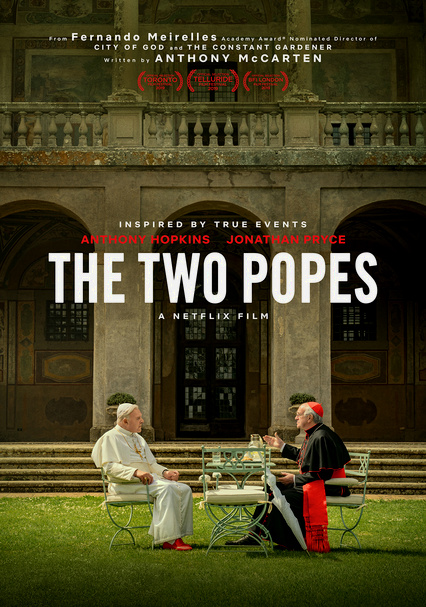
The Two Popes-2019

The Two Popes-2019

Director Fernando Meirelles

Starring Jonathan Pryce, Anthony Hopkins

Scott’s Review #994

Reviewed February 27, 2020

Grade: B+

The Two Popes (2019) is a biographical drama that focuses on two real-life religious figures and the close friendship they form while sharing differing ideas and viewpoints.

The two men hold the highest spiritual office, and deep respect culminates over time while past secrets are uncovered.

The film carefully balances past and present but offers too few meaty scenes between the legendary actors for my taste.

Otherwise, a thought-provoking and historical effort, with brilliant sequences of Italy and Argentina.

The film begins in April of 2005 during a pivotal moment in history, following the death of Pope John Paul II. The world is abuzz with the naming of Cardinal Joseph Ratzinger (played by Anthony Hopkins), elected Pope Benedict XVI.

At the same time, Bergoglio (Jonathan Pryce), from Argentina, receives the second-highest vote count.

Ratzinger has a stiff and more traditional approach to Christianity, while Bergoglio is more modern in thinking and open to new ideas.

Seven years later, the Catholic Church is embroiled in the Vatican leaks scandal, which tarnishes the very concept of religion. Benedict’s tenure has been marred by public accusations regarding his role in the cover-up, which has shocked the world.

Meanwhile, Bergoglio intends to retire and arrives in Rome to receive Benedict’s blessing. This is the point at which the men slowly come to terms with each other and develop mutual respect and admiration.

The Two Popes is worth the price of admission for the acting alone. With heavyweights such as Hopkins and Pryce, one can rest easy in this regard and simply enjoy the experience.

The scenes between the two actors are fantastic and fraught with energy.

As the religious figures confide in one another and secrets brim to the surface, the actors are believable as the real-life figures. Even good, old-fashioned small talk is fascinating to watch.

While the present-day sequences enthrall, the flashbacks of Bergoglio as a younger man and his journey into the church are explored a bit too much, sometimes halting the flow.

He was once engaged to be married, but instead joined the Jesuits. He was married in scandal when the perception was that he had collaborated with the Argentine military dictatorship, and he was exiled to serve as an ordinary parish priest to the poor for the next ten years.

The balance between timelines is acceptable, but the flashbacks become too prevalent as the film progresses.

Director Fernando Meirelles seems more comfortable shooting scenes within Argentina since those are best directed using black and white filming to showcase both the ravages of a chaotic nation and the decades preceding the present.

Best known for the wonderful City of God (2003), he also intersperses real-life news sequences featuring the peril of the Argentinian people. The two time periods do not always flow naturally together, though.

A huge positive is the inclusion of the child abuse scandal that rocked the religious world and the brave decision that Meirelles made to focus on the revelation that Benedict knew about the accusations and dismissed them, clearly aiding in their continuation.

Both Popes deal with the struggle between tradition and progress, guilt and forgiveness, and confronting one’s past, making it a character study.

The exterior and surrounding sequences are an absolute treat. Having visited Rome and particularly Vatican City, the Sistine Chapel, a showcase of the Vatican, is wonderful to view on a personal level.

The chapel in the Apostolic Palace, the official residence of the pope, is both astounding due to its lovely religious art and the backdrop for many scenes between Benedict and the future Pope Francis (Bergoglio).

Any viewer fond of world history or religious history will enjoy The Two Popes (2019). With great acting, secrets revealed, conflict, and loyalty, the film is crafted well.

Some momentum is lost in the story’s back and forth, and the film is hardly one that warrants repeated viewings or study in film school; however, it provides a realistic look at modern religion, complete with its arguments and discussions, to delve into.

Oscar Nominations: Best Actor-Jonathan Pryce, Best Supporting Actor-Anthony Hopkins, Best Adapted Screenplay

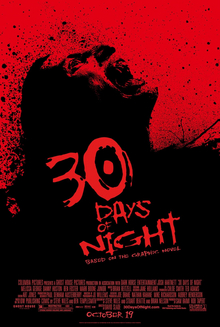
30 Days of Night-2007

30 Days of Night-2007

Director David Slade

Starring Josh Hartnett, Melissa George

Scott’s Review #993

Reviewed February 25, 2020

Grade: B-

During the decade when 30 Days of Night (2007) was released, the trend leaned towards the vampire-horror genre, where bloodthirsty tyrants would do battle with the good folks of the land.

The film has outstanding elements: a tiny town, total darkness, and chaos.

The gritty conclusion is a predictable letdown as the film spins out of control into the silly and the formulaic.

Hartnett, at the time, was an A-list actor whose film career was dwindling, reduced to the horror circuit.

In Barrow, Alaska, which is said to be the northernmost town in the United States, the winter sunsets do not rise for 30 days and nights, providing a full month of complete blackness.

An evil force emerges from the black atmosphere and strikes terror into the town, and all hope rests on a husband-and-wife cop team, Sheriff Eben Oleson (Hartnett) and Stella Oleson (Melissa George).

The duo must protect a handful of survivors from a pack of vampires and battle the lack of communication and blizzard conditions in the frigid Arctic.

The film is based on a comic book miniseries of the same name, but 30 Days of Night is mostly influenced by two better films: 28 Days Later (2002) and 28 Weeks Later (2007), the former a groundbreaking film within the sub-genre- even the title is a copycat!

The result is nothing groundbreaking and rather run-of-the-mill story-wise. It seems too closely patterned after other films rather than having an identity of its own.

The best part of the film is the fantastic elements and trimmings created to provide an atmosphere. Highly effective, it carries the film and intrigues the compelled audience when the story lacks.

What is more frightening than a blinding whiteout, hungry vampires, or a town fraught with perilous fear? The spooky atmospheric trimmings make the lack of payoff even more jarring, leaving the film adequate, but little more.

The casting is mediocre and unrealistic.

I doubt any sheriff in a tiny, forgotten town would be as good-looking as Hartnett, nor is he believable as a powerful sheriff- he does not fit the part.

George, as estranged wife Stella, is neither good nor bad, but rather inconsistent. There is little chemistry between the couple, and both were cast for their looks, as they seem more like staged puppets than fleshed-out characters.

Regardless, any romantic entanglements between the characters are dull and insignificant.

The character development is not there.

Ben Foster, as “The Stranger”, is a great actor, but not in this film. Subsequently appearing in grand roles in Hell or High Water (2016) and Leave No Trace (2018), he is not at his best in this film.

The character is limited, whereas he could have added much more to a better-written script.

We know little about the townspeople, and it is unclear what the vampires’ motivations are beyond wreaking havoc and creating terror.

30 Days of Night (2007) is a marginally good film, mostly because of the way it looks, and the horror-flavored ingredients sprinkled throughout.

Despite some cool ways of killing off the evil vampires, the film never hits high gear, remaining neutral for most of the way and ending with a disappointing climax.

It is advisable to see the much superior and similarly produced and filmed 28 Days Later (2002).

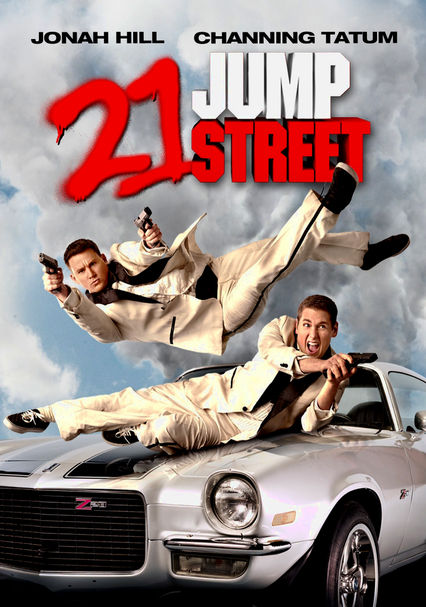
21 Jump Street-2012

21 Jump Street-2012

Directors Phil Lord, Chris Miller

Starring Channing Tatum, Jonah Hill

Scott’s Review #992

Reviewed February 20, 2020

Grade: C+

21 Jump Street (2012) is a nostalgic ode to the general style of the 1980s, more specifically a popular television series that ran from 1987 to 1991.

The teen police drama launched actor Johnny Depp’s successful career.

He starred as the good-looking leader of a team of young police officers who can pass for high school students and infiltrate potential drug rings, prostitution circles, or other such shenanigans.

The film is hardly high art or cinematic genius. The gags are silly and trite, other times not funny at all.

But the film has a freshness that feels cool, sleek, and fun, with a throwback to a decade of materialism, and it never apologizes for it.

The chemistry between Jonah Hill and Channing Tatum turns a standard buddy film into something bearable to watch.

The film is formulaic, but not dull.

The filmmakers aim for an action-comedy hybrid, even though the series was mostly conventional drama and taught a lesson in each episode. They also change course and focus on two characters instead of a group, making it more of a guy movie.

Honor roll student Morton Schmidt (Jonah Hill) and popular, underachieving jock Greg Jenko (Channing Tatum) reunite seven years after graduating high school at the police academy, where they are studying to be cops.

Eager to leave their juvenile problems and their dislike for each other behind, they use their youthful appearances to go undercover at a local high school as part of a Jump Street unit.

As they trade in their guns and badges for books and bagged lunches, Schmidt and Jenko risk their lives to investigate a violent and dangerous drug ring.

They slowly realize that high school is nothing as they left it just a few years earlier, and they revisit the terror and anxiety of being a teenager again and all the issues they assumed they had left behind.

The film is mediocre; nothing is wrong with it, but nothing is outstanding either. As the setup suggests, Morton and Greg are opposites in every way and must come together to achieve a common goal.

This is a standard cliché told countless times in films such as Stir Crazy (1983) and 48 Hours (1982), and the reference is from the 1980s.

Speaking of the decade of excess, 21 Jump Street achieves what it sets out to do in this regard with a clever nod to a revived scheme from that decade.

Set in present times, the film is nonetheless a nod to teen films of the day.

Wild comedy and lavish adventures are in order in every high school situation imaginable. Dating, AP chemistry class, and the senior prom are heavily promoted so that any viewer above the age of twenty-five can reminisce.

A fun and necessary quality is the inclusion of a few of the original cast of the television series-Holly Robinson Peete, Peter DeLuise, and Johnny Depp all appear in cameo roles.

This is a treat for fans of the original series and a tribute to its creation, though nothing else is utilized very well, and no other history ever quite measures up.

Robinson Peete’s role is nice because she appears as a police officer.

While it does little to honor the television series it is based on, and instead churns out more of a male-cop film, the incorporation of the original cast deserves praise.

The lead actors are charismatic and clever in their roles, which saves the film from being a disaster.

21 Jump Street (2012) veers too far into slapstick instead of sending an important message to its audience, which it could have.

The box-office hit was followed in 2014 by an unnecessary remake, aptly entitled 22 Jump Street.

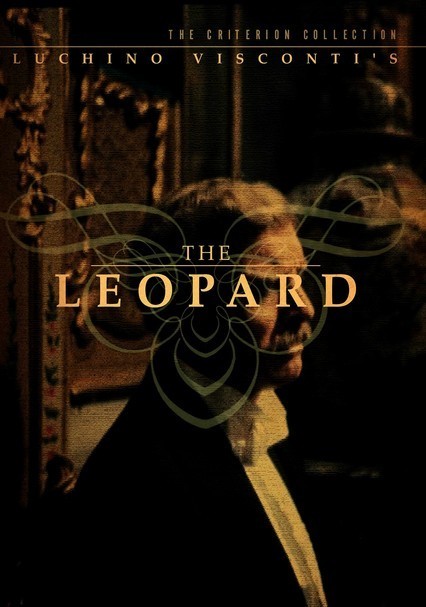
The Leopard-1963

The Leopard-1963

Director Luchino Visconti

Starring Burt Lancaster, Claudia Cardinale

Scott’s Review #991

Reviewed February 18, 2020

Grade: A

One of the great works in cinematic history, I preface this review by stating that I viewed the English-dubbed version of the brilliant The Leopard (1963), starring Burt Lancaster and Claudia Cardinale.

This version is considerably shorter, at two hours and forty-one minutes, than the Italian version, which is three hours and five minutes.

As grand as the former is, my hunch is that something is lost in translation with the latter. The English version has no subtitles and is available only on DVD, so the film is difficult to follow but is rich in texture.

An interesting tidbit is that the film’s surgery was performed without director Luchino Visconti’s input – the director was unhappy with the editing and the dubbing.

This point is valid since some voices are Italian and French, sounding too American and unauthentic.

Admittedly inferior, the English version is nonetheless extravagant and lovely on its own merits, though I would die to see the original version if it were available.

The time is during the 1860s, when the tumultuous era affected Italy and, more specifically, Sicily. Prince Don Fabrizio Salina (Lancaster) is at a crossroads between holding onto the glory he once knew and accepting the changing times, welcoming a more modern unity within the country.

A new mayor surrounds him, Don Calogero Sedara (Paolo Stoppa), who has a gorgeous daughter, Angelica (Cardinale).

He intends to marry Fabrizio’s French nephew, Tancredi Falconeri (Alain Delon).

The film dissects the changing times in Italy.

The visual treats for the viewer are astounding and by far the best part. The lovely, palatial estates are gorgeous, with decorative sets, bright and zesty colors, and meals displayed during parties that captivate audience members.

The costumes are state-of-the-art, and each frame can easily be a painting on a canvas. A tip is to pause the film, study it, and immerse yourself in its style.

Many film comparisons, both past and yet to come, can easily be made when you think about it.

An Italian Gone with the Wind (1939), if you will, with Angelica as Scarlett and Tancredi as Rhett (okay, the chemistry is not quite the same, but similarities do exist), and Concetta as the long-suffering Melanie; the characters can be compared.

The grand ball, the costumes, and the ravaged country are more prominent comparisons.

Nine years after The Leopard, a little film entitled The Godfather (1972) would change the cinematic landscape forever.

Director Frances Ford Coppola must have studied this film, as there are plentiful scenes of the Italian landscape and the culture in which both are immersed. Even snippets of the musical score mirror each other.

What a grand film to borrow and cultivate from!

Despite all the beautiful trimmings that make The Leopard a masterpiece, the film belongs to Lancaster in the best role of his career.

The hunk in 1953’s From Here to Eternity, as the Prince, he is aged to perfection, distinguished-looking with graying sideburns.

The film is an epic extravaganza, and the actor leads the charge, carrying the film.

He is a stoic man, but not without fault and emotion, wearing his heart on his sleeve, realizing that he must adapt to the changing times. We feel his quandary and embrace the character as a human being.

Attention-paying fans must be forewarned that the plot is basic and complex because of the absence of subtitles; however, the story is not highly complex.

The story is about how the Prince maneuvers his family through troubled (and changing) times to a more secure position. This is the film’s overarching theme.

Suffering from dubbing and quality control issues can do nothing to ruin a spectacular offering that is a cinematic gem and testament to the staying power of The Leopard (1963).

I eagerly await the day when the traditional Italian version can be found and discovered. It will be a treat to eat.

Until then, the film is a historical epic that can be appreciated for the dynamics and importance it so richly deserves.

Oscar Nominations: Best Costume Design, Color

Golden Globe Nominations: New Star of the Year-Actor-Alain Delon

21 Grams-2003

21 Grams-2003

Director Alejandro G. Iñárritu

Starring Sean Penn, Naomi Watts

Scott’s Review #990

Reviewed February 14, 2020

Grade: A

21 Grams (2003) is an independent crime thriller and drama featuring crisp writing, top-notch acting, and a unique directorial style by Alejandro G. Iñárritu.

In an early work by the acclaimed director, he delivers a powerful portrayal of the human condition through intersecting storylines.

The result is a powerful emotional response that resonates among viewers, taking the time to let the story evolve and marinate.

Outstanding filmmaking and a sign of things to come for the director.

The film is the second part of screenwriter Guillermo Arriaga’s and Iñárritu’s Trilogy of Death, preceded by Amores Perros (2000) and followed by Babel (2006).

21 Grams interweaves several plot lines in a nonlinear arrangement.

Viewing the films in the sequence is not required to appreciate and revel in the gorgeous storytelling and mood.

The story is told in a nonlinear fashion and focuses on three main characters, each with a “past”, a “present”, and a “future” story thread.

Events culminate in a horrific automobile accident, which is the overall story. The sub-story fragments delve into the lives of the principals as the audience learns more about them.

Ultimately, all three lives intersect dramatically, leaving the viewer mesmerized and energized by the deep connections.

Paul Rivers (Sean Penn) is a successful, married college mathematics professor who desperately needs a heart transplant. He and his wife are considering having a baby in case he should die.

Cristina Peck (Naomi Watts) is a recovering drug addict now living a happy suburban life with a loving husband and two young children.

Jack Jordan (Benicio Del Toro) is a former convict who is using his newfound religious faith to recover from drug addiction and alcoholism and live a happy existence with his wife and kids.

After the car accident, each life takes a shocking turn, forever changing things.

The multiple timelines and back-and-forth storytelling are an excellent part of 21 Grams, adding layers upon layers of potential entanglements among the characters.

This could be a confusing quality, but instead, it provides mystique and endless possibilities.

What worked so well in the outstanding Traffic (2000) is used by Inarritu and delivers. The recipe of clever plotting characters the audience cares about, and top-notch acting is created, mixed, and served on a silver platter.

Penn, Watts, and Del Toro are stellar actors who give their characters strength, sympathy, and glory. Each has suffered greatly and faced (or faces) tremendous obstacles in life, soliciting feelings from viewers.

All three are good characters, trying to do the right thing, and grasp hold of any sliver of happiness they can find. They have moral sensibilities without being judgmental.

Delicious is how each character interacts with the others, but in differing ways.

The film is not happy and not for young kids, but its brilliant elements will leave the film lover agape at its qualities. The film’s dark, muted lighting is perfect for the morbid stories it tells and the common themes of anguish, courage, and desperation.

The clever title refers to a 1907 experiment that sought to provide scientific proof of the soul’s existence by recording a loss of body weight (said to represent the departure of the soul) immediately after death.

Only the second full-length film in Inarritu’s young career, 21 Grams is brilliant in its portrayal of human emotion and connection.

The powerful director would go on to create Babel (2006) and The Revenant (2015), two vastly different films but with similar hearts.

21 Grams (2003) is a wonderful introduction to good things to come, using crafty acting and layered writing to create a gem well worth repeated viewings.

Oscar Nominations: Best Actress-Naomi Watts, Best Supporting Actor-Benicio del Toro

Independent Spirit Award Nominations: 1 win-Special Distinction Award (won)

101 Dalmatians-1996

101 Dalmatians-1996

Director Stephen Herek

Starring Glenn Close, Jeff Daniels

Scott’s Review #989

Reviewed February 13, 2020

Grade: C+

The classic animated Disney film 101 Dalmatians (1961) is brought to life in a live-action adaptation thirty-five years later, offering a fresh spin on the revered original.

Unfortunately, the result is nothing special save for Glenn Close’s brilliant performance as the dastardly Cruella De Vil.

Otherwise, the reworking is too amateurish and largely unnecessary, especially as compared to the brilliance and charm of the original.

Thankfully, not modifying the London setting, American video game designer Roger Dearly (Jeff Daniels) lives with his pet dalmatian, Pong.

Lonely, Roger trudges along through life without a love interest. During a walk, Pongo sets his eyes on a beautiful female Dalmatian named Perdy.

After a chase through the streets of London that ends in St. James’s Park, Roger discovers that Pongo likes Perdy.

Her owner, Anita Campbell-Green (Joely Richardson), immediately falls in love with Roger, and the duo is inseparable.

They get married along with Perdy and Pongo. Anita works as a fashion designer at the House of de Vil. Her boss, the pampered and glamorous Cruella de Vil (Close), has a passion for fur.

Anita, inspired by her Dalmatian, designs a coat made with spotted fur, and Cruella is intrigued by the idea of wearing Anita’s dog. She hatches a plot to steal and kill the puppies for her lavish gain.

The scenes between the dogs are cute and work better than the intended romantic relationship between the humans—a daring pursuit in the animated feature that does not shine through with real actors.

Either the chemistry between Daniels and Richardson does not exist, or the scene is too forced, or perhaps both. I did not buy the love-at-first-sight, stars-aligning moments.

I bet most audiences didn’t either. The result is a banal and stale connection between Roger and Anita, meant to be the core of the story.

Enough cannot be said for what Close brings to the role. The actress delivers a tremendous performance and sinks her teeth into the most prominent and interesting role in the film.

With a sinister sneer, a flowing red-and-white coat, and a token cigarette holder, she provides Cruella with dazzling menace.

Careful not to overact and result in a juvenile character, she relishes the role, providing just enough comedy without being too scary. The performance is perfect.

A negative is that, unlike the animated version, none of the animals have speaking voices. This detracts from the earnest quality of expressive, talking animals.

What pet owner does not imagine what their cat or dog would sound like if they talked?

Instead, the puppies sniff and look cute, distracting themselves and leaving them unclear about what feelings they have. One wonders why the decision was made in this way, but it does little to provide texture.

101 Dalmatians are too cute for their own good, which limits their sophistication. The original had British intelligence and a cultural voice, with small, yet important details, like falling rain, that live-action cannot mimic.

The 1996 version is kid-friendly, but brings little to the table, lacking interesting flair. Why not teach a lesson about the dalmatian dog breed rather than settle for simply an adorable slant?

Rumors abound that parents adopted dalmatians for their children after seeing the film and were forced to return them, rather than invest time in study, realizing that raising a dalmatian is hard work.

The idea of remaking an adorable, cozy Walt Disney classic from the 1960s with a fresh approach is admirable. The live-action detail could add a new twist or inventive spin that appeals to a new generation of youngsters.

Unfortunately, 101 Dalmatians (1996) works unwell, barely rising above mediocrity, with an aura of fluff and gimmicks that feel forced and trite.

The saving grace is Glenn Close, a tremendous talent who gives it her all despite subpar material.

Stick to the original 1961 version.

10,000 B.C.- 2008

10,000 B.C.- 2008

Director Roland Emmerich

Starring Steven Strait, Camilla Belle

Scott’s Review #988

Reviewed February 11, 2020

Grade: F

10,000 B.C. (2008) is a by-the-numbers adventure/action hybrid film that attempts to be slick and modern with catchy visual elements, but instead bottoms out, resulting in a terrible example of filmmaking.

The CGI usurps all other qualities, offering no historical accuracy and a ridiculous 2008 feel rather than the time at hand.

Those involved had only the film’s box-office returns in mind when the film was created.

An irritating formulaic quality and poor acting across the board leave this one dead on arrival.

Fierce, masculine mammoth hunter D’Leh (Steven Strait) sets out on an impossible journey to rescue the woman he loves, Evolet (Camilla Belle), from an evil warlord and save the people of his village.

While venturing into the unknown and frightening territories, D’Leh and his fellow warriors discover an amazing civilization rife with possibilities.

Predictably, the warriors are attacked and slaughtered, leaving the young man to protect the remaining group while winning the heart of a princess, well above his station in life.

The story is complete schmaltz and easy to predict from nearly the very beginning of the film.

Powerful invaders force the hunters of D’Leh’s tribe into slavery and accost the princess in such a fashion that the setup is all put neatly in place for the viewer, providing nothing out of the ordinary.

When the young and naive boy has an epiphany and realizes he is the only one who can save his tribe from extinction, it is all too much.

The film is riddled with cliché after cliché after cliché.

A tough ask to lead a film with summer blockbuster written all over it, newcomers Strait and Belle do their best, which only enhances how poor their acting is.

Cast for their good looks, they can offer little else. For audience delight, Strait is costumed with a bad wig, dripping sweat, and bulging muscles.

Belle is also victimized as she pouts and sulks while wearing skimpy clothing.

The result is a standard boy-meets-girl story: the boy loses the girl, and the boy becomes a man to clean up the girl’s mess. Inexplicable is how they meet and fall in love before ever speaking or getting to know each other.

If only the bad acting were the only negative, the film might be fair to middling, but nothing good is ever offered. All the hunters and tribe members look like modern people dressed to look like people from a different period.

The endless battle scenes borrow from the legion of action and adventure films that have come before it. The animals prance across the screen in obviously timed moments, providing little in the way of authenticity.

Director, Roland Emmerich, known for films such as Independence Day (1996) and The Day After Tomorrow (2004) has a knack for creating large epic adventures to please mainstream audiences.

There is nothing wrong with a conventional film if it manages to teach the viewer something or offer something of merit. With a target audience of pubescent boys and girls yearning to learn, Emmerich misses a golden opportunity to present an imaginative prehistoric moment and provide a lesson.

Complete with a bad story and bad acting, the drivel conjured up is nearly too much.

The over-stylish visuals cannot save 10,000 B.C. (2008) because they are so phony that one cannot even fathom any credibility.

The good-looking main stars look straight out of a glossy magazine and hardly from the prehistoric era presented.

With a little attempt at giving audiences anything of substance, this film is an epic fail to be missed.

The Lighthouse-2019

The Lighthouse-2019

Director Robert Eggers

Starring Robert Pattinson, Willem Dafoe

Scott’s Review #987

Reviewed February 5, 2020

Grade: A-

The Lighthouse (2019) is the sophomore effort by acclaimed and novice horror director Robert Eggers.

His first film, The Witch (2015), garnered praise and independent film award nominations, and his latest offering has also received numerous accolades across the board.

This time around, he wisely secures top-notch talent, casting the incredible Willem Dafoe and Robert Pattinson to star.

The result is a well-acted, gorgeously photographed film that is odd beyond belief, requiring a second viewing even to attempt to understand it. The atmosphere of this film will draw some viewers in and push away others. It is that type of film experience.

Shot in startlingly good black and white, the time is the 1890s, set somewhere off New England.

The film stars Dafoe and Pattinson as two lighthouse keepers who start to lose their sanity when a storm strands them on the remote island where they are stationed. They spar, love, and play games, while imaginations run wild with bizarre images of mermaids, death, and claustrophobic storm conditions.

Frequent hallucinations render the plot unclear of what is fantasy and what is reality.

The technical aspects of The Lighthouse are superior to the story elements.

The gorgeous camera work, looking like either a modern film or a film from the 1940s, is superior. Seldom is a film made like this, and the black and white filming provides a cold and bleak atmosphere.

The prevalent wind and driving rain are buffeted by flying objects and mud, creating a looming and foreboding danger. The viewer can tell that sinister events are on the horizon, perfectly encrusting the increasingly dangerous storm.

The story is harrowing to figure out, with the exception that one or both men are losing their minds. Winslow (Pattinson) is the newbie, sent to assist the elder lighthouse keeper, the elderly and cranky Thomas Wake (Dafoe).

Wake forbids Winslow to ever set foot in the lantern room, insisting that the task is his job alone. This piques the interest of the young man, especially when Winslow observes Wake going up to the room at night and stripping naked.

Winslow begins experiencing visions and dreams of tentacles in the Lighthouse, tree stumps floating in the water, and distant images of a mermaid.

Peculiar scenes exist that make The Lighthouse both memorable and challenging to decipher. The presence of seagulls lends the film an authentically beach-like atmosphere, with their cawing and flying around.

Their existence soon becomes an ode to Alfred Hitchcock’s The Birds (1963) as a one-eyed gull begins to stalk Winslow.

Told it is bad luck ever to kill a gull since they harbor the souls of sailors, Winslow finally kills the attacking one-eyed gull in a fit of rage during one of the film’s most brutal scenes. Wake seethes with anger.

The film is homoerotic in many scenes, none more so than the lovely scene when the two men begin to dance and sway to the music. About to kiss, reality strikes, and the two drunk men come to blows.

The scene reminds me of an important one in the groundbreaking LGBT masterpiece Brokeback Mountain (2005).

The combustible pent-up masculine tension explodes, and we wonder if in another time the men lovers might be. This aspect is cerebral, filling The Lighthouse with psychological mystique.

A common element is the two men’s distrust of one another. Trapped by the destructive storm, they frequently drink themselves into oblivion- what else is there to do?

They sit and stare at each other, sometimes filled with rage, sometimes suspiciously. In a scene both jaw-dropping and hilarious, Winslow forces Wake into a collar and leash and leads him on his hands and knees into a muddy grave.

Unsure if the scene is fantasy or reality, it could almost be taken from a gay leather porn film.

Eggers has a bright future ahead of him, and I am eager to see his next project. I am not averse to odd or even nonsensical films if the intent is good, but I would recommend a more straightforward approach next time to see what he comes up with.

The Lighthouse (2019) successfully offers a creepy and bizarre tale of men losing their sanity in a dream-like and creative way that will assuredly divide audiences.

Oscar Nominations: Best Cinematography

Independent Spirit Award Nominations: 2 wins- Best Director- Robert Eggers, Best Male Lead- Robert Pattinson, Best Supporting Male-Willem Dafoe (won), Best Cinematography (won), Best Editing

Oscar Nominated Animated Short Films-2019

Oscar-Nominated Animated Short Films- 2019

Directors: Daria Kashcheeva, Matthew A. Cherry, Karen Ruper Toliver, Rosana Sullivan, Kathryn Hendrickson, Bruno Collet, Jean-Francois Le Corre, Siqi Song

Scott’s Review #986

Reviewed February 4, 2020

Grade: A-

Having the honor of being able to view the five short films nominated for the 2019 Academy Award for Best Animated Short Film at my local art theater was pretty amazing.

Far too often dismissed as either irrelevant or completely flying under the radar of animated offerings, it is time to champion these fine little pieces of artistic achievement.

On par with, or even superseding, full-length animated features, each of the five offers a vastly different experience, yet each presents either inspired or hopeful messages or dark, devious, and edgy stories.

The commonality this year is relationships, and not necessarily between human beings, as one of them features a darling relationship between a cat and a dog.

Below is a review of each of the shorts.

Memorable-2019 (France)

This offering is the most visually enticing of the five nominees. In the story, a French painter slowly falls prey to the ravages of dementia, while his wife suffers alongside him as his memory disintegrates. He sinks into a world of impressionistic shapes, vivid with gorgeous color.

The film is both beautiful and heartbreaking, making it a challenging watch. The swirling colors and fragmented shapes provide a lush and melancholy feel.

The viewer will likely empathize with the only two characters to appear (husband and wife) and relate to each of them as they experience the misery and confusion, with the assurance of what the outcome will be.  Grade: A

Sister-2019 (China)

Sister is a touching tribute to a person who does not even exist.

A man thinks back to his childhood memories of growing up with an annoying little sister in China in the 1990s. What would his life have been like if things had gone differently? Would the siblings annoy each other or be the best of friends?

With political overtones, the piece describes the inhumane law that Chinese parents could only have one child, the mother forced to abort an impending birth.

Traditional Chinese colors of red and black are used, and the imaginary sister is cute and energetic, a tragic realization of the terrible loss of potential life in a damaged nation. Grade: A-

Hair Love-2019 (USA) (Won)

Created by a team from the United States and strongly considered the front-runner, Hair Love feels the shortest of the bunch and is the most accessible of all the nominees, but hardly fluff either.

A young black girl battles with her wild head of hair on a special day. After she unsuccessfully tries to create a gorgeous hairstyle by watching YouTube videos, she desperately enlists the help of her kindly father. At first disastrous, they manage some success.

The relationship is at first unclear. Is he a single dad? Is he her dad at all? Is he an older brother? The puzzle is quickly resolved with the revelation of the mother’s whereabouts in a tender and heartfelt ending. Grade: A

Kitbull-2019 (USA)

My personal favorite of the bunch, Kitbull, is tough to watch at first.

Any animal abuse in the film makes my stomach turn, and the beginning turned me off as I anticipated giving the piece a low rating.

Instead, Kitbull results in a marvelous experience as a darling and compassionate story of the relationship between a kind cat and a suffering dog.

The unlikely connection brought tears to my eyes as the cat, presumed to be an independent alley cat, came to the rescue of the pit bull, suspected of being in a dog fight. Any animal lover will watch this short with a mix of anger, empathy, and finally, joy.

The sobering reality that so much animal abuse still exists in the world is a both mind-blowing and cruel reality. Grade: A

Daughter-2019 (Czech Republic)

Daughter is a brief, yet vague film that is both confusing and yet resilient and creative. The story consists of two characters- a father and daughter, both of whom seem to suffer from regret.

The father appears to be either sick and recovered, or to have died (unclear if the story is told via flashbacks). The frequent pained expressions of both characters as they yearn to rewind the clock and treasure moments of the past, both of hardships and joy, are lessons that every viewer can appreciate and relate to.

The misshapen ceramic figures and the facial movements, especially the blinking eyes, do much to elicit an emotional reaction from the audience. Grade: B+

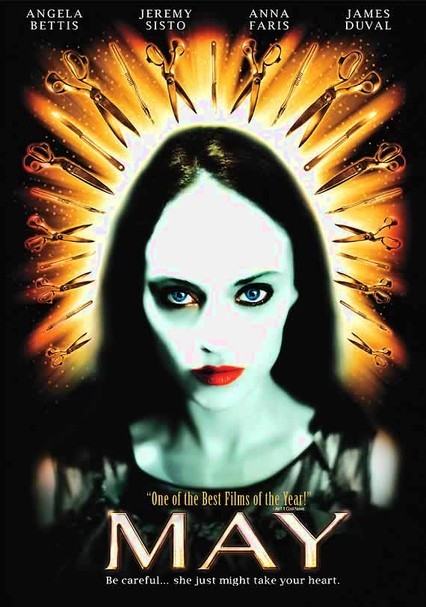
May-2003

May-2003

Director Lucky McKee

Starring Angela Bettis

Scott’s Review #985

Reviewed January 30, 2020

Grade: B+

May (2003) is a macabre and twisted psychological horror film and the directorial debut of Lucky McKee.

Though not a box-office success, the film has become a cult favorite and is a feast for lovers of the deprived and tormented.

The wicked fun is to watch the main character, already troubled at the start of the film, dissolve into complete and utter madness.

The acting and the mood are exceptionally crafted.

Growing up with a lazy eye, leaving her scarred with never-ending insecurity, May Canady (Angela Bettis) is a twenty-eight-year-old woman who has suffered from a troubled childhood.

Having always had trouble making friends, she finally befriends a lesbian colleague, Polly (Anna Faris), and a handsome mechanic, Adam (Jeremy Sisto).

Before long, she spoils the friendship when her oddities brim to the surface. May descends into utter madness and decides to build a new friend using human body parts.

Will bits and pieces of her friends be used in the creation?

Bettis is a goldmine in the central role, providing a healthy dose of sympathy and creepiness.

Many film characters have been outright disturbing in cinematic history, but May is wounded and victimized, so we, as viewers, want to see her win out for once.

All May wants is a friend, and, especially with Adam, we root for her to find true love.

May is like a combination of Carrie and Frankenstein.

Adam, while handsome, is also weird, and a good match for May. He introduces her to a bizarre movie in which two characters embark on a romantic picnic and then eat each other. Adam reveals that he created the film for a college project.

This impresses May- finally, she has a soulmate! She quickly ruins the moment by biting his lip, turning him off, and destroying her mounting confidence.

McKee is successful at making the film flow with precision and good pacing. Many rookie directors seem overwhelmed by a major motion picture undertaking, perhaps feeling more comfortable with short films.

McKee proves he knows his stuff with an elegant and icy atmosphere that is just perfect for this type of film.

May is a quick one hour and thirty-three minutes, which is all that is needed to make its mark.

The final thirty minutes are the best part as the shit hits the fan in a big way. McKee’s choice to use Halloween night as the backdrop is both obvious and ingenious.

May is not only ignored by Adam, but also learns that he has a new girlfriend. To add insult to injury, Polly also finds love with their new girlfriend, Ambrosia.

May feels isolated and finally snaps when her cat ignores her. She goes on a rampage and hacks up not only her friends but also her eye.

May is a clever and atmospheric horror/thriller film with bursts of creativity and a well-flowing narrative. McKee may not always be original and borrows heavily from other genre films, but he creates a solid blueprint for what his talents may lead to.

The film leaves the viewer unnerved and aghast, but isn’t that the point of a good horror film?

May (2003) could disappear over time, but it provides a worthy dedication to the horror genre.

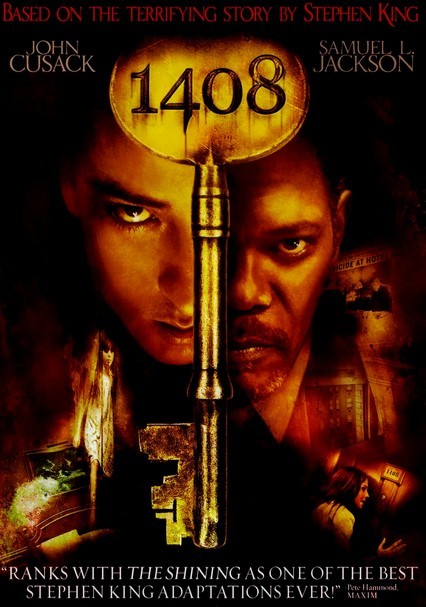
1408-2007

1408-2007

Director Mikael Hafstrom

Starring John Cusack, Samuel L. Jackson

Scott’s Review #983

Reviewed January 23, 2020

Grade: C+

A bundle of film adaptations of Stephen King novels has been born over the years.

1408 (2007) is one of many, and while suspenseful, the project might have been better served as a quick fifty-minute episodic television event rather than a big-screen effort.

The content seems displaced and disjointed, stretched too thin.

Nonetheless, big stars like John Cusack and Samuel L. Jackson provide some stamina to a film that slowly teeters into nonsense and a confusing conclusion.

Based on Stephen King’s 1999 short story of the same name, the film follows Mike Enslin (Cusack), an author who investigates allegedly haunted houses, and rents the titular room 1408 at the Dolphin, a New York City hotel, to see what all the fuss is about.

Although skeptical of the paranormal, he soon finds he cannot leave the room as bizarre events unfold.

The hotel manager, Gerald Owen (Jackson) attempts to convince Mike not to inhabit the notorious room, and intriguing is why?

The film is most successful when it focuses on the atmospheric and tense moments. The lighting and camera techniques evoke a closed-in, claustrophobic aura because the set is mostly a hotel room.

The use of psychological tension works better than a slice-’em, dice-’em approach.

During Mike’s examination of his room, the clock radio suddenly starts playing “We’ve Only Just Begun”, a hit song by The Carpenters. Mike assumes that Olin is pulling a prank to scare him.

At 8:07, the song plays again, and the clock’s digital display changes to a countdown starting from “60:00.”

This is creepy, and the viewer is intrigued by what will happen next.

The window slams down and wounds Mike’s hand. He begins to see ghosts of the room’s past victims, followed by flashbacks of his dead daughter Katie and his sick father.

This catapults Mike into terror, and he attempts to escape the room, fearing for his life.

He fails to escape, and the room appears to hold him prisoner until his wife, Lily (Mary McCormack), comes to the rescue.

What does Olin have to do with the events? Is Lily sinister or benevolent?

When Mike is out of the hotel room, the film falls apart. Containing too many weird circumstances to make much sense- a surfing event on the beach, a Molotov cocktail, a fire alarm, and a return to the hotel room- spins the viewer in too many directions as a hallucinogenic experience is created.

Before long, the viewer will stop caring. I know I did. On paper, these oddities sound intriguing, but they did not translate well to the screen.

Hafstrom directs the activity adequately and uses actors viewers are familiar with, which adds to its credibility.

With fewer talents or unknowns, the film might have felt low-budget or independent, and I think it, while not great, needs these actors to lend professionalism.

The star is naturally Cusack, who enjoys the most screen time as a man who only believes what his eyes and ears tell him, and not the silliness of spirits and ghosts.

The actor possesses an offbeat look, which adds to the film.

From a storyline perspective, 1408 never really catches fire. The film is neither pitiful nor a great adaptation of a Stephen King novel. The novel is hardly a household name, which does the film a few favors.

The result is fair to middling, with a promising first half followed by a dour second. 1408 (2007) will be forgotten five years after its release.

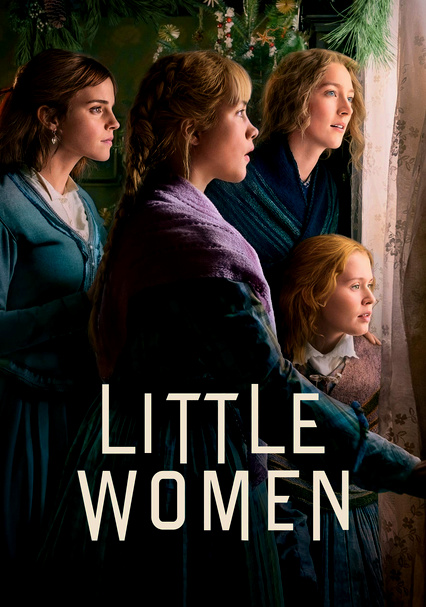
Little Women-2019

Little Women-2019

Director Greta Gerwig

Starring Saoirse Ronan, Florence Pugh

Scott’s Review #982

Reviewed January 21, 2020

Grade: A-

Numerous adaptations of the 1860s classic novel by Louisa May Alcott have been forged upon the silver screen, some good and some not as good.

The consensus is that Little Women (2019) is one of the better offerings, if not the best.

Director Greta Gerwig crafts a clear feminist, progressive version of the trials and tribulations of the March family, led by the spirited, spitfire Jo (Saoirse Ronan). Gerwig’s telling is fantastic, breathing fresh life into a classic story.

The story fluctuates heavily between 1868 and 1861, spanning both the United States Civil War and its aftermath.

Liberal, the Marches reside in Massachusetts, led by matriarch Marmee (Laura Dern), who mainly lives life while their patriarch, Father March (Bob Odenkirk), is off at war. The rest of the household includes sisters Jo, Meg (Emily Watson), Amy (Florence Pugh), and the youngest daughter, Beth (Eliza Scanlen).

The family endures joy, hardship, romance, love, and death as they navigate the decade.

The focal point is Jo, a determined young lady, who moves to New York City, frequently reflecting on her life through back-and-forth sequences.

She begins, as an aspiring writer, and as she grows up, eventually becomes a success, having her novel published boldly. She resists the tried and true and questions why a woman must rely on a man for success rather than her efforts and talents.

During the story, she is pursued by two young men, Laurie (Timothee Chalamet) and Friedrich (Louis Garrel).

Little Women is a fantastic and emotional story and a film that has no need for CGI, car chases, explosions, or any ingredients meant to enliven a film. It does not need them.

The excitement is in the plot, as we thirst for more of the ups and downs that the March family faces. With any successful drama, there are nuanced characters, each taking a turn at a story.

While Jo is the headliner, Amy, Meg, and Beth are much more than opening acts. They each have their own lives, dreams, triumphs, and hardships, and the audience cares about each of them.

To capitalize on this point, the casting is dynamite. In a small, but brilliant role, Meryl Streep gives a bombast to her character of Aunt March, the wealthy widow who owns a gorgeous house and vacations in Paris.

She is cranky, but wise, only wanting the very best for her nieces, which is, of course, to marry rich!

Ronan is well-cast and charismatic as Jo, the actress who loses her Irish accent for an American one. She utilizes her acting skills to imbue Jo with determination and just enough empathy to win over the audience.

Gerwig assures that the audience is reminded of the times and what it meant to be female during the 1860s, with a minimal chance at self-achievement, having to rely on a man for nearly everything.

She is in no way demeaning or ridiculing the male gender, though. She paints no villains in her film, instead showing men as supportive at times, enamored at other times, but never exerting their power over women.

Little Women receives a minor demerit in the pacing department. The film sharply shifts back and forth, in a too rapid manner, from period to period, at times leaving the viewer unclear as to which section of the film they are in.

Blessedly, this ceases about midway through, but the technique is jarring and unnecessary. One wonders what the action was intended to achieve and why a more straightforward approach to storytelling was not used.

A key facet of any outstanding film is the emotional reaction, and Little Women had this viewer with tears streaming down his face. Sometimes for joy, sometimes for sadness, all in an organic way given oomph by a powerful musical score that resonates but never overwhelms.

The film is one in which all its elements come together in perfect harmony.

The film received six nominations, including Best Picture, Best Actress (Ronan), Best Supporting Actress (Pugh), and Best Adapted Screenplay. Sadly, and in a never-ending slight for female directors, Gerwig was overlooked.

Before the 2019 film adaptation of Little Women, the novel had been adapted for film six times, with the most successful versions being in 1933 and 1949.

Seventy years later, the most modern version is arguably the best, with a left-leaning stance that is oh so necessary in modern times.

Oscar Nominations: 1 win- Best Picture, Best Actress- Saoirse Ronan, Best Supporting Actress- Florence Pugh, Best Adapted Screenplay, Best Original Score, Best Costume Design (won)

The Lion King-2019

The Lion King-2019

Director Jon Favreau

Voices: Donald Glover, Alfre Woodard, Seth Rogen

Scott’s Review #981

Reviewed January 17, 2020

Grade: B

An impossible feat would have been to eclipse the magic of the stage version or the loveliness of the animated version. Still, The Lion King (2019) offers a different approach as well.

Arguably, this version is both animated and not, infused with computer-generated animation (CGA) and marvelous visual effects, showcasing creativity.

Partial to the two-former offering, this telling is lovely and perfect for the entire family.

The realism of the animals and scenery is remarkable.

To recap, new viewers, the story centers on a den of lions living among the creatures in the “Pride Lands of Africa”. They hunt, prance, love, and guard their territory, mainly from the hungry hyenas, who are kept at bay during peaceful times.

King Mufasa (James Earl Jones) and Queen Sarabi (Alfre Woodard) are fair rulers and anticipate their son, Simba (Donald Glover), taking over the throne one day, much to the chagrin of Mufasa’s evil brother, Scar (Chiwetel Ejiofor), who was passed over for the crown.

Envious of Simba, Scar tricks him and his friend Nala (Beyoncé) into wandering into the land of the hyenas, hoping to cause their deaths. When a heroic Mufasa foils his plot, Scar ups the ante and hatches a scheme to kill his brother.

He not only succeeds but also makes Simba believe he caused his father’s death. Ashamed, the youngster runs away to begin a new life, unaware that he will one day return to save the day.

Props must be given to the filmmakers for their inclusion and cultural authenticity, as many of the characters, especially those at the forefront, are voiced by African-American talent.

This is a notable achievement, considering the film is set in Africa, and it’s unusual for the voices to be Caucasian.

Heavyweights like Jones and Woodard sound polished, especially Jones with his deep and dominant, yet fatherly voice, perfectly cast as the King. Woodard provides gentle warmth and confident complexity.

The musical numbers are terrific.

The film begins with an energetic and tribal rendition of “Circle of Life,” where a legion of wild animals dances together in a warm display of diversity.

The song appears later in the film. The powerful and romantic “Can You Feel the Love Tonight” is performed against a lovely moonlit sky with decadent stars.

The new song “Spirit” performed by Beyoncé is adequate but does not figure into the story as much as it should, seeming more like an afterthought.

The best parts of The Lion King, however, are the astounding visuals.

The contrasting sequences of bright, sprawling African terrain and a magical oasis of colorful flowers and running water, set against the dark and foreboding landscape of the dangerous hyenas, offer the viewer a multitude of delights to savor.

The orange and red colors during the climactic finale are unrivaled in the dazzling bombast of adventure.

As realistic as the elements are in the film, they are also negative. Watching the animals talk and prowl amid the lush landscape felt wonderful, until I realized that all of it is fake.

Real animals were never used; instead, it is a virtual reality tool that creates the illusion of reality.

This aspect slightly saddens me as the genuine quality left me feeling robbed. The possibility of another alternative would have meant a reboot of the animated classic, and I am not sure that would have been wise.

Favreau, once an actor and now a director, known for creating films such as Iron Man (2008) and Iron Man 2 (2010), certainly knows his way around an adventure film.

The story, while containing some menacing moments, also feels a bit safe and lacks the freshness or edginess that the 1994 version possessed. Something seems watered down, and the excitement and heart of the original feel missed.

I will always go back to the animated 1994 treasure for a cinematic feast, but while The Lion King (2019) could have been a disaster, it isn’t. With modernized songs and enough CGA to last a lifetime, I could easily see some people hating the film, but I embraced it for what it is.

Spectacular visual treats await any fan of cinema, as one will ponder how the project all came together.

Oscar Nominations: Best Visual Effects

Sex Tape-2014

Sex Tape-2014

Director Jake Kasdan

Starring Cameron Diaz, Jason Segel

Scott’s Review #980

Reviewed January 15, 2020

Grade: C

Sex Tape (2014) is a cliched, by-the-numbers, standard romantic comedy that meets expectations, but does little to exceed them.

It is a raunchy affair, perhaps too raunchy for some, and riddled with juvenile moments.

The film contains good chemistry between the leads and is fun up to a point. The final sequence strays too far into dumb, situation comedy-style moments, with too many seen-before stereotypes, that take away most of the preceding fun.

With universally scathing reviews, I expected to hate the film salivating over the opportunity to craft a good, old-fashioned terrible review, but, Sex Tape is marginally fair to middling.

After reuniting again after starring in Bad Teacher (2011), Cameron Diaz and Jason Segel do what they can with the material given, offering strong convictions and fluid moments of enamored charm.

In a supporting role as the boss, Rob Lowe is fine in a stock role, and the child actors are abhorrent (what else is new in romantic comedy casts?)

The film treats the viewer to a brief backstory, narrated by Annie, about the fresh romance between twenty-somethings, Jay and Annie Hargrove (Segel and Diaz).

Much in love, they can barely keep their eyes off each other and have sex at the drop of a hat. Once they settle down and have kids, their romantic interludes must be balanced and scheduled amid bath time, feedings, and the necessity of sleep.

Annie writes a popular blog, expressing the challenges of being a mom, as she bucks for a well-paying job at a company run by Hank Rosenbaum (Lowe).

One day, while feeling naughty, Jay and Annie rapturously and spontaneously decide to record their session of hanky panky on video, to enjoy later.

Predictably, an error occurs, and their lovemaking session is inadvertently synchronized to video to several iPads the couple had given away over time, which is the entire cast.

They struggle to retrieve the iPads and erase their session while being blackmailed by an anonymous viewer.

The strength of Sex Tape is the pairing of Diaz and Segel because without them the film would be nonsense. Chemistry and antics are everything in physical comedy films, and these two have it down.

We accept that the married couple, despite it being ten long years, is still in love with each other, avoiding the doldrums. What they need is a spark and it is fun watching them come up with a sneaky idea.

Even when the film gets bad, the actors are a hoot.

The supporting cast is what one usually gets in a romantic comedy and the wonder is why these characters are always written as a “type” and not better fleshed out.

Examples are Jay and Annie’s best friends, Robby and Tess Thompson (Rob Corddry and Ellie Kemper), one-dimensional and offering merely extensions of the lead characters, with no character development of their own.

The same can be said for Annie’s mother (played by Nancy Lenehan).

The studio’s attempts to promote the latest technological tool, the iPad, to death is strongly evident. If one more iPad appeared on screen I would have screamed. And how is it possible to record yourself in numerous sexual positions with an iPad?

How did they move the iPad and get into those positions? Why did everyone and their brother have an iPad? A weak explanation alluded to Jay’s occupation being somehow responsible.

Sex Tape (2014) does not rewrite the comedy roadmap and will assuredly be forgotten over time- might this film’s bad reviews and the disastrous remake of Annie (2014) be why Diaz retired from acting altogether?

Regardless, for a pleasant Saturday night of silly laughs over a Cosmopolitan or two, this film is okay but for fans of Diaz, watch There’s Something About Mary (1998) instead.

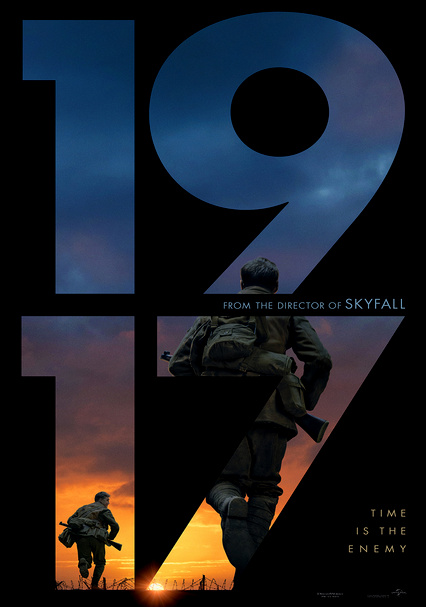
1917-2019

1917-2019

Director Sam Mendes

Starring George Mackay, Dean-Charles Chapman

Scott’s Review #979

Reviewed January 14, 2020

Grade: A

My tastes do not always lean towards the standard war film, so when I first heard about 1917 (2019), I was less than enthusiastic for no other reason than my pre-conceived perceptions.

Though it peaked with the idea of a World War I film rather than the standard World War II or Vietnam War film, I anticipated a run-of-the-mill experience or a story that had already been told.

Boldly told with incredible intensity and a brilliant technical style, director Sam Mendes creates a memorable cinematic treasure.

In April 1917, during the height of World War I, two British soldiers are tasked with a daring assignment: to hand-deliver crucial news to the 2nd Battalion of the Devonshire Regiment, calling off their planned attack on the German forces.

The Germans have faked a retreat to the Hindenburg Line and are ready to ambush the battalion, intending to kill sixteen hundred soldiers.

Schofield (George MacKay) and Blake (Dean-Charles Chapman) are chosen, with Blake’s brother Joseph among the soldiers bound to meet their fate.

As they journey, the young men face a myriad of hurdles including booby traps left by the Germans, terrain littered with dead bodies of their comrades, a precarious helicopter crash, giant rats, and the rapidly approaching deadline to deliver their message.

If they do not accomplish their mission in a timely fashion (twenty-four hours), the results will be devastating. Mendes keeps the tension high because he tells his story in real-time.

1917 is raw and emotional, hitting a hard punch.

Powerful scenes of dead bodies riddle the land, fat and pale from days spent immersed in cold water, young soldiers once handsome, now dead and bloated, remind the viewer what a terrible thing war is, and the ravages it causes.

Unlike other war films, patriotism and nationalist pride are not present.

Instead, the soldiers are weary and angry, confused as to why they are sent to fight for land as ugly as where they are, to die for land that is not even their own. They are depressed and confused.

The relationship between Schofield and Blake is excellent. Both men are weary and afraid, but have each other’s backs throughout their assignment.

It is not clear how long they have known each other, but they are at least acquaintances. They each come to the other’s rescue, and a pivotal scene occurs in a dusty hideout where they nearly die after a cave-in.

The characters possess grit and determination, but it is their humanity and connection with each other that resonate powerfully with the viewer.

An incredible scene unfolds as the day turns into night, and Schofield is well into enemy territory. To avoid a pursuing German soldier, he hides in a dusty basement area and finds a cowering young French girl. At first fearful, the pair quickly bonds, and a realization occurs to Schofield.

A newborn child accompanies the girl.

Assumed to be hers, the soldier immediately parts with his stash of food, not realizing the baby can have only milk. A ghastly realization is that the baby is not the French girl’s at all, but was instead found and rescued to prevent its death. The scene is tender and beautiful, perfectly contrasting the ugliness of the war.

The fantastic scene gives the viewer pause, prompting them to wonder what will become of the girl and the baby.

Nearly rivaling this lovely scene, another poignant moment occurs when Schofield stumbles upon a group of soldiers watching another soldier perform a rendition of the melancholy war tune, “Wayfaring Stranger”.

This moment slows the action down to a crawl, dedicated to loneliness and sadness amid the terrible battles.

The technical aspects that Mendes creates are spectacular and meant to be enjoyed on the largest screen possible. He uses a one-take approach, which keeps the action fast and furious.

The lavish and grandiose exterior scenes of immense dry land perfectly counterbalance a terrific watery scene when Schofield is chased into the river and soon embarks on wavy, grand rapids.

The camera remains on the soldier throughout the scene, as the viewer is taken on a wild adventure, sweeping every morsel of up and down motion with the tide.

To piggyback on this point, a scene occurs when one of the young men is knocked unconscious. It is daylight, but when he regains consciousness, it is night. The cinematography is brilliant, with a sharp left turn to translucent colors and blurry images of buildings.

The viewer is as disoriented as the soldier and fears what lurks in the shadows, as is found out when an unknown approaching figure begins to fire his gun.

1917 (2019) is a progressive-leaning gem with an anti-war message and a genuine approach to a “day in the life of a soldier”. It is not glossy or contrived, but a candid, realistic view of the savagery of war.

With a creative technical style, it is one of the best of its genre ever made.

Oscar Nominations: 3 wins-Best Picture, Best Director-Sam Mendes, Best Original Screenplay, Best Original Score, Best Sound Editing, Best Sound Mixing (won), Best Production Design, Best Cinematography (won), Best Makeup and Hairstyling, Best Visual Effects (won)

Go For Western Economy With These Pioneering

but it is too much for my strength — I sink under the weight of the splendour of these visions!

I am alone, and feel the charm of existence in this spot, which was created for the bliss of souls like mine. I am so happy, my dear friend, so absorbed in the exquisite sense of mere tranquil existence, that I neglect my talents.

Continue reading Go For Western Economy With These Pioneering →

Cargo industry welcome foreign investment

Aenean feugiat purus vitae sollicitudin laoreet. Duis fringilla ligula vel velit lacinia, in mattis felis consectetur. Sed at pretium orci. Ut tempus libero odio, sit amet consequat neque pretium ut. Integer hendrerit mauris nec odio auctor suscipit. Proin porttitor turpis vitae ligula dictum, a sollicitudin purus congue. Nulla viverra nisi ex, ut ornare tellus cursus quis. Nulla posuere tincidunt leo at condimentum. Sed egestas tortor a nisi fringilla, id cursus odio rhoncus.

Working Together to Make Investments

feugiat purus vitae sollicitudin laoreet. Duis fringilla ligula vel velit lacinia, in mattis felis consectetur. Sed at pretium orci. Ut tempus libero odio, sit amet consequat neque pretium ut. Integer hendrerit mauris nec odio auctor suscipit. Proin porttitor turpis vitae ligula dictum, a sollicitudin purus congue. Nulla viverra nisi ex, ut ornare tellus cursus quis. Nulla posuere tincidunt leo at condimentum. Sed egestas tortor a nisi fringilla, id cursus odio rhoncus.

Welcome to my blog!1,552 reviews posted so far! I'm Scott Segrell and I reside in Stamford, CT. My site features hundreds of film reviews I have written since I launched the site in 2014. I hope you enjoy reading my latest reviews or searching for your own favorites to see if we agree. Please see my Recent Posts section, and don't forget to utilize the tags and category links.