Tag Archives: Virginia Christine

Guess Who’s Coming to Dinner-1967

Guess Who’s Coming to Dinner-1967

Director Stanley Kramer

Starring Spencer Tracy, Katharine Hepburn, Sidney Poitier

Scott’s Review #1,539

Reviewed June 29, 2026

Grade: A

Guess Who’s Coming to Dinner is a groundbreaking, socially themed film made in 1967, in the midst of the Civil Rights movement that was sweeping the United States.

The rights aimed to abolish legalized racial segregation, discrimination, and disenfranchisement in the country, which most commonly affected African Americans.

So, the time was perfect for a star-studded film of this caliber.

The screenplay by William and Tania Rose is rich with character motivation and development.

Both the characters themselves and audiences can understand the perspectives of each of the six prominent characters as they slowly explain their thoughts and, at times, their underlying unconscious biases.

At the time of release, the film was understandably a commercial and critical hit during a fabulous time in cinema.

On the threshold of increased creative richness in the 1970s, the late 1960s were the building blocks to expressionism and tremendous cinematic thought.

The film was one of the first to depict an interracial marriage in a positive light.

While a film like Guess Who’s Coming to Dinner would be dated if made in 2026, sadly, lots of blatant racism and discrimination still exist in the United States, though we have certainly made progress.

Joey Drayton (Katharine Houghton) is a young, free-thinking white woman from a wealthy family in San Francisco. She and a successful black doctor, John Prentice (Sidney Poitier), become engaged.

In addition to their racial differences, he is much older than she is and has been married once before.

They nervously fly to San Francisco to meet her parents and break the news, and they are to be married two weeks later in Switzerland.

Matt Drayton (Spencer Tracy) and his wife, Christina (Katharine Hepburn), are open-minded liberals who must confront the many issues and feelings the impending marriage arouses.

Also attending the Draytons’ dinner are Prentice’s parents, John Sr. and Mary (Roy E. Glenn Sr., Beah Richards), who vehemently disapprove of the relationship.

Other supporting characters, like the kindly Monsignor Mike Ryan (Cecil Kellaway), a white male, and the efficient yet unfeeling black housekeeper Tillie (Isabel Sanford), offer differing perspectives on the union.

While the interracial pairing is front and center, the set pieces and artistic design are flawless, offering a looming backdrop of San Francisco.

Frequent scenes occur on the family terrace, lush with bright flowers, images of the Pacific Ocean and the Golden Gate Bridge, and, in one sequence, a rich orange hue amid a dazzling sunset.

To say nothing of the lavish family estate with exquisite art, furniture pieces, and grand rooms all on display during the film.

Director Stanley Kramer deserves praise for these elements and many more, as the film is woven together tremendously well.

The acting is flawless all around, with the top honors going to Hepburn and Poitier.

A poignant scene in which Christina (Hepburn) remembers how happy Joey always was as a child, and how her past happiness pales in comparison to how happy she is now, will bring any viewer to a soggy mess as Hepburn slowly tears up.

Poitier shows his strong range during John’s knockdown, drag-out argument with his father, exclaiming how he owes nothing to his father, and a father’s role is to want the best for his child and to let his child make his own choices.

While Mike thinks nothing but beauty from the union, Tillie is outraged at the nerve of John to mix with white wealth. She shockingly calls him ‘boy’ and scolds him for thinking above his ‘station in life’.

With Tillie and John Sr., we see that bias and racism are not always exclusive to the white community. Black people also see color and prejudice.

This point is the film’s genius, as most of the characters undergo deep dives and learn about themselves, for better or worse.

Some fun facts are that Houghton is the niece of Hepburn, and the film is Spencer Tracy’s final role, having battled illness throughout shooting, but insisting on finishing the film.

Guess Who’s Coming to Dinner (1967) challenges the norms of the times amazingly well, and the brilliance of the acting holds up decades later.

Oscar Nominations: 2 wins-Best Picture, Best Director-Stanley Kramer, Best Actor-Spencer Tracy, Best Actress-Katharine Hepburn (won), Best Supporting Actor-Cecil Kellaway, Best Supporting Actress-Beah Richards, Best Story and Screenplay-Written Directly for the Screen (won), Best Art Direction, Best Film Editing, Best Original Song Score or Adaptation Score

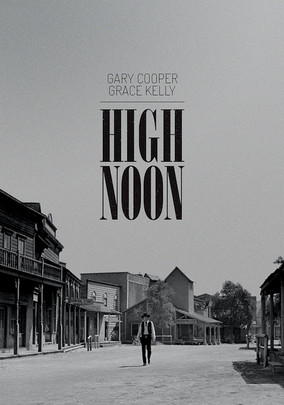
High Noon-1952

High Noon-1952

Director Fred Zinneman

Starring Gary Cooper, Grace Kelly

Top 250 Films #150

Scott’s Review #638

Reviewed April 28, 2017

Grade: A

Billed as a standard Western but much more complex than a film as traditional, basic Western, High Noon accomplished what no other Western did in 1952- adding complexities from different genres, such as suspense and drama, to a film form.

Additionally, High Noon challenged typical Western themes, such as male-driven fights and chases, in favor of a moral and emotional approach, and oh, is the film ever character-driven.

The results are astounding, and to understand and appreciate all its elements, the film should be studied in film school.

High Noon heartily breaks the mold. It was released when mainstream Western was quite popular in the film, adding enormous risk, and the results paid off in spades.

Marshal Will Kane (Gary Cooper) has just wed his beloved bride, Amy (Grace Kelly), in a small ceremony in a tiny town in New Mexico. He plans to turn over his badge and retire to the prairie land with his new wife.

Suddenly, the town receives word that a dastardly villain, Frank Miller, whom Kane once sent away, has been released from a Texas prison and plans to exact revenge on Kane.

Miller is to arrive on the noon train as his three accomplices await his arrival, much to the chagrin of the rest of the town, who become panicked with each passing moment.

The film begins at approximately ten-thirty in the morning and ends shortly after Noon.

High Noon has subtle political themes and clear examples of McCarthyism. However, some dispute this McCarthyism was a campaign launched by Senator Joseph McCarthy, which ended up blacklisting many artists suspected of communism.

The central theme is how people become frightened and blame the attack on one another because of this fear. Our main protagonist (Kane) faces the dire feat of facing four angry gunmen, with revenge on their minds, alone, as an entire town of people chooses not to get involved.

Brilliant is that High Noon more or less takes place in real-time. The inclusion of clocks in the film, and specifically of pendulums swaying back and forth, creates a defined level of tension as character after character nervously glances at the time, knowing full well that with each passing minute, they inch closer and closer to a fantastic and deadly showdown- much blood will be shed.

Cooper, old enough to be Kelly’s grandfather, is noticeable if one chooses to be nitpicky, but the couple works well together, and I bought the happily wedded couple as genuine.

I adore the character of Helen Ramirez, played by actress Katy Jurado. A Mexican character, Ramirez is a prominent businesswoman in the small town, owning a saloon. She is empowered and confident, a character to admire regardless of gender.

A strong female character of Mexican heritage in a 1952 film was relatively uncommon, considering the film is set in the Wild West.

Equally impressive and completely backward for the time, the events of Amy coming to the rescue of Kane, instead of the standard, gender-specific, “man rescues woman,” challenge the norm. Further groundbreaking is that Amy is written as a Quaker woman, not the traditional Christian woman, nor is she skittish or silly.

Western stereotypes are entirely turned upside down, which is arguably way ahead of its time.

Eerie yet highly effective is the use of a “theme song” either sung or in another form (musical score or background music) throughout the film—the song is “Do Not Forsake Me, My Darling,” which became a hit for Texas Ritter.

It is worth mentioning that the success of this added “theme song” encouraged subsequent Westerners to add similar songs to their films.

Challenging the standard in many ways, High Noon sets the bar very high in its thoughtfulness, message, and conflict.

The film exemplifies people who take the world and turn it upside down with fantastic and inspiring results.

Oscar Nominations: 4 wins-Best Motion Picture, Best Director-Fred Zinnemann, Best Actor-Gary Cooper (won), Best Screenplay, Best Scoring of a Dramatic or Comedy Picture (won), Best Song-“The Ballad of High Noon (“Do Not Forsake Me, O My Darlin”)” (won), Best Film Editing (won)

Invasion of the Body Snatchers-1956

Invasion of the Body Snatchers-1956

Director Don Siegel

Starring Kevin McCarthy, Dana Wynter

Scott’s Review #895

Reviewed May 8, 2019

Grade: B+

Invasion of the Body Snatchers (1956), released during the mid-1950s, a time of post-War World II unity and prosperity in America where neighborhoods snuggled cheerily by the fireplaces with nary a care in the world, sought to make the public paranoid, and it worked.

Thanks to a foreboding premise, audiences got to ponder the possibilities of pod people cloning human beings and invading the planet, scaring the daylights out of the masses, and resonating with critics.

Playing like an extended episode of The Twilight Zone, and to the film’s credit, it preceded the television series. The film successfully achieves thought-provoking post-film dialogue at a brief one-hour and twenty-minute running time. It has been crowned with cult-classic status and similar creepy-themed genre films that blossomed during the 1950s.

Set in the fictional sunny California town of Santa Mira, the film gets off to an exciting start as we witness a screaming man in an emergency room attempting to be calmed by staff. The harried man claims to be a doctor and recounts, via flashbacks, the events leading up to the present day.

Our main character, Dr. Miles Bennell (Kevin McCarthy), and his ex-girlfriend Becky (Dana Wynter) team up after several patients report relatives acting robotic and strange.

When half-created bodies in pods are soon discovered, Miles and Becky know something is amiss in their town and race to figure out the mystery of the “pod people” while others turn into emotionless human-like beings.

The epidemic is caused by extraterrestrial life. The intention is for humanity to lose all emotions and a sense of individuality, creating a simplistic, stress-free world.

An interesting facet of Invasion of the Body Snatchers is how time has changed the reaction to the film. In 1956, the thought of aliens taking over the world seemed plausible and frightening since the man had not yet walked on the moon, and astronomy was a new venture.

The peaceful tranquility of the United States of America was in danger of being overtaken, the film exclaimed, and viewers fell for the scare tactics.

The film was created to be a political allegory, and boy did this sure work.

Decades later, the United States’ vibe is more integrated and flourishes with more diversity and acceptance of other cultures and beings. The country is also more chaotic, so the invasion of the “pod people” is less scary and perhaps even more embraced by those living in Malcontent.

Invasion of the Body Snatchers suffers from poor aging and a message rethink and teeters on feeling dated.

The acting is marginally good, if not spectacular, but it does not need to be Oscar-worthy to have the desired effect. The actors deliver their lines with dramatic gusto, successfully conveying suburban Americans’ troubled paranoia to audiences who will surely be on the edge of their seats as the drama unfolds.

The characters never think outside the box, only in straightforward terms, so the motivations are earnest.

The black and white cinematography is palpable yet subdued, and the lack of colors provides substance. While the 1950s was a wonderful time for film, it was also a less edgy time for cinema.

The 1960s brought fewer restrictions and more shocking elements, but Invasion of the Body Snatchers is compartmentalized, feeling more like a long episodic television thriller.

Double-billed with the equally frightening The Day the Earth Stood Still (1951) would make for delicious 1950s science-fiction viewing.

I remain partial to the stunning, vibrantly colored 1978 remake, which features superior filmmaking and more layered production values. The original Invasion of the Body Snatchers (1956) holds its own and is a recommended watch.