Tag Archives: Collin Wilcox

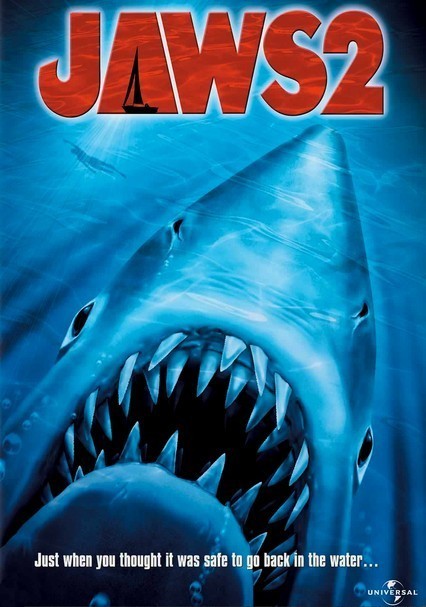
Jaws 2-1978

Jaws 2-1978

Director Jeannot Szwarc

Starring Roy Scheider, Lorraine Gary, Keith Gordon

Scott’s Review #1,307
Reviewed October 13, 2022

Grade: A-

Because of the enormous critical and commercial success of Jaws in 1975, a sequel was created. Important to keep in mind is that in the mid-1970s, it was not yet common to produce sequels, especially if the director, Steven Spielberg, had no interest in participating.

Jaws 2 (1978) was an enormous box-office success, but the reviews were only mixed.

I adore the film, which mixes thrills with the horror genre and wisely sets up the kills like a slasher film.

The teenagers are savagely attacked and killed by the Great White shark, one by one, in a style that uses a lurking and effective musical score.

The film’s tagline, “Just when you thought it was safe to go back in the water…” has become one of the most famous in film history and has been parodied and homaged several times.

I want to assume it led to a healthy, almost now-mandatory helping of sequels to other successful films.

Unfortunately, Jaws 2 also spawned a couple more sequels of its own, which were piss-poor and laughable, but we won’t get into that here.

A fun fact is that the film was nearly as troubled as Jaws. The first director of the film, John D. Hancock, was deemed incompetent and replaced by Jeannot Szwarc.

Star Roy Scheider, who only reprised his role to end a contractual issue with Universal, was also unhappy during production and had several heated exchanges with Szwarc.

Maybe that should have been a sign not to make any more Jaws films.

Years after the shark attacks that left Amity Island reeling, Sheriff Martin Brody (Scheider) finds new trouble lurking in the waters and must rise to the occasion.

To add conflict, Mayor Vaughn (Murray Hamilton) wants to end the beach town’s poor reputation. But the sudden disappearance of a pair of divers suggests that something is up. When Sheriff Brody voices his warnings about holding an exciting sailing competition, everyone thinks he is suffering the effects of post-traumatic stress.

That is, until a shark fin is spotted in the water, sending the town into panic mode.

There’s no logical plot reason to make Jaws 2, but somehow I’m okay with that. The film entertains with enough frights and jumps to satisfy, and the formulaic approach works well.

Besides the enthralling final sequence when Brody must rescue his sons, Mike and Sean (Mark Gruner and Marc Gilpin), the opening sequence involving scuba divers and a female water skier is quite enticing and the best part of the film.

The musical score by John Williams, who fortunately returned to the fold, is fabulous and enhances any peril the characters face. The slick and clever approach gives the audience a clue that danger lurks nearby, but we don’t know when or where the shark will strike.

I mentioned slasher films earlier, and this formula is used in Jaws 2. As the teens set sail for the competition, it is good fun to wonder who will get killed and who will live to see another sunny beach day.

Despite Scheider not wanting to do the film, you’d never know it by his terrific acting. He doesn’t phone in his performance, and he brings macho swagger and muscle. He’s everyone’s favorite dad who only wants to save and protect.

Jaws 2 (1978) attempts to scare and entertain, and it succeeds. There is little character development, but it’s not the type of film that needs deep texture.

The reason to watch is to see folks who intend to enjoy the water get attacked and ripped to shreds.
To Kill a Mockingbird-1962

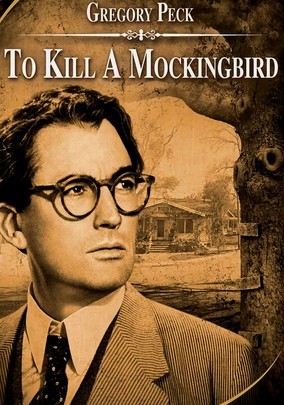
To Kill a Mockingbird-1962

Director Robert Mulligan

Starring Gregory Peck, Mary Badham, Robert Duvall

Scott’s Review #468

1051852

Reviewed August 25, 2016

Grade: A

To Kill a Mockingbird is a 1962 film based on Harper Lee’s renowned novel. It was released only two years earlier, in 1960.

The novel was groundbreaking, and the film is equally so. Race and racism are front and center in the storyline. The film is still a marvel because it tells the story through the eyes of a child—in present-day terms, an adult—as she reflects on her experience.

The film is set in the 1930s in a small Alabama town.

We follow the lives of Atticus Finch, a respected lawyer and father, and his two young children- Scout and Jem.

Gregory Peck, as Atticus, is the moral center of the film. Scout (Mary Badham) narrates, and her innocence makes the story much more compelling and less like a preachy vehicle for a social topic.

The Finchs are a tight family unit as Atticus is widowed, leaving Jem and Scout motherless. A poor black man-Tom- is accused of raping and beating a white woman, also poor, coached into the accusations by her racist father.

We accept that the woman had designs on Tom and, when caught by her horrified father, was beaten, with Tom left to take the blame.

Much of the film, but not too much, takes place in the courtroom, as we hear testimony by the poor woman, her father, and Tom.

Not to be missed is that every juror is a white man- a sad reminder of the racism that existed and one argues still exists, though not as blatant in today’s modern world.

One cringe when the black attendees are forced to sit in the upper portion of the courthouse, an obvious way to demean and lessen them, and which speaks volumes for the town- we realize Tom does not have a chance, yet we hope against hope for his acquittal.

Wisely, I do not feel the point is the trial’s outcome—we know what will result. But the film teaches us a lesson about reality: life is often unfair and painful.

The after-effects of the trial are the most exciting part of To Kill a Mockingbird.

Gregory Peck was awarded the Best Actor Oscar in 1962 for his role as a liberal, progressive, and honorable man who can do no wrong and is an excellent example for his children.

A black maid, Calpurnia, works for him, and he treats her like family. I could not help but think she is the mother figure in Jem and Scout’s lives.

Atticus does the right thing, treating everyone fairly and living a moral life. He is an excellent example, and it is no wonder Peck won the trophy.

A subplot involves a mysterious neighbor, Boo Radley, feared by the town kids but turning out to be a protector and companion to Scout and Jem. This role was the first for acclaimed actor Robert Duvall- the actor has a tiny yet important role and does a great deal of expressive acting without uttering a line.

The title of the film is poignant and essential to the ending.

The film is really about Jem and Scout and their quick journey into the pains and unfairness endured by adults- once innocently enjoying the summer, playing games, and making friends with a visiting young boy, they are exposed to evil and a hate-filled racist town, which they slowly come to realize exists.

Filmed in black and white, this quality enhances the picture. The blowing leaves and dark shadows add much to the impressive cinematography and give the film a dark quality that color would have ruined.

The 1930s time period is very authentic.

To Kill a Mockingbird is a timeless film with an important message about the world. Children and adults of every generation should view it as a lesson in empathy and compassion.

The film is not ugly or raw but is truthful and still feels fresh. It will resonate with all audiences patient enough to give it a good watch.

Oscar Nominations: 3 wins-Best Picture, Best Director-Robert Mulligan, Best Actor-Gregory Peck (won), Best Supporting Actress-Mary Badham, Best Screenplay Based on Material from Another Medium (won), Best Music Score-Substantially Original, Best Art Direction, Black-and-White (won), Best Cinematography, Black-and-White

Catch-22-1970

Catch-22-1970

Director Mike Nichols

Starring Alan Arkin, Bob Balaban, Martin Balsam

Scott’s Review #41

60020883

Reviewed June 18, 2014

Grade: B

Catch-22 (1970) is a satirical film similar in subject matter to Robert Altman’s M*A*S*H, released the same year, though admittedly, I have not seen that film yet.

It does remind me of Dr. Strangelove (1964) and Slaughterhouse-Five (1972) in their anti-war theme.

This film is well-made and certainly effectively portrays the outrageousness and lunacy of war.

Most of the characters are portrayed as crazy, albeit in a darkly humorous, over-the-top way.

Alan Arkin is wonderful as the protagonist trying to find a way out of the island of Italy, where he and his fellow pilots are stationed.

At times, the film feels disjointed and hard to follow, which I understand the novel is too (I have not read the entire book), but Catch-22’s (1970) message comes across loud and clear.