Tag Archives: Harry Shannon

Written on the Wind-1956

Written on the Wind-1956

Director Douglas Sirk

Starring Rock Hudson, Lauren Bacall, Robert Stack

Scott’s Review #1,529
Reviewed April 20, 2026

Grade: A-

The terms ‘melodrama’ and ‘soap opera’ unfortunately come with a negative connotation, conjuring up disparaging adjectives like sappy or overwrought. Mix in poor acting, and you’ve got yourself a bad film.

But director Douglas Sirk, well known in the 1950s for his Hollywood melodramas like All That Heaven Allows (1955), Imitation of Life (1959), and Written on the Wind (1956), crafts beautiful visual effects amid powerful performances and compelling storylines.

Casting A-list movie stars only adds to the credibility.

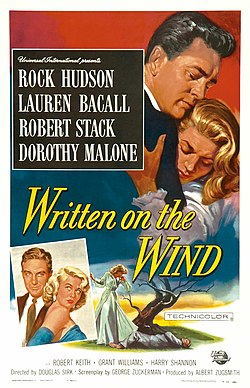
Written on the Wind stars Rock Hudson and Lauren Bacall as complicated characters on the cusp of a relationship, but hindered by other selfish characters who are determined to pursue their own romantic desires.

Hudson starred in an impressive six Douglas Sirk films while Bacall’s career was beginning to wane, leading her to accept the role.

The action makes stops in New York City and Miami before settling in oil-rich Texas, where a central dysfunctional family dynasty led by Jasper Hadley (Robert Keith) is the main focus.

Hadley’s alcoholic son, Kyle (Robert Stack), is in love with Lucy (Bacall), whom he woos and marries. At the same time, Kyle’s scheming, self-destructive sister, Marylee (Dorothy Malone), has her sights set on Kyle’s childhood best friend, the dashing Mitch (Hudson), who longs for romance with Lucy.

The foursome banter, lust after, and become involved in dramatic situations, which lead to secrets and eventually death. Subjects like alcoholism, unrequited love, miscarriage, murder, and a court trial are explored.

While the situations may sound like nothing more than a sudsy afternoon daytime drama, the acting and rich writing more than raise the film above mediocrity.

The juicy sequences alone will entice the rabid viewer.

The exceptional chemistry between Hudson and Bacall is a winning formula, and viewers easily root for them to be together, and they immediately seem destined to be. Their scenes smolder with passion and determination, but both characters are too righteous and benevolent to let anything happen.

After all, Lucy is married to Kyle, and learns she is pregnant, though she remains terribly unfulfilled.

It’s easy to like Mitch and Lucy, especially when they’re contrasted with unsympathetic characters like Kyle and Marylee. Rich and spoiled, Kyle is a lustful playboy, a womanizer, and terribly insecure and jealous.

Marylee is a boozy nymphomaniac, callous and never satisfied.

Kyle and Marylee are not explored as much as they might have been with a longer running time, so they have hints of being one-dimensional. But both actors’ powerful performances leave audiences mesmerized by their characters.

Marylee nearly steals the show with her fiery bedroom negligee dance to a hi-fi blaring “Temptation,” while another character dies tragically a floor below.

You might say we ‘love to hate’ both characters.

Since Sirk and Hudson were both gay, though not publicly so at the time (1956), keen viewers can notice hidden clues about the situations Hudson might have been facing in real life.

We can see how Hudson would have had attractive women like Marylee fawning over him and practically begging him to bed them. Unable to be receptive to their advances, instead, he would feel guilty and lonely.

Besides wonderful writing, Sirk’s direction is inspiring. The opening sequence features a clever ‘the beginning is the ending ‘ approach that many filmmakers borrowed over the years in their cinematic works.

The audience immediately sees Kyle stagger outside the palatial mansion, brandishing a gun and finally collapsing. While the wind whistles, a desk calendar is shown with the pages quickly turning to eighteen months prior when the story really begins.

This opening scene will be recreated at the end of the film, making for instant attention.

Other spicy add-ons, like fine furniture throughout the estate, a grand dinner beginning with a fruit-cocktail appetizer, more than a few sophisticated martinis served, and modern sports cars being driven, lend a robust flair of wealth and glamour to the production.

A sequence was even modeled after a flashy Manhattan nightclub, the 21 Club.

For a trip into a world of wealthy yet tortured characters, Written on the Wind (1956) is top-notch. Some cliches can be forgiven, as melodrama was hardly done any better than this film.

Oscar Nominations: 1 win-Best Supporting Actor-Robert Stack, Best Supporting Actress-Dorothy Malone (won), Best Song-‘Written on the Wind.’

Golden Globe Nominations: Best Performance by an Actress in a Supporting Role in any Motion Picture-Dorothy Malone

Citizen Kane-1941

Citizen Kane-1941

Director Orson Welles

Starring Orson Welles

Top 250 Films #24

Scott’s Review #296

60000605

Reviewed December 12, 2015

Grade: A

Regarded as one of the greatest films ever made, Citizen Kane (1941) is a technically brilliant film that introduces fantastic new elements into a film that has not been seen before and has not been replicated for decades. It is a timeless masterpiece that continues to be enjoyed and marveled at in modern times.

One can forget what the story is about, as they can sit back, having no idea of what the story means (it can be a bit difficult to follow), and view the film from a cinematic perspective.

The various camera angles, shadows, and use of an actual ceiling (never seen in film before) are impossible not to appreciate for any film lover.

My favorite scenes occur when director (and star) Orson Welles uses snow falling outside as the cameras look through a window to observe the winter wonderland. This quality is simply astonishing in creative technicality.

I can view this scene over and over again.

The plot is a hybrid of drama and mystery. It examines the life and legacy of newspaper legend Charles Foster Kane.

The character, played by Welles himself, is loosely based on the real-life figure of William Randolph Hearst.

The film is told mainly through narrated flashbacks, as a newsreel reporter attempts to solve the big mystery centered around the deceased celebrity- his dying word, uttered from his lavish Florida mansion, was “rosebud,” and nobody seems to know who “rosebud” is or what the word represents.

As the story progresses, we learn more about the famous Kane. The reporter, Jerry Thompson, learns that Kane’s childhood in Colorado was one of poverty.

His mother, discovering a gold mine on her property, sent Kane away to be educated by a famous banker, thus securing his future. Thompson also interviews Kane’s business manager and Kane’s ex-wife, who is now a drunk and owns a nightclub, but neither can shed light on the mystery.

The mystery- never solved by Thompson nor anyone else- is revealed at the end of the film, to the viewer only, in fantastic form, and Kane’s childhood is key to the entire puzzle. This angle is creative, imaginative, and brilliant for the whole film.

Technically, one of the best, most creative film creations, Citizen Kane, has lost none of its marvels over the years and can be watched, studied, and introduced to new generations of film lovers eager to learn what a true movie gem is all about.

Oscar Nominations: 1 win-Outstanding Motion Picture, Best Director-Orson Welles, Best Actor-Orson Welles, Best Original Screenplay (won), Best Scoring of a Dramatic Picture, Best Sound Recording, Best Art Direction-Interior Decoration, Black-and-White, Best Cinematography, Black-and-White, Best Film Editing

Gypsy-1962

Gypsy-1962

Director Mervyn LeRoy

Starring Rosalind Russell, Natalie Wood

Top 250 Films #80

Scott’s Review #37

567360

Reviewed June 18, 2014

Grade: A

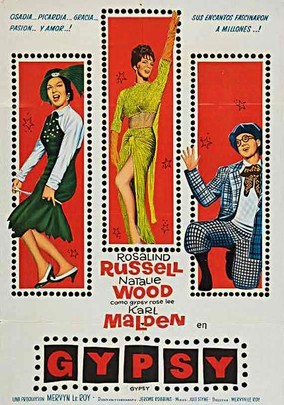
The film version of the iconic Broadway production is a huge success, mainly due to Rosalind Russell’s superb performance as Mama Rose, a muscular and driven stage mother in the Depression-era world of show business.

She is mesmerizing in the role and reminiscent of Joan Crawford and Bette Davis, who would have been wonderful in it.

Russell carries the film with her bombastic, loud, and determined performance- her children will become stars, and Rose will get the stardom and spoils she so richly deserves.

She uses every nook and cranny to her advantage —borrowing money from her father, scraping leftover Chinese food scraps, and stealing silverware.

Rose’s daughters, Baby June and Louise (Natalie Wood), are in tow to help her achieve her goals —June, the talented one, and Louise, along for the ride.

When circumstances develop, Louise blossoms and becomes the famous Gypsy Rose Lee.

From the masterpieces “Everything’s Coming up Roses” and “Some People” to her heartbreak as a driven stage mom, Russell’s performance makes the film.

Her best scene comes at the climax. Rose finally admits that she has spent her life needing to be noticed, hits an empty stage alone in a theater, and has an emotional breakdown.

Natalie Wood and Karl Malden certainly add depth to their characters, especially Wood, who transforms from a mousy wallflower to the seductive stripper Gypsy Rose Lee.

From a casting perspective, I am not sure Wood was quite right for the role- the second time in two years this would occur (her casting in West Side Story being the other misstep), but she was an enormous star at the time and was awarded juicy roles.

Gypsy (1962) is one of the great Hollywood musicals from the 1950s/1960s heyday.

Witty and clever dialogue helps this film stand out at the top of the list of similar movies.

Bravura!

Oscar Nominations: Best Scoring of Music-Adaptation or Treatment, Best Cinematography, Color, Best Costume Design, Color

Golden Globe Nominations: 1 win-Best Director-Motion Picture-Mervyn LeRoy, Best Performance by an Actor in a Motion Picture-Musical or Comedy-Karl Malden, Best Actress in a Leading Role-Musical or Comedy-Natalie Wood, Rosalind Russell (won), New Star of the Year-Paul Wallace

High Noon-1952

High Noon-1952

Director Fred Zinneman

Starring Gary Cooper, Grace Kelly

Top 250 Films #150

Scott’s Review #638

Reviewed April 28, 2017

Grade: A

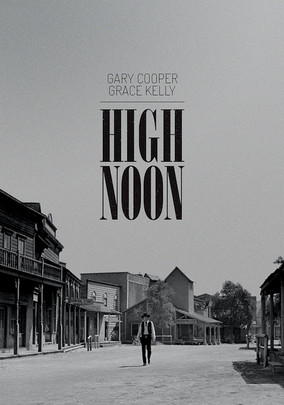
Billed as a standard Western but much more complex than a traditional, basic Western, High Noon accomplished what no other Western did in 1952- adding complexities from different genres, such as suspense and drama, to a film form.

Additionally, High Noon challenged typical Western themes, such as male-driven fights and chases, in favor of a moral and emotional approach, and oh, is the film ever character-driven.

The results are astounding, and to understand and appreciate all its elements, the film should be studied in film school.

High Noon heartily breaks the mold. It was released when mainstream Western was quite popular in the film, adding enormous risk, and the results paid off in spades.

Marshal Will Kane (Gary Cooper) has just wed his beloved bride, Amy (Grace Kelly), in a small ceremony in a tiny New Mexican town. He plans to turn over his badge and retire to the prairie land with his new wife.

Suddenly, the town receives word that a dastardly villain, Frank Miller, whom Kane once sent away, has been released from a Texas prison and plans to exact revenge on Kane.

Miller is to arrive on the noon train as his three accomplices await his arrival, much to the chagrin of the rest of the town, who become panicked with each passing moment.

The film begins at approximately ten-thirty in the morning and ends shortly after Noon.

High Noon has subtle political themes and clear examples of McCarthyism. However, some dispute that McCarthyism was a campaign launched by Senator Joseph McCarthy, which ended up blacklisting many artists suspected of communism.

The central theme is how people become frightened and blame one another for the attack out of that fear.

Our main protagonist (Kane) faces the daunting task of confronting four angry gunmen, with revenge on their minds, alone, as an entire town chooses not to get involved.

It’s brilliant that High Noon more or less takes place in real-time.

The inclusion of clocks in the film, specifically pendulums swaying back and forth, creates a distinct sense of tension as character after character nervously glances at the time.

They know full well that with each passing minute, they inch closer and closer to a fantastic and deadly showdown- much blood will be shed.

Cooper, old enough to be Kelly’s grandfather, is noticeable if one chooses to be nitpicky, but the couple works well together, and I bought the happily wedded couple as genuine.

I adore the character of Helen Ramirez, played by actress Katy Jurado. A Mexican character, Ramirez, is a prominent businesswoman in the small town who owns a saloon.

She is empowered and confident, a character to admire regardless of gender.

A strong female character of Mexican heritage in a 1952 film was relatively uncommon, considering the film is set in the Wild West.

Equally impressive and completely backward for the time, the events of Amy coming to the rescue of Kane, instead of the standard, gender-specific “man rescues woman,” challenge the norm.

Further, Amy is groundbreaking: she is written as a Quaker woman, not a traditional Christian woman, nor is she skittish or silly.

Western stereotypes are entirely turned upside down, which is arguably way ahead of its time.

Eerie yet highly effective is the use of a “theme song” either sung or in another form (musical score or background music) throughout the film—the song is “Do Not Forsake Me, My Darling,” which became a hit for Texas Ritter.

It is worth noting that the success of this added “theme song” encouraged subsequent Westerners to include similar songs in their films.

Challenging the standard in many ways, High Noon sets a very high bar for its thoughtfulness, message, and conflict.

The film exemplifies people who take the world and turn it upside down with fantastic and inspiring results.

Oscar Nominations: 4 wins-Best Motion Picture, Best Director-Fred Zinnemann, Best Actor-Gary Cooper (won), Best Screenplay, Best Scoring of a Dramatic or Comedy Picture (won), Best Song-“The Ballad of High Noon (“Do Not Forsake Me, O My Darlin”)” (won), Best Film Editing (won)

Golden Globe Nominations: 4 wins-Best Motion Picture-Drama, Best Performance by an Actor in a Motion Picture-Drama-Gary Cooper (won), Best Performance by an Actress in a Supporting Role in any Motion Picture-Katy Jurado (won), New Star of the Year-Actress-Katy Jurado, Best Screenplay-Motion Picture, Cinematography-Black and White (won), Best Original Score-Motion Picture (won)

Touch of Evil-1958

Touch of Evil-1958

Director Orson Welles

Starring Charlton Heston, Janet Leigh

Scott’s Review #914

Reviewed July 2, 2019

Grade: A

Touch of Evil (1958) is a film noir directed by the legendary influential Hollywood director Orson Welles.

The film contains suspense, drama, and mystery but is to be mainly praised for visual treats to enhance the cinematic experience. The dark and foreboding thriller was revolutionary for the time of release and influenced many films of similar ilk in the years to come.

Robust and fraught with tension, the experience is marvelous and worthy of study for its many nuances.

Welles directs the work, stars in, and writes the screenplay, so his entire being is invested in the production and execution.

Known mainly for the legendary Citizen Kane (1940), a film that arguably changed the course of cinema with its direction and cinematography, Touch of Evil explores a different genre entirely. However, it keeps the excellent aspects of Welles’s loftier film intact, including the black-and-white element, resulting in a grand and dangerous crime-infused classic.

The screenplay was loosely based on the novel Badge of Evil by Whit Masterson.

The tension is ample from the onset as the humidity-drenched Mexico-United States border is the focal point. A car driven by a young couple is laced with a bomb and detonates as soon as they cross into U.S. territory.

In a hint of irony, Newlyweds Miguel “Mike” Vargas (Charlton Heston), a drug enforcement official in the Mexican government, and his wife Susie (Janet Leigh) pass the car several times on foot before the explosion.

An investigation ensues with the introduction of other characters, including Police Chief Pete Gould (Harry Shannon), District Attorney Adair (Ray Collins), and police captain Hank Quinlan (Welles), with a prime suspect being Sanchez, a young Mexican secretly married to the victim’s daughter.

Typical in the film noir genre, events are not what they seem like as layers of the plot slowly unravel. The heavyset and disheveled Captain nostalgically visits a brothel run by Tanya (Marlene Dietrich), who barely recognizes him because he’s gained so much weight since their last meeting.

Vargas forsakes his bride to spearhead the investigation but soon locks horns with corpulent Quinlan, and the duo begins to feud. Could Quinlan or Vargas have something to do with the car bombing, or could other supporting characters be behind or involved in the shenanigans?

This is an excellent part of Touch of Evil, as the film leaves the viewer guessing.

Heston and Leigh are the lead couple, and their chemistry is apparent from the first scene in which they appear together. Sexy and mysterious, she hunkers down in a dump fraught with peril while he attempts to solve the crime and keep his girl safe.

Outside factors play a significant role in keeping the lovers apart. Although Heston’s portrayal of a Mexican man is quite the stretch, the audience will nestle comfortably into the events as they reveal deeper layers.

Once a handsome man, Wells is not afraid to let it all hang out as the fat and racist Quinlan becomes one of the greatest and most complicated screen villains as his true colors emerge.

As the film’s title boldly suggests, does his character contain complexities that make him evil and keep some sympathies, or does he wreak havoc on all he touches with his devious nature only the tip of the iceberg?

Viewers await the final act to have several questions answered as motivations are finally revealed.

Touch of Evil (1958) provided delicious and pulsating material for filmmakers clever enough to study its intricacies, notably Roman Polanski for Chinatown (1974).

Nuggets were also thrown the way of Alfred Hitchcock, who got the idea for Leigh to appear in Psycho (1960) two years later, catapulting her character alone in a hotel peril and mixing in a weird hotel clerk.

The power the film had to hatch other great films from its ingenuity is the most fun part of watching it repeatedly.