Tag Archives: Philip Ober

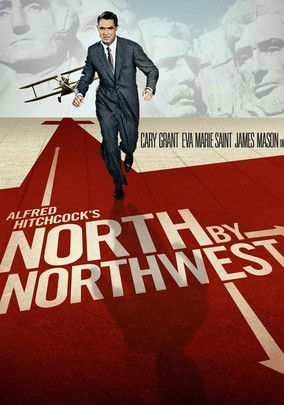
North by Northwest-1959

North by Northwest-1959

Director Alfred Hitchcock

Starring Cary Grant, Eva Marie Saint

Top 250 Films #15

Scott’s Review #90
60000544

Reviewed July 3, 2014

Grade: A

North by Northwest is a 1959 Alfred Hitchcock film, released during the director’s heyday (1950s and 1960s).

It is considered one of his most commercially successful films. It is mainstream fare that contains all the elements of a great Hitchcock film: adventure, intrigue, romance, and suspense.

Unlike in some of his other films, his characters are straightforward and not psychologically wounded, as in some of his others. This is not a slight but merely makes the film “for the masses.”

Charismatic Cary Grant plays the role of successful advertising executive Roger Thornhill. He works in bustling New York City, has a secretary, and is well respected in his circle.

While enjoying drinks at the club the evening before a planned trip to the theater, he becomes a victim of mistaken identity—thought to be George Kaplan- and is accosted by henchmen at a lavish Glen Cove, Long Island mansion.

After a botched attempt on his life, he is arrested and ultimately must race across the United States on the lam to find the real George Kaplan.

The incredible locales range from New York City to Long Island, Indiana, Chicago, and Mount Rushmore.

The film is exciting from start to finish, never letting up, and features a common theme of Hitchcock’s- an “everyman” falsely accused of a crime attempts to prove his innocence.

It differs from some Hitchcock films in that there is not as much psychological analysis of the characters, but rather a good, old-fashioned adventure story with many twists and turns.

In many ways, North by Northwest is a precursor to the enormously popular James Bond films, as Grant brought style, sexiness, and charisma to this sleek feature.

The set style and design look perfect. The lush Long Island estate set is flawless, with a grand staircase and a well-constructed library—not to mention the exterior shot of the enormous house.

The house in Mount Rushmore is sleek, quite trendy, and reeks of high sophistication. It is pretty grand and situated on an incline, featuring an airplane runway.

The chemistry between Grant and Eva Marie Saint is apparent and oozes from the screen from the moment they bump into each other on a train traveling from New York to Chicago. As they dine in the dining car, a flirtatious scene unfolds-the landscape whizzes by in the background, with the comforting train whistle and ambient noise working well.

Their relationship is established, and the characters are intrigued and slightly mistrustful of each other, which lends the scene an edge and complexity that works.

The film features a cutting-edge graphic design in the opening credits, similar to the design used in Vertigo during the same period. The green colors and the sophisticated advertising style of the graphics kick the film off in a creative, ultra-cool, modern way.

Interestingly, Martin Landau’s implied homosexuality in Leonard, henchman to the main villain, Phillip Vandamm, is precisely how Landau played the role. During Hitchcock’s time, homosexuality was strictly prohibited in film, but it was subtly portrayed.

Leonard’s fascination and jealousy towards Vandamm are intertwined with levels of flirtation and vengefulness.

Scene after scene of North by Northwest is filled with suspense—the crop duster scene is my favorite. Shot without music and on location in a dreary, clear, middle-of-nowhere field somewhere in Indiana, the scene is layered with suspense throughout.

Thornhill is scheduled to meet Kaplan at a designated spot. A lonely bus stop, random passing cars thought to be the intended, a deadly airplane, and an explosion all occur, creating a fraught scene.

New fans of Hitchcock should begin with this one—it is mainstream and one of his finest. It contains all the traditional Hitchcock elements, and all the pieces come together perfectly.

North by Northwest (1959) is a masterpiece.

Oscar Nominations: Best Story and Screenplay Written Directly for the Screen, Best Art Direction, Color, Best Film Editing

From Here to Eternity-1953

From Here to Eternity-1953

Director Fred Zinnemann

Starring Burt Lancaster, Deborah Kerr

Top 250 Films #156

Scott’s Review #875

Reviewed March 7, 2019

Grade: A

Based on a popular 1952 novel of the same name by James Jones, From Here to Eternity (1953) tells a powerful story of romance and drama set against the gorgeous backdrop of Hawaii.

The film is poignant and sentimental for its build-up to the World War II Pearl Harbor attacks, further enhancing the storytelling.

With great acting and a compelling story, the film is a bombastic Hollywood creation that has endured and remains timeless.

A trio of United States Army personnel is stationed on the sunny island of Oahu. The primary principals are First Sergeant Milton Warden (Burt Lancaster), Private Robert E. Lee Prewitt (Montgomery Clift), and Private Angelo Maggio (Frank Sinatra). Their lives in the Schofield Army Barracks are chronicled.

Their respective love interests, Alma Lorene (Donna Reed) and Karen Holmes (Deborah Kerr), join them, and the triumphs and sorrows of each are explored dramatically before the devastating incident.

The film’s perspective is centered on the male characters, which risks it being classified as a “guy’s movie.”

Enough melodrama and romance offset the testosterone and masculinity, and as the characters weave in and out of each other’s lives, a broader canvas emerges.

This point is to the film’s credit, as each character is rich with development, sympathy, or sometimes pure anger.

Many films have been told, and continue to be told, about the terrors and after-effects of World War II, but From Here to Eternity remains at the top of the heap.

While not going full throttle with excessive violence or grit, the film tells of the trials and tribulations of people affected by, and soon to be affected by, the war.

The characters co-exist peacefully in their little slice of the world. Though there is the occasional bullying or insubordination among the ranks, the romance soon takes center stage, followed by the dire attacks.

The smoldering beach scene featuring Burt Lancaster and Deborah Kerr on the ravaging shores of Halona Cove is as iconic as any cinematic moment.

Rumors of the star’s torrid love affair and the need to run off to make love after shooting the scene could be myths, but they have never been disproven.

The camera crew reportedly shot the scene quickly, leaving the duo to their desires. Regardless, the scene may cause the iciest of hearts to turn into a torrent of heart-pounding flutters.

The film suddenly turns dark, as if realizing it is about a devastating war.

A central character dies, and another character hunts for revenge. Despite these deaths not being at the hands of an enemy or a battle, they are powerful and dim.

Finally, the attack on Pearl Harbor is upon us, just as the audience will no doubt sense it coming. The film ends sadly with a simple dialogue between the two main female characters.

Thanks to the fine direction of novice director Fred Zinnemann, From Here to Eternity (1953) elicits a wide range of emotions and subject matter.

At its core, it is a cynical film, but it is also rich in courage, integrity, and love of one’s country, without succumbing to phony patriotism.

With a dash of romance and sexuality, the film is utterly memorable and deserving of the hefty Academy Awards it achieved.

Oscar Nominations: 8 wins– Best Motion Picture (won), Best Director-Fred Zinnemann (won), Best Actor-Montgomery Clift, Burt Lancaster, Best Actress-Deborah Kerr, Best Supporting Actor-Frank Sinatra (won), Best Supporting Actress-Donna Reed (won), Best Screenplay (won), Best Musical Score of a Dramatic or Comedy Picture, Best Sound Recording (won), Best Cinematography, Black-and-White (won), Best Costume Design, Black-and-White, Best Film Editing (won)

Golden Globe Nominations: 2 wins-Best Director-Motion Picture-Fred Zinnemann (won), Best Performance by an Actor in a Supporting Role in any Motion Picture-Frank Sinatra (won)