And Soon the Darkness-1970
Director Robert Fuest
Starring Pamela Franklin, Sandor Elès
Scott’s Review #1,541

Reviewed July 19, 2026
Grade: B+
With similarities to Claude Chabrol films, an influential French director who made, among others, Le Boucher (1970), And Soon the Darkness has immeasurable appeal for cinema fans of thrillers and horror to suckle on.
Throwing Alfred Hitchcock components in the mix like proper tension, an enthralling buildup, and an old-fashioned whodunit for good measure, the film largely works well.
While it’s admittedly a slow-build film, I rather like this quality, since the payoff works.
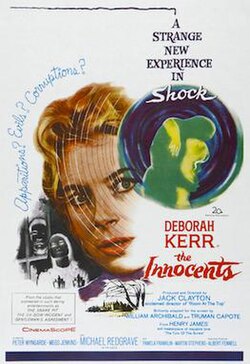
A grown-up Pamela Franklin (the little girl from The Innocents, 1961) stars as Jane, a young British nurse bicycling through the French countryside while on holiday with her friend Cathy (Michele Dotrice).
They encounter a handsome yet mysterious Frenchman who begins to follow them. While Cathy is titillated, Jane is cautious as the girls navigate the lonely roadways miles away from a populated town.
After a row, Jane and Cathy go their separate ways. When Jane returns to the village where they’re staying, her friend is nowhere to be found.
Frantic, she searches for Cathy.
One perplexity with And Soon the Darkness is with its title. There is nary a scene that takes place in darkness or at any time other than bright sunlight.
I expected to see characters fleeing peril under a moonlit sky or cowering in dark, dingy barns, post midnight, but the film’s overall tone is bright and airy.
Instead, frequent scenes show Jane and Cathy casually riding their bikes along sparsely populated side roads or enjoying a relaxing roadside meal at a cafe.
All in the daytime hours.
Despite the light, director Robert Fuest nonetheless successfully creates a sense of eeriness. In horror films, darkness is a key prop and an easy way to create a proper atmosphere.
I’m amazed by the result and the constant tension that abounds.
The best tense scene is when Cathy is left alone on the side of the road, where she sunbathes and naps, intent on enjoying her downtime.
Realizing that Jane is gone and perhaps harboring slight regret over their fight, she begins to hear the crack of twigs, the wind, and a singing bird.
Thanks to some fine camerawork, the audience suspects that someone is watching Cathy through the trees as the camera looks through branches.
The character and viewer slowly realize that she is not imagining things. This is confirmed when a pair of her underpants disappears, and the spokes of her bicycle tire are suddenly damaged.
The scene is lengthy and highly effective.
With Cathy missing in action, the events turn to Jane’s point of view, and a riveting whodunit emerges. She encounters several characters all acting suspiciously, and she learns that a young female tourist about her age was raped and murdered a year ago.
A tense Frenchwoman, Madam Lassal, and her husband, who owns a cafe; a British schoolmistress; a gendarme (police officer); and his ailing father all become suspects.
When the mysterious stranger (Sandor Elès) reappears and claims to be a detective named Paul, Jane is reassured. Should she instead be suspicious?
Whereas Claude Chabrol’s films tend to be psychological and fraught with deep emotional turmoil, And Soon the Darkness sticks with action-oriented themes.
Made in 1970, the film may have influenced other 1970s horror films such as Last House on the Left (1972) and I Spit on Your Grave (1978), as well as later slasher films like Friday the 13th (1980).
The use of remote forests, camps, barns, and other outdoor, lonely places in broad daylight is inspiring.
A straight-up horror thriller with little blood or gore, And Soon the Darkness (1970) chooses not to delve deeply into character motivations but instead presents a tension-infused thrill ride.