Category Archives: Historical Drama

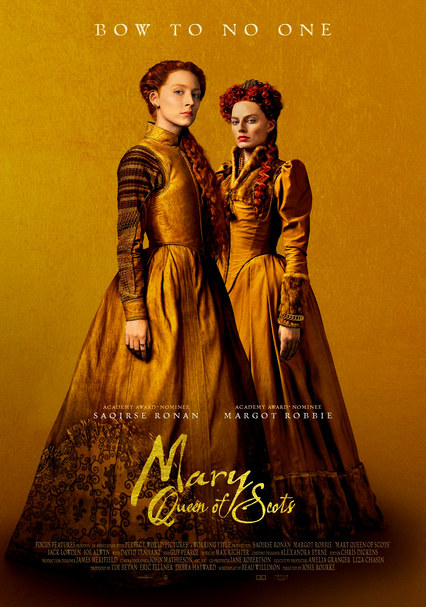
Mary Queen of Scots-2018

Mary Queen of Scots- 2018

Director Josie Rourke

Starring Saoirse Ronan, Margot Robbie

Scott’s Review #851
Reviewed January 2, 2019

Grade: B+

A period piece with all the trimmings for brilliance (on paper anyway), Mary Queen of Scots (2018) is a very good film, but its pacing misses the mark, preventing it from being a truly great film.

Fantastic acting and wonderful photography are the high points of an otherwise uneven experience, even if most of the components are intact.

This is not so much a total knock as a light critique, as the film is ultimately quite good and just missing the big oomph to take it over the top.

Saoirse Ronan stars as Mary Stuart, the likable Queen of France, who has returned to her native Scotland to reclaim the throne after her husband dies. Only eighteen years of age, she initially refuses pressure to remarry, but conflict ultimately ensues with Queen Elizabeth I (Margot Robbie), who rules neighboring England and Ireland.

The women admire each other from afar but develop a rivalry in power and love. To complicate matters, religious conflict, scandals, and deceit are also present in the story.

The feminist theme is inspiring and makes the film better than merely a soap opera of two rival females sparring over men.

In the mid-sixteenth century, women in control were hardly commonplace and relatively resented by the men forced to serve the “whims of women,” as one male character puts it.

Constantly showcased are males’ attempts at wooing the women in hopes of gaining power and ultimately the throne.

Still, director Josie Rourke (a woman) keeps the power firmly among the women, showing they can be as tough as they are sympathetic.

Furthermore, Mary Queen of Scots continues its progressive agenda with a startling LGBT subplot, which largely enriches Mary’s image.

One young androgynous male friend, presumably a bodyguard, frolics with Mary and other maids and confesses that he feels more like a sister than a brother to her. She accepts him wholeheartedly with an added message of “being your true nature.”

Later, the character suffers a terrible fate that devastates Mary. Regardless of the accuracy, this is a nice addition with an inspiring message.

The acting, particularly among leads Ronan and Robbie, is fantastic. Both young “it” women in Hollywood, the roles of Mary and Elizabeth, showcase their acting talents and chops for handling period piece roles.

Ronan, with flawless pale skin and authentic red locks, is beyond believable as Mary, who exudes strength yet kindness in the role she tackles. She can be stubborn but also fun and light, and Ronan has no trouble making the role her own.

Hot on the heels of playing the trailer trash character of Tonya Harding in I, Tonya (2017), Robbie hits it out of the park and does a one-eighty with the role of Elizabeth. Insecure and barren, afflicted with a skin disorder and a balding head of hair, the actress infuses the character with sensitivity and composure.

Robbie portrays her insecurity and yearning for unconditional love as she wears bawdy wigs and pancake makeup to hide her affliction.

Rourke’s mistake is not including more scenes of Ronan and Robbie together, save for one treasured scene at the end of the film. This is a wasted opportunity, as the treasured actresses could have played off each other’s talents in innumerable ways.

A knock-down, drag-out fight scene would have been a treasure to view.

The male characters do not leave much impact other than perhaps Lord Darnley (Jack Lowden), Mary’s bisexual second husband. As he betrays her on her wedding night with another man, Mary sees little use for him besides producing a child.

The handsome blonde actor adds some pizzazz, but is ultimately unlikable, as are the other similarly written men. Mary’s half-brother and Elizabeth’s advisor (Guy Pearce) are fine but ultimately underdeveloped.

Mary Queen of Scots (2018) is an effort to be commended for its female-driven and pro-LGBT stances. Perhaps unrealistic given the period and questions of historical accuracy looming over the entire film, problems with the production do exist.

The film ebbs and flows with some high moments and some looming blandness, but overall, it is to be respected and thereby recommended.

Oscar Nominations: Best Makeup and Hairstyling, Best Costume Design
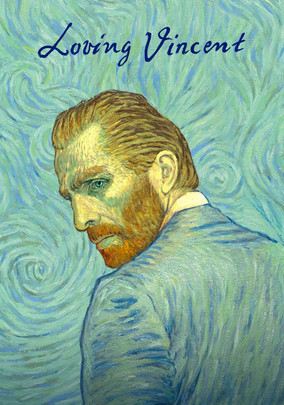
Loving Vincent-2017

Loving Vincent-2017

Director Dorota Kobiela, Hugh Welchman

Voices Douglas Booth, Saoirse Ronan

Scott’s Review #738

Reviewed April 5, 2018

Grade: B+

Loving Vincent (2017) is a unique animated feature that is quite the artistic experience and vastly different from any typical film of this genre.

Being the first of its kind to be a wholly painted animated feature, hopefully, other films will follow suit, resulting in an exuberance in creativity.

While Vincent van Gogh’s biography is fascinating, the dramatic plot often left me wondering about the accuracy of all the details.

Still, the film is to be celebrated for its progressive and edgy nature.

Cleverly, the actors starring in the vehicle act while they are subsequently drawn so that the viewer can imagine the action as if it were a standard film since the drawings mirror the actors involved.

For example, Saoirse Ronan can clearly be distinguished as the daughter of a local boatman, who was rumored to be keeping close company with van Gogh before his death. We know it is the actress, but in painting form, eliciting a surreal experience.

The action begins one year following tortured artist, Vincent van Gogh’s, tragic suicide. Postman Joseph Roulin asks his son Armand to deliver Van Gogh’s last letter to his brother, Theo.

Suspicion surrounds the artist’s death as mere weeks earlier his mood was calm and level-headed, making his death cause for alarm. From this point, Armand traverses throughout France to spend time with those who had dealings with Van Gogh during the last days of his life.

Those characters include his doctor, an innkeeper, and others who may hold clues to his death’s mystery.

From a story perspective, Loving Vincent is a compelling piece as mystery and suspicion are cast around the actual death of the artist. This is not so much a whodunit as we know of the resulting suicide, however, the film casts some doubt about the why of that fateful night.

Did someone drive Van Gogh to take his own life suddenly? What was the romantic situation between either Marguerite or perhaps even Adeline? The supposed copying of Van Gogh’s art by his doctor, Dr. Paul Gachet, is fascinating.

Through these dramatic and intriguing facets, I began to wonder what was factual and what was not.

The brilliant part of Loving Vincent is the unusual and artistic method by which the film is created.

The fact that the film is about one of the most respected and appreciated artists of all time is no accident, and this perfectly encapsulates the overall tone of the film.

Throughout the one hour and thirty-four-minute duration of the film, I was continually enamored by its ” look.” Exquisite and quite beautiful, the filmmakers chose classically trained painters over traditional animators, and I feel this makes all the difference.

The use of actual Van Gogh paintings was an instrumental part of the film, which was modified to fit into the allotted screen room. The cast performed the film, as if it were a play, in front of a green screen, and then the painters created their magic—pretty incredible!

Also, mind-blowing uses colors to change the time of day (brightness and darkness), which results in a highly effective tone.

By creating a visual masterpiece of cinematic beauty, Loving Vincent (2017) is a feast for the eyes.

Although it is unclear whether the story is true to form or whether facts are embellished, the film succeeds as a work of art and provides a good glimpse into the life of one of the world’s most beloved and tortured artists.

Oscar Nominations: Best Animated Feature Film

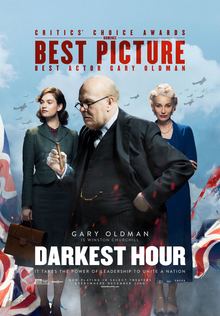
Darkest Hour-2017

Darkest Hour-2017

Director Joe Wright

Starring Gary Oldman

Scott’s Review #718

Reviewed January 24, 2018

Grade: A-

Darkest Hour (2017) is a British historical film that showcases legendary actor Gary Oldman’s astounding portrayal of Winston Churchill.

Known for numerous other fine-acting performances in films such as the Harry Potter series (2001-2011), JFK (1991), and Batman Begins (2005), this performance easily transcends all of the others as he brings perfection to complex role-infusing humor, drama, and many idiosyncrasies of the storied historic figure.

Churchill is the best role of Oldman’s lengthy career.

Director Joe Wright, famous for classy European films such as Pride and Prejudice (2005), Atonement (2007), and Anna Karenina (2012), traditionally offers rich, intelligent experiences with an upper-crust, often British theme and fills his characters with wry humor and wit.

In Darkest Hour, a film that belongs to Oldman, by the way, Churchill is the master of gruff sarcasm and cantankerous charm.

During the tumultuous time of 1940,  with the barbaric grips of Nazi Germany settling upon both England and France (Allies in World War II), a disheveled England is frustrated with their current Prime Minister, Neville Chamberlain, for being weak.

Chamberlain begrudgingly appoints Winston Churchill as his successor, amid limited support.

The film discusses Churchill’s early days in charge as the war and the Nazi presence loomed larger and larger- especially as the historic Dunkirk situation comes into fruition.

Darkest Hour is a good quality film —it has a certain historic richness and the feeling of experiencing a worthy and relevant film. For those of us who did not live during the 1940s, the film will likely serve as an educational experience into the events of the day.

Hundreds of films have been made over time that have explored the events during World War II in fantastic detail, but this film is unique in that it not only provides a perspective of the Allied countries “back against the wall” situation but the ups and downs and pressures that Churchill, the man, faced.

Despite a few quick clips of Hitler and very old black-and-white footage and newspaper headlines of the crazed leader, the focus is not on the enemy country. No actor was used to play Hitler; rather, the focus is on Churchill and the decisions he made and the influences he was faced with.

Pressured to appease the militant German country and reach a “peaceful” deal, Churchill instead listened to the voices of the ordinary, everyday, British people to get his decision to fight the Germans and not back down.

Clever and relevant to 2017 cinema, the film spotlights the famous Dunkirk situation, when British forces were trapped on the shores of Dunkirk, with German planes looming overhead.

Many men were saved, thanks in large part to Churchill and British and French civilian boats that aided in the rescue.

The 2017 film Dunkirk would make an excellent companion piece to Darkest Hour because its subject matter is similar to that of Darkest Hour.

Not surprisingly, both films received Academy Award nominations for Best Picture.

A great lesson I carried away from the film is with Churchill himself.

Sure, I knew that he was the Prime Minister of England during the 1940s and was instrumental in the events of the bloody war, but I knew little about the man himself.

Thanks to Wright and, of course, Oldman, the viewer will learn the good and bad characteristics of this man. A heavy drinker, commonly downing champagne with lunch and brandy the rest of the day, he was initially not well-liked, nor taken very seriously by British royalty.

With Churchill’s bubbling personality, Oldman is fantastic at filling the role with humor, frustration, and just the correct amount of empathy and concern.

Despite his temper, we can tell that he loves his country and is proud of the people living there—that is why he is adamant about conquering the enemy. So, we know he is a good man despite his temper tantrums.

Oldman also successfully embodies the mannerisms that this historical figure contained.

Kristin Scott Thomas also gives a worthy performance, albeit in a small role, as the mature and graceful wife, who can both support and match wits with her husband.

Thanks to a brilliant acting performance by Gary Oldman, who takes on a difficult role that could easily be botched by lesser talent, Darkest Hour is a 2017 historical drama worth seeing.

He makes a film that could have been dull and flat into a worthy watch to both learn something and be amazed at a truly great acting performance.

Oscar Nominations: 2 wins-Best Picture, Best Actor-Gary Oldman (won), Best Production Design, Best Cinematography, Best Makeup and Hairstyling (won), Best Costume Design

Frost/Nixon-2008

Frost/Nixon-2008

Director Ron Howard

Starring Frank Langella, Michael Sheen

Scott’s Review #595

Reviewed January 8, 2017

Grade: B+

Adapted from a Broadway play, director Ron Howard creates a powerful film surrounding the infamous 1977 interview between former President Nixon and interviewer David Frost.

Frank Langella and Michael Sheen star.

For someone too young to remember Nixon or the Watergate scandal, the film was very enlightening and historical for me on a personal level.

Frost/Nixon is also a very human story and well-made.

The interview scenes are fantastic, as the constant back-and-forth, cat-and-mouse, each man looking for an opportunity to either pounce, avoid, or gain the upper hand is rich with character-driven possibilities.

The scuttlebutt and the behind-the-scenes scrambling by Nixon’s men is good drama.

In particular, Frank Langella steals the show as President Nixon. He is confident, strong, yet vulnerable, and sad.

An acting Tour De Force by Langella.

Oscar Nominations: Best Picture, Best Director-Ron Howard, Best Actor-Frank Langella, Best Adapted Screenplay, Best Film Editing

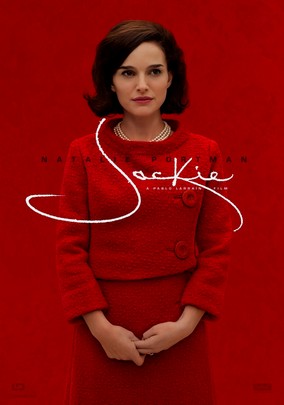
Jackie-2016

Jackie-2016

Director Pablo Larrain

Starring Natalie Portman

Scott’s Review #576

Reviewed January 1, 2017

Grade: A-

Natalie Portman carries the 2016 biographical-drama film based on the life of Jackie Kennedy and the events directly following the assassination of John F. Kennedy in 1963.

The film does not retread conspiracy theories or feature more than a few brief glimpses of JFK himself. Instead, it tells Jackie’s story and what she faced throughout the ordeal.

The film wisely uses flashbacks to show the famous tour of the White House, which Jackie gave shortly before the President’s death.

It is a bravura performance by Portman as Jackie.

Director Pablo Larrain, primarily known for achievements with foreign-language films (the Chilean film No (2012), comes to mind), rather than the American history genre, is successful in his work with direction.

The film is gloomy, both in tone and with the terrific brooding musical score composed by Mica Levi, with its loud, abrupt sound effects.

The overall feel of the film is foreboding and dark.

The main activity is told through a famous Life interview that Jackie Kennedy gave a week after the assassination. The reporter was Theodore H. White, who was slightly less than sympathetic in demeanor toward the First Lady.

Held in Massachusetts, Jackie is still pained in peaceful tranquility away from the limelight.

Portman successfully reveals two sides of Jackie Kennedy to the audience. Not simply the smiling debutante she always portrayed publicly, Jackie was also a complex, feisty woman.

She vehemently wanted the world to see how brutal the assassination was, how proud she was of her husband, and how she would not back down from holding a lavish and public funeral procession for her deceased husband.

Jackie was met with harsh criticism and defiance for her desire. A proud woman, she did not wish to run away and hide from the terrible events.

Jackie is mostly a quiet, introspective film. Much of the film is about Jackie being interviewed, and there are flashbacks of her giving the White House tour.

Typically, Portman portrays Jackie as prim, proper, and demure. She is always filled with class and grace.

In one riveting sequence, though, we see Jackie walking through the White House, smoking cigarettes and drinking vodka. She appears alone and vulnerable, having just lost her husband.

Portman embraces her pain, and the audience grieves with her. She is alone in more ways than one. We see her not only as a First Lady but also as a sad woman in her agony.

Portman is fantastic in her mannerisms and tone of voice.

I loved the continuous usage of flashbacks to tell the story. Still, the film does not delve into an unneeded history lesson. We all know what happened. The point of the film is to answer curiosity about Jackie.

What is most effective is the focus on Jackie’s reactions and how Jackie handled the events.

In a grotesque scene rivaling any horror film, we are right there with Jackie in the car that fateful day as a shot rings out, blowing JFK’s head wide open. Sinking into Jackie’s lap, she later candidly describes to the Life magazine reporter how she attempted to hold the remains of his head together.

We then see her wandering around, her beautiful pink suit smeared with blood.

A quiet yet compelling and mesmerizing film, Portman is the main draw. She channels emotions of heartbreak, sadness, and composure.

Jackie was a fantastic First Lady who was always graceful and proper, but Portman shows another side of her that very few people knew about.

In addition to this fine acting, Jackie (2016) is a dark, brooding film that successfully tells this woman’s story.

Oscar Nominations: Best Actress-Natalie Portman, Best Original Score, Best Costume Design

Independent Spirit Award Nominations: Best Feature, Best Director-Pablo Larrain, Best Female Lead-Natalie Portman, Best Editing

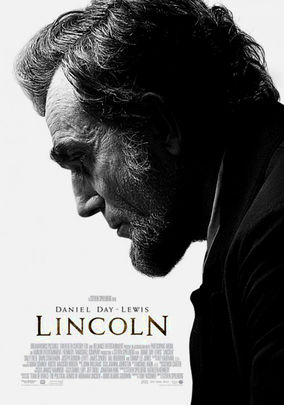
Lincoln-2012

Lincoln-2012

Director Steven Spielberg

Starring Daniel Day-Lewis

Scott’s Review #476

70251896

Reviewed September 10, 2016

Grade: A

Lincoln is a 2012 film, which received a slew of Academy Award nominations. However, opinions about the film itself differ.

Lincoln has audiences divided over whether it’s a brilliant film or a snoozefest.

My opinion leans decisively toward the former.

I recognize that (especially the first half) the film is slow-moving, but I found it engrossing and well-made.

Even the subtle aspects (costumes, art direction, lighting) are masterfully done.

I found Daniel Day-Lewis’s (Abraham Lincoln) lengthy stories intriguing, not dull, and a wonderful history lesson.

Steven Spielberg does what he does best- he creates a Hollywood film done well. He’s also done controversial, shocking, or experimental films, but mainstream fare is his forte.

This film isn’t for everyone, but if you have the patience, it will be an enlightening experience. If nothing else, a thing or two may be learned.

Oscar Nominations: 2 wins-Best Picture, Best Director-Steven Spielberg, Best Actor-Daniel Day-Lewis (won), Best Supporting Actor-Tommy Lee Jones, Best Supporting Actress-Sally Field, Best Adapted Screenplay, Best Original Score, Best Sound Mixing, Best Production Design (won), Best Cinematography, Best Costume Design, Best Film Editing

Bridge of Spies-2015

Bridge of Spies-2015

Director Steven Spielberg

Starring Tom Hanks, Mark Rylance

Scott’s Review #399

80050060

Reviewed April 28, 2016

Grade: B+

Tom Hanks teams with Stephen Spielberg once again in another A-list Hollywood film.

Like Saving Private Ryan (1998), Bridge of Spies (2015) is in the historical vein. This time, the Cold War is featured; the film begins in 1957.

The camera work, the artwork, and the set decorations are second to none as the film looks and feels authentic.

As interesting as the overall result is—it felt like I was watching a well-made film—there was also something missing, which did not make it truly riveting, and that is why it received a B+ rating.

With Spielberg and Hanks on board, one will get a quality film.

Hanks portrays James B. Donovan, a Brooklyn attorney specializing in insurance law, but a wiz at negotiation and experienced with the Nuremberg trials.

He is assigned to defend suspected spy Rudolf Abel (Mark Rylance) in what is assumed to be an open-and-shut case, his guilt is considered a given.

Abel has been arrested by the FBI and is thought to be a Russian spy. They are willing to release him on the condition that he reveal Soviet contacts, but he refuses.

Meanwhile, an American pilot, Frances Powers, is captured in Soviet territory and taken hostage. To make matters more complicated, an American graduate student, Pryor, is trapped behind the Berlin Wall in East Germany and not allowed by the Germans to leave.

The pressure is on Donovan to defend Abel in the United States but to make a deal to return the three men to their respective countries.

Hanks, a great actor, is his typical stoic, capable self, and his portrayal reminds me of his role in Captain Phillips (2013), calm, well-mannered- a clear yet quiet leader.

The role is not flashy compared to other legendary Hanks roles (Forrest Gump-1994, Philadelphia-1993). The film centers around Hanks and caters to his acting style. His character is always at the forefront.

Hanks never gives a bad performance and I admire him in almost anything.

Let’s discuss the role and the portrayal by Mark Rylance in his Oscar-winning role.

Giving a very subdued, nuanced performance, he is good and low-key in what could have been an energetic, over-the-top performance if written that way, but I am not sure I would have handed him the golden statuette over a few of the other nominees in the 2015 Supporting Actor category.

This isn’t a criticism, but I am unsure if he warrants an Academy Award.

Bridge of Spies is very detail-oriented and every set piece- from late 1950s cars, clothing, hairstyles, and home furnishings is spot on.

The film was expensive to produce and no expense seems to have been spared.

The film travels from Brooklyn to the Soviet Union, to Germany, and gives off a patriotic, Americana flare, which is true to life in the given time. There was such a sense of country and community.

Nothing makes this more apparent than the distasteful glares coldness and hatred displayed by many characters towards Donovan.

To counteract this, when Donovan is ultimately more the hero, he is revered and celebrated.

As great as the film looks, there is something slightly disconnecting about it. I was left wanting more from a story perspective and feeling slightly disengaged throughout parts of it. I was never riveted or blown away despite realizing I was watching a well-made film.

This can happen if the story is less compelling than the way the film looks as with Bridge of Spies.

After I finished watching I felt that I did not need to see the film again, in contrast to truly great films where one can watch over again.

A slight mention is that Bridge of Spies is a “guy’s film”. Amy Ryan, a great actress, does all she can with the only real female role in the film in that of Donovan’s dutiful, supportive wife, a role written one-dimensionally hundreds of times.

It is a shame her character is not fleshed out. The typical worried scenes or fretting for her husband to return home to his family are purely reactionary and do not further the plot.

In this sense, the film deserves criticism for being too traditional.

Bridge of Spies is a good effort but not a tremendous film. It is the type of film I liked but did not love.

Perhaps, the names Spielberg and Hanks on the marquee had me expecting more.

Oscar Nominations: 1 win-Best Picture, Best Supporting Actor-Mark Rylance (won), Best Original Screenplay, Best Original Score, Best Sound Mixing, Best Production Design

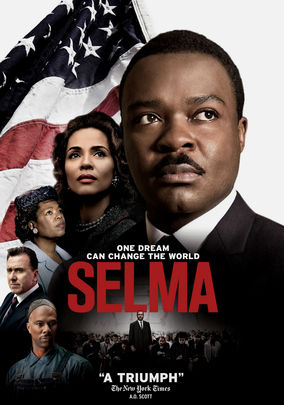
Selma-2014

Selma-2014

Director Ava DuVernay

Starring David Oyelowo, Carmen Ejogo

Scott’s Review #248

80013278

Reviewed June 19, 2015

Grade: A-

An Oscar-nominated factual feast, set in the mid-1960s during the Civil Rights movement, Selma (2014) is a re-telling of the life and times of Martin Luther King Jr. and the struggles that black Americans endured during a tumultuous period in history.

The film includes dealings with then-President Lyndon B. Johnson and the famous and important 1965 Selma to Montgomery voting rights march, which led to the signing of the pivotal Voting Rights Act of 1965.

This film reminded me quite a bit of 2013’s The Butler in subject matter and style-ironic since Lee Daniels was slated to direct and instead signed on for The Butler.

Both feature a charismatic and intelligent black man struggling with racial matters.

Despite being an independent undertaking, it is glossy, polished, and reflective of the time. Both The Butler and Selma boast a huge cast, and historical political figures, in a tumultuous era in history.

Selma features a bevy of real-life figures from George Wallis to President Johnson to the obvious leader of the Civil Rights movement, Martin Luther King Jr., and his wife, Coretta Scott King, and the casting is very well thought out.

Tim Roth, David Oyelowo, Tom Wilkinson, and Carmen Ejogo portray their roles professionally and passionately. None of the above received Oscar nominations and I am okay with that.

I did not feel that any were definite standouts from a crowded field of talent, though perhaps Ejogo could have been in the running with her understated though compelling performance.

The drama surrounding the lack of expected Oscar nominations is not shared by me. The truth is, the film was included in the Best Picture category and won Best Song.

While an emotional and compelling film, neither is it a masterpiece nor will change the art of cinema, though I must stress it is good.

I find Selma to be an important film- a look back on history and the shame and humiliation placed on blacks who attempted to obtain voting rights. A heartbreaking scene depicts a determined woman (played by Oprah Winfrey) being denied this right by a cold and racist authority figure as she is asked impossible and tricky questions to prove her patriotism, which of course, she cannot possibly answer correctly.

Yes, the film is directed by a black, female director (Ava DuVernay) and yes, one might argue that it has a black point of view. However, the film successfully sympathetically portrays several white characters and avoids the assumption that all white people were racist in this period.

Let’s face it- racism still exists, especially in the South, and in the 1960s even more so. I did not find the message in black people vs. white people’s terms, but rather as a humanistic struggle for rights.

And the struggles continue as the film makes abundantly clear in the message of the film.

While King was a life changer to the black people of the United States, his life was abruptly cut short in his prime. One wonders how much more good this man could have achieved.

The song “Glory” is an emotional, powerful number, especially during the marching and subsequent slaughter scenes highly emotional and effective.

And who will not become teary-eyed as the innocent marchers are beaten and treated like cattle, simply for taking a stand? One will gasp at the senseless bombing scene that rocks a building and takes four innocent little girls’ lives away with it.

Selma successfully transplanted me to a time before my time and made me appreciate and capture the positive and negative experiences of a race of people not long ago.

This film inspires and moves me and teaches me what a movement occurred in 1965.

Oscar Nominations: 1 win-Best Picture, Best Original Song-“Glory” (won)

Independent Spirit Award Nominations: Best Feature, Best Director-Ava DuVernay, Best Male Lead-David Oyelowo, Best Supporting Female-Carmen Ejogo, Best Cinematography

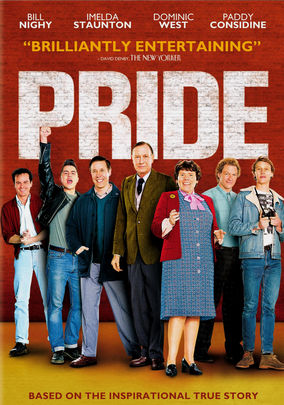
Pride-2014

Pride-2014

Director Matthew Warchus

Starring Bill Nighy, Imelda Staunton

Scott’s Review #215

80013480

Reviewed January 17, 2015

Grade: B-

Pride (2014), based on a true story, deserves props for delivering a nice message about inclusion and groups of vastly different people coming together as human beings.

While it’s a nice film, the filmmakers play it a bit too safe and it has a definite formulaic feel to it.

Surely, the real story of Pride was not as simplistic as this film felt at times.

The setting is 1984 England. A group of British miners goes on strike over wages. A group named Lesbians and Gays Support the Miners made up of gay men and women developed an interest in the strike and decided to help the miners and families.

Why they decided to take on this cause is not fully explained. The National Union of Mineworkers is hesitant to accept funds as they worry about the publicity caused by a group thought to be perverts.

The film is riddled with clichés- the macho miners resist the help from the gays, many of whom are portrayed as effeminate. The characters who are lesbians look as though the filmmakers wanted to “butch them up”, thereby overdoing the stereotype.

There is a subplot of one gay young man who has not come out to his parents, a well-to-do, pretentious couple. When inevitably the truth is revealed, the parents are angry and turn their backs on the teen.

He leaves home to join the gays and lesbians who accept him into their lives with open arms.

The female head of the committee is homophobic and vows to do everything in her power to make sure the gay and lesbian group does not succeed in aligning with the miners.

These clichés seemed way too overdone to make the film more dramatic. Some of the characters, therefore, come across as one-dimensional.

Even the story revolving around a character with AIDS seems watered down and soft.

On the plus side, casting the brilliant Imelda Staunton as the sympathetic, maternal, Hefina is a plus.

A huge supporter of gays and lesbians she comically befriends all of them and is curious about their lifestyles. Bill Nighy is also excellent as Cliff, the older miner who turns out to be gay.

Margaret Thatcher, Prime Minister at the time, is presented as greedy and selfish with little regard or use for the miners or labor unions.

Pride (2014) is an earnest, sentimental, feel-good film that deserves adoration for the coming together of different communities.

I would have liked to see more risks taken by the film.

Anna Karenina-2012

Anna Karenina-2012

Director Joe Wright

Starring Keira Knightley, Jude Law

Scott’s Review #126

70243443

Reviewed July 22, 2014

Grade: B+

Anna Karenina (2012) is the film adaptation of Leo Tolstoy’s classic novel.

Shamefully, I hadn’t read the novel, but I was familiar with the story, so I wasn’t sure how successful the transition from novel to film would be.

The transition proved to be quite successful, as it would turn out.

Being a fan of director Joe Wright, who did wonderful work directing Atonement in 2007, I consider him a master of costumed period pieces, and Anna Karenina is no different in that regard.

It differs, however, in how it is shot. The film is non-traditional, shot with jarring, quick camera movements interspersed with musical numbers.

It resembles Moulin Rouge (2001) in style and isn’t for everyone’s tastes. I enjoy this technique, and combined with the wonderful art direction/costumes, it makes for modern, unique storytelling.

Keira Knightley is adequate as Anna, but nothing special. I have to wonder if she was cast simply because she is typically the lead in Joe Wright films.

It is a tragedy, of course, and a tale of a lonely, love-torn young woman conflicted between two high-class men.

On a broader scale, it’s a story of the romantic entanglements of the high-class world and their trials and tribulations, centering on Anna.

The film’s look impressed me more than the story did.

Oscar Nominations: 1 win-Best Original Score, Best Production Design, Best Cinematography, Best Costume Design (won)

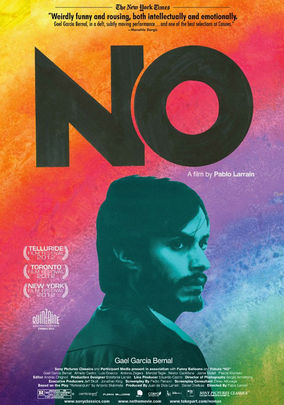
No-2012

No-2012

Director Pablo Larraín

Starring Gael García Bernal

Scott’s Review #119

70243255

Reviewed July 17, 2014

Grade: B

No is a 2012 Best Foreign Language film nominee that centers around a Chilean ad executive’s campaign to oust a powerful Chilean dictator (Pinochet) from power circa 1988.

The ad executive (played by Gael García Bernal) struggles to create a powerful campaign to influence the media and the voters.

The movie has a documentary-style look and is visually interesting.

You experience firsthand how difficult it was to build a successful campaign amid the political unrest in Chile at the time.

The fact that the film is based on a true story adds a level of interest.

While watching the film, it felt like 1988, and I felt transported back in time, unlike many period films where sets look dressed up for the period.

A detraction of No (2012) was its painfully slow pace, which occasionally made it drag.

Oscar Nominations: Best Foreign Language Film

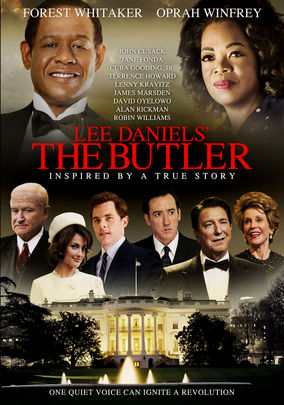
Lee Daniels’ The Butler-2013

Lee Daniels’ The Butler-2013

Director Lee Daniels

Starring Forest Whitaker, Oprah Winfrey

Scott’s Review #81

70266686

Reviewed June 30, 2014

Grade: A

Director, Lee Daniels, is a recent favorite of mine (Precious-2009, The Paperboy-2012) and his latest The Butler (2013) is an excellent, true story, undertaking.

While the trailer looked appealing, I was concerned that the film might be overwrought or have a Hollywood sappiness.

While it’s a Hollywood film, it is also a powerful, emotional experience.

The viewer is taken on a journey from 1926 through the current president from the viewpoint of White House butler Cecil Gaines (Whitaker), who serves several presidents and is privy to the goings-on in the White House.

He is played by Forest Whitaker and his boozy, troubled wife is played by Oprah Winfrey.

Both give tremendous performances.

The Butler is a political journey through time and I love the authenticity of each decade from the sets to the costumes to the hairstyles.

The casting of the Presidents is curious (Robin Williams as Eisenhower and John Cusack as Nixon), but works nonetheless.

The rivalry between Cecil Gaines and his rebellious son is quite interesting as the viewer sides with each individual at different times.

The film is more emotional than I anticipated and much of the audience was teary during scenes of heartbreak and triumph.

I feel The Butler (2013) is a must-see for everyone.

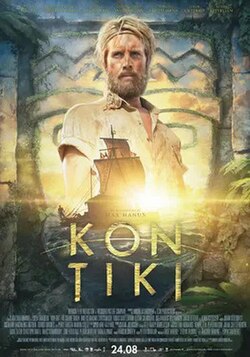
Kon-Tiki-2012

Kon-Tiki-2012

Directors Joachim Rønning, Espen Sandberg

Starring Pål Sverre Hagen

Scott’s Review #78

Reviewed June 28, 2014

Grade: C+

I don’t know what’s happened to the nominating process for the Best Foreign Language Film Oscar (it’s been controversial for years). Still, you used to be able to count on any of the five nominated films to be interesting, edgy, and even controversial.

These days, a few of the nominated films barely squeak through, rise above mediocrity, and are such mainstream stories.

Kon-Tiki (2012) is one such film.

It tells the tale of a Norwegian scientist determined to sail, via raft, from Peru to the Polynesian islands to prove a Sun God, centuries ago, made the same voyage.

He forms a team and off they go.

Supposedly based on a true story, the team faces the typical challenges in an oceanic adventure: bad weather, sharks, the raft in peril, and dissent among the ranks.

These high-sea clichés have gotten to me recently. The film is similar in context to Life of Pi, also made in 2012.

It’s not a bad film, but there is nothing special about it either, and it has glossy and safe written all over it- the score is Spielberg to the nines, who has nothing to do with this film.

The five adventurers are bronzed with buff bodies when nobody was buff in the 1940s when this film is set, and the scruffy beards, after months of sailing, look perfectly phony.

For the top-tier foreign language group, I expected something more cutting-edge and with more substance.

Oscar Nominations: Best Foreign Language Film

Anastasia-1956

Anastasia-1956

Director Anatole Litvak

Starring Ingrid Bergman, Yul Brynner

Scott’s Review #68

Reviewed June 24, 2014

Grade: B+

Anastasia (1956) is an exquisitely shot historical drama set in Paris and Denmark circa 1928.

The film tells the story of a surviving member of the Romanov Dynasty who was discovered in early 20th-century Russia. But is she an imposter or the real heir?

This is the central question that the film encompasses.

The set and art direction are gorgeous.

Ingrid Bergman is flawless as a tortured, lost, amnesiac woman who attempts to discover herself and her feelings. Unsurprisingly, she won the Best Actress Oscar this year (1956).

How wonderful to see Helen Hayes (typically a stage actress) as the Dowager Empress.

It is interesting to see Natalie Schaffer (Lovey Howell of Gilligan’s Island fame) in the film.

My only slight knock is that I didn’t sense any chemistry between Bergman and Yul Brynner, but the romantic element is certainly secondary to the fascinating period drama.

Every scene is first-rate in production and style, and gorgeous filming. Every frame looks like a painting.

Oscar Nominations: 1 win-Best Actress-Ingrid Bergman (won), Best Music Score of a Dramatic or Comedy Picture

Golden Globe Nominations: 1 win-Best Performance by an Actress in a Motion Picture-Drama-Helen Hayes, Ingrid Bergman (won)

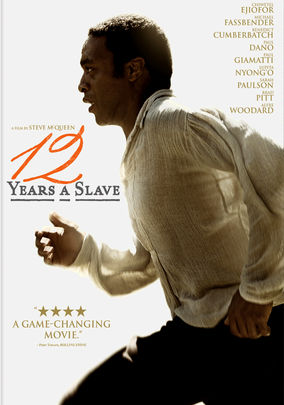
12 Years a Slave-2013

12 Years a Slave-2013

Director Steve McQueen

Starring Chiwetel Ejiofor

Scott’s Review #62

70284282

Reviewed June 24, 2014

Grade: A

At the time of 12 Years a Slave’s (2013) release, a ton of buzz began circulating. Was it that good?

Considered the front-runner to win the Best Picture statue, it did go on to win the top honor.

The film is not easy to watch. It is brutal and heart-wrenching at times. I will spare the details, but the most intense scene involves a whip.

There are scenes of torture, degradation, and cruelty against the slaves by the slave owners.

While tough to watch, I applaud the film for not glossing over the atrocities of slavery. Some have criticized it for being a retread of similar films, but I disagree. It is worlds more intense than watered-down versions.

However, the film is not a downer.

Yes, a class of people is beaten down and victimized, but they also rise above and never give up hope. The fact that it’s a true story and a book was written on the subject by the real Solomon Northup makes it all the more powerful.

The performances are outstanding (Ejiofor, Fassbender, Paulson, and Nyong’o).

The look and cinematography are sharp and I love the distinctiveness of the north and south scenes. The setting is stifling hot and dreary.

There are at least two scenes where the camera pans on a shot and holds it for seemingly an eternity until an action occurs, which makes the scenes effective.

While difficult to watch, 12 Years a Slave (2013) should be viewed by everyone to see how far society has come, not forgetting how far we still need to go to eliminate discrimination and victimization.

Oscar Nominations: 3 wins-Best Picture (won), Best Director-Steve McQueen, Best Actor-Chiwetel Ejiofor, Best Supporting Actor-Michael Fassbender, Best Supporting Actress-Lupita Nyong’o (won), Best Adapted Screenplay (won), Best Production Design, Best Costume Design, Best Film Editing

Independent Spirit Award Nominations: 5 wins-Best Feature (won), Best Director-Steve McQueen (won), Best Male Lead-Chiwetel Ejiofor, Best Supporting Male-Michael Fassbender, Best Supporting Female-Lupita Nyong’o (won), Best Screenplay (won), Best Cinematography (won)

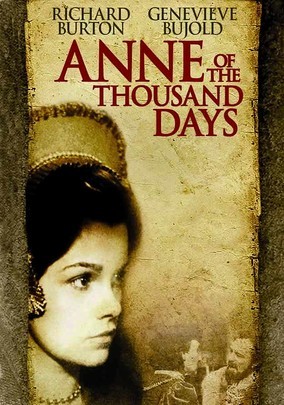
Anne of the Thousand Days-1969

Anne of the Thousand Days-1969

Director Charles Jarrott

Starring Richard Burton, Geneviève Bujold

Scott’s Review #56

60010091

Reviewed June 22, 2014

Grade: A-

Anne of the Thousand Days (1969) is one of the better historical dramas I have seen.

One can become absorbed in the history of royalty and learn a lot. It has a clear Shakespearean quality to it (tragedy) and is compelling in many ways.

It tells the true story of the tumultuous relationship between Henry VIII of England and his second wife, Anne Boleyn, whose union produced one of the most famous queens, Elizabeth I.

Henry VIII’s first wife, Katherine, was discarded amid much controversy and political intrigue.

The drama is part of what makes this film so enjoyable, along with the historical element. It is dramatic, but not a soap opera, and the acting is superior.

The film also has gorgeous costumes and cinematography.

Unfortunately, the finale of the beheading left too much to the imagination, and a more graphic scene would have put it over the top.

The film is near excellent, though.

Oscar Nominations: 1 win-Best Picture, Best Actor-Richard Burton, Best Actress-Geneviève Bujold, Best Supporting Actor-Anthony Quayle, Best Screenplay Based on Material from Another Medium, Best Original Score for a Motion Picture (Not a Musical), Best Sound, Best Costume Design (won), Best Art Direction, Best Cinematography

Golden Globe Nominations: 4 wins-Best Picture-Drama (won), Best Director-Charles Jarrott (won), Best Actor-Drama-Richard Burton, Best Actress-Drama-Geneviève Bujold (won), Best Supporting Actor-Anthony Quayle, Best Screenplay (won), Best Original Score