Tag Archives: John McConnell

Django Unchained-2012

Django Unchained-2012

Director Quentin Tarantino

Starring Jamie Foxx, Christoph Waltz

Top 250 Films #116

Scott’s Review #699
Reviewed November 26, 2017

Grade: A

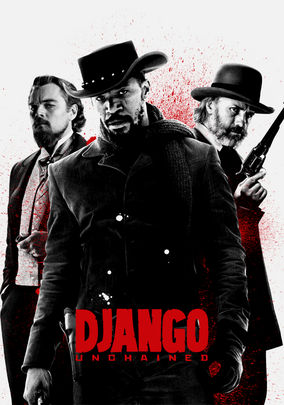
Quentin Tarantino, the brilliant filmmaker, can do very little wrong in my opinion, and he releases yet another masterpiece with 2012’s Django Unchained, a western story centering around the delicate subject matter of slavery.

As with several other talented director’s stories, the main focal point here is a revenge-driven tale with plenty of bloody scenes and stylistic ferociousness, making Django Unchained yet another masterpiece in the Tarantino collection.

Certainly not for the faint of heart, the film will please fans of film creativity and artistic achievement.

As with many Tarantino films a stellar cast is used and each actor cast to perfection- it seems almost every actor in Hollywood is dying to appear in the director’s films- this time Jamie Foxx, Christoph Waltz, Kerry Washington, Leonardo DiCaprio, and Samuel L. Jackson are the lucky ones, all featured in prominent roles- not surprisingly the acting is top-notch.

An interesting fact to note is that whoever appears in a Tarantino film seems to be having the time of their lives- what creative freedom and interesting material to experience.

A comparable director to Tarantino- as far as recruiting fine actors- is Robert Altman- also tremendously popular with talent.

The saga begins with clear Western flair as Django Freeman (Foxx) is led through the scorching heat of Texas with a group of other black slaves, presumably, to be sold by their abusive white captors- the time is 1858, and the abolition of slavery has not yet occurred the Civil War is still two years away.

Doctor King Schultz (Waltz), a former dentist and current bounty hunter, is on a mission to find and kill the Brittle brothers and realizes that Django can help him find the men.

To complicate matters, Django has been separated from his wife Broomhilda (Washington) and vows to find her and avenge her abductors.

As circumstances lead Schultz and Django to a vast Tennessee estate, the duo becomes business partners and friends. The race to rescue Broomhilda takes the pair to sunny (and equally hot) Mississippi- the home of vicious Calvin Candie (DiCaprio) and his dreaded “Candyland”.

The crackling heat and the atmospheric nature of Django Unchained combined with the revenge theme make the film an immeasurable success.

An ode to spaghetti westerns of yesteryear, the film incorporates similar music and grit so that the result is a modernized version of those films, with lots more blood and violence.

Slavery is a tough subject matter to tackle, especially when members of the Ku Klux Klan are featured, but Tarantino does so effortlessly, and as Django gains revenge on his tormentors, there is major audience satisfaction to be enjoyed.

The indignities and downright abuse that several black characters suffer can be quite tough to sit through.

The climactic dinner scene in Mississippi is splendid and the best sequence of the film. Schultz and Django dine with Calvin at his spectacular mansion. Calvin’s sinister and loyal house slave (Jackson) suspects a devious plan is about to be hatched and a vicious shoot-out erupts between the parties involved.

The ingenious and long sequence is a cat-and-mouse affair with all of the characters carefully tiptoeing around the others in fear of being revealed or discovered as fakes.

The scene is exceptional in its craft as we watch the characters dine on delectable food and drink, all the while motivations bubble under the surface.

Django Unchained is not for film-goers seeking either a linear story or a mainstream piece of blockbuster movie-making-Tarantino is not a typical Hollywood guy.

The film is exceptionally carved and constructed in a way that challenges the viewer to endure what some of the characters (specifically Django and Broomhilda) are made to go through. This discomfort and horror make the inevitable revenge all the more sweet and satisfying.

Quentin Tarantino has created masterpiece after masterpiece throughout his filmography of work.

Proudly, I can herald 2012’s  Django Unchained as one of the unique director’s very finest and will be sure to be remembered decades and decades in the future as being able to challenge, provoke thought, and satisfy legions of his fans.

Oscar Nominations: 2 wins-Best Picture, Best Supporting Actor-Christoph Waltz (won), Best Original Screenplay (won), Best Sound Editing, Best Cinematography

Miller’s Crossing-1990

Miller’s Crossing-1990

Director Joel Coen

Starring Ethan Coen, Gabriel Byrne

Scott’s Review #394

60028099

Reviewed April 13, 2016

Grade: B+

Containing a mixture of The Godfather Part III, Goodfellas, and The Grifters- ironically all released in 1990- Miller’s Crossing is an old-fashioned gangster film made fresh thanks to the direction of Joel Coen.

He brings a quirky edge to the film, throwing in a blend of film noir, black humor, and edgy characters that make the film storyline feel fresh and alive in the present.

It has a definite late-1980s-era cinematic look (not a compliment).

I could immediately tell which decade it was made. Miller’s Crossing begins slowly, but during the second act, it gains steam and is the best part of the film.

The film is set somewhere in New York during the 1920s Prohibition period- it is assumed New York City, but this is never stated.

The general story involves Tom Reagan, a handsome Irish gangster and right-hand man of Leo O’Bannon (Albert Finney), who becomes involved in conflict with Leo, his lover Verna (Marcia Gay Harden), and her brother Bernie (John Turturro), who is wanted dead by rival Italian mobster, Johnny Caspar.

Johnny’s right-hand man, “Dane,” comes into play, as does another gangster, Mink, played by Steve Buscemi. Tom changes allegiances and plays one mob boss against the other as a web of deceit, tested loyalty, and murder ensues.

As the first half concluded, I was not completely sold on the film.

How many times have I seen a gangster film with all the stereotypical elements, the tough-guy shtick, and the contrivances?

I was afraid I was watching a retread of similar films.

I wondered what the point of the film was- the relationship between Tom and Leo’s struggle for power and control. A triangle between Tom, Verna, and Leo?

I noticed little chemistry among them and could not help but wonder whether a female presence was required in the film, though not all that necessary.

Regardless, I was quickly bored with Verna’s character.

But then the elements of the film began to come together, and some rather left-of-center nuances emerged, leaving me even more engrossed.

A homosexual triangle (seldom seen in traditional, crime/mob films) took shape between Mink, Dane, and Bernie. All vicious killers had no stereotypes often seen in the film, which is refreshing.

Dane was arguably the most brutal of all the characters, and the bloodletting was plenty. I found this reveal completely refreshing, not to mention unexpected.

However, the intricacies of the triangle were left unexplored. They bedded each other.

A pivotal scene set in the woods (Miller’s Crossing) is as gorgeous as it is character-driven. Tom must choose between killing Bernie and proving his loyalty to the mobsters awaiting, or secretly letting him live, faking his death, all in the name of his love for Verna.

But will his decision come back to haunt him?  Is Tom, at his core, a good man or a bad man?

The calm of the forest mixed with the brutality of the film is perfect. I was reminded of the 1970 Italian masterpiece The Conformist while viewing this beautiful scene—Tom’s conflict between good and evil and his earlier premonition of a tumbling hat come into play.

His character conflict reminded me of Michael Corleone in The Godfather films.

Look quickly, and you will see Frances McDormand, soon to be a fixture in Coen films, as a slinky, well-dressed secretary. We are reminded of great things to come by this then-unknown talent.

A nice thing that I always look forward to in Coen films is the quirky, weird, fun, minor characters, and Miller’s Crossing is no different- Johnny Caspar’s overweight wife and son, an Augustus Gloop from Willy Wonka and the Chocolate Factory lookalike, give comedy to the potentially too dark film.

From Bryan to Tic-Tac to the fat lady with the purse, all offer amusing and meaningful turns that lend the film a richness and an unusual cast of characters.

Miller’s Crossing (1990) proves to be a nice little film once it picks up steam, and the intertwining of stories and characters, with a touch of classic film noir, makes for a refreshing take on an age-old genre.

Blood Feast 2: All U Can Eat-2002

Blood Feast 2: All U Can Eat-2002

Director H.G. Lewis

Starring John McConnell

Scott’s Review #65

60029437

Reviewed June 24, 2014

Grade: B

Blood Feast 2: All U Can Eat (2002) is a sequel to the original Blood Feast from over thirty years ago.

It is not necessary to see the original before seeing this film (I hadn’t). The original killer’s grandson is the gruesome caterer/maniac in this installment.

Director H.G. Lewis heavily influenced John Waters, who has a fantastic cameo as a perverted reverend.

This movie is so over-the-top and campy that it should not be taken seriously at all.

The premise, if one can call it that, involves a lunatic caterer intent on using various female body parts to concoct a scrumptious meal to serve at a wedding.

The film is more of a comedy than a traditional horror film.

The victims are bubbleheads, mispronouncing words and traipsing around in skimpy outfits (or less) for no reason. The mean-spirited mother of the bride is a delight.

Scenes of taste testing and the presentation of “ladyfingers” are hilariously creative.

Campy in every way and poorly acted, but good late-night fun.

12 Years a Slave-2013

12 Years a Slave-2013

Director Steve McQueen

Starring Chiwetel Ejiofor

Scott’s Review #62

70284282

Reviewed June 24, 2014

Grade: A

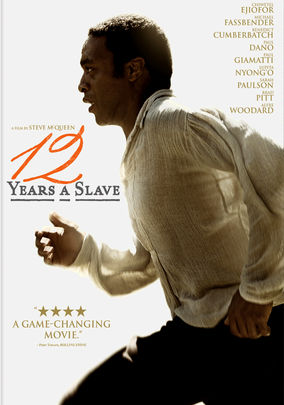
At the time of 12 Years a Slave’s (2013) release, a ton of buzz began circulating. Was it that good?

Considered the front-runner to win the Best Picture statue, it did go on to win the top honor.

The film is not easy to watch. It is brutal and heart-wrenching at times. I will spare the details, but the most intense scene involves a whip.

There are scenes of torture, degradation, and cruelty against the slaves by the slave owners.

While tough to watch, I applaud the film for not glossing over the atrocities of slavery. Some have criticized it for being a retread of similar films, but I disagree. It is worlds more intense than watered-down versions.

However, the film is not a downer.

Yes, a class of people is beaten down and victimized, but they also rise above and never give up hope. The fact that it’s a true story and a book was written on the subject by the real Solomon Northup makes it all the more powerful.

The performances are outstanding (Ejiofor, Fassbender, Paulson, and Nyong’o).

The look and cinematography are sharp and I love the distinctiveness of the north and south scenes. The setting is stifling hot and dreary.

There are at least two scenes where the camera pans on a shot and holds it for seemingly an eternity until an action occurs, which makes the scenes effective.

While difficult to watch, 12 Years a Slave (2013) should be viewed by everyone to see how far society has come, not forgetting how far we still need to go to eliminate discrimination and victimization.

Oscar Nominations: 3 wins-Best Picture (won), Best Director-Steve McQueen, Best Actor-Chiwetel Ejiofor, Best Supporting Actor-Michael Fassbender, Best Supporting Actress-Lupita Nyong’o (won), Best Adapted Screenplay (won), Best Production Design, Best Costume Design, Best Film Editing

Independent Spirit Award Nominations: 5 wins-Best Feature (won), Best Director-Steve McQueen (won), Best Male Lead-Chiwetel Ejiofor, Best Supporting Male-Michael Fassbender, Best Supporting Female-Lupita Nyong’o (won), Best Screenplay (won), Best Cinematography (won)