Tag Archives: Sacha Pitoëff

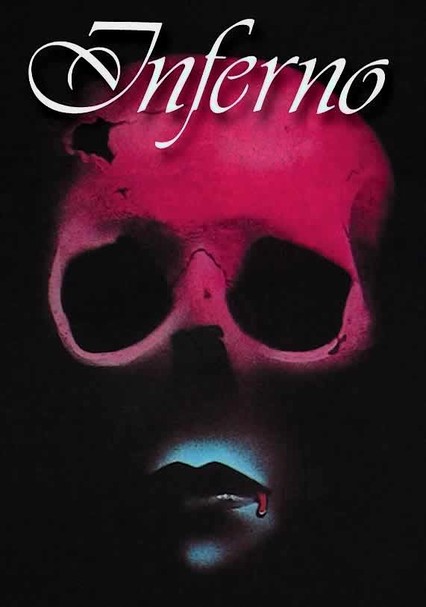
Inferno-1980

Inferno-1980

Director Dario Argento

Starring Leigh McCloskey, Irene Miracle

Scott’s Review #1,372
Reviewed June 27, 2023

Grade: B+

Any fan of the famous Italian horror director Dario Argento knows to expect a visual extravaganza from his films.

They reek of color and a weird atmosphere that makes them distinguishable from other, less crafty directors, and that’s worth a lot to a cinema fan.

Inferno (1980) is no exception, but, to be fair, the plot is brutal to follow, as the visuals easily overshadow the storytelling. On the flip side, despite being set mainly in New York City, Inferno has a definitive Italian vibe.

And why shouldn’t it, since it’s shrouded in Italian creativity?

Fans of Argento will know what I’m saying and leap into the film as I did, immersed in art direction rather than a defined plot.

The film is the second in his “Three Mothers” trilogy, and Inferno focuses on a Manhattan apartment building inhabited by a deadly spirit that murders the tenants in sadistic ways.

The other two films in the collection are Suspiria (1977) and Mother of Tears (2007).

When a poet named Rose (Irene Miracle) discovers a book suggesting she’s living in a building built for one of three evil sisters to rule the world, she begs her brother, Mark (Leigh McCloskey), to visit her from Rome.

But when he arrives, she’s disappeared without a trace. Mark encounters several creepy characters as he attempts to unravel the mystery and find his sister, either dead or alive.

It takes some time to figure out who the main character is supposed to be. Is it Rose, Mark, Mark’s friend Sara, or Rose’s neighbor, Elise? Before long, three of the four are sliced into bits.

The kills are superior, with my personal favorite being the death of one character guillotined with the glass of a broken window. This is nearly usurped by a pack of snarling cats with murder on their minds, attacking another victim.

As a cat lover, I grinned with pleasure.

As alluded to earlier, the story is too hard to follow. Therefore, the showdown between the main character and the witch is a letdown, and it is uncertain what becomes of the witch.

I also desired to see the witch more.

But maybe I wasn’t paying too close attention. The gorgeous sets caught my attention more than any plot point did.

I was especially enamored by the gothic New York City apartment set, which takes center stage during most of the film. The blue velvet curtains and dimly lit corridors, combined with desolate corners and few inhabitants, made me want to stay there.

Especially appealing is a secret hole in the wall that carries sounds throughout the behemoth building.

The colors and camerawork successfully create eerie, memorable sequences. One can easily dine on a bright green wall and gush over a deep blood-red drape or shadow.

The gloomy, downright scary underwater sequence when Rose dives to grasp a secret key is a brilliant piece of camerawork.

Alida Valli, so good as one of the witches in Suspiria, makes her return in Inferno, but in a limited part. As Carol, an employee of the apartment building, she has little to do, and adding insult to injury, Valli’s voice is dubbed by an American voice.

Sure, it’s not the best in the Argento collection, and Suspiria will always remain my number one, but Inferno (1980) is for the Argento fans only. I wouldn’t suggest it to novice fans, nor stress that one needs to see the trilogy in order.

The labyrinthine settings and elaborate deaths make the film a winner.
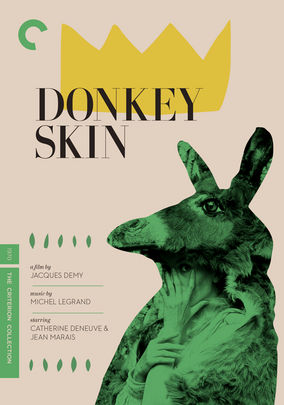
Peau d’Ane (Donkey Skin)-1970

Peau d’Ane (Donkey Skin)-1970

Director Jacques Demy

Starring Catherine Deneuve, Jacques Perrin

Scott’s Review #227

70032096

Reviewed March 11, 2015

Grade: B

Peau d’Ane (English: Donkey Skin) is a 1970 French musical film that is a fairy tale for adults- seemingly happy, but very dark beneath the surface.

To say this film is bizarre would be an understatement. The film is a strange retelling of the classic Cinderella story.

The film is set in a peculiar medieval world and centers on a dying Queen (Catherine Deneuve), her husband, the King (Jean Marais), and the heroine, the beautiful Princess (also Catherine Deneuve).

The Queen is dying. Her last wish is for the King to marry the most beautiful woman in the land. Coincidentally, that is their daughter, The Princess! Eager to produce an heir to the throne, he is determined to marry and reproduce with his daughter.

The Princess, wanting none of it, turns herself into an ugly creature by wearing the skin of a donkey and moves to a neighboring kingdom to exist in a life of exclusion and revulsion, farming pigs and being berated by those around her.

A handsome Prince decides to pursue the woman who has baked him a delicious cake, but knows not who she is. Ironically enough, it is the Princess.

I found the film to be quite interesting, albeit in a warped way. Unusual and challenging to analyze, one must watch with an open mind.

Certainly, Donkey Skin delves headfirst into the icky world of incest. It makes no apologies for its controversial nature, all the while interspersing the film with cheery tunes, singing roses, and hatching chicks.

The donkey skin that the Princess wears is fake and unbelievably laughable, and how nobody is aware that there is a beautiful Princess underneath is silly.

And yet the film somehow works. I was transported into a magical world where nothing is normal, and one surprise after another ensues.

A couple of oddities worth mentioning: some of the film’s music a contemporary and upbeat. Also, strangely, the final scene involves a helicopter, which is completely implausible given the period.

I get the sense that this film is going for absurd and unique and succeeds on both counts.

Visually, the film is gorgeous- bright and cheerful with loads of colors. The film has awe-inspiring art direction, with the castle’s set pieces odd, engaging, and colorful. I especially enjoyed the Prince’s bedroom set.

As eccentric and seemingly dark as the film is, often a character will burst into a cheerful song, as evidenced by the Princess singing a happy tune while making a meal, all the while dressed in her donkey skin, almost like a scene out of Mary Poppins (1964) or My Fair Lady (1964) or any other wholesome musical.

To be sure, a unique film, Donkey Skin (1970) is eccentric, lively, and interestingly perverse with a French flair—fantasy for adults and a journey into the weird.

Anastasia-1956

Anastasia-1956

Director Anatole Litvak

Starring Ingrid Bergman, Yul Brynner

Scott’s Review #68

60011684

Reviewed June 24, 2014

Grade: B+

Anastasia (1956) is an exquisitely shot historical drama set in Paris and Denmark circa 1928.

The film tells the story of a surviving member of the Romanov Dynasty who was discovered in early 20th-century Russia. But is she an imposter or the real heir?

This is the central question that encompasses the film.

The set and art direction are gorgeous.

Ingrid Bergman is flawless as a tortured, lost, amnesiac woman who attempts to discover herself and her feelings. Unsurprisingly, she won the Best Actress Oscar this year (1956).

How wonderful to see Helen Hayes (typically a stage actress) as the Dowager Empress. It is interesting to see Natalie Schaffer (Lovey Howell of Gilligan’s Island fame) in the film.

My only slight knock is that I didn’t sense any chemistry between Bergman and Yul Brynner, but the romantic element is certainly secondary to the fascinating period drama.

Every scene is first-rate in production and style, and gorgeous filming. Every frame looks like a painting.

Oscar Nominations: 1 win-Best Actress-Ingrid Bergman (won), Best Music Score of a Dramatic or Comedy Picture