Tag Archives: George MacKay

1917-2019

1917-2019

Director Sam Mendes

Starring George Mackay, Dean-Charles Chapman

Scott’s Review #979
Reviewed January 14, 2020

Grade: A

My tastes do not always lean towards the standard war film, so when I first heard about 1917 (2019), I was less than enthusiastic for no other reason than my pre-conceived perceptions.

Though it peaked with the idea of a World War I film rather than the standard World War II or Vietnam War film, I anticipated a run-of-the-mill experience or a story that had already been told.

Boldly told with incredible intensity and a brilliant technical style, director Sam Mendes creates a memorable cinematic treasure.

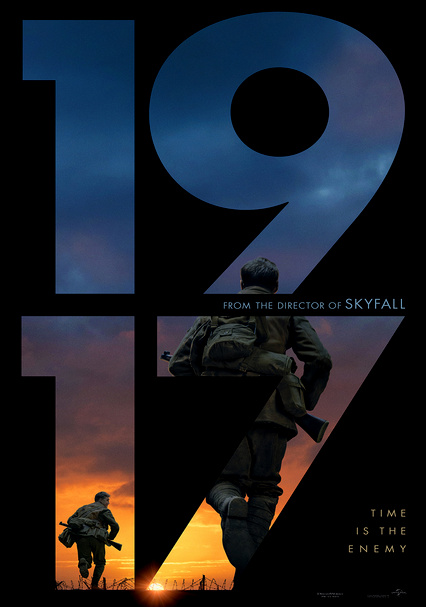
In April 1917, during the height of World War I, two British soldiers are tasked with a daring assignment: to hand-deliver crucial news to the 2nd Battalion of the Devonshire Regiment, calling off their planned attack on the German forces.

The Germans have faked a retreat to the Hindenburg Line and are ready to ambush the battalion, intending to kill sixteen hundred soldiers.

Schofield (George MacKay) and Blake (Dean-Charles Chapman) are chosen, with Blake’s brother Joseph among the soldiers bound to meet their fate.

As they journey, the young men face a myriad of hurdles including booby traps left by the Germans, terrain littered with dead bodies of their comrades, a precarious helicopter crash, giant rats, and the rapidly approaching deadline to deliver their message.

If they do not accomplish their mission in a timely fashion (twenty-four hours), the results will be devastating. Mendes keeps the tension high because he tells his story in real-time.

1917 is raw and emotional, hitting a hard punch.

Powerful scenes of dead bodies riddle the land, fat and pale from days spent immersed in cold water, young soldiers once handsome, now dead and bloated, remind the viewer what a terrible thing war is, and the ravages it causes.

Unlike other war films, patriotism and nationalist pride are not present.

Instead, the soldiers are weary and angry, confused as to why they are sent to fight for land as ugly as where they are, to die for land that is not even their own. They are depressed and confused.

The relationship between Schofield and Blake is excellent. Both men are weary and afraid, but have each other’s backs throughout their assignment.

It is not clear how long they have known each other, but they are at least acquaintances. They each come to the other’s rescue, and a pivotal scene occurs in a dusty hideout where they nearly die after a cave-in.

The characters possess grit and determination, but it is their humanity and connection with each other that resonate powerfully with the viewer.

An incredible scene unfolds as the day turns into night, and Schofield is well into enemy territory. To avoid a pursuing German soldier, he hides in a dusty basement area and finds a cowering young French girl. At first fearful, the pair quickly bonds, and a realization occurs to Schofield.

A newborn child accompanies the girl.

Assumed to be hers, the soldier immediately parts with his stash of food, not realizing the baby can have only milk. A ghastly realization is that the baby is not the French girl’s at all, but was instead found and rescued to prevent its death. The scene is tender and beautiful, perfectly contrasting the ugliness of the war.

The fantastic scene gives the viewer pause, prompting them to wonder what will become of the girl and the baby.

Nearly rivaling this lovely scene, another poignant moment occurs when Schofield stumbles upon a group of soldiers watching another soldier perform a rendition of the melancholy war tune, “Wayfaring Stranger”.

This moment slows the action down to a crawl, dedicated to loneliness and sadness amid the terrible battles.

The technical aspects that Mendes creates are spectacular and meant to be enjoyed on the largest screen possible. He uses a one-take approach, which keeps the action fast and furious.

The lavish and grandiose exterior scenes of immense dry land perfectly counterbalance a terrific watery scene when Schofield is chased into the river and soon embarks on wavy, grand rapids.

The camera remains on the soldier throughout the scene, as the viewer is taken on a wild adventure, sweeping every morsel of up and down motion with the tide.

To piggyback on this point, a scene occurs when one of the young men is knocked unconscious. It is daylight, but when he regains consciousness, it is night. The cinematography is brilliant, with a sharp left turn to translucent colors and blurry images of buildings.

The viewer is as disoriented as the soldier and fears what lurks in the shadows, as is found out when an unknown approaching figure begins to fire his gun.

1917 (2019) is a progressive-leaning gem with an anti-war message and a genuine approach to a “day in the life of a soldier”. It is not glossy or contrived, but a candid, realistic view of the savagery of war.

With a creative technical style, it is one of the best of its genre ever made.

Oscar Nominations: 3 wins-Best Picture, Best Director-Sam Mendes, Best Original Screenplay, Best Original Score, Best Sound Editing, Best Sound Mixing (won), Best Production Design, Best Cinematography (won), Best Makeup and Hairstyling, Best Visual Effects (won)
Captain Fantastic-2016

Captain Fantastic-2016

Director Matt Ross

Starring Viggo Mortensen

Scott’s Review #616

Reviewed February 10, 2017

Grade: B+

A thought-provoking story that raises a question of home-schooled, non-traditional book intelligence versus the lack of social norms and interactions and debates about which upbringings are more relevant, Captain Fantastic (2016) is a terrific film with a moral center.

The film, which stars Viggo Mortensen, is a family drama with a unique spin and edgy subject matter. Mortensen is not afraid to tackle complex and thoughtful roles.

Although it is perhaps not as gritty as it could have been and feels a bit safe, it still entertains and elicits thought, a critical aspect of film often lacking in modern cinema.

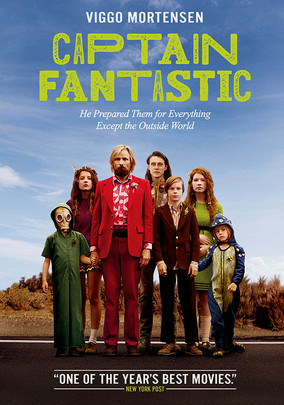
Director Matt Ross immediately treats us to aerial views of the green and mountainous Pacific Northwest, where a family of seven- one father and six children aged five to seventeen, silently prey on and kill a deer grazing in the forest. This is their dinner.

The family is unorthodox, to say the least.

Led by Ben Cash (Mortensen), he teaches the children how to fight, how to survive, and how to be ready for any situation. They are brilliant kids who can recite the Bill of Rights and the most complex literature.

Soon, it is revealed that their mother, Leslie, has committed suicide, and a battle ensues between her parents (Frank Langella and Ann Dowd), who is determined to bury her “properly” with a Christian funeral, and Ben and his children, who are determined to honor her last wishes for cremation.

Ben and the gang travel via their run-down school bus to New Mexico, meeting local townspeople as a battle of cultures occurs.

I commend Ross for creating a story that challenges the viewer to think, depending on the viewer’s religious or political views. There is a risk of people either loving or hating the film.

The film is skewed toward the left, as in the dinner and sleepover scenes with Ben’s sister. Her “Americanized” family is awkward, and the families have entirely different styles.

Ross makes it clear that Ben and his family are the intelligent ones, and his sister’s kids are pretty dumb, not even knowing what the Bill of Rights is and mindlessly playing violent video games.

The fact that they are a “typical American family” is sad and quite telling of wRoss’s perspective

Captain Fantastic wisely shows that either side is not perfect. His oldest son, Bodevan, blooming sexually, has an awkward encounter with a pretty girl, proposing marriage to her with her mother present because he knows no social norms.

A younger son is attracted to a “normal” life with his grandparents, who are a wealthy couple. The grandparents are not presented as bad people; instead, they want the best for their grandchildren and fear how their lives will turn out without better structure or what they perceive as a better upbringing.

Some of the kids blame Ben for their lack of social skills and being what they perceive as “freaks.”

The film does end safely as a happy medium is ultimately reached, but I never felt cheapened by this result. I found Captain Fantastic rich in intelligent writing and a challenging tale.

Many moments of “what would you do?” were brought to the forefront. Mortensen portrays Ben Cash flawlessly, mixing just the right vulnerability with the stubbornness of the character, and it is an excellent film for anyone fearing being intelligent is not cool because it is.

Oscar Nominations: Best Actor-Viggo Mortensen

Independent Spirit Award Nominations: Best Male Lead-Viggo Mortensen

Pride-2014

Pride-2014

Director Matthew Warchus

Starring Bill Nighy, Imelda Staunton

Scott’s Review #215

80013480

Reviewed January 17, 2015

Grade: B-

Pride (2014), based on a true story, deserves props for delivering a nice message about inclusion and groups of vastly different people coming together as human beings.

While it’s a nice film, the filmmakers play it a bit too safe and it has a definite formulaic feel to it.

Surely, the real story of Pride was not as simplistic as this film felt at times.

The setting is 1984 England. A group of British miners goes on strike over wages. A group named Lesbians and Gays Support the Miners made up of gay men and women developed an interest in the strike and decided to help the miners and families.

Why they decided to take on this cause is not fully explained. The National Union of Mineworkers is hesitant to accept funds as they worry about the publicity caused by a group thought to be perverts.

The film is riddled with clichés- the macho miners resist the help from the gays, many of whom are portrayed as effeminate. The characters who are lesbians look as though the filmmakers wanted to “butch them up”, thereby overdoing the stereotype.

There is a subplot of one gay young man who has not come out to his parents, a well-to-do, pretentious couple. When inevitably the truth is revealed, the parents are angry and turn their backs on the teen.

He leaves home to join the gays and lesbians who accept him into their lives with open arms.

The female head of the committee is homophobic and vows to do everything in her power to make sure the gay and lesbian group does not succeed in aligning with the miners.

These clichés seemed way too overdone to make the film more dramatic. Some of the characters, therefore, come across as one-dimensional.

Even the story revolving around a character with AIDS seems watered down and soft.

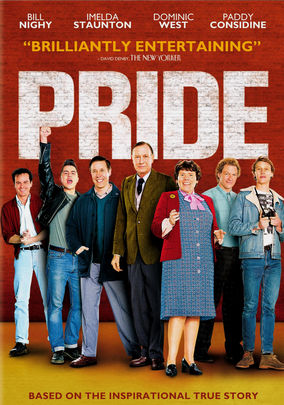
On the plus side, casting the brilliant Imelda Staunton as the sympathetic, maternal, Hefina is a plus.

A huge supporter of gays and lesbians she comically befriends all of them and is curious about their lifestyles. Bill Nighy is also excellent as Cliff, the older miner who turns out to be gay.

Margaret Thatcher, Prime Minister at the time, is presented as greedy and selfish with little regard or use for the miners or labor unions.

Pride (2014) is an earnest, sentimental, feel-good film that deserves adoration for the coming together of different communities.

I would have liked to see more risks taken by the film.