Tag Archives: Michael Hordern

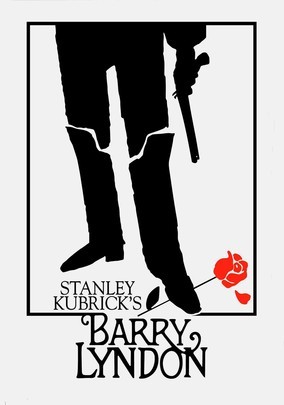
Barry Lyndon-1975

Barry Lyndon-1975

Director Stanley Kubrick

Starring Ryan O’Neal

Top 250 Films #44

Scott’s Review #211
284790

Reviewed January 4, 2015

Grade: A

Barry Lyndon (1975) is a sprawling, beautiful film by famed director Stanley Kubrick. The film is set in the 18th century.

Extremely slow-paced, yet mesmerizing, every shot looks like a portrait, and the inventive use of lighting via real candlelight in certain scenes makes this film a spectacle in its subdued beauty, to say nothing of the gorgeous sets and costumes.

The film is nothing short of a marvel to view.

The story centers around Ryan O’Neal, who plays an Irish man named Redmond Barry.

Redmond is a poor Irish man but is an opportunist. The film follows his life travels throughout Ireland, England, and Germany, as he becomes involved in duels, is robbed, impersonates an officer, is reduced to becoming a servant, gambles, marries a rich widow, and feuds with his stepson.

When he woos and marries the wealthy Countess of Lyndon, he settles in England to enjoy a life of wealth and sophistication. He changes his name to Barry Lyndon. His ten-year-old stepson, Lord Bullingdon, becomes a lifelong enemy as their hatred for each other escalates and is the focal point of Act II of the film.

The supporting cast is filled with unique characters and in particular, the three sinister characters (Lord Bullingdon, Mother Barry, and Reverend Runt) are delicious to watch especially when they square off against one another as is the case with Runt and Mother Barry.

Barry’s two love interests (Lady Lyndon and a German war widow) are entertaining to watch and Lady Lyndon’s costumes are exquisite. Furthermore, Chevalier de Balibar, a wealthy gambler who takes Barry under his wing is a delight.

As with many masterpieces, if not for the great casting, the film would not be as wonderful.

My three favorite scenes include the vicious confrontation between Mother Barry and Reverend Runt- an initially polite conversation between two selfish characters gradually spins into viciousness, the duel between Barry Lyndon and Lord Bullingdon- bitter rivals square off in an awkward yet dramatic duel, and when Barry passionately kisses his dying friend- an unexpected homoerotic scene.

Barry Lyndon delves into the issue of class and class distinction and clearly defines the haves and the have-nots and the struggles of the poor to obtain wealth by any means and for the wealthy to retain their good fortunes.

At a running time of over three hours, it may initially turn viewers off, but as time goes on the film will grip hold of the viewer and not let go.

Having now seen Barry Lyndon (1975) four times, each time I enjoy the film more and more as I become more absorbed by and immersed in the masterpiece.

It’s like a fine wine- it gets better with each taste.

Oscar Nominations: 4 wins-Best Picture, Best Director-Stanley Kubrick, Best Screenplay Adapted from Other Material, Best Scoring: Original Song Score and Adaptation or Scoring: Adaptation (won), Best Costume Design (won), Best Art Direction (won), Best Cinematography (won)

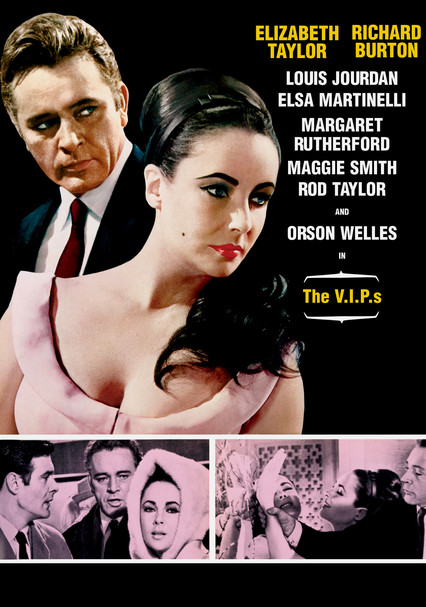
The V.I.P’s-1963

The V.I.P’s-1963

Director Anthony Asquith

Starring Elizabeth Taylor, Richard Burton, Louis Jourdan

Scott’s Review #1,263

Reviewed June 4, 2022

Grade: B+

The V.I.P.’s (1963) is a sweeping drama set against a foggy London airport. It’s a good film but hardly a masterpiece, as the trials and tribulations of the stranded passengers are explored and sometimes intersect in standard ways.

The film is formulaic and offers little surprise, but I enjoyed it and was entertained by the parade of stars shuffling through the vast airport.

Some stories are more interesting than others, and the film is in a soap opera style with glamorous and rich characters.

One wonders if The V.I.P. influenced the creation of the film Airport (1970) seven years later. The film is patterned after 1932’s Grand Hotel, both of which were distributed by Metro-Goldwyn-Mayer.

Real-life couple and Hollywood A-listers Elizabeth Taylor and Richard Burton star and are the main draws of the film.

The all-star cast also features Louis Jourdan, Maggie Smith, Rod Taylor, Orson Welles, and the scene-stealing Margaret Rutherford.

Inclement weather has delayed a flight from London’s fabulous Heathrow Airport to New York City. A cross-section of elite passengers (V.I.P.s) impatiently wait to board the plane as they experience various life crises in the airport.

The main storyline revolves around Frances (Taylor), a gorgeous woman who is fleeing a loveless marriage to her millionaire husband, Paul (Richard Burton), and is in love with the dashing Marc Champselle (Jourdan).

Supporting stories feature a dotty duchess (Rutherford) who has fallen on hard times and a handsome businessman (Rod Taylor) trying to thwart a hostile takeover.

At the same time, his secretary (Smith) lusts after him, and Gloria (Elsa Martinelli), an aspiring actress, and her money-grubbing producer, Max (Welles).

Despite the heavy-sounding plots, the film is not overly severe and provides comical moments in small doses, which secures the pacing and offsets too much doom and gloom.

Liz and Richard have big, soapy moments, and writer Terence Rattigan was reportedly inspired to write the screenplay by a real-life situation.

Actress Vivien Leigh was planning to leave her husband Laurence Olivier for another man but was delayed at Heathrow Airport.

How scandalous!

Nonetheless, Taylor stoically gives an acceptable performance as a conflicted actress in love with a man other than her husband. The setup plays out as tired as it sounds, except for the juicy reality that Taylor and Burton were married, providing the only interest.

Taylor and Burton have terrific chemistry, though she also does with Jourdan. Still, there is something uncompelling and unsatisfying about the story.

Shockingly, they are all upstaged by Rutherford, who steals the entire film, resulting in her surprising Best Supporting Actress victory. She may have won because of the Academy’s tendency to sometimes award an older actor with the prize for a lifetime body of work.

Her riveting story is my favorite as she desperately seeks a way to save her historic home.

The actress hits a home run, providing much-needed comic relief and the liveliest of performances. Her peril offsets her cleverness, and her performance is filled with heart.

Many critics hastily insisted that Rutherford was the only reason to see The V.I.P.’s. Personally, the combination of an airport, peril, and big stars was more than enough to have me hooked.

The only addition that might have made the film better was an enormous fire or a hijacking crisis.

The V.I.P.’s (1963) will only appeal to fans of Taylor and Burton or those seeking something sudsy. Otherwise, the film is not too well remembered.

Oscar Nominations: 1 win-Best Supporting Actress-Margaret Rutherford (won)

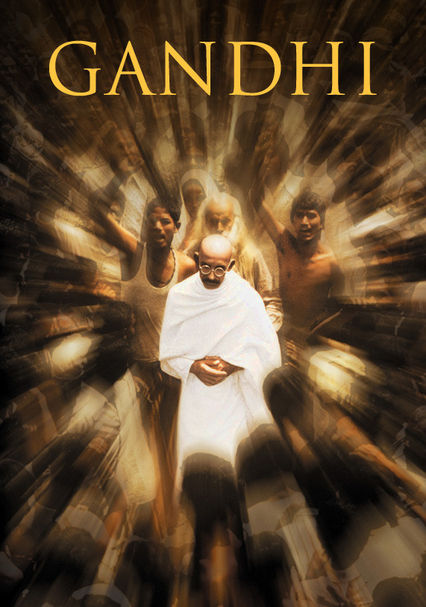
Gandhi-1982

Gandhi-1982

Director Richard Attenborough

Starring Ben Kingsley

Scott’s Review #1,189

Reviewed October 30, 2021

Grade: A

Ben Kingsley delivers an astonishing performance as Mahatma Gandhi,  the steady-handed lawyer who stood up against British rule in India and became an international symbol of nonviolence and peaceful understanding until his tragic assassination in 1948.

Entitled simply Gandhi (1982) the film is directed by Richard Attenborough who has created masculine offerings such as The Great Escape (1963) and The Sand Pebbles (1966) before.

Calmly, the director creates a grandiose epic but one that is thought-provoking and introspective in its humility.

I was incredibly affected by this picture.

As beautiful as the cinematography and other such trimmings are the message is what stands out to me most. One man’s spirit and thirst for fairness and human equality are beyond inspiring decades after the film was made.

Thanks to Kingsley, the biography infuses an infectious channeling of what being a human being is all about and how human decency is the desired goal.

The film belongs to Kingsley. Despite hosting a cast of literally thousands he is the only name worth mentioning. He is that superior.

Attenborough, who teams with screenwriter John Briley presents major events in the life of Mohandas Gandhi (Kingsley). The film starts suddenly in January 1948, when an elderly Gandhi is on his way to an evening prayer service and is shot point-blank in the chest in front of a large number of dumbfounded greeters and admirers.

His state funeral is shown, the procession attended by millions of people from all walks of life, with a radio reporter speaking beautifully about Gandhi’s world-changing life and projects.

The film then returns to decades earlier when Gandhi, a young man, has a violent and racist experience. He vows to dedicate himself to the concept of nonviolent resistance. Initially dismissed, Gandhi was eventually internationally renowned, and his gatherings of passive protest moved India towards independence.

Gandhi has been criticized for its extraordinary length with a running time of three hours and ten minutes. A suggestion is to watch the film in multiple sittings though the best recommended approach would be to see it on the big screen.

Unfortunately, I didn’t but fantasize about the massive sequences and how gorgeous they would appear at the cinema.

The story, acting, production, and pretty much everything else about Gandhi is a ravishing spectacle.

It’s worth its weight to sit back and watch Kingsley completely immerse himself in the role. The actor deservedly won the Best Actor Academy Award and despite his oodles of other film roles is best remembered for this one.

I’m half surprised that it didn’t typecast him since he is so identifiable in the role.

I’d like to mention two aspects that some might not notice as much as others but that is simply astounding. The cinematography of the deserts, towns, and cities of India is plush with detail and accuracy. If one cannot go on a trip to India the next best thing is to watch this film instead. You’ll get a good dose of realism.

South Africa is also featured.

The costumes brilliantly showcase Indian flair and culture so well that I felt that I had been to an interesting country at the time that the film portrayed the events and felt nestled amid the luxurious colors and good taste.

Post-1982, the film genre of the epic exists rarely if ever anymore.

Long gone are the days of brilliance like Gone With the Wind (1939) or Lawrence of Arabia (1962) which are truly a delight to simply lay one’s eyes on.

Gandhi deserves to be appreciated as much as those other films despite being released in less than an artistic decade in cinema.

Gandhi (1982) is a wonderfully tragic film and leaves the viewer feeling sad but also inspired to carry the torch picked up by one brave man.

A history lesson it’s also as much a lesson in humanity and the courageous fight that one man fought. Military power is not the way to achieve change in the world.

Oscar Nominations: 7 wins-Best Picture (won), Best Director-Richard Attenborough (won), Best Actor-Ben Kingsley (won), Best Screenplay-Written Directly for the Screen (won), Best Art Direction, Best Cinematography (won), Best Costume Design (won), Best Film Editing (won), Best Makeup, Best Original Score, Best Sound

The Mackintosh Man-1973

The Mackintosh Man-1973

Director John Huston

Starring Paul Newman, James Mason, Dominique Sanda

Scott’s Review #1,058

Reviewed August 31, 2020

Grade: B

The Mackintosh Man (1973) is not one of legendary director John Huston’s best films.

Known for well-remembered titles like The African Queen (1951), The Maltese Falcon (1941), and The Misfits (1961) that all movie historians and fan buffs are familiar with (or should be), this project is rather lackluster, only picking up at the very end to offer a riveting ending.

The rest is mediocre, weighed down by a plot that lacks depth, a romance that falls short, and little in the way of answers or a good wrap-up.

If this sounds too harsh, I will say that anything starring Paul Newman is worth seeing. Huston hit the jackpot in the casting department, and the actor provides enough to raise The Mackintosh Man’s status to an adequate “B” ranking.

I hate the title as it took days for it to stay in my memory.

Huston attempts to make the film a taut thriller, which at times is achieved, especially during the climax, and mixes humor, but the humor rarely comes through, only getting in the way of what would have been better in a darker vein.

It feels like a weak attempt to turn Paul Newman into James Bond.

Back to Newman. With his handsome face and icy blue eyes, he makes any film compelling, but I never really bought him in the role. This could be because of how the character is written.

Newman is an American actor who plays a British secret agent pretending (sometimes) to be Australian. This is a busy ask even for an actor of Newman’s caliber. He was much better in Alfred Hitchcock’s critically panned but well-aged Cold War thriller, Torn Curtain (1966), in a similar role.

Dominique Sanda, brilliant in The Conformist (1969), has little screen time until the finale, when her character finally shows depth.

Newman plays Joseph Rearden, a British intelligence agent tasked with bringing down a communist spy ring. After purposely getting himself tossed in a high-security prison, he breaks out of the joint in an escape arranged by a mysterious organization.

Rearden then tries to track the group’s activities and unmask its shadowy leader, played by James Mason.

On paper, the premise sounds quite appealing, and with Newman, Mason, and Sanda in my pocket, my expectations were lofty, but not met.

I am not painting the film as bad by any means, just not as good as I anticipated. Certainly, some aspects work.

Reardon’s time in prison is appealing and might have influenced the not-yet-made Escape from Alcatraz (1979).

When a male prisoner makes a pass at Reardon on the lunch line, asking Reardon if he’d like to dance with him, he is kindly rebuffed. Does the prisoner cleverly respond with “maybe in a year or two”?

The scene is played for laughs but also contains a sweet innocence.

The Mackintosh Man is not a film in which a scene like this can be interpreted as anything more than a reaffirmation of Reardon’s (and Newman’s) masculinity, though.

From there, we get back to business.  He meets a convicted Russian spy, and the two conceive a successful prison break. How they escape so easily is hard to swallow, but they have help from an organization.

After the breakout, Reardon finds himself drugged and sent to Ireland. It turns out that Mackintosh organized the escapade in the hope that Reardon could infiltrate the Scarperers, gather information on the group’s leader, Sir George Wheeler (James Mason), and prove that he was a Russian spy.

Just writing this out feels too confusing, which is the film’s main problem.

Reardon has a flirtation with an eccentric, tall, bad girl straight out of a Kubrick film, before connecting better with Mrs. Smith (Sanda), and culminating in a harrowing climax aboard a luxury yacht, with the gorgeous backdrop of Malta.

The sequence almost makes the rest of the film forgivable, as a lot of action suddenly develops, and the landscape is gorgeous. A deadly and unexpected shooting occurs after an incident involving drugged champagne or white wine.

I advise watching The Mackintosh Man (1973) with the knowledge that the slowness and the confusion of most of the film are worth watching for the fantastic finish.

Events and plot points may not necessarily all be spelled out, but the yacht scene and Malta locales are tremendous.

Newman carries the film with good acting from Mason and Sanda supporting the star.

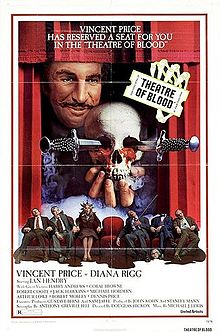
Theatre of Blood-1973

Theatre of Blood-1973

Director Douglas Hickox

Starring Vincent Price, Diana Rigg

Scott’s Review #230

220px-Theatreofbloodposter

Reviewed March 23, 2015

Grade: B

Theatre of Blood (1973) stars Vincent Price, a long-time fixture in the classic/campy horror scene, as a demented Shakespearean theatre actor who enacts revenge on the critics who fail to recognize him with a coveted award that he cherishes.

Price, as always frighteningly good, delivers a campy, but not ridiculous, turn as the crazed actor.

Price’s appearance alone- tall, wiry, with sinister facial expressions, poises him perfectly to believability in any dastardly role he portrayed in his heyday and the performance he gives as Edward Lionheart is no exception.

Not solely a campy, melodramatic horror film, Theatre of Blood rises above that categorization with humorous tributes to Shakespeare and a unique chronicle of the Shakespearean works used to systematically off the critics one by one about the Shakespearean story- quite frankly in a comical and witty way.

Price eerily dresses in many different elaborate costumes to commit the murders- a wine-tasting expert, and a television host, among other interesting characters, and oftentimes, taunts his victims before permanently dispensing them.

The film is quite British in tone and humor and done in a tongue-in-cheek manner so that the murders are not to be taken at all too seriously.

The critics themselves- seven or eight of them- are deliciously fun. One is a loud boisterous fat man who always has his beloved poodles at his side.

What happens to him and the dogs is better left unsaid.

Another is an uptight, sophisticated woman (played by Price’s real-life wife Coral Browne). Several of the critics are created as comic villains so their demises are not all too devastating for the audience as they are rather unlikeable characters, to begin with.

I found myself rooting for Lionheart and looking forward to the next murder!

One criticism involves Diana Rigg, who plays Price’s daughter Edwina, accomplice to his dirty deeds. Well known for her starring role in On Her Majesty’s Secret Service and the 1960s Avengers series, Rigg has little substance to do in Theatre of Blood.

Perhaps by 1973, her film career was on the downturn and she was not winning the coveted roles any longer. I would have loved to see her sink her teeth into a meatier role.

A side-kick, Edwina could have done much more.

The film belongs to Price and the unique storytelling of Shakespearean works made only possible by this great actor.

Not overly serious and played for some laughs, Theatre of Blood (1973) is successful in its telling of an interesting British horror story.

It’s a nice late-night treat for fans of the British horror genre especially.

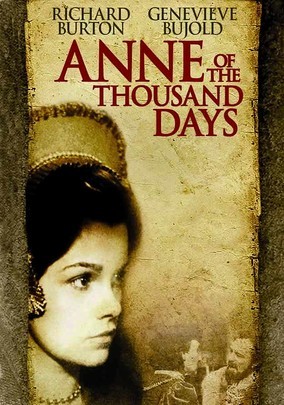
Anne of the Thousand Days-1969

Anne of the Thousand Days-1969

Director Charles Jarrott

Starring Richard Burton, Geneviève Bujold

Scott’s Review #56

60010091

Reviewed June 22, 2014

Grade: A-

Anne of the Thousand Days (1969) is one of the better historical dramas I have seen.

One could become absorbed in the history of royalty and learn much. It has a clear Shakespearean quality to it (tragedy) and is compelling in many ways.

It tells the true story of the tumultuous relationship between Henry VIII of England and his second wife, Anne Boleyn, whose union produced one of the most famous queens, Elizabeth I. Henry VIII’s first wife, Katherine, was discarded amid much controversy and political intrigue.

The drama is part of what makes this film so enjoyable, along with the historical element. It is dramatic, but not a soap opera, and the acting is superior.

The film has gorgeous costumes and cinematography, too.

Unfortunately, the finale of the beheading left too much to the imagination, and a more graphic scene would have put it over the top.

The film is near excellent, though.

Oscar Nominations: 1 win-Best Picture, Best Actor-Richard Burton, Best Actress-Geneviève Bujold, Best Supporting Actor-Anthony Quayle, Best Screenplay Based on Material from Another Medium, Best Original Score for a Motion Picture (Not a Musical), Best Sound, Best Costume Design (won), Best Art Direction, Best Cinematography