Tag Archives: Kelvin Harrison Jr.

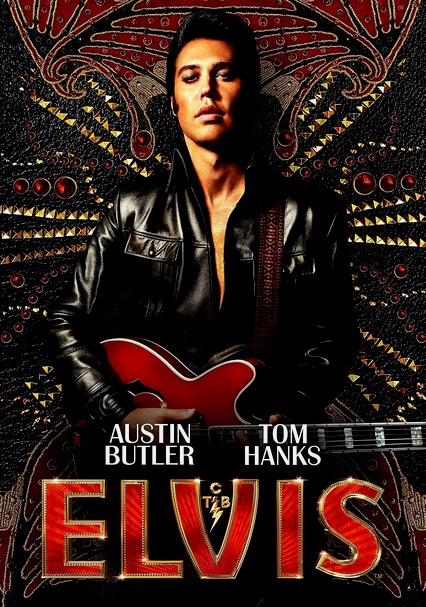
Elvis-2022

Elvis-2022

Director Baz Luhrmann

Starring Austin Butler, Tom Hanks

Scott’s Review #1,299
Reviewed September 16, 2022

Grade: B+

Once I knew that Australia’s own Baz Luhrmann was directing the new film Elvis (2022), I immediately formulated an expectation of what the film-watching experience would be like.

I anticipated a specific type of filmmaking, where an auteur artist merges fast-paced music videos with a dramatic biopic into a cohesive film.

Other Luhrmann offerings, such as Moulin Rouge (2001) and The Great Gatsby (2013), incorporate contemporary musical elements and are highly visual and stylistic. I knew what I was going to get and was prepared for it.

Elvis is no different, and Luhrmann’s style is an unconventional risk not for everybody.

I mostly enjoyed the film, but I didn’t quite love it either, seeing both the good and the not-so-good aspects.

At two hours and thirty-nine minutes, it goes on way too long.

Perhaps contradicting this point is that Elvis does improve as it progresses, initially feeling jarring, overwhelming, and disjointed due to rapid editing and rapid camera work.

A Dramamine is suggested until one is comfortable with the sudden bursts of turbulence. I semi-joke, but there is a period of sinking into Luhrmann’s style that is necessary, especially if you have never seen one of them.

The film explores the life and music of Elvis Presley (Austin Butler), and his complicated relationship with his opportunist manager, Colonel Tom Parker (Tom Hanks), and his wife, Priscilla (Oliva De Jonge).

The story delves into the singer’s rise to fame and the evolving cultural landscape in the United States during the 1950s and 1960s.

Like many films, the events start much later than the main story, in this case, 1997. Parker is on his deathbed, ruminating about how he first met Elvis and helped make him a legendary icon.

Much of the film takes place in glitzy Las Vegas, where Elvis had a long-term residency. However, it’s worth noting that the star’s working-class roots and impoverished upbringing in a predominantly black neighborhood had a tremendous influence on his music.

The Vegas setting applies a sparkling veneer, mixed with a sense of isolation, especially in scenes that show Elvis’s million-dollar penthouse view of Sin City. The star frequently pulls all the black curtains to reside in solitude.

Butler starts slow but ends up doing a fabulous job of portraying the iconic star, no easy feat. At first, I had difficulty buying the actor as Elvis, but as time went on, he became more immersed in the role.

The best scenes, hands down, occur during the performances. The sheer rawness of his act and the famous wiggle that left fans dizzy with eroticism are compelling and authentic, to say nothing of titillating.

The young actor exudes charisma just as the real-life star does, and this is most evident on stage. The dramatic scenes don’t work as well, and Luhrmann strangely skims over the controversial weight gain years, the 1970s, that Elvis experienced.

I expected Butler to don a fat suit, but there was none of this.

This miss can almost be forgiven when a heart-wrenching final performance of ‘Unchained Melody’ by the honest Elvis is showcased. The number is fraught with emotion and tenderness, leaving me feeling sympathy.

Hanks is good as the slimy and curmudgeonly manager, but I never felt sympathy for the character. If the film can be believed, he ruined Elvis as much as he brought him success, but Hanks never made me forgive the man. I also wasn’t interested in his backstory.

It will be hard-pressed ever to make me enjoy Hanks more than in his Oscar-winning back-to-back turns in Philadelphia (1993) and Forrest Gump (1994), his two best roles.

Elvis, the film, does better when it serves as a musical performance rather than a biography. Sure, the drug use and the disputes with family and manager are dramatic but it’s the performances of ‘All Shook Up, ‘Unchained Melody’, and ‘Can’t Help Falling Into Love’ that win me over.

In pure Luhrmann form, many of the familiar songs are done in different tempos and interpretations, but that’s part of the fun.

Comparisons to recent musical biographies, such as Bohemian Rhapsody (2018) and Rocketman (2019), are fair.

Elvis (2022) is not as good as those films, but it’s above average and succeeds when it entertains, showcasing how the star’s determination and grit prevailed despite outside influences.

Oscar Nominations: Best Picture, Best Actor-Austin Butler, Best Cinematography, Best Production Design, Best Film Editing, Best Sound, Best Costume Design, Best Makeup, and Hairstyling
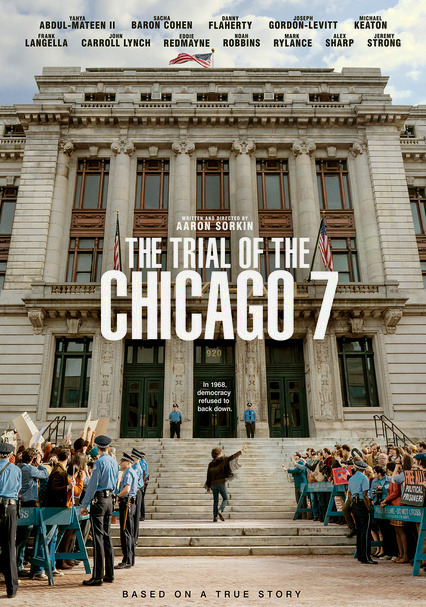

The Trial of the Chicago 7-2020

The Trial of the Chicago 7-2020

Director Aaron Sorkin

Starring Sacha Baron Cohen, Eddie Redmayne, Joseph Gordon-Levitt

Scott’s Review #1,136

Reviewed April 26, 2021

Grade: B+

The Trial of the Chicago 7 (2020) is a Hollywood film with an important message. It’s conventional and explores a historic episode of great importance, and the story is told well with many liberties taken for effect.

Director Aaron Sorkin sticks to a familiar formula, peppering humor with the standard heavy drama, and creates a film that will appeal to mainstream audiences. He was rewarded with several Oscar nominations for the film.

It’s a crowdpleaser first and foremost.

I would have been bothered more by the traditional approach had the subject matter not been so weighty or not presented in a left-leaning way, which it was.

Solidly anti-war, this made the film more powerful and meaningful, though some of the comedic elements seemed silly and trite, and added to lighten the mood.

The period is 1969, though the main subject at hand occurs in 1968, so there is much back and forth. After antiwar activists clash with police and National Guardsmen at the important 1968 Democratic National Convention in Chicago, violence erupts.

Charged with conspiracy and inciting to riot, seven of the protestors are put on trial. The charges are controversial because a new president, Richard Nixon, has just been elected, and a revenge-seeking Attorney General lusts for an example to be made of them.

The casting is tremendous.

John Doman is fabulous in the quick role of the evil Attorney General John Mitchell (historians know that he was later a convicted criminal), and Frank Langella makes Judge Julius Hoffman into the asshole he was.

I’ve never been as impressed with Sacha Baron Cohen (or rather, this is the first time I’ve been impressed) as he steamrolls into the role of Abbie Hoffman, a social and political activist.

Eddie Redmayne, John Carroll Lynch, Mark Rylance, and Joseph Gordon-Levitt also deserve praise as either a member of the seven or lawyers for either side.

Whether or not specific accuracy is achieved is not top of mind for me. The Trial of the Chicago 7 provides a historical account of the events that unfolded the night of the riots and the subsequent courtroom proceedings the following year. I’m okay with a few exaggerations for cinema’s sake.

The product is a safe and glossy affair and incredibly slick to the eyes.

The editing is fantastic. Snippets of the real Chicago riots of 1968 are interspersed with the created scenes, creating a sound effect through the back and forth. But before this, real-life comments from Martin Luther King Jr. and Robert Kennedy kick off the action. Both assassinated, their existence is essential to witness before the point at which the film is ever made.

Justice is not always served. Sorkin’s point in including the sequences seems to hit home that there are good politicians out there fighting for truth and fairness.

My favorite scene is the final one. At the end of the trial, Hayden (Redmayne) is given a chance to make a case for a lenient sentence. However, over Judge Hoffman’s objections, Hayden uses his closing remarks to name the 4,752 soldiers who were killed in the Vietnam War since the trial began.

This act prompts many in the court to stand and cheer. Viewers will as well.

The main problem that gnawed at me is the same concern I had when I realized that Sorkin was at the director’s helm. He is a dazzling screenwriter, making the dialogue crisp and rich with intelligence.

But, known for television successes such as The West Wing (1999-2006) and Sports Night (1998-2000), this causes The Trial of the Chicago 7 to look like a made-for-television production versus a raw film experience.

I realize that Sorkin will likely never be a film auteur. Sorkin is the reason that The Trial of the Chicago 7 is a B+ film and not an A film.

The late 1960s were a prominent and sometimes tragic time in United States history. The Trial of the Chicago 7 delves into a pivotal event where several were railroaded and punished for something they did not do.

The film makes sure that the railroaders get their just desserts, and that’s fun to see.

Oscar Nominations: Best Picture, Best Supporting Actor-Sacha Baron Cohen, Best Original Screenplay, Best Cinematography, Best Film Editing, Best Original Song-“Hear My Voice”

Luce-2019

Luce-2019

Director Julius Onah

Starring Naomi Watts, Octavia Spencer, Kelvin Harrison, Jr. 

Scott’s Review #1,122

Reviewed March 16, 2021

Grade: B+

Often unpleasant with shifting character allegiances, Luce (2019) is a painful look at race relations. The clever nuance is the relationships between people of the same race.

Superior acting elevates the film above just a nice idea, as heavyweights like Octavia Spencer and Naomi Watts lend credibility to a small indie film.

The result is sometimes muddied waters and an unclear direction, but the effort is exceptional and a worthy subject matter in modern times.

The film is down and dirty, and no apologies are given for what is dissected. The co-writer and director, Julius Onah, a Nigerian-American man, offers glimpses of grandeur, and it is impossible to guess how it will end.

We wonder if he bases the story on his own very real experiences, and I am eager to see what projects he comes up with in the future.

I found some aspects of the film implausible, if not logically impossible, and not every point adds up or is successfully outlined. But the effort and the balance of drama, thrills, and social issues are there for the taking.

I realized I was rooting for one character, and then suddenly, I was disappointed in their actions, and my allegiance shifted to another of the principal characters. This is key and a positive aspect of a good character-driven film.

At times, though, the characters’ actions are questionable, and more than one mighty shake of the head in disbelief will be experienced.

Liberal-minded parents Amy (Watts) and Peter Edgar (Eli Roth) have adopted Luce (Kelvin Harrison Jr.), a child of a refugee from a dangerous third-world country. It is referenced that they have spent years in therapy to repair the damage he has suffered as a child.

It is implied he learned to shoot and possibly kill at a young age. Now a teenager and Americanized, Luce is popular in high school and a star scholar and track star.

Life is good. Or is it?

The film, based on J.C. Lee’s play of the same name, is shot conventionally and does not look like a play.

Luce writes and submits an alarming essay that forces the Edgars to reconsider their marriage and their family after their teacher brings it to their attention.

He challenges and makes an enemy of this teacher, Harriet Wilson (Spencer), who is extremely tough on students of color, being black herself. She snoops through one student’s locker and finds drugs, ratting on him and blowing his chances for a scholarship.

When she finds fireworks in his locker, she is appalled and makes it her mission to entangle his parents, but could she have planted them herself?

Is she out to get Luce, jealous of his success when she has had to struggle for hers? Tensions mount between Harriet and Luce as the story unfolds.

The acting is powerful all around the canvas, but Harrison and Spencer deliver a standout performance that is nearly brilliant. Watts and Roth are good, too, but with more standard portrayals.

Excellent is how we get to know each of the four principles in detail. Harriet, at first, appears a demanding shrew, but her personal life makes her sympathetic. She attempts to care for her mentally ill sister herself, but after a humiliating scene at school, she is forced to return her to her home.

Suddenly, I was a fan of Harriet. Later, I was disappointed in Luce and Amy, whom I thought I was supposed to root for. The film is topsy-turvy, and I enjoyed this juicy infusion of not knowing what was to come next.

When Luce’s female classmate, who harbors an enormous secret, takes center stage, the roller-coaster ride becomes even bumpier.

I wish there were more films like Luce (2019) to hit mainstream theaters. It provokes thought and opinion while featuring social problems, preconceived notions, and trusting one’s merits.

I wish the puzzle had been solved more satisfactorily than it was.

Independent Spirit Award Nominations: Best Director-Julius Onah, Best Male Lead-Kelvin Harrison, Jr., Best Supporting Female-Octavia Spencer

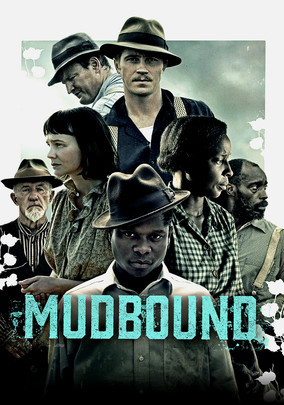
Mudbound-2017

Mudbound-2017

Director Dee Rees

Starring Carey Mulligan, Garrett Hedlund

Scott’s Review #724

Reviewed February 12, 2018

Grade: B+

Mudbound is a 2017 Netflix period drama that transports viewers to a time of racism and struggles as World War II ravaged Europe.

The piece is set mainly in rural Mississippi; however, during the 1940s, most people, especially black people, had a vastly different way of life.

The film depicts the hardships and struggles of two families living on the same land, one white and one black, and how their lives intersect dramatically.

The film received several Oscar nominations, including for Adapted Screenplay, Supporting Actress, Song, and Cinematography. I will suffice it to say I support the latter two mentions in the group but not the former.

While the final act kicks the film into much-needed high gear, and the filming detail of the rural southern terrain is quite apt, I kept waiting for a stunning scene involving the usually excellent Mary J. Blige to erupt, but sadly nothing ever came.

While inspired, the writing would not get my vote in the screenplay category either, especially when other, more worthy films (think Mother!) were bypassed.

The mood of Mudbound is immediately impressive as we are introduced to the grizzled and muddy town of Marietta, Mississippi, a sort of farm wasteland. Brothers Henry and Jamie McAllan struggle to bury their recently deceased “Pappy” as the lands are ravaged by a driving storm.

When Henry briefly leaves Jamie in the watery grave the pair has dug, Jamie is panic-stricken that Henry will not return. In this way, director Dee Rees reveals a significant clue to tension between the brothers as the film rewinds to sometime earlier when times were happier for the brothers.

Mixed in with the trials and tribulations of brothers McAllan, is Henry’s wife Laura (Carey Mulligan), who shares a loveless marriage with him, while secretly lusting after Jamie.

A poor black family resides and works on the McAllan farm, and must endure hardship and racism from the white residents of Marietta, especially when their son Ronsel returns from World War II, a celebrated hero.

Old habits die hard as the Ku Klux Klan rears its ugly head, targeting the young soldier for daring to bed with a German woman abroad.

As most of the film meanders during the first hour or so with odd edits and pacing, I did not easily connect with many of the characters, though I wanted desperately to.

There seemed to be not enough buildup to the ultimate drama. The film is shot in a way that you know you are watching something of substance, but it takes a long, long time to reach a crescendo.

The aforementioned criticism of Mary J. Blige, who portrays long-suffering matriarch Florence Jackson, is not of the part itself or her acting; rather, I expected a gritty, meat-and-potatoes-style performance from the talented lady.

I disagree with her Oscar nomination, and instead would have chosen the brilliant Michelle Pfeiffer from Mother!

Praise must be written for Mulligan’s performance, shamefully overlooked, like the haggard, intellectually unfulfilled housewife, Laura. As she wistfully buries her nose in a novel to escape her dull life, or longingly looks at Jamie, disappointed with her loneliness, we feel every emotion that Mulligan plays.

A consistent problem with Mudbound was that it lacked a grand emotional scene from either Blige or Mulligan.

The film’s racist subject matter can be utterly challenging to watch as a significant character sees their tongue removed and another character forced to make a difficult choice. This action leads to a deadly turn of events and the murder of another character, resulting in a lifetime of secrets.

The final thirty minutes are the best part of Mudbound.

A must-notice historical feat is Rachel Morrison’s nomination in the cinematography category. She is the first female to receive this honor, and it is certainly about time. Morrison successfully fills Mudbound with the perfect mood—both picturesque greenery and a depressing, downtrodden aura.

This is not as easy as one might imagine, but creative talent achieves this effortlessly.

Mudbound has received much attention but is not the masterpiece some are touting it as. It takes way too long to hit its stride, the film has good aspects and some missed opportunities.

Perhaps a better-put-together film would have resulted in a brilliant experience instead of “only” a good watch. I recommend Mudbound, but I expected and hoped for much more than I was given.

Oscar Nominations: Best Supporting Actress-Mary J. Blige, Best Adapted Screenplay, Best Original Song-“Mighty River”, Best Cinematography

Independent Spirit Award Nominations: 1 win-Robert Altman Award (won)

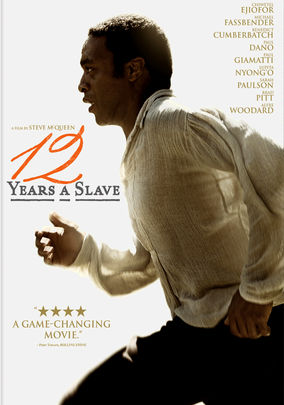
12 Years a Slave-2013

12 Years a Slave-2013

Director Steve McQueen

Starring Chiwetel Ejiofor, Lupita Nyong’o, Michael Fassbender

Scott’s Review #62

70284282

Reviewed June 24, 2014

Grade: A

At the time of 12 Years a Slave’s (2013) release, a ton of buzz began circulating. Was it that good?

Considered the front-runner to win the Best Picture statue, it did go on to win the top honor.

The film is not easy to watch. It is brutal and heart-wrenching at times. I will spare the details, but the most intense scene involves a whip.

There are scenes of torture, degradation, and cruelty against the slaves by the slave owners.

While tough to watch, I applaud the film for not glossing over the atrocities of slavery. Some have criticized it for being a retread of similar films, but I disagree. It is worlds more intense than watered-down versions.

However, the film is not a downer.

Yes, a class of people is beaten down and victimized, but they also rise above and never give up hope. The fact that it’s a true story and a book was written on the subject by the real Solomon Northup makes it all the more powerful.

The performances are outstanding (Ejiofor, Fassbender, Paulson, and Nyong’o).

The look and cinematography are sharp and I love the distinctiveness of the north and south scenes. The setting is stifling hot and dreary.

There are at least two scenes where the camera pans on a shot and holds it for seemingly an eternity until an action occurs, which makes the scenes effective.

While difficult to watch, 12 Years a Slave (2013) should be viewed by everyone to see how far society has come, not forgetting how far we still need to go to eliminate discrimination and victimization.

Oscar Nominations: 3 wins-Best Picture (won), Best Director-Steve McQueen, Best Actor-Chiwetel Ejiofor, Best Supporting Actor-Michael Fassbender, Best Supporting Actress-Lupita Nyong’o (won), Best Adapted Screenplay (won), Best Production Design, Best Costume Design, Best Film Editing

Independent Spirit Award Nominations: 5 wins-Best Feature (won), Best Director-Steve McQueen (won), Best Male Lead-Chiwetel Ejiofor, Best Supporting Male-Michael Fassbender, Best Supporting Female-Lupita Nyong’o (won), Best Screenplay (won), Best Cinematography (won)