Tag Archives: Corey Johnson

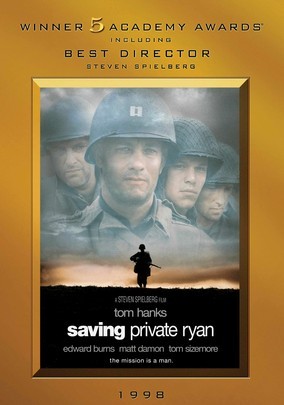
Saving Private Ryan-1998

Saving Private Ryan-1998

Director Steven Spielberg

Starring Tom Hanks

Scott’s Review #778
Reviewed June 26, 2018

Grade: A

Famed director Steven Spielberg does not always get the respect he deserves. This is usually because, for better or worse, he has become synonymous with the “blockbuster” film, drawing comparisons to either lightweight fare or films of “lesser” artistic merit.

His 1980’s works- Raiders of the Lost Ark (1981), E.T. the Extra-Terrestrial (1982), and Indiana Jones and the Temple of Doom (1984)- were enormous commercial successes, though I enjoyed all of the films.

During the 1990s, Spielberg continued to direct “popcorn flicks” such as Hook (1991) and Jurassic Park (1993) with large studio budgets but somewhat less critical acclaim.

Finally, he was able to change many opinions with 1993’s Schindler’s List and the war film to end all war films, Saving Private Ryan (1998), an epic, profound experience.

Both received numerous Oscar nominations and achieved box-office success.

The film is a tremendous treat, thanks to the riveting opening sequence alone (more on that later).

If that is not enough to impress, Saving Private Ryan is known for infusing a very graphic element into the war film, with no let-up from the brutality. Spielberg does not water down this picture; instead shows the pain and angst of war.

The film is helped tremendously by the casting of Hollywood superstar Tom Hanks, who leads an enormous cast of mainly young men.

Saving Private Ryan opens with a prologue: in the present, a veteran brings his family to visit an American cemetery in Normandy.

Flashbacks then take the audience back to the Omaha Beach debacle in 1944, where American troops faced deadly German artillery attacks in France.

After the horrific three-day D-Day, it is learned that three of the four Ryan sons have died in the events. Captain Miller (Hanks) is ordered to bring a team of men to Normandy and bring the fourth Ryan son (Matt Damon) to safety.

Spielberg’s opening D-Day sequence is just astounding and propels the film to unforgettable status. With a running time of twenty-four minutes, the riveting and horrific slaughter of American soldiers is intensely brought to the screen.

Audiences undoubtedly sat open-mouthed (I know I did!) as bullets riddled the beach and left soldiers killed or with limbs torn off. The camera work is brilliant, as the use of a shaky technique, almost a documentary style, is used for effect.

This sequence successfully promotes anti-war sentiment without glorifying combat at all. The scene will stay with its audience for years to come.

Saving Private Ryan can be compared to the decades-later Dunkirk (2017) in that each film took the war genre and turned it on its head.

The similarities between the films start with the obvious: the main events in both films occur during World War II, in the same week, and in the French beach settings, making the films perfect companion pieces.

Both films feature a gray, rainy setting with many horrific moments of death and suffering. The war film is a common genre that has historically teetered on the brink of predictability and oversaturation. Still, both films do something completely different and unexpected, yet mirror each other in style.

To counter-balance the violence in the opening sequence, a quiet scene is created and remains one of my favorites. The scene contains almost no dialogue throughout the seven-minute duration and is pivotal to the entire film.

As a typist realizes that three letters of death are to be delivered to the same family, a woman on a mid-west farm quietly washes dishes and is calmly horrified when she sees a government car approaching.

What else can this mean but that one of her sons is dead? The poor Mrs. Ryan will be told that she has lost not one, but three sons.

How utterly unimaginable, and the scene is incredibly touching!

The best part of Saving Private Ryan is that Spielberg combines a deeply sentimental vision with the terrible atrocities of war. He portrays not only the violent effects of the battles on the soldiers but also on the surviving families.

This is not always done in war films, at least not to the level that Spielberg chooses to.

With a film as startling as Saving Private Ryan, Spielberg turned the war film genre inside out. Breaking barriers with a no-holds-barred gusto, Spielberg influenced war films for years to come- Black Hawk Down and Enemy at the Gates (2001) are prime examples, and received acclaim from fellow directors for his interesting techniques.

Saving Private Ryan (1998) was an enormous financial winner at the box office, proving that great films don’t have to be watered down to find an audience.

Oscar Nominations: 5 wins-Best Picture, Best Director-Steven Spielberg (won), Best Actor-Tom Hanks, Best Screenplay Written Directly for the Screen, Best Original Dramatic Score, Best Sound Effects Editing (won), Best Sound (won), Best Art Direction, Best Cinematography (won), Best Makeup, Best Film Editing (won)
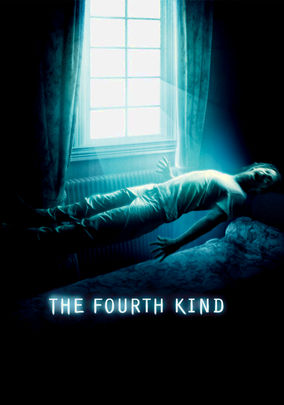
The Fourth Kind-2009

The Fourth Kind-2009

Director Olatunde Osunsanmi

Starring Milla Jovovich

Scott’s Review #583

Reviewed January 4, 2017

Grade: B-

I went into the theater to see The Fourth Kind (2009) not expecting a classic, but rather, a few frights, chills, and something compelling.

I ended up completely entertained and believing it was a good movie.

However, after the credits rolled, I was left with an unsatisfying and misrepresented feeling.

The premise of the film is admittedly a bit trite.

An Alaskan female psychiatrist, Dr. Abigail Tyler (Milla Jovovich), videotapes her therapy sessions with patients and discovers that some alien has possibly abducted them.

Yes, this sounds crazy, but the film is well-made and rather believable.

The look of the film is similar to the Paranormal Activity films, a craze that was happening when the film was released in 2009.

The documentary look and the interviews with the actors will be looked back on as “of its time”, to be sure.

The style and interspersing of “real” events with fictitious events were interesting.

However, I was disappointed when I read that the supposed “real” events were entirely made up, a fact the movie never admits, and, in fact, time and time again reminds the audience are real events.

I enjoyed the movie but felt duped afterward, rendering The Fourth Kind (2009) trivial and forgettable.

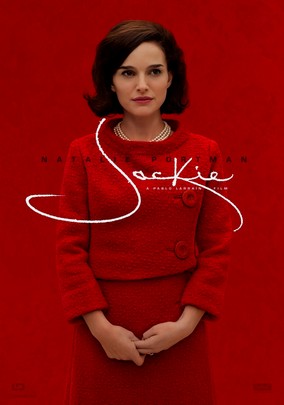
Jackie-2016

Jackie-2016

Director Pablo Larrain

Starring Natalie Portman

Scott’s Review #576

Reviewed January 1, 2017

Grade: A-

Natalie Portman carries the 2016 biographical-drama film based on the life of Jackie Kennedy and the events directly following the assassination of John F. Kennedy in 1963.

The film does not retread conspiracy theories or feature more than a few brief glimpses of JFK himself. Instead, it tells Jackie’s story and what she faced throughout the ordeal.

The film wisely uses flashbacks to show the famous tour of the White House, which Jackie gave shortly before the President’s death.

It is a bravura performance by Portman as Jackie.

Director Pablo Larrain, primarily known for achievements with foreign-language films (the Chilean film No (2012), comes to mind), rather than the American history genre, is successful in his work with direction.

The film is gloomy, both in tone and with the terrific brooding musical score composed by Mica Levi, with its loud, abrupt sound effects.

The overall feel of the film is foreboding and dark.

The main activity is told through a famous Life interview that Jackie Kennedy gave a week after the assassination. The reporter was Theodore H. White, who was slightly less than sympathetic in demeanor toward the First Lady.

Held in Massachusetts, Jackie is still pained in peaceful tranquility away from the limelight.

Portman successfully reveals two sides of Jackie Kennedy to the audience. Not simply the smiling debutante she always portrayed publicly, Jackie was also a complex, feisty woman.

She vehemently wanted the world to see how brutal the assassination was, how proud she was of her husband, and how she would not back down from holding a lavish and public funeral procession for her deceased husband.

Jackie was met with harsh criticism and defiance for her desire. A proud woman, she did not wish to run away and hide from the terrible events.

Jackie is mostly a quiet, introspective film. Much of the film is about Jackie being interviewed, and there are flashbacks of her giving the White House tour.

Typically, Portman portrays Jackie as prim, proper, and demure. She is always filled with class and grace.

In one riveting sequence, though, we see Jackie walking through the White House, smoking cigarettes and drinking vodka. She appears alone and vulnerable, having just lost her husband.

Portman embraces her pain, and the audience grieves with her. She is alone in more ways than one. We see her not only as a First Lady but also as a sad woman in her agony.

Portman is fantastic in her mannerisms and tone of voice.

I loved the continuous usage of flashbacks to tell the story. Still, the film does not delve into an unneeded history lesson. We all know what happened. The point of the film is to answer curiosity about Jackie.

What is most effective is the focus on Jackie’s reactions and how Jackie handled the events.

In a grotesque scene rivaling any horror film, we are right there with Jackie in the car that fateful day as a shot rings out, blowing JFK’s head wide open. Sinking into Jackie’s lap, she later candidly describes to the Life magazine reporter how she attempted to hold the remains of his head together.

We then see her wandering around, her beautiful pink suit smeared with blood.

A quiet yet compelling and mesmerizing film, Portman is the main draw. She channels emotions of heartbreak, sadness, and composure.

Jackie was a fantastic First Lady who was always graceful and proper, but Portman shows another side of her that very few people knew about.

In addition to this fine acting, Jackie (2016) is a dark, brooding film that successfully tells this woman’s story.

Oscar Nominations: Best Actress-Natalie Portman, Best Original Score, Best Costume Design

Independent Spirit Award Nominations: Best Feature, Best Director-Pablo Larrain, Best Female Lead-Natalie Portman, Best Editing

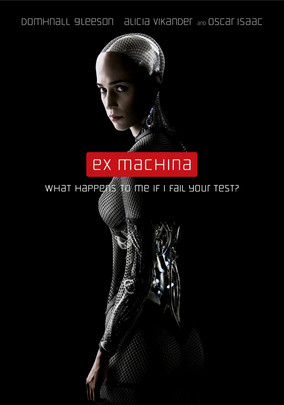
Ex Machina-2015

Ex Machina-2015

Director Alex Garland

Starring Domhnall Gleeson, Alicia Vikander, Oscar Isaac

Scott’s Review #410

80023689

Reviewed June 17, 2016

Grade: B+

Ex Machina (2015) reminds me of another recent science-fiction film, Her (2013), with more of a female empowerment edge. The latter is more of a romantic drama with undercurrents of love.

In contrast, Ex Machina has a cynical tone and elements of imprisonment and psychosis, even narcissism.

The film features excellent visual effects and a futuristic mystique, making it a successful treatment.

Directed by first-timer Alex Garland, who could very well be a director to watch rise the ranks with subsequent projects.

Young, fresh-faced computer programmer, Caleb Smith (Domhnall Gleeson), wins a week-long trip to remote Alaska, to spend it with his mysterious boss, Nathan Bateman (Oscar Isaac), the CEO of a software company.

Caleb must arrive at the luxurious, sprawling estate via helicopter as it is in a deserted area of the world and exists on mile after mile of the gorgeous landscape.

Nathan, played by Oscar Isaac, is both charismatic and creepy. He lives alone save for a beautiful Asian servant named Kyoko, who speaks no English, and a female robot named Ava (played by rising star Alicia Vikander).

Caleb’s assigned task is to study Ava and determine whether he can relate to her as a human while knowing she is a robot. It is soon revealed that Nathan plans to reprogram Ava, thereby killing her. Caleb schemes to rescue Ava, but is all that it seems?

With a cast of only four principals, it is not difficult to assess each character and their relations with each other. Caleb is the least complex of the four or rather, the one with motivations readily apparent.

The others are shrouded in mystery. Caleb expects a fun getaway but instead finds himself amid experimentation. Is Nathan’s desire to perform psychological tests on Ava, by way of Caleb, genuine?

The audience can sense immediately that there is something off about Nathan. Merely in his thirties, how could he amass such financial success so soon?

Why is he, a servant, and a robot the only inhabitants? Why does the helicopter pilot refuse to venture further than the drop-off point?

Some of these questions are answered, some remain unanswered. It is part of what makes the film mysterious and complex. Could Ava be the one doing her share of experimentation or manipulation?

Alicia Vikander deserves much praise for her role as Ava and some would argue that the talented young actress should have won the Best Supporting Actress trophy for this role instead of for The Danish Girl (2015).

I’m not sure I would leap to the same conclusion, but she does amass a ton of subdued emotion as Ava. She is complex and profound. She longs for exposure to the outside world and would love to cross a crowded street to see all the faces and different types of people.

Like Nathan, there is also something not right about Ava.

Is she calculating or simply soulful? But how can she be, she is a robot.

I compared her to another famous film robot/computer- HAL from 2001: A Space Odyssey (1968).

Along with Vikander, Isaac steals the film in a role that mixes creep with genius. He sits around his estate in comfy clothes a blue-collar man might wear drinking beer and studying Ava. He has sexual relations with his servant and she is expressionless.

He does not treat her well so we do not root for his character. At the same time, his character is tough to read. Is he experimenting on Ava or Caleb?

Visually, Ex Machina has a sleek blend of modern, crisp CGI, not at all usurping the story. There is also a scene of bloodletting that chills as much as any good horror film would.

Garland was heavily influenced by 2001: A Space Odyssey and Altered States (1980) and made the film with as little budget as possible and without outside influences that might change his vision.

I commend this and wish more filmmakers would follow suit.

Ex Machina (2015), while perhaps not perfect, could be a blueprint for what is to come from this young director.

Oscar Nominations: 1 win-Best Original Screenplay, Best Visual Effects (won)

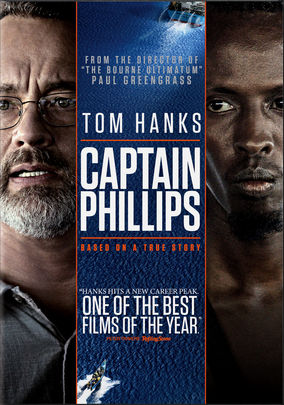
Captain Phillips-2013

Captain Phillips-2013

Director Paul Greengrass

Starring Tom Hanks, Barkhad Abdi

Scott’s Review #28

70243460

Reviewed June 17, 2014

Grade: B

Captain Phillips (2013) is an intense, gripping, action, thriller film nominated for the Best Picture Oscar.

As much as I enjoyed the film, I do not think a nomination for the top honor is warranted.

I have seen this type of film many times before and the underlining tone of “USA- good, other countries- bad”, whether intentional or unintentional, distracted me.

Another distraction was that all the protagonists are white whereas all the antagonists are African.

This is based on a true story but seems to be glorified.

The target audience must have been older, white, conservative men, who would revel in this type of film.

Tom Hanks is great and his performance during the final fifteen minutes of the movie should have cemented him an Oscar nod instead of the film

The main villain, played by a complete unknown, Barkhad Abdi, was excellent, especially considering the actor had no acting experience.

What a big break!

Overall, an interesting, exciting experience, but short of the Oscar glory.

Oscar Nominations: Best Picture, Best Supporting Actor-Barkhad Abdi, Best Adapted Screenplay, Best Sound Editing, Best Sound Mixing, Best Film Editing