Tag Archives: Forest Whitaker

Vantage Point-2008

Vantage Point-2008

Director Pete Travis

Starring Matthew Fox, Dennis Quaid, Forest Whitaker

Scott’s Review #1,271

Reviewed June 25, 2022

Grade: B-

The premise of Vantage Point (2008) is clever and hook-laden stirring up the feeling of intrigue. After all, the idea of several ‘vantage points’ to one perilous event, in this case, an assassination in a European country, exudes promise, and excitement.

An imagined fun game of whodunit or what happened to whom and when and from whose perspective prompted me to want to see this film.

The trailer looked good.

The film doesn’t satisfy and feels like a muddled mess with little character development and surprisingly mediocre acting given its A-list cast. The dialogue is forever repetitious with characters yelling out the same expletives in frustration that soon results in the incredible, teetering on laughably bad.

It plays too much like a carbon copy of the popular and exceptional television series ’24’ which ran on FOX during the 2000s when Vantage Point was made.

The inspiration, Vantage Point borrows heavily from the political thriller theme setup and the day-in-the-life concept popular during this decade. The editing is rapid-fire quick.

I was able to struggle to find a couple of redeeming values in the otherwise forgettable film.

Usually, seeing a film on the big screen in a slick, air-conditioned movie theater is a treat and increases my enjoyment of it, and that matters here.

In the case of Vantage Point, this raised its final grade from a mediocre C+ to a not much improved and generous B- score.

A stellar company of actors including Dennis Quaid, Sigourney Weaver, Forest Whitaker, William Hurt, and others joins Matthew Fox, hot at the time for his lead role in the massively successful ABC television series, Lost.

Did these actors read the script before signing on?

Witnesses with different points of view try to unravel an assassination attempt on U.S. President Henry Ashton (Hurt) while he is giving an important speech in Salamanca, Spain.

Special Agents Thomas Barnes (Quaid) and Kent Taylor (Fox) are assigned to protect Ashton during the summit on the war on terror. Television producer, Rex Brooks (Weaver), directs news coverage while American tourist Howard Lewis (Whitaker) films the audience.

After the leader’s arrival, shots ring out, and Ashton is down. In the resulting chaos, Howard comes forward with his camcorder, which he believes contains an image of the shooter.

Everyone attempts to solve the mystery by giving different accounts of what transpired.

Vantage Point is fantastic for about the first thirty minutes until it quickly runs out of gas. The setups are rapid with Rex, Howard, Barnes, and Taylor experiencing different perspectives and the film moves around in the timeline from pre-shooting to post-shooting well.

The novelty wears thin once the perspectives are revised repeatedly and the plot becomes unnecessarily complicated and downright convoluted.

This makes a normally fast running time of one hour and twenty-nine minutes feel like a lifetime commitment.

Comparisons that I’ve heard to a 1950 Japanese film called Rashomon which unfortunately I have never seen are laughable.

My hunch is that the art film is worlds away from the slickly Americanized Vantage Point and a slow build in the former is superior to the quickly edited mainstream latter.

Vantage Point (2008) is not a well-remembered film nor should it be. There is no reason to watch it a second time. A better choice is to watch the series 24 again instead.

It’s nearly the same with one being superior.

Passing-2021

Passing-2021

Director Rebecca Hall

Starring Tessa Thompson, Ruth Negga

Scott’s Review #1,222

Reviewed January 22, 2022

Grade: A

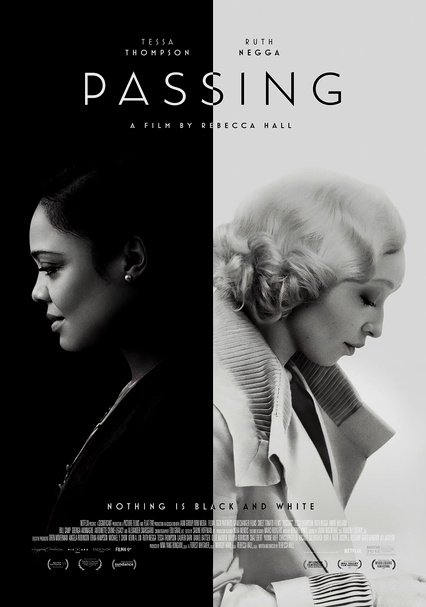
Passing (2021) is a quiet film brimming with importance. It’s the feature directorial debut of Rebecca Hall, and she hits a home run with a movie pleasing both visually and from a storytelling perspective.

The title of the film equates to the word ‘passing’, referring to three different meanings, as the viewer will need to wait until the end to figure it out.  I was not able to deduce the third meaning until I read the synopsis and was left in a state of shock.

The setting is 1920s New York City, a polished time when status and sophistication meant everything. Unfortunately, despite the liberal-leaning metropolis, racism is still alive and kicking.

The first scene shows a pair of well-dressed ladies entering a store, commenting how thankful they feel that their children have only met ‘colored’ people who are members of their staff. The message is clear that they think anyone of dark skin is a leper.

Passing is a film about race, but so much more.

Tessa Thompson plays Irene Redfield, a well-to-do light-skinned black woman who is married to a successful doctor, Brian (André Holland). They reside in Harlem in a predominantly black neighborhood.

Irene is respected and is also able to walk amongst cultured white people and ‘pass’ for white. She is treated differently when she does.

One day, Irene stops for a sandwich at a posh hotel. She runs into her childhood friend Clare (Ruth Negga), who is also of mixed race. Clare completely passes for white and is married to a successful and handsome banker, John Bellew (Alexander Skarsgård).

He makes no secret of despising black people.

As Irene and Clare reconnect, Clare begins to immerse herself in the black culture and specifically in Irene’s life. She flirts with many black men and grows close to Brian, much to Irene’s chagrin. Irene becomes both jealous and enamored with Clare.

They both risk their established lives as they soul-search for their truths.

Passing is not conventional, and that’s what I admire and love about it. While watching, I never knew what direction the film was going in, and I missed one subtle, yet essential, detail- Irene’s fascination with Clare.

The complex relationship is shaken to the core in a jarring final sequence during a winter party in a luxury apartment.

Hall makes the monumental good decision to film in black and white cinematography, thus making the racial subject and tones all the more powerful.

Visually, this is never more evident than when Clare stands beside a darker-skinned black character. The contrast is astounding and made me believe how everyone would be fooled into thinking she is a white woman.

The story of two cultured black women navigating life in the early twentieth century is compelling enough, but the underlying themes that emerge add depth to the meaning of Passing, layering it with a wealth of emotional complexity.

The film reminds me of the 2002 masterpiece Far from Heaven. Visually brilliant and both offering stories about race, they are also tragic. Nobody ends up happy or fulfilled, and a terminal sense of loss is palpable in each. A tortured, well-manicured central character exists in both films.

Negga has received the lion’s share of praise for playing Clare, but Thompson is also flawless.

Both actresses are brilliant in their portrayals of characters who are very much alike. They strive for perfection but are nonetheless living in fantasy worlds, whether they realize it or not. It’s tough to convey this to audiences, but they do in measured calmness.

The film shows that we all pretend just a little bit and pass it off sometimes, don’t we?

It’s a scary realization.

My standard modus operandi when I review a film is to think whether it stays with me after the credits roll or if it is quickly dismissed from my train of thought.

Passing (2021) has powerfully remained in my mind and caused me to ruminate and peel back the onion more and more in this tremendous and stylistic effort.

Independent Spirit Award Nominations: 2 wins-Best Supporting Female-Ruth Negga (won), Best Cinematography (won)

Respect-2021

Respect-2021

Director Liesl Tommy

Starring Jennifer Hudson, Forest Whitaker, Marlon Wayans

Scott’s Review #1,208

Reviewed December 17, 2021

Grade: B-

I had high hopes when I heard that a new biopic based on the life and times of the Queen of Soul, Aretha Franklin, was in the works.

My elation was solidified when Jennifer Hudson was cast in the iconic role. It seemed just perfect for her.

After all, the singer has pipes for miles and is now far removed from her appearance as a chubby but lovable young upstart on television’s American Idol. She has already won an Oscar for portraying a singer Effie White in Dreamgirls (2006) and is firmly established in the big leagues.

Sadly, Respect (2021) underwhelms through no fault of Hudson’s.

Almost every aspect of the film is standard and by the numbers, and the word ‘safe’ comes to mind multiple times throughout the viewing. On par with a television movie rather than a big-screen spectacle, the feature can largely be skipped, except for Hudson’s performance scenes.

Hudson’s finale of ‘Amazing Grace’ is astonishing, as is the real-life performance by Aretha Franklin for President Obama and his wife, Michelle, that appears over the closing credits.

I would recommend this film only for the die-hard Aretha fans. If novice South African director, Liesl Tommy, had visions of mirroring the recent successes of Bohemian Rhapsody (2018) or Rocket Man (2019), she sadly missed the mark completely.

For a similar experience, watch the superior What’s Love Got to Do with It (1993) starring Angela Bassett as Tina Turner.

Respect follows the rise of Aretha Franklin’s career, from a privileged child singing in her father’s church choir to her international superstardom and her journey to find her voice.

She battles her ‘demons’ like overindulging in alcohol and dating abusive men as she struggles with the rigors of touring and recording hit singles, becoming a demanding diva along the way.

The film contains nearly every cliche in the book, and I have my doubts that all of the plots are even factual. It is expected that Franklin falls for a charismatic yet abusive man and returns home with a black eye to her controlling father, played by Forest Whitaker.

The talented actor has little to do besides what you would expect from a typical controlling movie father.

She struggles with her career, battles the bottle, collapses on stage, fights with her family, scolds a housekeeper, reunites with her sisters, returns to the stage a star, and just about every other experience that the rise and fall and rise again of a superstar would behold.

Strangely, the film’s timeline primarily spans from 1962 to 1972, during the singer’s rise to fame. Notably, one period was also skipped over in her return to the top of the charts in 1985 with ‘Freeway of Love’ or any of her other 1980s hits.

She died in 2018, so much of her life is not featured at all.

Aretha is often portrayed as being overweight, despite being overweight for most of her life. The fact that Hudson, who was once overweight herself and is now svelte, is in the lead role suggests that either Hudson or the filmmakers (or both) didn’t want her to be perceived as fat.

While understandable, missed is an essential trademark of the Queen of Soul.

The best parts of Respect are when Hudson performs. Besides her brilliant rendition of ‘Amazing Grace’, other treats are ‘Think’, ‘I Say a Little Prayer’, and, naturally, ‘Respect’. Hudson rises to the occasion with every number.

Jennifer Hudson excels in a role for which she is perfectly cast. She successfully channels her inner Aretha Franklin and soars when she is allowed to let loose and give a brilliant performance.

Unfortunately, the rest of the material is lackluster, with dialogue and situations that are generic, and a gnawing feeling of watching Jennifer Hudson perform Aretha Franklin’s songs cannot be shaken.

I expected greatness out of Respect (2021), but all I got was mediocrity.

Black Panther-2018

Black Panther-2018

Director Ryan Coogler

Starring Chadwick Boseman, Michael B. Jordan

Scott’s Review #805

Reviewed August 23, 2018

Grade: B+

For the record, I am not a huge superhero fan nor an obsessive follower of the popular Marvel comic series. I see a handful of superhero films but hardly any of this particular genre, usually those (if any) receiving year-end recognition.

Having heard many positives regarding Black Panther (2018), I was looking forward to something creative and left of center from the typical genre film.

While the film has some standard superhero elements, the fact that most of the characters are ethnic is an enormous plus and worth the price of admission alone.

Admittedly, Black Panther plays out like a superhero film is “supposed” to play out: fight scenes, machismo, action, and villains, with the standard good versus evil storyline thrown in.

This is all good and will undoubtedly please the traditional Marvel comic book fan. However, the nuances that the screenwriters and director, Ryan Coogler, sneak into the film set it above a mediocre rating.

The fact that nearly all of the principal characters are black is tremendous, and the female black characters are portrayed as strong.

Furthermore, the visual treats of Africa and Korea, and multi-cultural clothing and colors are noteworthy. While I wish the actual story had steered further away from the tried-and-true, I was left happy with the other qualities.

The film begins with a quick story of how one African nation, Wakanda, came to be and proudly brought into existence the first “Black Panther” with superpowers obtained from a special plant.

As the action moves to Oakland, California, circa 1992, we learn that the King of Wakanda is visiting his brother, who works undercover.

Following the King’s death, his son T’Challa (Chadwick Boseman) takes over the throne but is soon challenged by his cousin, N’Jadaka (Michael B. Jordan), who deems himself the rightful heir.

Another subplot involves a black-market arms leader named Ulysses Klaue, who leads T’Challa, along with Nakia (Lupita Nyong’o) and Okoye (Danai Gurira), to South Korea and back to Wakanda.

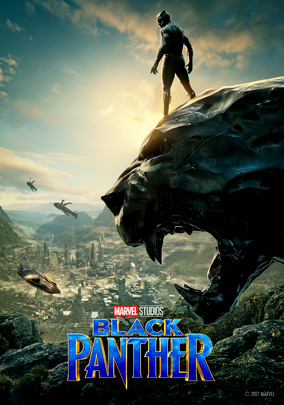
Black Panther feels ambitious, like seeing something worth seeing, something inventive and cool. The film is stylized, and Coogler’s direction is spectacular, with bright, colorful visual treats, especially as he features lavish African locales.

Admittedly, in a mainstream comic book film laden with CGI effects, it is tough to know what is real or not, but as a viewer, these aspects were a treat and pleasing to the eyes.

The plot of the film itself feels admittedly mediocre, tough to follow, and a “been there, done that” evaluation. By the same token, the story seems predictable, and is it any wonder that T’Challa will reclaim the throne as King of Wakanda?

It does not matter too much after the inevitable clashes with warrior-type men who want the throne and/or feel that they are the rightful heir to it.

This is not to say the film is not good—it is, but the plot is not the highlight of Black Panther; it feels fairly standard.

The male-female roles are a fascinating study and progressive-minded. Granted, the male characters (T’Challa, N’Jadaka, and M’Baku) are all testosterone-laden and fierce with machismo.

However, despite being manly men, they also contain some sensitivity, and the characters have a unique family element.

On the other hand, the female characters are powerful and empowering- a dynamic approach for a superhero film sure to be seen by millions. One female character is even an Army General! So the portrayal of women as strong warriors rather than merely secondary or arm candy is impressive.

The comic book or superhero genre is notoriously filled with gender stereotypes and specific, often generic aspects. It is nice to see this work break down some of these barriers.

Between the recent Wonder Woman (2017) and Black Panther (2018), women and the black community have been represented positively.

Here’s to hoping that the LGBT community may be next.

Oscar Nominations: 3 wins- Best Picture, Best Original Score (won), Best Original Song-“All the Stars”, Best Sound Editing, Best Sound Mixing, Best Production Design (won), Best Costume Design (won)

Arrival-2016

Arrival-2016

Director Denis Villeneuve

Starring Amy Adams, Jeremy Renner, Forest Whitaker

Scott’s Review #642

Reviewed May 9, 2017

Grade: B-

Arrival (2016) is the latest in a recent trend of science fiction-themed films garnering Academy Award praise, either for technical achievements or, in the case of Arrival, a surprising Best Picture nomination in addition to the more traditional awards notice for categories like sound effects and editing.

Traditionally, science fiction gets little or no recognition in significant categories; this makes the inclusion of films in the under-the-radar style with the big guns all the more surprising.

Similar in style to recent films such as Interstellar (2014) and Gravity (2013), Arrival ultimately proves a disappointment as a complete film, succeeding only in specific avenues like its musical score and a sort of surprise twist ending that the film presents, but at times is downright to say nothing of its tedious moments.

Needless to say, I wholeheartedly disagree with its Best Picture nomination.

I am not claiming to be the world’s greatest science fiction fan. At times, Arrival does have glimmers of success (mainly in the first act) and some high points in the vein of 2001: A Space Odyssey (1968), the greatest of the greats in the genre. However, the good moments ultimately fade as the story lumbers on, only to show a brief resurgence in the final act.

Sadly, the rest of the film is rather middling.

In a role seemingly written just for her, Amy Adams stars as Louise Banks, a linguist professor living and teaching in Massachusetts.

One day, a series of twelve extraterrestrial aircraft appeared across the world. Louise is summoned by an Army Colonel (Forest Whitaker) to travel to a remote area of Montana where one aircraft has taken up residence and assist a physicist, Ian Donnelly (Jeremy Renner), in communicating with the aliens.

Their goal is to determine why they have come to planet Earth.

Interspersed with the main story are strange flashbacks of a life Louise briefly spent with her daughter, who appears to have died of cancer as a teenager.

The film’s premise is reminiscent of another film named Contact, made in 1997, starring Jodie Foster.

The film seems to borrow aspects from several other famous science fiction films, such as the creepy, ominous score that harkens back to 2001: A Space Odyssey in its mysteriousness to the oddity of The Day the Earth Stood Still (1951).

So much so that the film reminds me too much of other films, it, therefore, has little identity, especially throughout the film’s mid-section.

Other than Louise’s character, there is no character development, and this is glaring among the male cast of top talents like Whitaker and Renner. The roles are glorified throwaway roles.

Except for Renner’s limited involvement in the film’s climactic “twist,” which admittedly barely raises the movie above mediocrity, neither character serves many purposes and could be played by any actor.

Whitaker’s G.T. Weber has little motivation other than convincing Louise to participate in the mission. The film also seems unsure whether to fully explore a romantic entanglement between Louise and Renner’s Ian.

Indeed, a flirtation exists on the surface, but the film never hits a home run with it. Couldn’t a meatier story be created for these two storied actors?

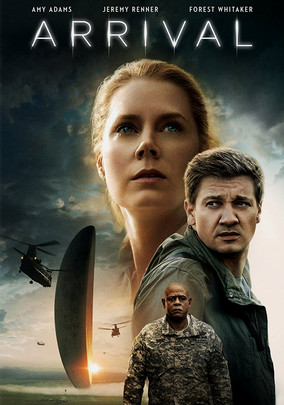
The unique extraterrestrial, a hybrid of tentacles, fingers, and funny eyes appearing as a pair humorously nicknamed Abbott and Costello, is impressive from an artistic perspective, and this does help the film.

The characters’ unsureness about whether Abbott and Costello are friends or foes is also slightly intriguing. However, the film’s main negative is that nothing much happens other than Louise’s repeated attempts to communicate, whimsically staring into the camera in wonderment and ultimately figuring out the alien’s messages and purpose.

Worthy of mention is a fantastic and ominous musical score that gives the film some climactic and dark elements that feel like its highlights. It adds chilling, practical elements, bringing the movie up a notch from complete blandness.

The film’s best part is its ending, which sent a chill down my spine. The unique and inspired big reveal made me a bit shiver.

This way, Arrival saves itself from being completely lackluster, but too little, too late. I would have preferred the film to balance the emotions, surprises, and thrills more rather than exist mainly as a tedious, uninteresting film.

Overall, the outcome of Arrival (2016) is more of a retread than anything new or original.

Oscar Nominations: 1 win-Best Picture, Best Director-Denis Villeneuve, Best Adapted Screenplay, Best Sound Editing (won), Best Sound Mixing, Best Production Design, Best Cinematography, Best Film Editing

Songs My Brother Taught Me-2015

Songs My Brother Taught Me-2015

Director Chloé Zhao

Starring John Reddy, Jashaun St. John

Scott’s Review #494

80038286

Reviewed October 14, 2016

Grade: B+

Songs My Brother Taught Me (2015) is quite an understated film experience, but despite the slow pace, I found the film of great interest.

The Native American population is largely ignored in cinema (and perhaps other avenues) so what a treat it was to see a film, albeit a small, quiet film, being made to represent this group of people.

Forest Whitaker produces the film.

Undoubtedly the funding was responsible for allowing it to be made at all.

Living on an Indian reservation in remote South Dakota, the story focuses on Lakota Sioux brother and sister Johnny and Jashaun- aged sixteen and eleven, respectively.

When their father dies in a house fire, they are forced to ponder their future within the Indian reservation, and also their desires to escape their lives and move to Los Angeles with Johnny’s girlfriend- also an inhabitant of the land.

The film is largely a slice of life on a reservation and the trials and tribulations of the members who live there. Johnny’s mother is a kindhearted yet boozy young woman with another son in prison.

Jashaun’s mentor, a tattooed man who is creative and attends alcoholics anonymous meetings, only to be caught drunk by Jashaun. A rivalry between Johnny and some rival boys develops.

Finally, Johnny aspires to purchase a truck from an older gentleman. The film is laced with different facets of real-life situations- trivial to some, but an entrance into a culture most know so little about.

I found the film quite interesting and compelling in a very subdued way. A marvel is the frequent long views of the prairie land- sweeping winds and gorgeous scenery for miles. Many shots of Johnny and Jashaun are featured- simply gazing into the crisp air in deep thought.

We see the conflict put upon both youngsters. Johnny, quite handsome and the object of affection by more than one young lady, yearns for a more exciting life. His girlfriend will be attending college in California. Pretty and smart- she is sure to move on to success, but Johnny plans to go with her.

Her brother inquires how Johnny will live with no job and no money- all valid points. Will Johnny age and remain on the reservation for the rest of his life or escape to a different world?

Jashaun, quite young, is filled with quiet energy and curiosity. She is educated and wise beyond her years. What will become of her without a father and surrounded by some unsavory types that her family knows?

Not an offering for those intent on seeing more action than thoughtfulness, but for the patient viewer, it is a fascinating introspective treat.

Songs My Brother Taught Me (2015) taught me a lesson in good storytelling.

Independent Spirit Award Nominations: Best First Feature, Best Cinematography, Acura Someone to Watch Award

Lee Daniels’ The Butler-2013

Lee Daniels’ The Butler-2013

Director Lee Daniels

Starring Forest Whitaker, Oprah Winfrey

Scott’s Review #81

70266686

Reviewed June 30, 2014

Grade: A

Director, Lee Daniels, is a recent favorite of mine (Precious-2009, The Paperboy-2012) and his latest The Butler (2013) is an excellent, true story, undertaking.

While the trailer looked appealing, I was concerned that the film might be overwrought or have a Hollywood sappiness.

While it’s a Hollywood film, it is also a powerful, emotional experience.

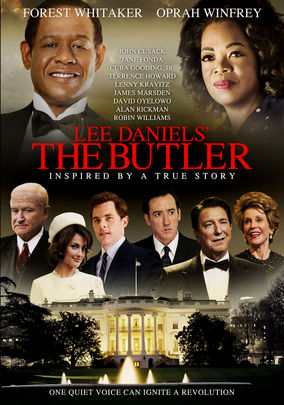
The viewer is taken on a journey from 1926 through the current president from the viewpoint of White House butler Cecil Gaines (Whitaker), who serves several presidents and is privy to the goings-on in the White House.

He is played by Forest Whitaker and his boozy, troubled wife is played by Oprah Winfrey.

Both give tremendous performances.

The Butler is a political journey through time and I love the authenticity of each decade from the sets to the costumes to the hairstyles.

The casting of the Presidents is curious (Robin Williams as Eisenhower and John Cusack as Nixon), but works nonetheless.

The rivalry between Cecil Gaines and his rebellious son is quite interesting as the viewer sides with each individual at different times.

The film is more emotional than I anticipated and much of the audience was teary during scenes of heartbreak and triumph.

I feel The Butler (2013) is a must-see for everyone.

Fruitvale Station-2013

Fruitvale Station-2013

Director Ryan Coogler

Starring Michael B. Jordan, Octavia Spencer

Scott’s Review #64

70267488

Reviewed June 24, 2014

Grade: B+

Not knowing all of the details of this incident, but only taking into account the details the film presents, Fruitvale Station (2013) is a good film.

Most of the film is in the lead-up to the big incident.

While not perfect, the victim is presented as a good guy, who helps strangers, and stray dogs, loves his daughter, and has a great heart.

He lives a tough life, has been in and out of prison, and is forced to sell drugs to make a living.

But he has a strong family unit (mother, grandmother, girlfriend, friends) so he lives a decent life.

The cops in question are presented very negatively (intense, racist, and brutal).

Again, I don’t know what happened, but obviously, the filmmakers are on the victim’s side (as they should be). The police reasons are revealed at the end of the film.

It’s a heartfelt, good, solid portrayal.

Independent Spirit Award Nominations: 1 win-Best Male Lead-Michael B. Jordan, Best Supporting Female-Melonie Diaz, Best First Feature (won)

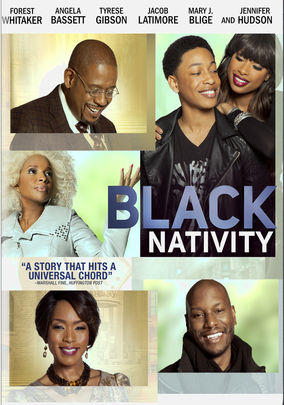
Black Nativity-2013

Black Nativity-2013

Director Kasi Lemmons

Starring Jennifer Hudson, Forest Whitaker

Scott’s Review #46

70279001

Reviewed June 18, 2014

Grade: C-

Black Nativity (2013) is a family holiday movie about a poor Baltimore teen sent to live with his affluent, estranged grandparents (Forest Whitaker and Angela Basset) in Harlem.

Jennifer Hudson plays the teen’s financially struggling mother.

The estrangement stems from a silly misunderstanding years ago when Hudson’s character was pregnant with her now teenage son.

I enjoyed the performances of Whitaker, Bassett, and Hudson, and the sprinkling of songs performed by the leads was nice, but the story was incredibly sappy and predictable and wrapped up in a nice bow at the end of the film.

Scene one screams predictable and safe.

I did not sense any real conflict or grit throughout the movie and it felt like watching a Hallmark-made-for-television movie- not a compliment.

Black Nativity (2013) is a nice family story, but a little more.

Skip unless you enjoy the watered-down family fare.