The Red Shoes-1948
Director Michael Powell, Emeric Pressburger
Starring Moira Shearer, Marius Goring
Top 250 Films #108
Scott’s Review #683
Reviewed September 19, 2017
Grade: A
The best in the collection of cinematic ballet films, 1948’s The Red Shoes is a highly artistic and influential film, one that is undoubtedly studied in film schools everywhere.
One cannot view The Red Shoes without amazement, and the realization that this piece must have been dissected by legendary director Darren Aronofsky before he created his creepy 2010 psychological thriller, Black Swan, is evident.
The Red Shoes is a British film that imbues it with a transparent element of grace, class, and sophistication, perfectly encapsulating the themes of love, ambition, and jealousy —the Brits do it right.
Director Michael Powell later crafted the odd and controversial 1960 film Peeping Tom, which was sure to have wholly ruined his career, yet he brought his A-game to this 1948 work.
Decades later, Powell is now considered a genius director.
The film is laden with foreshadowing, at least a handful of times during its running time, as we meet our heroine, Vicky Page (Moira Shearer), a bright-eyed young woman with flowing red locks and aspirations of grandeur as she emerges as a fledgling ballerina in the Covent Garden area of London.
Partially due to her aristocratic upbringing and her assertive, snooty aunt, she lands an audition for the ballet company led by the sophisticated Boris Lermontov (Anton Walbrook).
He is immediately enamored of her, yet gives her the cold shoulder, making her question her talent. The key here is incorporating trains into multiple sequences.
As Lermontov and Vicky’s lives begin to intertwine, a young music student named Julian (Marius Goring) is perturbed by his professor’s plagiarism of his music, which he had conducted under the guise that it was his own work.
When Julian expresses his displeasure to Lermontov, he is hired to perform with the orchestra.
The addition of Julian to the plot sets off a compelling triangle among the three characters, whose lives overlap in a mix of young love, passion, and jealous rage.
The action takes off even further as the film moves to the gorgeous settings of Paris and Monte Carlo, a treat for any worldly or aspiring world traveler, with breathtaking photography and cinematic angles of the lush locales.
As former prima ballerina Irina Boronskaya decides to leave the company to be married, Lermontov creates a new ballet, The Red Shoes, starring Vicky, with music composed by Julian.
This creates enormous pressure for all involved as the film takes a dark turn.
Dashes of influence surrounding the exquisite performance of the famous Swan Lake dance number heavily influenced the 1950s classic An American in Paris (1951).
The long, colorful, dramatic sequence emits lush, vivacious music and performance. This “time out” from the heavy drama encompassing the rest of the film is beautiful and peaceful, and one of the sheer highlights of The Red Shoes.
The film hinges on the dynamic between the three principal characters, as each actor is spot-on and rich in flair.
Incredibly profound are the performances by Shearer and Walbrook, as each actor brings their respective character to life with the perfect amount of fury, ambition, and tension. Still, Goring as Julian is equally worthy of mention. Kudos.
I adore witnessing Moira Shearer dance; her talent and tenacity are astounding. An internationally renowned British ballet dancer and actress, Vicky is ideally suited to the role, as the character must have been close to her heart.
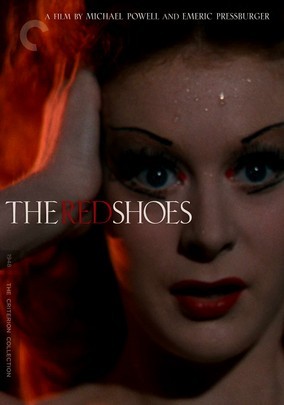
Who can forget the most famous scene, where a determined and crazed Vicky finishes her stage performance, Powell firmly holding the camera on her makeup-stained face, her blue eyes wide and hair wild?
Her look of triumph and insanity, lost in the moment, is a grand and unforgettable image often reproduced in cinema reference books.
Equal parts dramatic, romantic, eerie, lustful, and wise, The Red Shoes (1948) is a classic film made way ahead of its time. Its startling visuals, treasured art and set designs, powerful acting, and compelling story make it a must-see.
No wonder this film had such a profound influence on other masterpieces to come.
Oscar Nominations: 2 wins-Best Picture, Best Motion Picture Story, Best Scoring of a Dramatic or Comedy Picture (won), Best Art Direction-Set Decoration, Color (won), Best Film Editing
Golden Globe Nominations: 1 win-Best Original Score-Motion Picture (won)