Tag Archives: Alan Arkin

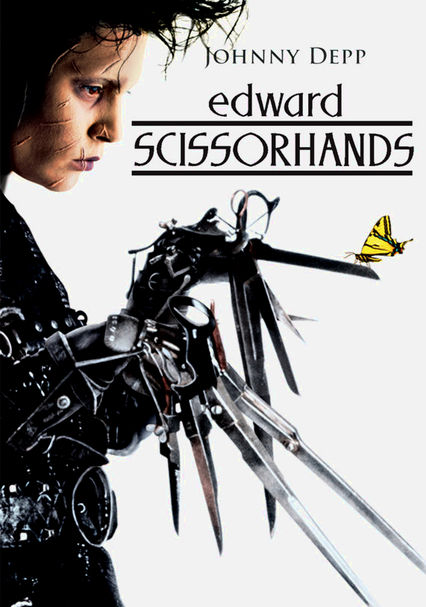
Edward Scissorhands-1990

Edward Scissorhands-1990

Director Tim Burton

Starring Johnny Depp, Winona Ryder, Dianne Wiest

Scott’s Review #1,198

Reviewed November 20, 2021

Grade: B+

Edward Scissorhands (1990) is a Tim Burton creation, given appropriate funding only after the smash success of his 1989 film Batman. A creative and romantic fantasy, it is an unconventional project made as charming and whimsical as its stars were at that time.

The film is part sad, part magical, with enough science fiction and romance sprinkled in to make it work across genres. The result was another box office hit for Burton, teen idol status for its lead stars, and an obvious Academy Award nomination for the deserving Makeup department.

As unconventional and original as it appears on the surface the film suffers slightly from being a bit mainstream. There is a safe, romantic comedy feel that takes the film away from a much darker tone it could (and should) have had.

Still, Edward Scissorhands is entertaining and fascinating.

An eccentric scientist, deliciously played by Vincent Price, builds an animated human being, the gentle and soft-spoken Edward (Johnny Depp). He dies before he can finish assembling Edward, leaving the poor young man with a freakish appearance accentuated by the scissor blades he has instead of his hands.

Friendly suburban saleswoman Peg (Dianne Wiest) discovers Edward and takes him home, where he falls for Peg’s teen daughter Kim (Winona Ryder). However, Edward’s hands make him an outcast despite his kindness and artistic talent.

This is a challenge for all of them.

By 1990 Johnny Depp was becoming a huge Hollywood star and so was Winona Ryder. As the ‘it’ actors, this helps Edward Scissorhands tremendously by not only adding ticket sales but also a fascination with them as a couple.

The chemistry is palpable and so is the classic good girl helping boy reform. Depp’s Edward is a sympathetic hero and is instantly mysterious and likable.

Wiest, then in her prime, is a hoot as the comical Avon lady who introduces Edward to the joys and pains of suburban Americana. Particularly enjoyable are the perfectly manicured landscapes in Peg’s neighborhood where she goes door to door selling her products.

As one can easily predict, the beautiful plants and bushes suffer from Edwards’s dangerous hands.

The Gothic mansion where Peg discovers Edward is a deliciously creative set piece that has the classic Burton stamp. The director is so defined by his artistic sets and design that half the fun of the film is discovering and noticing these fabulous creations.

The mainstream part comes with the story and a smattering of 1982’s E.T. sentimentality included to win over middle-American audiences. This isn’t bad but it does lighten the heavy drama and sinister approach that Burton could have honed in on.

Much of the credit must go to Depp because on paper the premise could easily be dismissed as silly, trivial, or outlandish. The actor brings pathos to the role and makes the audience believe in and fall in love with the character.

He makes Edward even more rootable by adding some obvious cliches- Kim’s jealous boyfriend Jim, played by Anthony Michael Hall, and the eccentric religious fanatic who believes that Edward is evil incarnate, played by O-Lan Jones.

Adding these villains and most of the rest of the neighborhood as either clueless or misunderstanding townsfolk adds to the reduction of most of the supporting cast to standard stock characters.

Burton, along with Depp, Ryder, and Wiest, gives Edward Scissorhands (1990) heart.

It’s a beautiful fairy tale that feels magical and adventurous save for some mediocre storytelling. It’s an above-average film that won over the masses at the time of release.

Oscar Nominations: Best Makeup
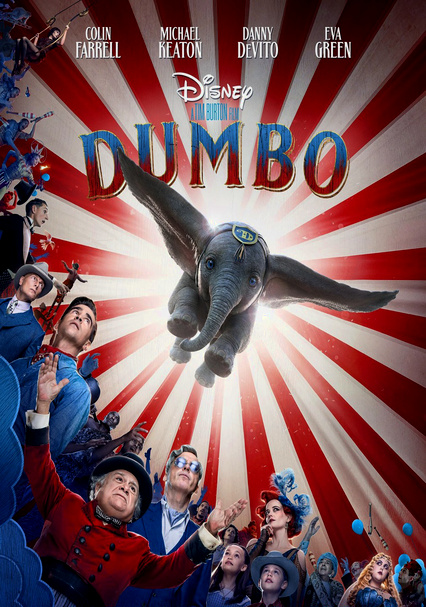
Dumbo-2019

Dumbo-2019

Director Tim Burton

Starring Colin Farrell, Danny DeVito, Eva Green

Scott’s Review #889

Reviewed April 24, 2019

Grade: C+

Dumbo (2019), the live-action remake of the charming and emotionally charged animated original from 1941, contains some positives but ultimately underwhelms, coming up with less than a stacked deck.

The problematic and gnawing element that persisted throughout the Disney film was its overly cute or child-leaning quality, which was not to my taste.

Nevertheless, for an afternoon at the theater with young children under the age of twelve, the film is a recommended and utterly appropriate activity for fun.

My expectation, knowing that Tim Burton was at the director’s helm, was for a darker, perhaps murkier interpretation, given some of his films in the catalog.

After all, Beetlejuice (1988) and Dark Shadows (2012), though flawed, contain some wicked charm and naughty humor. Dumbo is considerably softer as the director chooses a safe, more accessible path.

Creating magic from nearly eighty years ago is a challenging task for anyone to achieve.

World War I veteran and amputee, Holt Farrier (Colin Farrell) returns from the war to rejoin the financially problematic traveling circus owned by Max  Medici (Danny DeVito).

A widower, reunited with his two children, Holt is assigned to oversee the pregnant elephant, Mrs. Jumbo, as she gives birth to an unusual-looking elephant with giant ears who comes to be known as Dumbo.

The children discover that Dumbo can fly when aided by a feather, as the evil V.A. Vandevere (Michael Keaton) attempts to profit from Dumbo’s talents at any cost, adding to his fabulous creation, Dreamland.

The art direction and the look of the film are where Burton succeeds.

With dark, visually striking creations and intricate, spider-like sets, especially in Dreamland, the film bears the director’s unmistakable signature.  The costumes and styles are well-suited to the year 1919, and the wardrobe and hairstyles are in line with the times.

The circus stars and characters, from the fat lady to the exotic jugglers, are well-cast, adding good texture and multicultural flavor to the production.

The standout musical number is the poignant and sentimental “Baby Mine,” wisely featured twice during the film. Since the song is so lovely, this proves a bold move and my favorite part of what is otherwise a mediocre experience.

Sharon Rooney sings the version featured during a touching and painful scene between separated elephants Dumbo and Mrs. Jumbo, and the rock band Arcade Fire performs a different rendition over the end credits.

Anyone needing a good cry would be advised to check out the emotionally charged song.

While the acting among Farrell, DeVito, and Eva Green as Colette, the French trapeze artist who falls for the sexy Holt, is all admirable, two performances left me with critical fire. Keaton, typically a standout performer, goes full-throttle with an over-the-top and one-note performance as the villainous Vandevere.

Cartoon-like with herky-jerky head snaps and tic-like movements, the actor appears silly and ineffectual at creating any sort of robust character. Young actress, Nico Parker as Milly, Holt’s daughter, gives a dreadfully wooden performance in what could have been the film’s most likable character.

Besides one or two tender scenes the film largely goes for a cutesy vibe, not feeling fresh nor especially genuine. A Disney production, the film feels quite mainstream, lacking edginess, like the producers had dollar signs and major success on their minds over artistic merit or staying true to the original.

Other than a quick shot of the number “41” on the front of a train, a clear tribute to the animated original’s year of release, the remake strays very far from the first Dumbo with a few new characters and sadly no gossipy female elephants anywhere.

A disappointing offering, the live-action Dumbo (2019), the year’s first in a series of five expected Disney releases (Aladdin, The Lion King, Maleficent: Mistress of Evil, and Lady and the Tramp being the others) lacks much more than a couple of sweet scenes, an adorable elephant, and admirable sets, feeling utterly ordinary in flavor.

This is a misfire compared to the legendary, teary 1941 version of Dumbo.

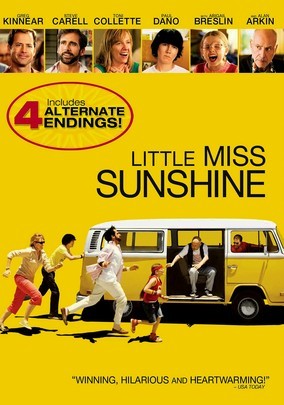
Little Miss Sunshine-2006

Little Miss Sunshine-2006

Director Jonathan Dayton, Valerie Faris

Starring Greg Kinnear, Steve Carell

Scott’s Review #697

Reviewed November 23, 2017

Grade: A

A film that became a sleeper hit at the time of release in 2006 and went on the achieve recognition with year-end award honors galore, Little Miss Sunshine holds up quite well after over ten years since its debut.

Combining family humor with heart, audiences will fall in love with the antics of the dysfunctional Hoover family, warts and all, as they strive to persevere endless obstacles to enable precociously, seven-year-old daughter, Olive, a chance at competing in a beauty pageant hundreds of miles away.

The film is a comedic treat with charm and contains uproarious fun.

Directors  (and husband and wife team) Jonathan Dayton and Valerie Faris start right to work kicking off the humor in style as the one hour and forty-one-minute film introduces depressed Uncle Frank (Steve Carell) to the rest of the Hoovers as he comes to live with the family after a failed suicide attempt.

Frank, who is gay and has recently been dumped, is Sheryl Hoover’s (Toni Collette) brother and has a dry sense of humor.

He fits in well with the other peculiar members of the clan- Dad Richard (Greg Kinnear), a struggling motivational speaker, Grandpa Edwin, a vulgar, irritable man, brother Dwayne, angry and refusing to speak, and finally, pudgy-faced, Olive.

The brightest spots in Little Miss Sunshine are the exceptional writing and the nuanced, non-one-dimensional characters. Each character is both good yet troubled in their way and the overall message of the film is an important one.

The plot of the film encompasses a beauty queen pageant and the lifestyle this involves- hypocrisy and plastic nature is the main theme.

When the family stops at a roadside cafe for breakfast, Olive hungrily orders ice cream and is shamed by a member of the family- she must watch her figure, she is told.

Other members instead encouraged Olive to be herself.

Little Miss Sunshine poses an interesting dissection of the pressures very young people face to be perfect, especially in the beauty pageant business, and the message society sends.

Shocking is a scene where many of the contestants, all under the age of ten, appear in sexy, glamorous makeup, and bikinis.

Little Miss Sunshine is a very funny film and this undoubtedly is due to the chemistry that exists among the cast of talented actors. Quite the ensemble, all five of the principal characters have an interesting relationship with each other.

Too many film comedies suffer immensely from forced jokes or typical “set-up” style humor, plot devices created to elicit a response from the audience- which I call “dumbing down”.

Little Miss Sunshine, however, feels authentic and fresh- a situation becomes funny because there is an honest reaction by the characters.

The film is a slice of the life experience of an average blue-collar family.

A standout scene to mention is the hysterical one in which the Hoovers are pulled over by a highway police officer. To say nothing of the fact that the Hoovers are “escorting” a corpse to their destination, along with pornographic magazines, their classic, beat-up, yellow Volkswagen bus barely runs and contains a malfunctioning horn that beeps at inopportune times.

These hilarious scenes work on all levels as the comic timing is palpable and leads to a laugh-out-loud response.

Furthermore, the climactic “beauty pageant” scene is fraught with physical humor.

Olive, the oddball in a group of hypersexualized, young starlets, takes inspiration from her grandfather to simply “be herself”. She does so in a hilarious version of “Super Freak” that is R-rated, both shocking the audience and celebrated by others- specifically her entire family.

Olive successfully proves that she can be herself and happily does so.

How wonderful and refreshing to find a comedy with honest, ample humor and real integrity that can shine many years after its first release and retain the richness and zest that originally captured legions of viewers.

As proven over time with many independent films, wonderful writing and directors sharing a vision, go a long way in achieving a quality piece of filmmaking.

Oscar Nominations: 2 wins-Best Picture, Best Supporting Actor-Alan Arkin (won), Best Supporting Actress-Abigail Breslin, Best Original Screenplay (won)

Independent Spirit Award Nominations: 4 wins-Best Feature (won), Best Director-Jonathan Dayton and Valerie Faris (won), Best Supporting Male-Alan Arkin (won), Paul Dano, Best First Screenplay (won)

Catch-22-1970

Catch-22-1970

Director Mike Nichols

Starring Alan Arkin, Martin Sheen

Scott’s Review #41

60020883

Reviewed June 18, 2014

Grade: B

Catch-22 (1970) is a satirical film similar in subject matter to Robert Altman’s M*A*S*H, released the same year though admittedly I have not seen that film yet.

It does remind me of Dr. Strangelove, and Slaughterhouse-Five in their anti-war theme.

This film is well-made and certainly effectively portrays the outrageousness and lunacy of war.

Most of the characters are presented as crazy, albeit in a dark-humored, over-the-top way.

Alan Arkin is wonderful as the protagonist trying to find a way out of the island of Italy where he and his fellow pilots are stationed.

At times the film feels disjointed and tough to follow, which I understand the novel is too (I have not read the entire book), but the message of the movie comes across loud and clear.