Tag Archives: Richard LaGravenese

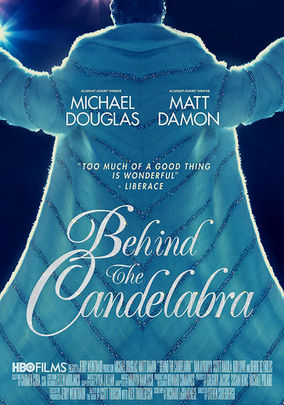
Behind The Candelabra-2013

Behind the Candelabra-2013

Director Steven Soderbergh

Starring Michael Douglas, Matt Damon

Scott’s Review #411

70274808

Reviewed June 18, 2016

Grade: A

I thoroughly enjoyed this HBO film based on the life of Liberace, whom I was too young to know much about before viewing this movie.

The excesses of his lavish lifestyle are explored completely.

The standouts are Michael Douglas and Matt Damon who are both exceptional in their portrayals of Liberace and his young lover. Both were unrecognizable at times and completely embodied their characters.

I can’t attest to the absolute truth of the story, but the HBO film does a nice job of mixing joy, passion, heartbreak, sadness, and competition throughout.

The story undoubtedly bears a likeness to many Hollywood troubled relationships past and present.

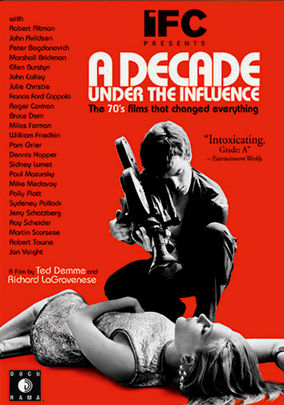
A Decade Under The Influence-2003

A Decade Under the Influence-2003

Director Ted Demme, Richard LaGravenese

Starring Francis Ford Coppola, William Friedkin, Ellen Burstyn

Scott’s Review #392

60027599

Reviewed April 5, 2016

Grade: B+

Produced by the cable network Independent Film Channel (IFC), A Decade Under The Influence explores the 1970s in film, a decade that was arguably the most creative and liberating decade for filmmakers and audiences alike.

A period in film defined by the directors securing creative freedom instead of the studios, where artists, instead of corporations, finally ruled the roost.

A Decade Under the Influence offers an overview of the era.

Despite some conspicuous omissions, I enjoyed this informative piece a great deal.

The documentary is divided into numerous segments, including sections on women in film, the transition into a different period in Hollywood, and the subsequent close of the decade.

The interviews are plentiful, including a who’s who of stars: Martin Scorsese, Ellen Burstyn, Clint Eastwood, Robert Altman, Julie Christie, Francis Ford Coppola, and numerous other influential directors, actors, and filmmakers.

Each individual describes their perspective on 1970s cinema and shares personal anecdotes about experiences or challenges.

Ellen Burstyn, for example, describes how the success of The Exorcist afforded her a plethora of other film offers, but all of the roles were of prostitutes, dutiful wives, or women in peril.

She needed roles more stimulating than those, so she chose to star in Alice Doesn’t Live Here Anymore, which was a much better-written role.

What I found a bit sad is that there are still limited, layered roles for women in Hollywood, unless one goes the independent film route, which this documentary touts as a savior.

Francis Ford Coppola explains that The Godfather was never expected to be a success, but rather that he was chosen to direct the film merely because he worked cheaply and was Italian-American.

How ironic that the film became such a monumental success and an influence on filmmaking as a whole for generations to come.

The documentary at times seems like an overview of the decade, with many clips of classic 1970s cinema interspersed with talking points.

Despite being three hours long, I still felt there was so much more the documentary could have explored. Not surprisingly, the stars granted interviews were granted heavy screen time for their films.

The documentary was fine, but could have delved much deeper- I could see a multiple-disc set of ten or more hours dedicated to the decade.

One conspicuous omission was Robert Altman’s Nashville, arguably, the best film of the decade. While it was briefly mentioned and a still frame of a scene from it appeared, I felt it warranted more dissection and discussion.

This was more surprising given that Altman was interviewed for the documentary.

Another miss was Halloween or any mention of John Carpenter films. Halloween influenced many horror films to come, and The Exorcist received heaps of coverage, undoubtedly because star Burstyn and director William Friedkin appear at length throughout the production.

Additionally, in the horror genre, Black Christmas (a highly influential horror film) was not mentioned at all.

A celebration of my favorite decade of cinema, A Decade Under the Influence is a documentary that is a basic must-see for fans of 1970s cinema, or film students perhaps immersing themselves into the world of great film for the first time.

Unbroken-2014

Unbroken-2014

Director Angelina Jolie

Starring Jack O’Connell, Garrett Hedlund, Domhnall Gleeson

Scott’s Review #260

70305949

Reviewed August 1, 2015

Grade: B

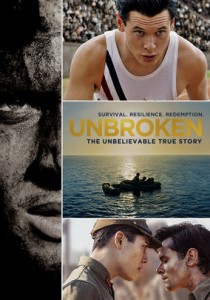
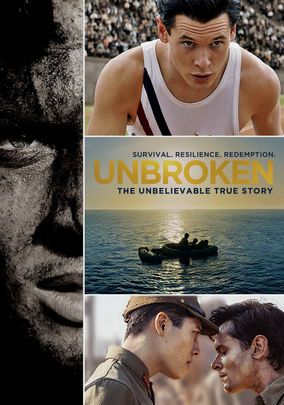
Unbroken (2014) tells the true story of Olympic athlete Louis Zamperini, a runner during the World War II period, who was also serving in the military during this tumultuous time in history.

His story is one of bravery, courage, and endurance, as he survives a hellish experience in a Japanese prisoner of war camp after having crashed in the Pacific Ocean, stranded for forty-seven days as if that were not enough to break a man.

Mainstream Hollywood fare to the hilt, this film is surprisingly directed by Angelina Jolie (a woman) and written by the Coen brothers, the latter usually emitting less traditional and more quirky fare than this film.

Jolie directs what is arguably a “guys movie” that contains very few women in the cast, and the ones who do appear are either loving mothers or giggling schoolgirl types, so the big names associated with Unbroken surprise me.

I would have taken this work as a Clint Eastwood film.

Unbroken, expected to receive several Oscar nominations, was shut out of the major categories.

Visually, Unbroken is slick, glossy, and shot very well- it looks perfect. The cinematography, sound effects, and costumes look great.

The cast of good-looking young men looks handsome even while battered and bruised and half-starved. While in a way this is a compliment, it is also not one. Unbroken lacks any grittiness and plays it quite safe. Even the scenes of abuse and beatings lack an edge to them.

This is not to say that the film is not good. It is good.

I found myself inspired by the lead character of Louis, played by Jack O’Connell, for his resilience during his ordeals. O’Connell gives a very good performance as his motto, “If I can take it, I can make it” is repeated throughout, and who will not cheer at his accomplishments?

Zamperini, who has traditional Italian parents having relocated to the United States, is strict but fair. Louis’s older brother, Peter, is his best friend and is the person who has the most faith in him. At first, Louis is on the verge of becoming a punk, in trouble with the law, if not for the interference of his brother, who gets him interested in the sport of running.

As the years go by and war erupts, Louis embarks on a tour of duty in the military and his plane crashes in the water providing yet another test of courage and stamina. Louis is strong and always the leader of the group he is intertwined with.

The scenes of the three survivors stranded on the raft for days become slightly tedious, but perhaps this is the intention, as they eat raw fish and raw birds to survive. Much of the remaining action is set in two Japanese war camps as Louis (and others) struggle to survive until the massive war has ended- they do not know if they will live or die.

The central antagonist- a vicious Japanese sergeant named “Bird”, perplexed me. Blatantly targeting Louis and administering cruel beatings and heaping tests of strength upon Louis, presumably out of jealousy because Louis was an Olympic athlete, why did Bird not simply kill him?

His motivations were also odd- In one scene, Bird tearfully tells Louis that he knew they would be friends from the beginning and seems to admire him. Bird’s father, going by a photo, seems a hard, mean man. Is this why Bird is so vicious? Bird’s character is not well thought out.

Also, every single Japanese character is portrayed in a very negative light, which sadly is common in war movies. Surely, despite being a war, there had to have been a few Japanese people who were not cruel.

Character development and depth are not a strong suit of this film.

Unbroken is a good, solid, war drama with an inspiring message of triumph, faith, and determination.

Indeed, it is a positive message to viewers of all ages.

The abuse/torture scenes are tough to watch, but the result is a feel-good story.

The snippets of the real Louis Zamperini are wonderful to watch.

Oscar Nominations: Best Sound Editing, Best Sound Mixing, Best Cinematography