Tag Archives: John Dehner

Bambi-1942

Bambi-1942

Director David Hand

Starring Various voices

Top 250 Films #129

Scott’s Review #556

Reviewed December 22, 2016

Grade: A

Bambi (1942) is one of my favorite classic Disney animated features. It is simply a lovely, endearing, and heartbreaking tale.

Gorgeous and flawless, the film conveys a clear message about animals yearning for peace in a world where hunters seek to disturb and kill the graceful deer.

After all these years, this message still resonates loud and clear, sad, heartbreakingly. All deer hunters should watch this film and dare to take a shot.

Bambi was released during the Golden Age of Disney films, which was led by notable films such as Snow White, Dumbo, and Pinocchio, among others.

We first meet baby Bambi as his dear mother nurtures and nestles him, fawning over him with pride and teaching him the joys of the forest. Bambi’s father is the Great Prince of the Forest- protector of all the creatures of the land.

Bambi’s mother (unnamed) warns an exuberant Bambi to be cautious of the gorgeous yet dangerous meadows, where the deer are vulnerable and unprotected.

During the film’s famous gut-wrenching scene, tragedy occurs, and violence disrupts the peaceful forest, leaving Bambi alone, lost, and devastated, forced into a cruel world of tragedy, realism, and responsibility.

The scene gets to me every time, as we see the pain and harshness of life for the sweet deer, to say nothing of the other animals in the forest —namely, Thumper (a rabbit) and Flower (a young Skunk).

These characters are Bambi’s best friends. The dripping teardrop that oozes from Bambi’s eye can never be forgotten.

To counterbalance the film’s darkness, Disney successfully incorporates cheerful scenes of the animals dancing and interacting with each other as a unified community.

This is nice, as it shows the power and bond between the creatures – they are united as a family and take care of one another. I love this message, especially as young people will watch the film for the first time.

There is also a sweet romance offered between Bambi and Faline.

Watching the film and listening to the musical score is a way to experience sheer beauty. The music makes the film powerful- its classical and operatic elements are gorgeous and will elicit emotions.

Visually, each frame is a drawing set against a still, and it is magical to watch and marvel at the amount of work that undoubtedly went into this preparation.

In the end, the circle of life comes full circle. Bambi becomes the Great Prince of the Forest, replacing his father as the protector. Now, all grown up with two tiny babies of his own, he must protect his family and friends.

Life goes on. This is a sad yet realistic message. How brave Disney was in creating a masterpiece like Bambi.

Personal satisfaction is observing my beloved female feline friend, Thora, become mesmerized and attentive to the film each time I watch it.

Disney’s Bambi is a wonderful, cherished treasure that evokes emotions and conveys a valuable, poignant message. It is a timeless masterpiece to be enjoyed for generations to come.

One will not escape the film with dry eyes, a testament to the marvelous filmmaking involved.

Oscar Nominations: Best Scoring of a Dramatic or Comedy Picture, Best Original Song-“Love Is a Song”, Best Sound Recording

Carousel-1956

Carousel-1956

Director Henry King

Starring Gordon MacRae, Shirley Jones

Scott’s Review #1,486

Reviewed July 27, 2025

Grade: A-

Following the success of Oklahoma! in 1955, Carousel (1956) is similarly based on the lauded Rodgers and Hammerstein stage musical.

It is firmly nestled among the myriad musical productions that emerged in the 1940s, 1950s, and into the 1960s in cinema.

Darker in tone, the musical drama bears a strong resemblance to Oklahoma!

It swaps the Midwest United States for Northeastern Maine. Clambakes and watery harbors lend authenticity to the film.

Easily paired with Oklahoma! as a double feature, it even features the same stars—Gordon MacRae and Shirley Jones, who return to star in Carousel.

As an aside, the filmmakers originally cast Frank Sinatra, who dropped out, so MacRae was a second choice.

As with the original stage production, the film features some of Rodgers and Hammerstein’s most famous songs, particularly ‘Carousel Waltz’ and the emotional ‘You’ll Never Walk Alone’.

It also features arguably the most serious storyline of all their musicals, incorporating domestic abuse into the fray.

The story follows the romance of Billy Bigelow (MacRae), a charming carousel barker, and Julie Jordan (Shirley Jones), a pretty blue-collar worker from a nearby mill in Boothbay Harbor, Maine.

When the attractive young couple abruptly and reactively gets married, they also both find themselves unemployed and broke, which puts a strain on their relationship.

When Billy finds out that Julie is pregnant, he resorts to extreme measures to get money, a decision that leads to tragedy.

Cleverly, the film is non-linear, as the first scene features Billy in what appears to be Purgatory (or the back door of Heaven), where he is told that he can return to Earth for one day to make amends.

We know that Billy has died after a tragic event, but we do not know the details.

To its credit, Carousel is not a cheery, bombastic musical fraught with over-the-top phoniness or too much glee. The characters are darker, which makes it feel unique.

This is evident in a comparison of MacRae’s and Jones’s characters in Oklahoma! to Carousel. While Laurey (Jones) is a respectable, virginal good girl, Julie plays with fire, assuredly spending time alone with Billy after being warned of the consequences.

Curly McLain (MacRae) is a good-natured cowboy who admires the beautiful morning while riding to see his wholesome crush, Laurey, whereas Billy is a rough-talking, macho brute.

Supporting characters like Carrie (Barbara Ruick), Jigger (Cameron Mitchell), and Cousin Nettie (Claramae Turner) are fantastic additions, especially Turner, as she brings down the house with ‘You’ll Never Walk Alone’.

Still, I yearned for a bit more substance to their characters. What makes them tick? Are they fulfilled?

A final highlight is the amazing fantasy musical song and dance number that appears towards the finale. As Billy’s teenage daughter, Louise (Susan Luckey), dances amongst her classmates, she is mocked for her father’s reputation and shortcomings.

She writhes around them in a deliciously choreographed sequence that builds tension and kickstarts the action.

Unlike Curly, I found Billy difficult to like, though the character is softened considerably by the end of the film. He’s honestly a dick through most of the story, hitting Julie and plotting ways to find fortune at the expense of others.

To make matters worse, he also slaps his own daughter’s hand when he comes down from Purgatory to see her. Are we expected to like him?

Despite the two aforementioned powerful musical numbers, the other songs don’t carry through as much or are nearly as memorable.

For much of the running time, until the great build with Louise’s musical number, there is a slowness to the events. Whereas Oklahoma! has it all, something is missing from Carousel, and the pacing isn’t as fine-tuned.

Nonetheless, I adore the summery New England setting with the authentic location sequences and attention to detail.

The darkness and edgy religious-themed trimmings combined with two home run-hitting musical numbers are enough to make me a fan of Carousel (1956).

The Boys from Brazil-1978

The Boys from Brazil-1978

Director Franklin J. Schaffner

Starring Gregory Peck, Laurence Olivier, James Mason

Scott’s Review #1,391

Reviewed August 20, 2023

Grade: B+

The Boys from Brazil (1978) is a taut political thriller with a neo-Nazi focus and a weird cloning subject matter. It’s a bit of a tough follow, but quite compelling all the way through, and doesn’t lag at all.

Sometimes political thrillers get overly complicated or drag, but this one doesn’t. The story is slightly hokey and impractical, even bordering on ludicrous, but since it’s so intriguing and action-packed, these adjectives can be overlooked.

Surprisingly, I wasn’t blown away by either Laurence Olivier’s or Gregory Peck’s performance, despite being a fan of both actors. Both actors overact and create stereotypes, but especially Peck’s character is a bit too cartoonish.

It took me half the film even to recognize either man, since both are heavily made up, making them hard to tell apart. It also took until the dramatic conclusion for either character to grow on me truly.

A brilliant one-scene cameo performance by Uta Hagen, a German-American actress, as a former Nazi guard now imprisoned, nearly steals the show and should have earned an Oscar nomination.

The story surrounds Doctor Josef Mengele, played by Peck, who clones Adolf Hitler ninety-five times and raises the boys in Brazil, giving them childhoods identical to Hitler’s in various parts of the world.

His goal is to create a band of Nazi leaders that can continue where Hitler left off, forming the Fourth Reich. Their fathers will be murdered, and the boys will be mothered as Hitler was.

Ezra Lieberman (Laurence Olivier), a Nazi hunter, learns of the plan from a young journalist (Steve Guttenberg) and is determined to thwart it.

The plot is a tough pill to swallow and takes some time to absorb fully, but it’s fresh and unique. I’m not sure if, in 1978, people had had enough of Nazi and World War II films, but both subjects are always worth dissecting again.

I’m not sure why it was so tough to get used to Peck as the evil doctor, but it was. It’s probably because Peck usually plays characters with a strong moral compass, and he was playing way against type.

His character looks weird, and Peck seems to be overacting sometimes, almost like he was playing a James Bond villain. It’s not exactly a role that measures up to Atticus Finch in To Kill a Mockingbird (1962).

Olivier is better and the main protagonist of The Boys from Brazil, but I’m not sure he entirely wins me over. It’s not easy immersing oneself in the prim-and-proper British aristocratic actor playing a Jewish man who kvetches so often.

Still, by the finale, when Mengele meets Lieberman in a deadly showdown involving vicious Dobermans, a gun, and a Hitler clone, I was cheering for Olivier all the way.

Supporting characters played by Guttenberg, Anne Meara (Jerry Stiller’s wife) as Mrs. Curry, one of the Hitler clones’ mothers, and the aforementioned Hagen are excellent. I wish that each character were explored better and given more screen time.

The same can be said for Rosemary Harris in a one-scene performance. While quality, I wanted more from her character of Frau Doring, the wife of one of the murdered fathers of the Hitler clones.

Finally, James Mason has little to do as Colonel Seibert other than serve as second fiddle to Peck.

But The Boys from Brazil is the Olivier and Peck show.

The locales are a big win since they add an international vibe and relevance. Geographies such as Germany, Paraguay, Austria, and rural Pennsylvania, United States, are featured, which greatly elevate the film.

The taught nature of the film provides suspense, an ode to history, and an eerie measure of Trumpism in comparison to Nazi-ism. The Boys from Brazil (1978) isn’t prime steak, but it’s not a bad watch either.

Oscar Nominations: Best Actor-Laurence Olivier, Best Film Editing, Best Original Music Score

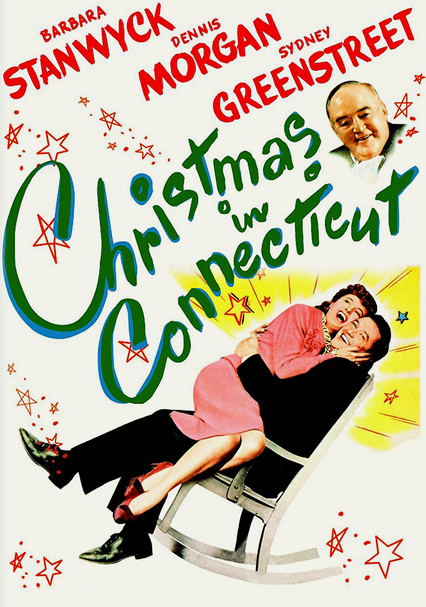
Christmas in Connecticut-1945

Christmas in Connecticut-1945

Director Peter Godfrey

Starring Barbara Stanwyck, Dennis Morgan

Scott’s Review #1,211

Reviewed December 24, 2021

Grade: B+

Christmas in Connecticut (1945) is a flavorful holiday romantic yarn that will please those looking for a snowy, laugh-out-loud experience with zany moments and silly situations, but that works nonetheless.

Any foodie craving a film that dazzles with showcasing excellent meals will enjoy this treat.

The film also oozes New York’s sophistication and New England’s atmosphere, creating a cinematic balance between city and country.

Despite the colorful cover art, Christmas in Connecticut is shot in black and white, which is better.

The key selling point is the instant chemistry between the leads, Barbara Stanwyck and Dennis Morgan, who carry the film.

Stanwyck had just made the vastly different Double Indemnity (1944), and Morgan was a singer, allowing him to perform a memorable song.

Together, they shine.

Actors like Sydney Greenstreet, S.Z. Sakall and Una O’Connor provide perfect comic timing in their roles, allowing the leads to take the stage in the romance department.

Not to be missed is the timely release of the film in 1945, the year that World War II ended, and a necessary time for a cheery film like Christmas in Connecticut. The main character is an Army veteran who begins the film injured in a vet hospital, but the film opts not to make it a dreary, real-life experience.

The action starts in the Atlantic Ocean, where war hero Jefferson Jones (Dennis Morgan) is stranded on a raft with his mate. He imagines the raft a clean dining room table brimming with delicious food and his mate his waiter.

Awakened in a hospital, he tricks his nurse, Mary Lee (Joyce Compton), into becoming his fiancée so he can be fed steak dinners.

While recovering, he grows familiar with the “Diary of a Housewife” column written by Elizabeth Lane (Barbara Stanwyck), the Martha Stewart of the 1940s. She provides cooking advice for her readers.

Mary arranges with Elizabeth’s publisher, Alexander Yardley (Greenstreet), for Jeff to spend the holiday at Elizabeth’s lavish Connecticut farm with her husband and child.

However, the column is a sham, so Elizabeth arranges to marry her friend, John Sloan (Reginald Gardiner), to make it appear that she is the domestic she claims to be in her columns.

How she can write popular columns that dole out cooking and housekeeping advice without knowing anything about either subject is ludicrous but part of the fun.

When she meets Jeff, they fall madly in love at first sight.

The film is one madhouse situation after another, and while Elizabeth and Jeff will undoubtedly live happily ever after, the main appeal is how they will reach that point.

From the first scene, when they meet at the Connecticut farm, there is instant chemistry between Stanwyck and Morgan that lasts the entire film.

Their gazes and glances made me root for them.

The fun is the situations the pair is put through, mostly Elizabeth. As she pretends she has a baby, she borrows a neighbor’s baby and hastily names him Robert, unaware that the baby is a girl. When Jeff, who is more domestic than Elizabeth, changes the baby’s diaper, he is in for a shock.

That Elizabeth knows nothing about cooking or a baby is the hilarity of Christmas in Connecticut. She awkwardly tries to flip a flapjack or handle a cow or other situation comedy moments that make the film as good as it is.

Stanwyck is fantastic as a woman on the verge of being found out.

Handsome Dennis Morgan portrays a good American man who will make an even better husband, which is a large part of his appeal. We long for Elizabeth and Jeff to be together.

A bevy of food scenes and references appear. Besides the flapjacks and steak sequences, steaming plates of good food and drink appear in almost every scene.

Elizabeth’s uncle/chef and housekeeper, played by Sakall and O’Connor, respectively, light up the screen in comical scenes. I hoped the pair would find their romance together, but this never came to fruition.

An endearing seasonal nugget, Christmas in Connecticut (1945), will please fans of good-natured romance tinged with physical comedy. It has a heart and a pleasant veneer showcasing hapless misunderstandings that lead to the inevitable and satisfying conclusion.

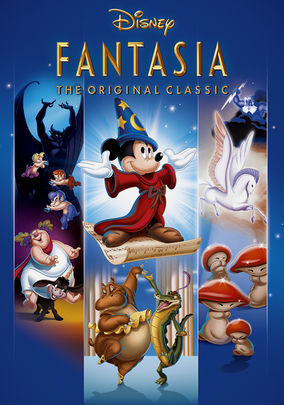
Fantasia-1940

Fantasia-1940

Director James Algar, Various

Starring Leopold Stokowski, Walt Disney

Scott’s Review #544

Reviewed December 11, 2016

Grade: B+

Before viewing this 1940 gem by Walt Disney, I was naive about precisely what Fantasia was about. Indeed, I had heard of it and knew it was an animated production, but I was also mystified by it. Now embarrassed, I realize what a creative treat I missed out on.

Better late than never.

I expected a Walt Disney animated story like Snow White or Pinocchio, but this assumption mistook me. While the film took me a bit to get into, it is a marvel and quite extravagant.

The combination of classical pieces and the animated story is brilliant and visually impressive. There are eight pieces in total, all with stories to tell.

Animated films are not typically my genre of choice, but this one impressed me quite a bit if nothing more than the imagination involved.

A Fantasia reboot emerged in 2000.

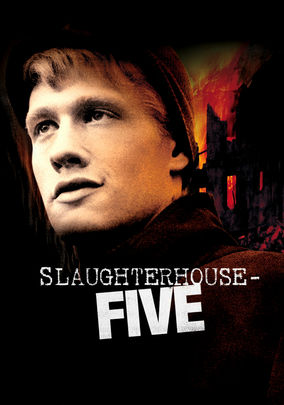
Slaughterhouse Five-1972

Slaughterhouse Five-1972

Director George Roy Hill

Starring Michael Sacks, Ron Leibman

Scott’s Review #84

972612

Reviewed July 1, 2014

Grade: A-

Slaughterhouse-Five, adapted from the novel of the same name and made in 1972, is a dream-like visual experience through cinematic time.

The main character (Billie Pilgrim) is a World War II soldier who survives a horrific explosion during the war, and he, along with the viewer, floats through time to relive, but not change, three other periods in his life.

It is a first-person narrative.

As a senior during the most engaging period, he is transported to a lavish planet in outer space where he falls in love with a Goddess.

There is a certain anti-war sentiment to the film, and it is certainly cerebral, unique, mesmerizing, and tough to explain, but it is dreamy and clever, and, after 30-plus years, is surprisingly fresh. It should be experienced.

It is a science fiction type of film.

My favorite scene is the humorous, yet tragic, runaway Cadillac scene.