Tag Archives: Martin Wuttke

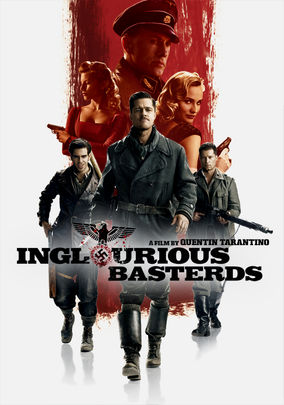
Inglourious Basterds-2009

Inglourious Basterds-2009

Director Quentin Tarantino

Starring Mélanie Laurent, Christoph Waltz, Brad Pitt

Top 250 Films #92

Scott’s Review #589
Reviewed January 7, 2017

Grade: A

Inglorious Basterds (2009) is simply a great movie.

Blending many film genres, it is hard to categorize, but that is because it is a Quentin Tarantino film, and that says it all.

The film as a whole contains excellent acting, is wonderfully shot, and is extremely detail-oriented, plus it has the familiar “Tarantino” style of music and sound, the chapter breakdown, and the heavy violence.

Set mainly in German-occupied France during the early 1940s during World War II, the action centers around two stories: Shosanna (Mélanie Laurent), a teenage girl whose entire family is killed after being discovered hidden by a dairy farmer.

He is a Jewish sympathizer, and Shosanna barely escapes with her life when an SS Colonel, brilliantly played by Christoph Waltz, interrogates the man.

Three years later, now living in Paris and owning a cinema, she plots her revenge. The other story is also of a revenge plot by a group of Jewish-American soldiers to kill as many Nazis as possible.

Both stories eventually intersect with a grand finale inside a cinema.

The story itself is richly nuanced and unlike many generic films of today. The fantastic set design and the perfection of every last set-piece are amazing.

Long scenes play out slowly but bristle with authenticity and good dialogue.

Take the first scene, for example- as the SS Colonel, aptly nicknamed the “Jew Hunter,” plays cat and mouse with the dairy farmer, politely asking for two glasses of milk, the audience knows the payoff will be huge, but the conversation crackles with good dialogue.

What strikes me most about the film is the intelligent writing.

The many scenes of conversations between characters, a chat over strudel and cream, a trivia game at a bar, and the aforementioned scene at the farmhouse crackle with unique, clever written dialogue, so the scenes are far from mere filler.

Of course, this is also a characteristic of Tarantino.

At over two and a half hours, Inglourious Basterds (2009) is long but satisfying.

My only criticism is of Brad Pitt. I didn’t buy him as a Tarantino guy and found his character the only weak point of the film. His southern drawl did not draw me in like I thought it might.

He was touted as the main character (perhaps because he was the biggest star), but he plays a supporting role.

Oscar Nominations: 1 win-Best Picture, Best Director-Quentin Tarantino, Best Supporting Actor-Christoph Waltz (won), Best Original Screenplay, Best Sound Editing, Best Sound Mixing, Best Cinematography, Best Film Editing
A Hidden Life-2019

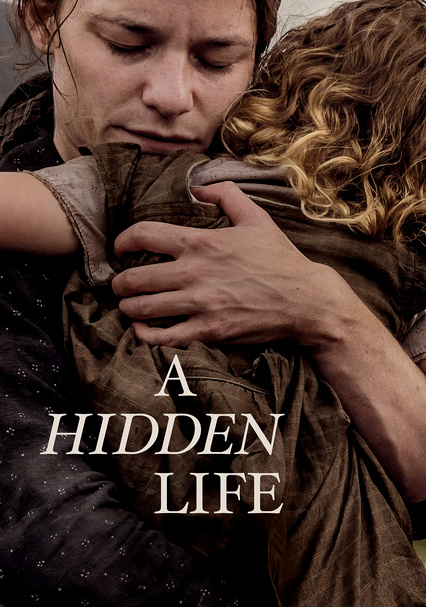
A Hidden Life-2019

Director Terrence Malick

Starring August Diehl, Valerie Pachner

Scott’s Review #1,063

Reviewed September 22, 2020

Grade: A

Terrence Malick returns to the big screen with A Hidden Life (2019), a lavish, sprawling beauty with a more structured plot than many of his other films.

His recent offering, The Tree of Life (2011), though marvelous, lost some viewers with its spiritual themes and lack of pacing.

With A Hidden Life, the director presents more substantial writing and a more straightforward story. It seems we can never get enough of World War II Nazi stories and conflict in cinema, as the topic remains relevant and robust.

This one stands out to me in a powerful way because it is based on a real-life figure. Although set in 1940s Germany and Austria, it resonates with great relevance in current United States history, as Malick offers clear parallels to the Donald Trump era—frightening stuff.

He weaves the past with the present, so Trump and Hitler’s personalities are compared, and the supporters of each are portrayed as similar. Again, frightening stuff.

A peaceful peasant farmer, Franz Jägerstätter (August Diehl), lives a quiet life with his wife, Fani (Valerie Pachner), in rural Austria. Over the years, they welcomed three daughters and lived in the idyllic village, popular and well-liked by the townspeople.

Their beautiful life soon turns ugly when the German army recruits Franz for basic training.

Events escalate when he refuses to take a loyalty oath to Hitler, wanting nothing to do with a war he does not support, nor with those who align themselves with the dictator.

This leads to many conflicts for Franz and his family as they face the wrath of once kindly neighbors, and the vicious Nazis.

The artistic details are gorgeous, as frequent scenes of lush landscape erupt in a frenzy. The statuesque mountains in the background, a shot of a running stream, the characters digging, planting, and growing produce —all are exquisite, adding a grandness and spirituality.

It is advisable to watch the film on the big screen, although I did not, and I still marvel at these sequences.

Despite the camerawork, A Hidden Life is not an easy watch, but it is an important one. The film is rich with meaning, texture, and substance. You get the feeling you are watching something of worth, and that means something.

The film is not a work of fiction, and the realism is quite powerful.

To imagine a man like Franz sticking to his values and beliefs in the face of death and peril in real life is astonishing and sobering. Malick does not do glossy or downplay the ordeals that Franz endures in the hideous German prisons.

Treated barely better than Jews were in concentration camps, he was nonetheless mocked, humiliated, and eventually executed.

When Franz is repeatedly advised by a local priest and others to merely take the oath and not mean a word of it, Franz cannot do it. I was left wondering how many other German and Austrian people pretended to support Hitler to save him from death, but did not.

I couldn’t find any studies.

The comparisons to the horrific conditions in the United States present day with a wannabe dictator in the White House are sobering.

Thankfully, the United States remains the land of the brave and the free, and certainly the outspoken. But we have a voice, and Franz did not, nor do the Austrian people whom he presumably represents. He did his best and refused to succumb to the pressures, but the question can be asked if it was worth it.

Oh, how I wish A Hidden Life had a different title, though. Not exactly one that rolls off the tongue, it took me days to remember what the title was.

I kept confusing it with A Better Life (2011), a completely different type of film with a similar name. Something a bit more dynamic would have been preferred, though I get why the word “life” was included. It’s such a profound word. The correlation of titles with The Tree of Life (2011) does make sense.

Malick does it again, offering another left-of-center production that goes against the grain compared to most modern cinema. World War II films are a dime a dozen, but this film stands out for its beauty and characterization.

One needs to see Terrence Malick’s films to truly understand and appreciate what the man is going for here, and props for adding a more concise story to draw viewers.

A Hidden Life (2019) is grand and fraught with meaning, adding relevance to the current state of the United States’ political system.

Independent Spirit Award Nominations: Best Director- Terrence Malick