Tag Archives: Norman Fell

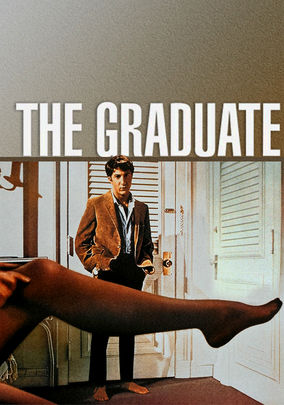
The Graduate-1967

The Graduate-1967

Director Mike Nichols

Starring Dustin Hoffman, Anne Bancroft

Top 250 Films #57

Scott’s Review #335
555221

Reviewed January 9, 2016

Grade: A

The Graduate is an immeasurable success and highly influential comedy from 1967- a time when films were gaining creative freedoms and pushing the envelope in new, edgy ideas and risqué subject matters.

Almost scandalous at the time of release, the film holds up exceptionally well after all these years and remains fresh and cutting-edge.

It is slick, sophisticated, and quite funny, though peppered with dark humor.

Thanks to Dustin Hoffman and Anne Bancroft, the film succeeds and remains among my all-time favorites.

Hoffman plays Benjamin Braddock, a nervous and insecure recent college graduate who returns home to sunny California, unsure of what his future holds.

His overbearing parents throw a lavish celebration at their home, where Benjamin is flocked by well-wishers, most of whom have a materialistic edge to them. His parents live in a very affluent community where wealth and items are of great importance.

All Benjamin wants to do is be by himself. At the party, Benjamin is pursued by the much older and glamorous Mrs. Robinson (Bancroft), who lives nearby and asks Benjamin for a ride home.

Her attempted seduction of him sets the film’s narrative in motion, as their relationship unfolds, particularly when Mrs. Robinson’s daughter, Elaine (Katharine Ross), enters the picture and captures Benjamin’s heart.

Director Mike Nichols successfully sets the right tone for the film, and we see the style and the sophistication of wealthy California in the 1960s.

Fashion, style, and glamour are prevalent, but they go against what Benjamin and Elaine stand for.

The film is also an exploration of generations. Benjamin’s parents and all their friends are into material things, such as cars, houses, and parties.

The triangle between Benjamin, Mrs. Robinson, and Elaine is the heart of the film. At first, we find ourselves rooting for Benjamin and Mrs. Robinson. There is a sweet nature to their romance. She is the aggressor- mature, in control, and confident, whereas Benjamin is insecure and shy, yet enamored with Mrs. Robinson.

Their awkward exchange in the hotel bar and their liaison in the hotel room are fantastic scenes.

Slowly, once Elaine emerges, Mrs. Robinson becomes more manipulative, taking on a villainous character, as the youngster’s love blossoms, and we begin to root for their happiness.

A fantastic aspect of The Graduate is its musical soundtrack, which was composed entirely by Simon and Garfunkel, a central musical duo of the late 1960s, from the opening chords of ‘The Sound of Silence’, to the appropriate ‘Mrs. Robinson’, the music adds much life and energy to the film and was successful at attracting young viewers at the time.

The featured soundtrack was highly influential to other films released after The Graduate.

Still fresh today, The Graduate (1967) launched the very successful career of Dustin Hoffman and emerged as an inspirational film that, though controversial in its day, seems tame now; however, the writing remains as crisp as it ever was.

A film to watch over and over again.  

Oscar Nominations: 1 win– Best Picture, Best Director-Mike Nichols (won), Best Actor-Dustin Hoffman, Best Actress-Anne Bancroft, Best Supporting Actress-Katharine Ross, Best Screenplay Based on Material from Another Medium, Best Cinematography

Airport 1975-1974

Airport 1975-1974

Director Jack Smight

Starring Charlton Heston, Karen Black, George Kennedy

Scott’s Review #1,060

Reviewed September 8, 2020

Grade: B+

Possessing all the disaster film genre schmaltz, proper trimmings, and then some, Airport 1975 (1974) is good, hammy entertainment that gleefully satisfies, though artistic types will be embarrassed to admit how much they like it.

In parallel with The Towering Inferno (1974) and Earthquake (1974), the three were some of the highest-grossing films of the year and it is little wonder why. The offering has enough adventure and peril to satisfy the entire family.

I watched this film practically in tandem with Airport (1970) and it feels a letdown by comparison, but that hardly matters. Both are very good.

With juicy anticipation, the filmmakers paid a ton of cash to secure a bevy of Hollywood stars of yesteryear assuring they could rake in the box office receipts.

Most are past their prime but still marketable, what a treat to see legendary silent film star Gloria Swanson playing herself as a passenger.

The unequivocal star and hero of the film is Charlton Heston, as he also was in Earthquake. Karen Black, Myrna Loy, Linda Blair, Susan Clark, Nancy Olson, and George Kennedy (reprising his role from the first Airport) round out the stellar cast.

Worth its price of admission is watching the opening credits to see who is in the cast.

Unlike Airport, which wisely spent much of its time inside the actual airport setting up the events and stories, Airport 1975 takes flight right away and crafts its trials and tribulations within the aisles and cockpit of the plane.

We learn right off the bat that the main romantic couple is Heston and Black. Captain Alan Murdock (Heston) apparently cannot commit to Chief Stewardess Nancy Pryor (Black) and they plan to meet up in Los Angeles to discuss the drama further.

We know they will have more to do with each other as her flight takes off for La La Land.

Quickly, a small plane flown by businessman Scott Freeman (Dana Andrews) is diverted to Salt Lake City airport and he suffers a massive heart attack while descending.

His plane naturally crashes into the cockpit of the enormous Boeing 747 killing two pilots and blinding the other.

With nobody able to fly the plane, Nancy must figure out how to divert disaster while cascading over mountains and contending with a fuel leak. Murdock and crew try to land the plane remotely or get somebody up there to save the day.

Predictably, Murdock is that man.

If Airport 1975 weren’t so damned fun it would be offensive since it’s riddled with gender stereotypes. Screenwriter, Don Ingalls, composes a project so fraught with machismo and masculinity, that the female characters have little chance to do much of anything without being saved by a man.

Let’s cite a couple of examples. Nancy is left alone in the open cockpit to navigate the plane.

Worthy of mention is that her hair remains perfect throughout.

Anyway, Murdock must explain to her how to check various controls which he does as if she were a five-year-old learning the alphabet, referring to a picture of the “little airplane” and calling her “dear”.

She rattles off a puzzled “what?” before figuring out where or what the “little airplane” is.

Secondary Stewardess Bette (Christopher Norris) is boy crazy, asking Nancy if the flight crew is “sexy” before making googly eyes at Latin pilot, Julio (Erik Estrada). He is married but that doesn’t seem to bother either of them.

They flirt while he orders her to bring him a cup of coffee. The male characters telling the female characters to get them drinks is a common theme in Airport 1975.

Naturally, Murdock eventually makes it on board to take over the controls and land the plane.

We imagine Nancy’s character thinking, “Good Heavens, thank goodness a man arrived just in the nick of time to save all of us!”. She promptly is sent to get Murdock a drink and fluff pillows.

But these are gripes that I can look past with the knowledge that if this film were made in 2020 Nancy would either land the plane or Murdock would be a female character and Nancy a male character.

Imagine that!

The real threats are the peril and drama associated with the events on the flight.

A sick kid (Linda Blair) must reach land quickly so that she can be provided medical assistance while a crack in the airplane ceiling could burst at any moment killing everyone on board.

For popcorn-fueled entertainment sure to please any viewer Airport 1975 (1974) is a perfect late-afternoon, rainy day suggestion.

Advisable is to not look too deeply into the stereotypes and contrived setups or this will ruin the fun. Instead, hop aboard and enjoy the bumpy flight from the comfy cushions of your living room with the assurance that you will land safe and sound.

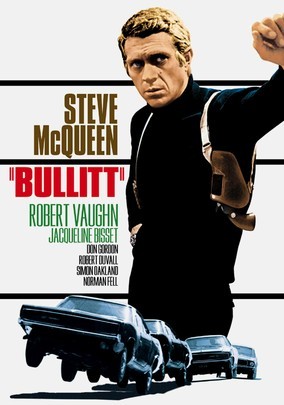
Bullitt-1968

Bullitt-1968

Director Peter Yates

Starring Steve McQueen, Robert Vaughn, Jacqueline Bisset

Scott’s Review #660

Reviewed July 7, 2017

Grade: B+

Bullitt (1968) is one of the ultimate “guy movies”, hardly a stretch considering it stars the “regular guy” hero of the time, Steve McQueen.

With his macho, tough-guy persona and his cool, confident swagger, he was a marquee hero during the late 1960s and into the 1970s.

While the film is rife with machismo stereotypes and is not precisely a women ‘s-lib film, it is also a good old-fashioned action thriller with plenty of chase and fight scenes to make most guys (and some girls) happy.

The story is not particularly thought-provoking, but the film works as escapist fare and is an example of good late-1960s cinema.

Set in San Francisco, Lieutenant Frank Bullitt (Steve McQueen) is assigned to watch a Chicago gangster, Johnny Ross, over a long weekend, before the criminal is set to testify against his brother on Monday morning.

Robert Vaughn plays ambitious politician, Walter Chalmers, who is determined to see the case go off without a hitch and see convictions in the organized crime syndicate.

Predictably, the weekend does not go as planned, and hitmen attack Ross. This, in turn,  sets off a cat-and-mouse game of deception and intrigue. As expected, the action is virtually non-stop with many action sequences lighting up the screen.

The plot of Bullitt does not matter, and one does not need to completely understand what is going on to enjoy the film for what it is. The intent of a movie like Bullitt is not good storytelling, but rather good action.

This is not meant as a put-down, but rather good, honest critiquing. One can sit back, relax, and enjoy the testosterone-laden affair.

Bullitt contains some riveting scenes that raise it above an average, middling action flick. The muscle car chase involving a then-state-of-the-art, flashy Ford Mustang and a Dodge Charger is fantastic and one of the film’s high points.

The quick, edgy camera angles as the cars zip down the windy, narrow San Francisco roads build compelling tension.

Will one of the cars careen off the side of the road or blow up? Since one of the cars holds Frank Bullitt and the other car is the bad guy, it is not tough to guess how the sequence will end.

But it’s good fun all the same, and well filmed.

The other spectacular sequence is the finale: as Frank and company overtake a busy San Francisco airport in pursuit of a baddie about to board a transcontinental flight, the chase leads them throughout the airport, onto a taxiing plane, and finally onto the runway as a plane is about to take off.

It is action at its finest and a treat for the viewer, bringing us back to airport days, pre-9/11, when airports were just different—the luxurious flight crew, the innocence, and the glamour- all a distant memory.

The scene is such that it shows all of the airport elements- the people, the employees, the airport, and the planes, giving it a slice-of-life feel, circa late 1960s airport days.

Appealing is the period in which the film is made. 1968 was an excellent year for cinema; Bullitt capitalized on the newly liberal use of blood in films, making it an influential action film.

Dozens of imitators (some admittedly with superior writing) followed, including classics Dirty Harry and The French Connection (both 1971). These contain the exact basic blueprint that Bullitt has.

A negative of Bullitt is the trite way women are portrayed. Female characters are written as dutiful nurses, gasping in fear and helplessly running away when an assailant runs rampant in the hospital, praying for a man to save the day.

Or, they are written, in the case of Bullitt’s girlfriend, as a gorgeous yet insignificant character, given a laughable scene in which she questions whether or not she knows Frank after witnessing the violence in his job- hello?

He is in the San Francisco Police Department after all.

Bullitt is a meat-and-potatoes kind of filmmaking. An early entry into what would become the raw 1970s and the slick formulaic 1980s action genre, the film deserves credit for being at the front of the pack in style and influence.

The story and character development are secondary to other aspects of the film, and Bullitt (1968) is just OK as escapism fare.

Oscar Nominations: 1 win-Best Sound, Best Film Editing (won)

Catch-22-1970

Catch-22-1970

Director Mike Nichols

Starring Alan Arkin, Bob Balaban, Martin Balsam

Scott’s Review #41

60020883

Reviewed June 18, 2014

Grade: B

Catch-22 (1970) is a satirical film similar in subject matter to Robert Altman’s M*A*S*H, released the same year, though admittedly, I have not seen that film yet.

It does remind me of Dr. Strangelove (1964) and Slaughterhouse-Five (1972) in their anti-war theme.

This film is well-made and certainly effectively portrays the outrageousness and lunacy of war.

Most of the characters are portrayed as crazy, albeit in a darkly humorous, over-the-top way.

Alan Arkin is wonderful as the protagonist trying to find a way out of the island of Italy, where he and his fellow pilots are stationed.

At times, the film feels disjointed and hard to follow, which I understand the novel is too (I have not read the entire book), but Catch-22’s (1970) message comes across loud and clear.