Tag Archives: Kiefer Sutherland

A Few Good Men-1992

A Few Good Men-1992

Director Rob Reiner

Starring Tom Cruise, Demi Moore

Scott’s Review #1,012

Reviewed April 15, 2020

Grade: B+

A Few Good Men (1992) is a film firmly rooted in the mainstream Hollywood courtroom-drama genre.

If the necessary elements hadn’t been well woven, the results might have been trite or even cringeworthy.

Nonetheless, with big stars and excellent acting, director Rob Reiner (yes, “Meathead” from All in the Family) lucks out with a predictable, compelling screenplay that is made better by the sum of its parts.

The film will never bore and is a standard edge-of-your-seat thrill ride.

The drama earned several year-end niceties, including nominations for the upper-crust Academy Awards. Best Supporting Actor, Best Film Editing, Best Sound Mixing, and, surprisingly, the lofty Best Picture statuette.

With no shame about the embarrassment of riches, the real question is whether it was deserved or not; the film walked away empty-handed on Oscar night.

When cocky and handsome military lawyer Lieutenant Daniel Kaffee (Tom Cruise) and his co-counsel, Lieutenant Commander JoAnne Galloway (Demi Moore), are assigned to a murder case, their investigation uncovers a hazing ritual that could implicate high-ranking officials.

U.S. Marines Lance Corporal Harold Dawson (Wolfgang Bodison) and Private First Class Louden Downey (James Marshall) are facing a general court-martial, accused of murdering fellow Marine William Santiago at the Guantanamo Bay Naval Base in Cuba.

Kaffee and Galloway are to determine if higher-ranking officers orchestrated and forced the lower-ranking men to carry out a “code red” order: a violent extrajudicial punishment, and their form of justice, to kill the young victim, thus silencing him forever.

The questionable part of the plot is whether Base Camp Commander Jessup (Jack Nicholson) administered the order or instead ordered Santiago’s commanding officer, Lieutenant Jonathan James Kendrick (Kiefer Sutherland), to merely “train” Santiago to become a better Marine.

This is where the courtroom drama takes center stage with gusto.

As good as Moore, Sutherland, and Marshall are in their compelling roles, the film belongs to Cruise and Nicholson, the group’s veterans.

The best scenes come at the end of the film as Cruise and Nicholson spar in the courtroom with bombast and trickery.

Nicholson’s Jessup is brooding and traditional, a lifelong military man who channels honor and dedication at any cost. Cruise’s Kaffee has something to prove and wants to win at all costs. So, they tangle in a fierce, macho way.

When he catches Jessup in a lie, just as a spider captures a fly, the scenes crackle with grit and energy.

The unforgettable line, “You can’t handle the truth!” is uttered by Nicholson.

A Few Good Men will both satisfy and dissatisfy those with a connection to or a penchant for the military.

On the one hand, the film celebrates the military as a model of efficiency, and its decorated appeal is admirable.

But the film also stands up to and questions the hypocrisy of one of the oldest establishments and its male domination and bullying methods, not so different from a classic college fraternity.

The courtroom trial of a patriotic group is serious business.

While not a revolutionary film, and sticking to a tried-and-true courtroom-drama script seen on television since the beginning of time, A Few Good Men (1992) delivers a hefty two hours and twenty minutes of pure entertainment.

Powerful acting across the board makes the film a superior experience and a thought-provoking message about whether unthinkingly following orders is still a relevant approach, not just in the military, but anywhere.

Oscar Nominations: Best Picture, Best Supporting Actor-Jack Nicholson, Best Sound, Best Film Editing

Golden Globe Nominations: Best Picture- Drama, Best Director-Rob Reiner, Best Actor-Drama-Tom Cruise, Best Supporting Actor-Jack Nicholson, Best Screenplay
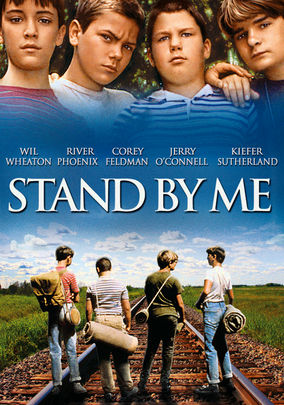
Stand By Me-1986

Stand By Me-1986

Director Rob Reiner

Starring Wil Wheaton

Scott’s Review #752

Reviewed May 2, 2018

Grade: A

Stand by Me (1986) is a sweet, coming-of-age story that every male (or female, for that matter) who grew up in small-town America will undoubtedly relate to.

Set mostly outdoors in the remote Pacific Northwest, the film shows the deep bonds of friendship as four youths set out on a journey of discovery over a Labor Day weekend.

In 1986, I could relate to the film, and today, Stand By Me still holds up well.

Stephen King, a tremendous author known mostly for horror novels, wrote a short story titled “The Body” in 1982. Stand By Me is based on this story.

Instead of traditional horror, however, the story is more of a straight-up adventure, though in pure King style- a dead body is front and center (naturally).

Rob Reiner directed Stand by Me, and its success led to other mainstream achievements for Reiner (1989’s When Harry Met Sally and 1990’s Misery, also a King novel).

Ben E. King’s legendary theme song plays over the closing credits and became a smash hit again in 1986.

The film starts intriguingly as the main character, Gordie, as an adult, learns that his childhood friend Chris Chambers has tragically been stabbed to death.

Gordie then narrates a flashback to the summer of 1959, when he and three other boys embarked on a childhood adventure on Labor Day weekend.

Along with Gordie (Wil Wheaton), we meet Chris (River Phoenix), a rebellious boy with a troubled home life, Teddy (Corey Feldman), who is scarred as a result of being burned by his mentally ill father, and Vern (Jerry O’Connell), an overweight kid insecure about his looks.

The wonderful aspect of Stand by Me is that each of the four central characters is flawed, whether physically or by some other insecurity, giving each character depth.

Each character is highly empathetic to an audience member who may see themselves in them.

This point carries through the entire film. Through conversational scenes with one another, each weakness is exposed and dissected- Teddy becomes vulnerable about his relationship with his father when a character refers to him as “loony”.

Vern’s weight bothers him, and Chris wants to be more than people expect him to be.

To avoid being weighed down by too many dramatic elements, Stand by Me incorporates much-needed humor. My favorite sequence is the delightful story in which Godie regales the other boys one night as they camp outdoors.

Town legend has it that a rotund man, who picked on a boy nicknamed “Lard-Ass,” enacts the perfect revenge on the townspeople one summer as he enters a pie-eating contest, resulting in a torrent of vomiting.

Reiner shoots this scene well and brilliantly balances the film’s differing tones, all while keeping it within a cohesive package.

The film belongs to its young actors, each of whom is cast brilliantly. Of course, Corey Feldman and River Phoenix went on to major success in the 1980s.

Phoenix, who tragically died in 1993, and Feldman, who suffered numerous setbacks in his short career, are forever youthful, with promise and poise in this film.

In Phoenix’s case, he seemed most on course for leading man status with his dashing, youthful looks and clean-cut appearance. Watching in later years, it is bittersweet to watch both actors and recollect the promise of each.

Mixing drama and comedy, and at its core a true adventure story best watched on a summer evening, Stand By Me (1985) is memorable and poignant.

Its late-summer setting, outdoor camping, and green scenery endure and stand the test of time.

Anyone who has taken a meaningful journey as a kid or made lasting memories in their youth (which should be all of us) can appreciate this timeless gem.

Oscar Nominations: Best Screenplay Based on Material from Another Medium

Golden Globe Nominations: Best Picture- Drama, Best Director-Rob Reiner

Independent Spirit Award Nominations: Best Feature, Best Director-Rob Reiner, Best Screenplay