Tag Archives: Edward Platt

Written on the Wind-1956

Written on the Wind-1956

Director Douglas Sirk

Starring Rock Hudson, Lauren Bacall, Robert Stack

Scott’s Review #1,529
Reviewed April 20, 2026

Grade: A-

The terms ‘melodrama’ and ‘soap opera’ unfortunately come with a negative connotation, conjuring up disparaging adjectives like sappy or overwrought. Mix in poor acting, and you’ve got yourself a bad film.

But director Douglas Sirk, well known in the 1950s for his Hollywood melodramas like All That Heaven Allows (1955), Imitation of Life (1959), and Written on the Wind (1956), crafts beautiful visual effects amid powerful performances and compelling storylines.

Casting A-list movie stars only adds to the credibility.

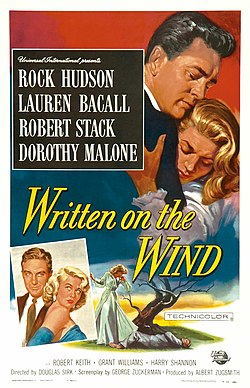
Written on the Wind stars Rock Hudson and Lauren Bacall as complicated characters on the cusp of a relationship, but hindered by other selfish characters determined to achieve their own romantic desires.

Hudson starred in an impressive six Douglas Sirk films while Bacall’s career was beginning to wane, leading her to accept the role.

The action makes stops in New York City and Miami before settling in oil-rich Texas, where a central dysfunctional family dynasty led by Jasper Hadley (Robert Keith) is the main focus.

Hadley’s alcoholic son, Kyle (Robert Stack), is in love with Lucy (Bacall), whom he woos and marries. At the same time, Kyle’s scheming, self-destructive sister, Marylee (Dorothy Malone), has her sights set on Kyle’s childhood best friend, the dashing Mitch (Hudson), who longs for romance with Lucy.

The foursome banter, lust after, and become involved in dramatic situations, which lead to secrets and eventually death. Subjects like alcoholism, unrequited love, miscarriage, murder, and a court trial are explored.

While the situations may sound like nothing more than a sudsy afternoon daytime drama, the acting and rich writing more than raise the film above mediocrity.

The juicy sequences alone will entice the rabid viewer.

The exceptional chemistry between Hudson and Bacall is a winning formula, and viewers easily root for them to be together, and they immediately seem destined to be.  Their scenes smolder with passion and determination, but both characters are too righteous and benevolent to let anything happen.

After all, Lucy is married to Kyle, and learns she is pregnant, though she remains terribly unfulfilled.

It’s easy to like Mitch and Lucy, especially when they’re contrasted with unsympathetic characters like Kyle and Marylee. Rich and spoiled, Kyle is a lustful playboy, a womanizer, and terribly insecure and jealous.

Marylee is a boozy nymphomaniac who is callous and never satisfied.

Kyle and Marylee are not explored as much as they might have been with a longer running time, so they have hints of being one-dimensional. But both actors’ powerful performances leave audiences mesmerized by their characters.

Marylee nearly steals the show with her fiery bedroom negligee dance to a hi-fi blaring “Temptation,” while another character dies tragically a floor below.

You might say we ‘love to hate’ both characters.

Since Sirk and Hudson were both gay, though not publicly at that time (1956), keen viewers can notice hidden clues about what situations Hudson might have been facing in real life.

We can see how Hudson would have had attractive women like Marylee fawning over him and practically begging him to bed them. Unable to be receptive to their advances, instead, he would feel guilty and lonely.

Besides wonderful writing, Sirk’s direction is inspiring. The opening sequence features a clever ‘the beginning is the ending ‘ approach that many filmmakers borrowed over the years in their cinematic works.

The audience immediately sees Kyle stagger outside the palatial mansion, brandishing a gun and finally collapsing. While the wind whistles, a desk calendar is shown with the pages quickly turning to eighteen months prior when the story really begins.

This opening scene will be recreated at the end of the film, making for instant attention.

Other spicy add-ons, like fine furniture throughout the estate, a grand dinner beginning with a fruit-cocktail appetizer, more than a few sophisticated martinis served, and modern sports cars being driven, lend a robust flair of wealth and glamour to the production.

A sequence was even patterned after a flashy Manhattan nightclub named 21 Club.

For a trip into a world of wealthy yet tortured characters, Written on the Wind (1956) is top-notch. Some cliches can be forgiven, as melodrama was hardly done any better than this film.

Oscar Nominations: 1 win-Best Supporting Actor-Robert Stack, Best Supporting Actress-Dorothy Malone (won), Best Song-‘Written on the Wind.’

North by Northwest-1959

North by Northwest-1959

Director Alfred Hitchcock

Starring Cary Grant, Eva Marie Saint

Top 250 Films #15

Scott’s Review #90

60000544

Reviewed July 3, 2014

Grade: A

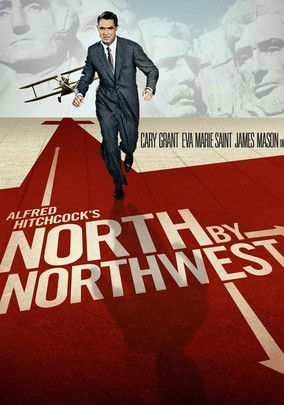
North by Northwest is a 1959 Alfred Hitchcock film, released during the director’s heyday (1950s and 1960s).

It is considered one of his most commercially successful films. It is mainstream fare that contains all the elements of a great Hitchcock film: adventure, intrigue, romance, and suspense.

Unlike in some of his other films, his characters are straightforward and not psychologically wounded, as in some of his others. This is not a slight but merely makes the film “for the masses.”

Charismatic Cary Grant plays the role of successful advertising executive Roger Thornhill. He works in bustling New York City, has a secretary, and is well respected in his circle.

While enjoying drinks at the club the evening before a planned trip to the theater, he becomes a victim of mistaken identity—thought to be George Kaplan- and is accosted by henchmen at a lavish Glen Cove, Long Island mansion.

After a botched attempt on his life, he is arrested and ultimately must race across the United States on the lam to find the real George Kaplan.

The incredible locales range from New York City to Long Island, Indiana, Chicago, and Mount Rushmore.

The film is exciting from start to finish, never letting up, and features a common theme of Hitchcock’s- an “everyman” falsely accused of a crime attempts to prove his innocence.

It differs from some Hitchcock films in that there is not as much psychological analysis of the characters, but rather a good, old-fashioned adventure story with many twists and turns.

In many ways, North by Northwest is a precursor to the enormously popular James Bond films, as Grant brought style, sexiness, and charisma to this sleek feature.

The set style and design look perfect. The lush Long Island estate set is flawless, with a grand staircase and a well-constructed library—not to mention the exterior shot of the enormous house.

The house in Mount Rushmore is sleek, quite trendy, and reeks of high sophistication. It is pretty grand and situated on an incline, featuring an airplane runway.

The chemistry between Grant and Eva Marie Saint is apparent and oozes from the screen from the moment they bump into each other on a train traveling from New York to Chicago. As they dine in the dining car, a flirtatious scene unfolds-the landscape whizzes by in the background, with the comforting train whistle and ambient noise working well.

Their relationship is established, and the characters are intrigued and slightly mistrustful of each other, which lends the scene an edge and complexity that works.

The film features a cutting-edge graphic design in the opening credits, similar to the design used in Vertigo during the same period. The green colors and the sophisticated advertising style of the graphics kick the film off in a creative, ultra-cool, modern way.

Interestingly, Martin Landau’s implied homosexuality in Leonard, henchman to the main villain, Phillip Vandamm, is precisely how Landau played the role. During Hitchcock’s time, homosexuality was strictly prohibited in film, but it was subtly portrayed.

Leonard’s fascination and jealousy towards Vandamm are intertwined with levels of flirtation and vengefulness.

Scene after scene of North by Northwest is filled with suspense—the crop duster scene is my favorite. Shot without music and on location in a dreary, clear, middle-of-nowhere field somewhere in Indiana, the scene is layered with suspense throughout.

Thornhill is scheduled to meet Kaplan at a designated spot. A lonely bus stop, random passing cars thought to be the intended, a deadly airplane, and an explosion all occur, creating a fraught scene.

New fans of Hitchcock should begin with this one—it is mainstream and one of his finest. It contains all the traditional Hitchcock elements, and all the pieces come together perfectly.

North by Northwest (1959) is a masterpiece.

Oscar Nominations: Best Story and Screenplay Written Directly for the Screen, Best Art Direction, Color, Best Film Editing

Rebel Without a Cause-1955

Rebel Without a Cause-1955

Director Nicholas Ray

Starring James Dean, Natalie Wood

Top 250 Films #112

Scott’s Review #885

Reviewed April 14, 2019

Grade: A

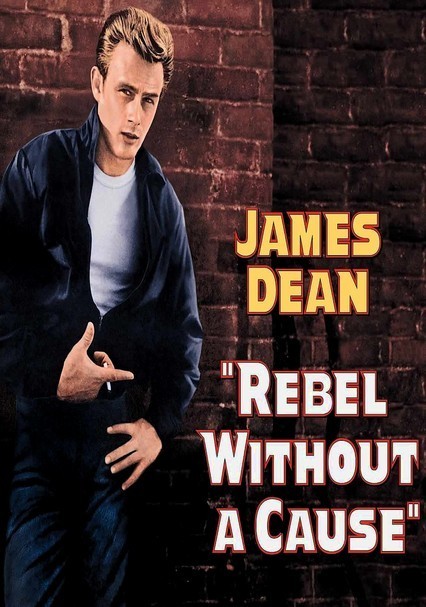
Rebel Without a Cause (1955) is usually most associated with being the best-remembered film of star James Dean’s short-lived career. East of Eden (1955) and Giant (1956) are his other notable films in a much too brief time.

With Rebel Without a Cause, Dean and underappreciated director Nicholas Ray crafted a story about teenage angst and rebellion that has brilliant authenticity and was the first of its kind to influence countless other films.

In Los Angeles, three teenagers meet and commiserate at the juvenile section of the police station, revealing their respective crimes. Jim Stark (Dean) has been brought in for drunkenness and meets John “Plato” Crawford (Sal Mineo), who was brought in for killing a litter of puppies, and Judy (Natalie Wood), who was brought in for curfew violation.

All three suffer from problems at home and confide in one another. Their most profound revelations connect them and bond them for life.

To complicate matters, Jim is a new student and must endure challenges associated with this, in addition to his troubled home life. His main rival is Buzz Gunderson (Corey Allen), who challenges Jim to a knife fight and, finally, a deadly “Chickie Run” game.

This leads to Buzz’s death, which infuriates his gang, who mistakenly assume that Jim ratted them off to the cops. This puts a target on Jim’s back as he slowly falls in love with Judy and develops a deep friendship with Sal, who idolizes him.

One key to the success of Rebel Without a Cause is in the casting. Dean, rebellious in real life and the roles he portrayed, chews up each scene he appears in.

The famous scene in which Jim quarrels with his father (Jim Backus) results in a bombastic emotional unraveling and an exclamation of “You’re tearing me apart!” as his blind-sided parents bicker with one another over how best to handle the situation.

Dean is a pivotal reason for the film’s success and landmark status.

Wood infuses her character, Judy, with poignancy and a calm demeanor. Judy is a good kid who behaves wildly out of frustration over her inability to communicate with her deliberately distant father (William Hopper).

Finally, Plato (Mineo), who is so sensitive that he threatens to break apart at the seams, has taken to killing puppies as a desperate cry for attention from his wealthy, always absent parents.

Wood and Mineo support the film in brilliant form.

Jim and Judy are likable as a pair from opposite sides of the tracks, another influential aspect of the film that became commonplace in oodles of entertainment genres over the years.

Good Girl meets Bad Boy is dangerous, tender, and filled with story possibilities.

It is implied that Plato is in love with Jim, but in 1955, films were meticulous about pushing the envelope much further than an implication when it came to homosexuality. Rumors ran rampant that Dean and director Ray had a torrid love affair off-screen.

Another positive is that the film is told within twenty-four hours, providing excellent pacing and an action-packed emotional punch. The best scenes occur at night, especially the deadly car race, and the fantastic conclusion takes place in the old deserted mansion that the trio of friends claim as their sanctuary.

The tragic final ending is sure to result in the shedding of a tear or two by anyone who watches and is entranced by the decisive finality of the event.

Watching the film in the present day, one must appreciate the enormous influence that Rebel Without a Cause has achieved.

Some classics that succeeded Rebel and stand out on their own include American Graffiti (1973), The Breakfast Club (1985), and even West Side Story (1961), which also starred Natalie Wood. Each is riddled with teenage angst, hormones, and elevated emotions, and all contain a seriousness and a depth all their own.

Rebel Without a Cause (1955) is a film that should be viewed and viewed again for more than the prominent and impressive story it tells.

The film is directed well and speaks to a generation of unruly and angry teenagers, giving them a much-needed voice. It is fraught with emotion and balance for current and future generations of teenagers to learn from.

Oscar Nominations: Best Motion Picture Story, Best Supporting Actor-Sal Mineo, Best Supporting Actress-Natalie Wood