Tag Archives: Bill Melendez

Bambi-1942

Bambi-1942

Director David Hand

Starring Various voices

Top 250 Films #129

Scott’s Review #556

Reviewed December 22, 2016

Grade: A

Bambi (1942) is one of my favorite classic Disney animated features. It is simply a lovely, endearing, and heartbreaking tale.

Gorgeous and flawless, the film conveys a clear message about animals yearning for peace in a world where hunters seek to disturb and kill the graceful deer.

After all these years, this message still resonates loud and clear, sad, heartbreakingly. All deer hunters should watch this film and dare to take a shot.

Bambi was released during the Golden Age of Disney films, which was led by notable films such as Snow White, Dumbo, and Pinocchio, among others.

We first meet baby Bambi as his dear mother nurtures and nestles him, fawning over him with pride and teaching him the joys of the forest. Bambi’s father is the Great Prince of the Forest- protector of all the creatures of the land.

Bambi’s mother (unnamed) warns an exuberant Bambi to be cautious of the gorgeous yet dangerous meadows, where the deer are vulnerable and unprotected.

During the film’s famous gut-wrenching scene, tragedy occurs, and violence disrupts the peaceful forest, leaving Bambi alone, lost, and devastated, forced into a cruel world of tragedy, realism, and responsibility.

The scene gets to me every time, as we see the pain and harshness of life for the sweet deer, to say nothing of the other animals in the forest —namely, Thumper (a rabbit) and Flower (a young Skunk).

These characters are Bambi’s best friends. The dripping teardrop that oozes from Bambi’s eye can never be forgotten.

To counterbalance the film’s darkness, Disney successfully incorporates cheerful scenes of the animals dancing and interacting with each other as a unified community.

This is nice, as it shows the power and bond between the creatures – they are united as a family and take care of one another. I love this message, especially as young people will watch the film for the first time.

There is also a sweet romance offered between Bambi and Faline.

Watching the film and listening to the musical score is a way to experience sheer beauty. The music makes the film powerful- its classical and operatic elements are gorgeous and will elicit emotions.

Visually, each frame is a drawing set against a still, and it is magical to watch and marvel at the amount of work that undoubtedly went into this preparation.

In the end, the circle of life comes full circle. Bambi becomes the Great Prince of the Forest, replacing his father as the protector. Now, all grown up with two tiny babies of his own, he must protect his family and friends.

Life goes on. This is a sad yet realistic message. How brave Disney was in creating a masterpiece like Bambi.

Personal satisfaction is observing my beloved female feline friend, Thora, become mesmerized and attentive to the film each time I watch it.

Disney’s Bambi is a wonderful, cherished treasure that evokes emotions and conveys a valuable, poignant message. It is a timeless masterpiece to be enjoyed for generations to come.

One will not escape the film with dry eyes, a testament to the marvelous filmmaking involved.

Oscar Nominations: Best Scoring of a Dramatic or Comedy Picture, Best Original Song-“Love Is a Song”, Best Sound Recording
Dumbo-1941

Dumbo-1941

Director Ben Sharpsteen

Starring Various voices

Top 250 Films #138

Scott’s Review #559

Reviewed December 24, 2016

Grade: A

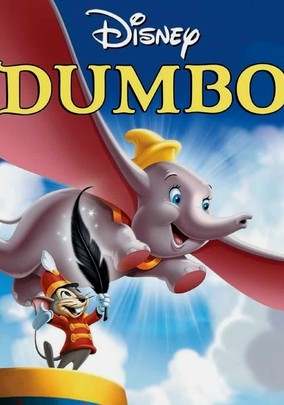
One of the best-produced (and at sixty-two minutes, one of the shortest) of the classic Walt Disney films of the golden age, Dumbo, in a similar fashion to another Disney classic, Bambi, is both heartbreaking and mixed with fun entertainment.

It should be heralded and viewed by everyone—children and adults alike—and teaches a valuable lesson in acceptance and tolerance, messages that never go out of fashion, despite the film being made in the grand old year of 1941.

To draw more comparisons to Bambi, we meet the title character, Dumbo, who is nuzzled and cherished by his warm, affectionate mother after being brought into the world by storks.

Dumbo is an elephant, and his mother is a circus elephant, where she spends her days as entertainment, along with a group of other female elephants —none of whom possess her grace, kindness, or dignity.

Sweet Dumbo is born with an imperfection- he has enormous ears. While others—namely the female elephants—ridicule and stare in horror at the lovable little elephant, his mother embraces and cuddles her little bundle of joy, eliciting a genuine, good-natured warmth rarely seen in cinematic history.

There is something innately good about this character (Mrs. Jumbo). She has a richness and way about her that is fantastic and consuming.

Sadly, one day, while entertaining the masses, a bratty human child taunts Dumbo, causing Mrs. Jumbo to go ballistic and immediately go into protection mode.

She was then deemed a “mad elephant”, shackled, chained, and worse yet- separated from her baby. How anyone can watch this portion of the film and not shed a tear or get a lump in their throat is beyond me.

Walt Disney was a master at eliciting raw emotion from his audience and writing heartbreaking yet charming stories.

The centerpiece of Dumbo is the extraordinary bond between mother and son —a sweet and powerful connection that almost everyone can relate to. The pride and joy in Mrs. Jumbo’s eyes when she is granted a visit from Dumbo while she is imprisoned is magical – it means the world to her.

The supporting characters are key to the film’s richness; Timothy Q. Mouse is essential to the story.

Upon Dumbo and Mrs. Jumbo’s separation, he becomes Dumbo’s only friend, sympathizing with Dumbo, and is instrumental to Dumbo’s reunion with his mama as well as his future successes in the circus.

The bitchy female elephants are crucial, too- despite being one of their own, they still reject Dumbo and Mother. There are some light moments, such as when the ladies, (Catty, Giddy, and Prissy), gossip and act superior to others.

Another fun scene, to balance the heavy drama, occurs when Timothy and Dumbo accidentally mistake champagne for water, causing them to hallucinate pink elephants.

Dumbo is essential because it sends a powerful message about how animals (especially circus animals) have historically been treated. Why animals should be used to amuse and entertain humans is anyone’s guess, but the film serves as a powerful reminder.

Fortunately, the film has a happy, satisfying ending that should please fans.

Dumbo (1941) is a timeless animated classic.

Oscar Nominations: 1 win-Best Scoring of a Musical Film (won), Best Original Song

Pinocchio-1940

Pinocchio-1940

Director Ben Sharpsteen, Hamilton Luske

Voices Cliff Edwards, Dickie Jones

Scott’s Review #723

Reviewed February 1, 2018

Grade: B+

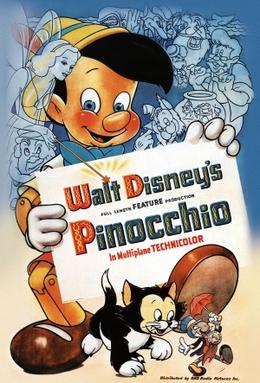
As a follow-up to the marvelous 1937 Walt Disney production of Snow White and the Seven Dwarfs, 1940’s Pinocchio is a darling tale of a wooden puppet longing to become a real boy.

The film vastly differs from its predecessor in that the protagonist is male, and the thematic elements are Italian (based on an Italian children’s novel). Still, similarly, Pinocchio is a touching experience and is magical and whimsical, telling a humanistic story about wishes and dreams coming true.

As narrated by a fantastic, cheerful little insect named Jiminy Cricket, an elderly woodcarver named Geppetto creates a wooden puppet named Pinocchio and wishes upon a star for the puppet to become a little boy.

A mysterious yet lovely Blue Fairy arrives one night and tells Pinocchio that he must be brave and truthful for the desired effect to occur- Jiminy serves as his conscience. Throughout the remainder of the film, Pinocchio’s morals are tested by unsavory characters who attempt to steer him down a dark path.

Certainly, Pinocchio is intended to be a message film for little boys and girls everywhere about the importance of honesty and truthfulness. However, some comic elements are mixed to avoid making the experience too dark or scary.

This is evidenced by the legendary way Pinocchio’s nose grows longer with each fib he tells. The film preaches a valuable lesson, which is why the adorable story holds up so well in the present.

Some values never go out of flavor.

In superb Disney form, Pinocchio features an emotional tearjerker of a scene towards the end of the film as Geppetto mourns the loss of his son.

The scene is sweet and touching and will fill even the hardest of hearts with feelings- regardless of age. In this way, Pinocchio becomes even more of a timeless treasure and is a film that the entire family, generations upon generations, can enjoy together.

Films of this nature are so important as a bonding form.

Enough praise cannot be given to Pinocchio’s incredibly effective theme song, “When You Wish Upon A Star,” belted out by Jiminy Cricket. The resounding tune is as emotional as it is timeless and bold. It is belted out at just the ideal time during the film and is still associated with the legendary film.

In fact, over the years, the song has become synonymous with the Walt Disney Company itself.

One slight oddity of the film is that Geppetto—clearly at the grandfather’s age—is the father of a young boy. This might have been perceived as sweet in 1940, but in 2018, it may have been perceived as a bit creepy or at least unusual.

Still, this is a minor flaw that can be easily overlooked. I have come to assume Geppetto is the grandfather in the story.

For those in the mood for a charming, classic animated Disney picture, 1940s Pinocchio is a mesmerizing and creative experience. At its core, it is a timeless benevolent lesson in goodness and purity.

Pinocchio is artistically filmed and told, and it can be enjoyed by anyone, regardless of age or gender.

Oscar Nominations: 2 wins Best Original Score (won), Best Original Song-“When You Wish Upon a Star” (won)

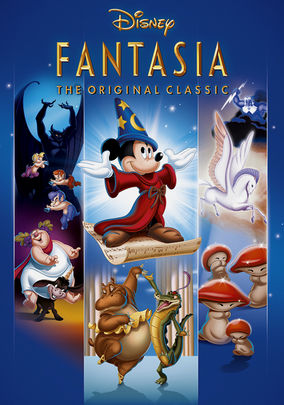
Fantasia-1940

Fantasia-1940

Director James Algar, Various

Starring Leopold Stokowski, Walt Disney

Scott’s Review #544

Reviewed December 11, 2016

Grade: B+

Before viewing this 1940 gem by Walt Disney, I was naive about precisely what Fantasia was about. Indeed, I had heard of it and knew it was an animated production, but I was also mystified by it. Now embarrassed, I realize what a creative treat I missed out on.

Better late than never.

I expected a Walt Disney animated story like Snow White or Pinocchio, but this assumption mistook me. While the film took me a bit to get into, it is a marvel and quite extravagant.

The combination of classical pieces and the animated story is brilliant and visually impressive. There are eight pieces in total, all with stories to tell.

Animated films are not typically my genre of choice, but this one impressed me quite a bit if nothing more than the imagination involved.

A Fantasia reboot emerged in 2000.

The Peanuts Movie-2015

The Peanuts Movie-2015

Director Steve Martino

Starring Noah Schnapp

Scott’s Review #304

80057058

Reviewed December 20, 2015

Grade: B-

Having adored the Peanuts comic strips in the “funnies” papers every Sunday as a wee child, and the wonderful classic A Charlie Brown Christmas special (1965) that aired every holiday season, I was eager to see a full-length film in theaters.

The Peanuts Movie commemorates the Christmas special’s fiftieth anniversary.  The Peanuts gang is so All-American and ingrained in our culture that I could not resist seeing it.

I expected “cute,” and that is exactly what I received. The film is nice but quite safe and predictable.

The Peanuts gang is much more than just the antics of Charlie Brown and his faithful dog Snoopy, who take center stage in the film.

The entire beloved gang is featured. Woodstock, Peppermint Patty, Marcie, Linus, Lucy, Frieda, Pig-Pen, and others, albeit in supporting roles.

The film features two main stories.

The long-suffering and (in his mind) friendless (despite actually being loved by the gang), Charlie Brown is enamored with his new neighbor, the Little Red-Haired Girl, well-known from the original comic strips as Charlie Brown’s schoolyard crush-yet never seen.

The other is Snoopy’s writing of a book about the Flying Ace, in which he saves his crush, Fifi, also a pilot, from the dangerous Red Baron and his army.

As usual, the film is really about Charlie Brown’s endless insecurities, prompted by bad luck and his habit of screwing things up, even though his intentions are noble.

When the Little Red-Haired Girl moves in across the street from Charlie Brown, he is immediately smitten and does numerous things to impress her and get her attention, but things go wrong.

A talent show in which he plays a magician goes wrong.

To his delight, he is partnered with the Little Red-Haired Girl on a book report, but when she is called out of town, he is forced to write the report himself, thereby foiling his attempts at getting close to her.

As usual, all parents remain unseen and speak garbled as the story is about the kids.

An interesting element is that while we see the Little Red-Haired Girl and she does speak, most of it happens toward the end.

For most of the film, we see her only from behind, which adds an element of mystery.

It would have been interesting to explore some of the supporting characters more: is Peppermint Patty gay, and is Marcie her love interest? How about a love interest or background for some of the others? A side story explored is a growing romance between Pig-Pen and Patti.

The film does a nice job of featuring the familiar settings of the original comic strip, Lucy’s psychiatrist’s booth, the wall, and the skating pond, which is a treat for longtime fans.

The Peanuts Movie (2015) is a nice film. I would have preferred a bit more of an edge or more creativity, as the original creator, Charles Schulz, had, but it is nice to be reminded of a simple time in life, and this film is a good time.