Rebel Without a Cause-1955
Director Nicholas Ray
Starring James Dean, Natalie Wood
Top 250 Films #112
Scott’s Review #885
Reviewed April 14, 2019
Grade: A
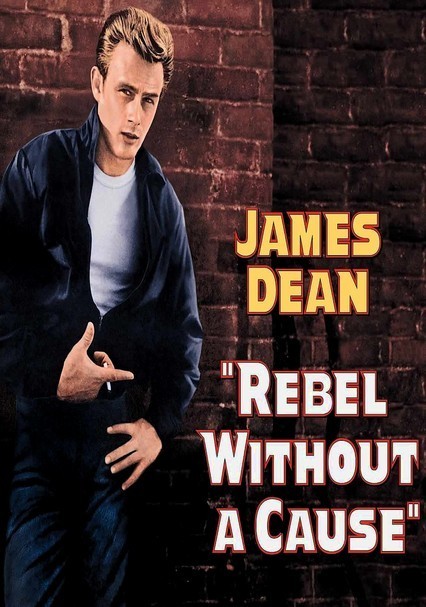
Rebel Without a Cause (1955) is usually most associated with being the best-remembered film of star James Dean’s short-lived career. East of Eden (1955) and Giant (1956) are his other notable films in a far too brief span of time.
With Rebel Without a Cause, Dean and underappreciated director Nicholas Ray crafted a story about teenage angst and rebellion that is brilliantly authentic and was the first of its kind to influence countless other films.
In Los Angeles, three teenagers meet and commiserate at the juvenile section of the police station, revealing their respective crimes.
Jim Stark (Dean) has been brought in for drunkenness and meets John “Plato” Crawford (Sal Mineo), who was brought in for killing a litter of puppies, and Judy (Natalie Wood), who was brought in for curfew violation.
All three suffer from problems at home and confide in one another. Their most profound revelations connect them and bond them for life.
To complicate matters, Jim is a new student and must endure the challenges that come with it, in addition to his troubled home life.
His main rival is Buzz Gunderson (Corey Allen), who challenges Jim to a knife fight and, finally, a deadly “Chickie Run” game.
This leads to Buzz’s death, which infuriates his gang, who mistakenly assume that Jim ratted them off to the cops. This puts a target on Jim’s back as he slowly falls in love with Judy and develops a deep friendship with Sal, who idolizes him.
One key to the success of Rebel Without a Cause is in the casting. Dean, rebellious in real life and the roles he portrayed, chews up each scene he appears in.
The famous scene in which Jim quarrels with his father (Jim Backus) culminates in a dramatic emotional unraveling and an exclamation of “You’re tearing me apart!” as his blind-sided parents bicker over how best to handle the situation.
Dean is a pivotal reason for the film’s success and landmark status.
Wood infuses her character, Judy, with poignancy and a calm demeanor. Judy is a good kid who behaves wildly out of frustration over her inability to communicate with her deliberately distant father (William Hopper).
Finally, Plato (Mineo), who is so sensitive that he threatens to break apart at the seams, has taken to killing puppies as a desperate cry for attention from his wealthy, always absent parents.
Wood and Mineo support the film brilliantly.
Jim and Judy are likable as a pair from opposite sides of the tracks, another influential aspect of the film that became commonplace in oodles of entertainment genres over the years.
Good Girl meets Bad Boy is dangerous, tender, and filled with story possibilities.
It is implied that Plato is in love with Jim, but in 1955, films were meticulous about pushing the envelope much further than an implication when it came to homosexuality.
Rumors ran rampant that Dean and director Ray had a torrid love affair off-screen.
Another positive is that the film is told within twenty-four hours, providing excellent pacing and an action-packed emotional punch.
The best scenes occur at night, especially the deadly car race, and the fantastic conclusion takes place in the old, deserted mansion that the trio of friends claims as their sanctuary.
The tragic ending is sure to bring a tear or two to anyone who watches and is entranced by the event’s decisive finality.
Watching the film today, one must appreciate the enormous influence Rebel Without a Cause has had.
Some classics that succeeded Rebel and stand out on their own include American Graffiti (1973), The Breakfast Club (1985), and even West Side Story (1961), which also starred Natalie Wood.
Each is riddled with teenage angst, hormones, and elevated emotions, and all contain a seriousness and a depth all their own.
Rebel Without a Cause (1955) is a film that should be viewed and revisited for more than just the prominent and impressive story it tells.
The film is well directed and speaks to a generation of unruly, angry teenagers, giving them a much-needed voice. It is fraught with emotion and balance, offering current and future generations of teenagers lessons to learn from.
Oscar Nominations: Best Motion Picture Story, Best Supporting Actor-Sal Mineo, Best Supporting Actress-Natalie Wood
Golden Globe Nominations: 1 win-New Star of the Year-Actress-Natalie Wood (won)