Tag Archives: Céline Sciamma

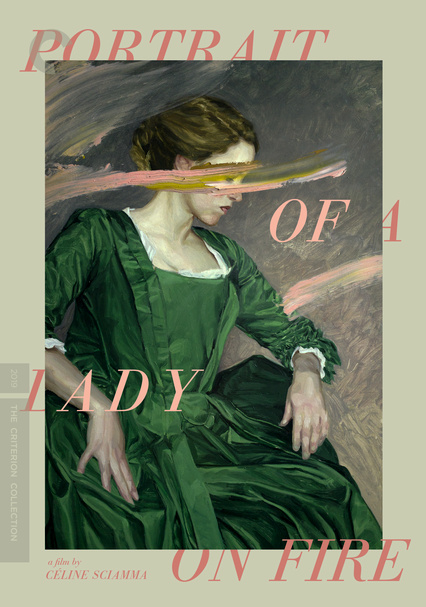
Portrait of a Lady on Fire-2019

Portrait of a Lady on Fire-2019

Director Céline Sciamma

Starring Noémie Merlant, Adèle Haenel

Scott’s Review #1,114
Reviewed February 19, 2021

Grade: A-

A film with tremendous artistry and a cool LGBTQ+ vibe, gay director Céline Sciamma delivers the goods with interesting finesse in Portrait of a Lady on Fire (2019).

She takes modern-looking actors and transplants them to the era of France during the late 18th century.

The film tells the story of a forbidden affair between an aristocrat and a painter commissioned to paint her portrait.

The viewer will ask themselves the following questions. What would become of two young gay women in this long-ago age? How many people repressed their true feelings and desires because of the times they lived in?

Would their different classes and backgrounds cause strife within their burgeoning relationship? I know I constantly asked myself these questions.

To those with limited cinematic patience, be forewarned. A Portrait of a Lady on Fire is plodding.

I didn’t mind this aspect, but some might. The payoff is not bombastic in an act of violence or an explosion sort of way, but it’s well worth the effort put in.

In a common approach in modern film that is feeling more standard than special, the first scene often precedes the events in the rest of the movie, so that we know how the events will turn out. But we do not know the hows and the whys.

It is immediately assumed that one character has suffered some loss or misfortune related to a painting.

Painter, Marianne (Noémie Merlant), is summoned to a remote island inhabited by very few people. She is commissioned to paint the wedding portrait of Héloïse (Adèle Haene), who is destined to be married to a nobleman in Milan, Italy.

Héloïse is depressed and despondent, wanting nothing to do with her intended, whom she has not met.

The portrait is a gift to the never-seen husband-to-be. It is revealed that Héloïse’s sister leaped to her death from the cliffs on the family estate, so it’s suggested throughout that she may suffer the same fate.

Needless to say, Marianne and Héloïse fall madly in love.

Their love is hardly ever a question, as the chemistry is immediately noticed. Sciamma, who wrote the screenplay, avoids stereotypes that would give away the sexuality of the main characters. They are not butch nor do they possess masculine qualities.

Do we wonder if they are bisexual? They never struggle with their sexuality, a dramatic cliche in other LGBTQ+ films.

I adore this because it makes the love story more powerful, rather than one character pursuing the conflicted other.

As brilliant and artistic as I found Portrait of a Lady on Fire to be, there are a couple of unexplained or unclear aspects. I am not even sure how they relate to the main story.

Waifish housemaid Sophie has an abortion with assistance from Marianne and Héloïse. Later, the three go to a bonfire gathering where women sing, during which Héloïse’s dress briefly catches fire (just as shown in the painting featured in the beginning).

When Sophie is having the abortion, there is an infant and a child nearby. Are they her children? Who are the women who sing?

I didn’t understand the point of these items.

Fortunately, these missteps can be forgiven for the grander piece is exceptional filmmaking. The final shot of Héloïse sitting in a theater is phenomenal and borrowed from Call Me By Your Name (2017), which featured an identical scene.

The camera focuses on the face of actress Haene as she conveys a range of emotions during the flawless scene. What a win for an actor!

Despite some side story flaws, I adored Portrait of a Lady on Fire (2019).

The film is exceptionally shot, and almost all shots could be portraits in their own right. Charming are the beach sequences, as when Marianne and Héloïse first ignite the flames of their passion.

My takeaway is that it tells the story of fate, but doesn’t feel like a downer. Instead, it feels like life.

Independent Spirit Award Nominations: Best International Film

Girlhood-2015

Girlhood-2015

Director Céline Sciamma

Starring Karidja Touré

Scott’s Review #398

80013602

Reviewed April 24, 2016

Grade: B

Girlhood (2015) is a coming-of-age French-language drama that follows a sixteen-year-old girl living in a poor area (the projects) just outside Paris.

She faces numerous conflicts and tough decisions about how to live her life. She navigates school, gangs, and romance, alongside a troubled home life.

Wisely, the film is directed a Céline Sciamma, which lends authenticity to the largely female issues discussed.

For all its good intentions and some interesting nuances, the film suffers from a lack of grit and has a safe feel, making it less compelling than it could have been.

I felt I was watching a glossy film rather than any harsh reality.

Still, worth the effort.

Marieme is a tall, gorgeous teenager living near Paris. She struggles academically and is rejected from attending high school, instead being sent on a vocational track to find a job.

Her mother works long hours as an office cleaner, and Marieme’s abusive brother is in charge of the household. Marieme also has two younger sisters.

Upset to learn she will not be attending high school, she is approached by a gang of girls, led by Lady, who asks her to go to the city with them.

She agrees to join their gang when she realizes that her brother’s best friend, Ismael, whom she has a crush on, is friendly with the other girls.

Marieme and the girls begin to pass the days by stealing, fighting, and terrorizing anyone in their path.

They party in hotels and go from place to place. Marieme must ultimately decide if this is the life she wants.

What I found most interesting about the film is its all-black cast. Sciamma (who ironically is white) felt that the female black population in Paris is underrepresented.

This is accurate, and it scores points with me.

I love the camaraderie among the girls. They always have each other’s backs, and when Marieme fights a rival girl to defend the recently beaten Lady, there is a sense of sisterhood that is appealing and is at the heart of the film.

The film explores friendship, loyalty, and bonding.

Most of the cast are either unknown actors or non-actors picked off the streets. As a result, the acting is surprisingly good for most novice or non-actors.

The romance between Marieme and Ismael is another strong point. They share an undeniable attraction but are forced to keep their relationship secret.

Marieme’s brother appears to run a boys’ gang and forbids anyone from being with his sister.

The scenes shared between Marieme and Ismael are tender, sweet, and believable. They have a rooting factor.

The positives are also Girlhood’s negatives. The film lacks real grit or dirt, and it plays the friendship and romantic elements safely.

Everything is glossy and bright.

For example, two fight scenes occur: one between Lady and a rival girl, and one between Marieme and the rival girl. A group of spectators gathers in a circle, egging the girls on. They are in a hot, deserted parking lot.

The scenes could have been brutal, bloody, and fierce. Instead, they are short, lack blood or bruising, and feel safe. When Marieme pulls out a knife, it is intended to cut the rival girl’s bra, not to stab her.

This seems unrealistic and not how things would play out in an urban gang situation.

And on a nitpicky level, why was the mother absent from the family life? Sure, she had a night job, but the film presented her as almost out of the picture.

She tried to help Marieme get a job, but her busy schedule still caused so much turmoil.

Also, the silly scene of the girls playing miniature golf added nothing to the plot and should have been dropped.

Girlhood (2015) is a nice, albeit sweet, female coming-of-age gang story that might have been more intense, but the filmmakers chose a softer tone rather than a harsher one.

It focuses mainly on bonding, friendship, and life choices rather than the realistic brutality it could have dealt with.

Independent Spirit Award Nominations: Best International Film