20th Century Women-2016
Director Mike Mills
Starring Annette Benning
Scott’s Review #611
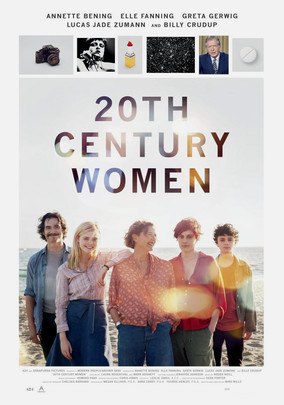
Reviewed January 22, 2017
Grade: A-
Annette Benning shines in her leading role in 20th Century Women (2016), a film directed by Mike Mills, a formidable independent filmmaker whose credits include 2010’s Beginners and 2005’s Thumbsucker.
In 20th Century Women, Mills serves as director and writer, so the film is his vision.
All five principal characters are quirky and well-written, though Benning’s is the most nuanced and fascinating.
The story is set in 1979 Santa Barbara. Despite the image of Santa Barbara as a wealthy, grand town dripping with the rich and powerful (perhaps due to the sweeping 1980s daytime soap opera of the same name), Mills doesn’t present this film that way.
He presents Santa Barbara as a more artsy town, at least for his characters.
Benning plays Dorothea Fields, a fifty-five-year-old divorced mother of a fifteen-year-old boy, Jaimie.
She is a free spirit who allows two runaways to live with her: Abbie (Greta Gerwig), a twenty-five-year-old aspiring photographer with fuchsia-colored hair recovering from cervical cancer, and William (Billy Crudup), a handyman.
They are joined by Jaimie’s good friend, Julie (Elle Fanning), a depressed neighbor.
The film explores each character’s trials and tribulations and their interactions in a quirky way, and we fall in love with each of them.
Dorothea enlists Abbie and Julie’s help to have a positive influence after he nearly dies after a foolish teenage prank.
Mills gives the period a slice-of-life feel, heavily referencing punk rock and the film’s political climate.
Bands such as Talking Heads and Black Flag reflect Dorothea’s struggle to learn what young people like, stay youthful, and stay in touch with her charges.
Dorothea is a chain smoker, and many scenes feature her pondering a situation while taking long drags. I love this aspect of the film as it showcases Benning’s cerebral performance.
She is a thoughtful woman who wants her son to grow up sane and productive since his father is absent.
Sex and feminism are significant themes in the film. Abbie loans Jaimie two books by female feminist authors to help him better understand women.
When he begins to discuss orgasms and a strange conversation about sex and virginity ensues during a dinner party Dorothea is hosting, the graphic detail is a bit too much for Dorothea.
She is a conflicted character- open-minded and caring; when it comes to her son, she has a more conservative edge while trying to remain open to his new experiences as a teen.
20th Century Women is strictly a character-driven film with enormous strength.
Each character is in a different place in life, and I adore how the film gives a conclusion to each character’s life in the years to come.
Indeed, the film follows the “happily ever after” formula, but that doesn’t bother me. Instead, the film is so well composed that the characters’ lives enrapture me.
Admittedly, the film is slow-moving at times, but that’s because of the richness of the dialogue—nothing is rushed.
Kudos to the cast. Gerwig and Fanning are incredibly excellent. Fanning’s Julie is a unique character- her mother is a psychiatrist who forces her to attend group sessions that she holds.
Julie has a step-sister with cerebral palsy, so Julie frequently sleeps at Dorothea’s house as a way to escape her life.
Sexually active, Julie has a pregnancy scare during the story.
A coming-of-age film set in an enjoyable time, 20th Century Women (2016) showcases the talents of a stellar cast led by Bening, takes audiences into a wonderful, character-driven world, and explores the lives of its intriguing characters with a clear portrayal of life in the late 1970s.
Oscar Nominations: Best Original Screenplay
Independent Spirit Award Nominations: Best Female Lead-Annette Bening, Best Screenplay
