Tag Archives: Ben Johnson

The Getaway-1972

The Getaway-1972

Director Sam Peckinpah

Starring Steve McQueen, Ali MacGraw

Top 250 Films #58

Scott’s Review #439
539604

Reviewed July 3, 2016

Grade: A-

The Getaway (1972) is a classic action film directed by Sam Peckinpah, known for films such as Straw Dogs and The Wild Bunch.

His films are known as “guy films” and are a rather violent experience.  The Getaway is no exception, though it is not immensely brutal either. Still, there is more than one macabre scene and one dastardly villain.

For fans of Peckinpah, The Getaway is a must-see.

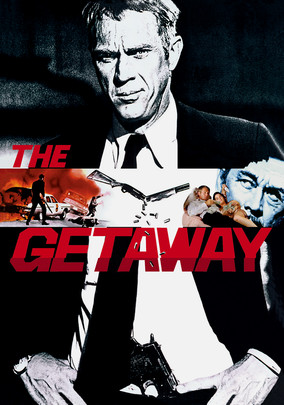
The film features Steve McQueen and Ali MacGraw, who are perfectly cast as lovers Doc and Carol McCoy. Inescapable was their chemistry, and art mirrored life: the two were embroiled in a torrid love affair during the shooting, and later they married.

We meet Doc in a Texas prison, where his parole has just been denied. Doc and Carol decide to make a deal with corrupt businessman Jack Benyon to ensure Doc’s release. One stipulation is for Doc to participate in a bank heist with two of Jack’s men (Rudy and Frank).

The heist goes off, but things go awry, and Doc and Carol head for El Paso with a large sum of money, being pursued by Rudy and a double-cross attempt by Jack.

Rudy kidnaps veterinarian Harold and his young wife Fran (Sally Struthers) to aid him with his injuries, taking them along as he pursues Doc and Carol.

Amid the already complicated plot, a con man attempts to steal Doc and Carol’s money.

Doc and Carol are clearly the heroes of the film and are meant to be rooted for, and the characters work very well together. Yes, they are criminals, but they are portrayed as lovely and as not hurting anyone who does not deserve it. Doc does spare Rudy’s life at one point, and I think this only reinforces Doc’s appeal as an antihero.

The love story is also a significant aspect of the filmmaking, making Doc and Carol likable. A few sweet, tender scenes of their romance are mixed in, adding a nice balance to the otherwise testosterone-fueled events.

The Getaway features spectacular editing, particularly at the beginning of the film, where we watch Doc in prison, going through his day-to-day rituals, which are seamlessly interwoven with other stories in the movie.

The musical score matches perfectly with the editing, adding a provocative element of intrigue. These components add the necessary elements to a film like this- edge-of-your-seat!

I love the Texas setting.

Characters are constantly traveling to get somewhere- either by train, by car, or on foot- so we see much of the Texas countryside, almost giving The Getaway a Western flavor.

It is certainly a hot, humid environment, though McQueen always wears a sophisticated suit, and MacGraw looks stylish and put together.

And from a prop perspective, I never tire of seeing those early 1970s sedans driving at high speeds.

Unfortunately, as with most of Peckinpah’s films, women are not portrayed in a positive light, though Carol is one of the strongest of his female characters. Yet, in one tough scene, she is smacked around by Doc after he realizes she slept with Jack to ensure his release from prison.

The most confusing and weak character is Fran. In a strange bit of writing, she inexplicably falls madly in love with her kidnapper, Rudy, even as he abuses and humiliates her, while her husband is around. This is odd and tough to watch, and not the best part of The Getaway.

Her character is not developed well, and it is head-shaking that she feels any passion for Rudy.

The heart of the film belongs to Doc and Carol as they are on the lam for much of the time, and this is a successful part of The Getaway- hence the title. Will they get caught? Will they escape?

The characters remind me of Bonnie and Clyde, so we wonder if Doc and Carol will meet the same fate, but of course, we like them, so we do not want that.

The Getaway is a fast-paced, down-home, red-blooded sort of action film. It is stylized, gritty, and sometimes violent. The chicken wing scene between Rudy, Fran, and Harold starts light and then turns ugly, adding to the film’s unpredictable nature.

A supreme offering by Peckinpah.

The Last Picture Show-1971

The Last Picture Show-1971

Director Peter Bogdanovich

Starring Timothy Bottoms, Jeff Bridges, Cybill Shepherd

Top 250 Films #121

Scott’s Review #1,349

Reviewed March 9, 2023

Grade: A

1971 was a great year in American cinema, from The French Connection to Willy Wonka and the Chocolate Factory to Fiddler on the Roof to Dirty Harry.

The list goes on and on.

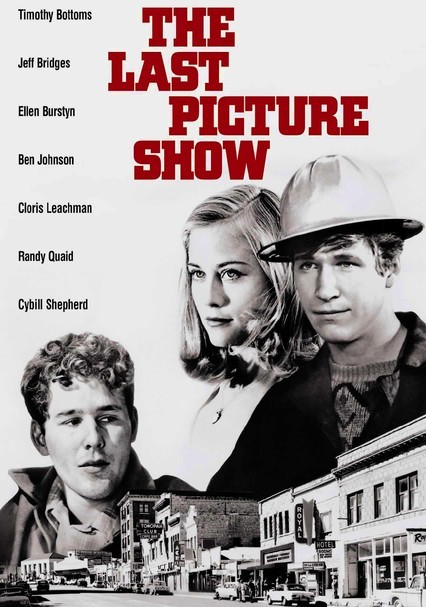
The brilliantly filmed and directed The Last Picture Show is easily ensconced in the year’s top ten, featuring an embarrassment of riches across the board. An important thing to promote is the successful use of the dusty setting and time, which is the film’s secret sauce.

Peter Bogdanovich crafts a dreary coming-of-age tale set in landlocked Texas. The film is loosely based on a 1966 novel of the same name written by Larry McMurtry.

The film includes many songs by Hank Williams Sr. and other country & Western and 1950s popular music recording artists to reflect the era.

Most of the townsfolk are bored to tears in the windswept hamlet of Anarene, Texas. Their saving grace is a local cinema (the picture show) run by the popular Sam the Lion (Ben Johnson), which is about to close its doors forever.

Others frequent the café run by sultry waitress Genevieve (Eileen Brennan), who knows everyone’s business.

The gossip and scandals run wild throughout town, following several principal characters and their trials and tribulations. High school students Sonny (Timothy Bottoms) and Duane (Jeff Bridges) lust after flirty Jacy Farrow (Cybill Shepherd) while trying to figure out their futures.

Sonny also finds time for an affair with depressed housewife Ruth Popper (Cloris Leachman), twenty years his senior, who is married to the school gym teacher, Coach Popper (Bill Thurman), who may be gay.

The year is 1951, when the Korean War is raging, and the once-prosperous oil town is in significant decline.

Bogdanovich’s apt camerawork, shot in black and white, is central to the film and the winning recipe (well, one of them). If The Last Picture Show were shot in color or worse yet, colorized, it would detract from the proper mood of sadness.

The exterior scenes involve swirling dust and wide-angle shots of the main street, often enough to relay a comparison to a ghost town, especially as events go along. There are also some sequences featuring vehicles or highway scenes, evoking thoughts of escape or departure.

The other key ingredient is the ensemble of characters led by exceptional acting. Sonny is the handsome lead character with a lifetime ahead of him and the kindest of all the players. His all-American good looks infuse a vulnerability into the character with vulnerability, especially in scenes with his mentor, Sam, and his friend, Billy.

Other quiet scenes reveal much about the supporting characters. Ruth sadly hangs the wash on her clothesline, looking worn and weary, while Genevieve grills a cheeseburger in the café, cigarette dangling and her once youthful aspirations slipping away.

Leachman and Johnson, both Academy Award winners in the supporting categories, deserve their awards. They successfully portray their anger in quiet ways, and both have dignity and self-worth, making their characters complex and revered.

The heartiest scenes belong to the younger set as they deal with simmering sexuality and hopes for college. Jacy experiments with sex, even sleeping with the man who her mother Lois (Burstyn) is having an affair with.

Shepherd also presents Jacy as vulnerable as she awkwardly strips off her clothes during a pool party, encouraged by a handsome boy she hopes to impress. At times, she is childish, other times a selfish bitch. It’s mentioned that her family is wealthy, so it’s assumed she is spoiled.

The 1950s usually provide a level of nostalgia and good, old-fashioned, carefree Americana.

The Last Picture Show (1971), thanks to the flawless direction and screenwriting of Bogdanovich and McMurtry, instead paints a perfect portrait of misspent youth and shattered dreams.

Oscar Nominations: 2 wins-Best Picture, Best Director-Peter Bogdanovich, Best Supporting Actor-Ben Johnson (won), Jeff Bridges, Best Supporting Actress-Cloris Leachman (won), Ellen Burstyn, Best Screenplay-Based on Material from Another Medium, Best Cinematography

Terror Train-1980

Terror Train-1980

Director Roger Spottiswoode

Starring Ben Johnson, Jamie Lee Curtis

Scott’s Review #1,098

Reviewed January 5, 2021

Grade: B+

Terror Train (1980) is a creepy slasher film released amid the heyday of the genre’s popularity. It embraces a familiar formula of teenage party victims. Still, it adds a helping of red herrings/whodunit twists, which catapult it above mediocrity and will keep audiences engaged until the finale.

Helpful is the casting of the “scream queen” of the time, Jamie Lee Curtis, who is the main attraction and the “final girl”. Her casting adds credibility and star power.

The film is a puzzle, with a difficult-to-predict ending and many twists and turns along the way—a perfect watch for a snowy New Year’s Eve, when it is set.

Events begin three years before the happenings in the main story, naturally, at a New Year’s Eve fraternity party, inhabited by a group of energetic pre-medical students looking for a good time.

Alana Maxwell (Curtis) is coaxed into participating in a cruel joke meant to lure an insecure pledge, Kenny (Derek MacKinnon), to a bedroom with the promise of sex.

Instead of becoming a light-hearted prank the group later laughs about, the joke spirals Kenny into insanity and a long stay at a mental institution.

Reunited for another party, this time on a train, bitterly cold and snowy New Year’s Eve is again the setting. The same group, now forgetting all about the prank, unwittingly boards the train for a night of booze, laughs, and partying.

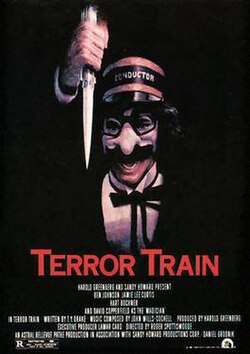
This time, a costume party is on the menu, which is convenient for a disguised killer intending to spend the night murdering the partygoers. He first kills Ed (Howard Busgang) on the tracks and takes his Groucho Marx costume to confuse everyone else.

A mysterious magician and assistant are aboard to provide entertainment.

The film belongs to Curtis since the idea was to create “Halloween on a Train”.

While Halloween (1978) is superior and scarier, Terror Train is cleverer. Many a red herrings appear throughout the story, so that a deduction about the killer’s identity can quickly be questioned.

Curtis, a popular star with the younger set in 1980, inevitably led fans to the movie theaters to see Terror Train. The comparisons to Halloween are apt- both feature disguises, masks, costumes, and mayhem.

The casting of Ben Johnson as Carne, the train conductor, an actor making films since the 1930s, and who won an Oscar for The Last Picture Show in 1971, provides the patriarchal character as Donald Pleasance did in Halloween.

Despite the vulnerability of being on a train speeding through the middle of nowhere on a frigid winter night with a killer on board, having a father figure and a voice of reason is reassuring. And the casting agents were lucky to get him.

The vibe in Terror Train is great, and the setting works wonderfully. In an ode to Hitchcock, the train is an effective setting for suspense or murder. The victims have few places to hide and a long tube with dark seats and hidden compartments, while they disappear one by one, which is perfect horror fodder.

The gripe is that the killer’s identity is painfully obvious. Spoiler alert- it’s who you think it is!

After the film, I was left feeling tricked and bamboozled. But, just like the mysterious magician, all is not what it seems.

Newcomer director, Roger Spottiswood, casts real-life magician, David Copperfield, for good effect, and the star does a fairly good job of adding tension and looking sinister. When the big revelation is upon us, a cool gender-bender treat awaits, but the killer is predictable, nonetheless.

A quick nod to the inclusion of some diversity, few and far between in the 1980 slasher fare. One of the fraternity brothers is a black male. The character is handsome and arrogant, and he gets his comeuppance quickly, but the addition is worth noting.

Terror Train (1980) is an atmospheric and surprisingly good holiday-themed slasher film that flies under the radar. Snuggle under a warm blanket, open the midnight champagne, and enjoy the claustrophobic, frightening post-Christmas trimmings.