The Last Picture Show-1971
Director Peter Bogdanovich
Starring Timothy Bottoms, Jeff Bridges, Cybill Shepherd
Top 250 Films #121
Scott’s Review #1,349
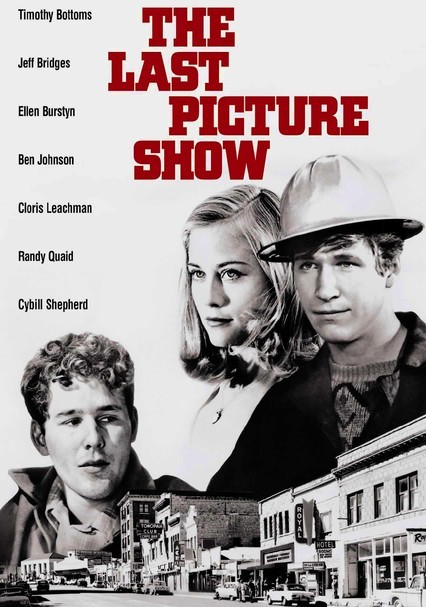
Reviewed March 9, 2023
Grade: A
1971 was a great year in American cinema, from The French Connection to Willy Wonka and the Chocolate Factory to Fiddler on the Roof to Dirty Harry.
The list goes on and on.
The brilliantly filmed and directed The Last Picture Show is easily ensconced in the year’s top ten, featuring an embarrassment of riches across the board.
One key strength is its successful use of the dusty setting and time, the film’s secret sauce.
Peter Bogdanovich crafts a dreary coming-of-age tale set in landlocked Texas. The film is loosely based on a 1966 novel of the same name written by Larry McMurtry.
The film includes many songs by Hank Williams Sr. and other country & Western and 1950s popular music recording artists to reflect the era.
Most of the townsfolk are bored to tears in the windswept hamlet of Anarene, Texas. Their saving grace is a local cinema (the picture show) run by the popular Sam the Lion (Ben Johnson), which is about to close its doors forever.
Others frequent the café run by sultry waitress Genevieve (Eileen Brennan), who knows everyone’s business.
Gossip and scandal run wild throughout town, following several main characters through their trials and tribulations.
High school students Sonny (Timothy Bottoms) and Duane (Jeff Bridges) lust after flirty Jacy Farrow (Cybill Shepherd) while trying to figure out their futures.
Sonny also finds time for an affair with depressed housewife Ruth Popper (Cloris Leachman), twenty years his senior, who is married to the school gym teacher, Coach Popper (Bill Thurman), who may be gay.
The year is 1951, when the Korean War is raging, and the once-prosperous oil town is in significant decline.
Bogdanovich’s apt black-and-white camerawork is central to the film and the winning recipe (well, one of them).
If The Last Picture Show were shot in color or, worse yet, colorized, it would undermine the film’s sad mood.
The exterior scenes involve swirling dust and wide-angle shots of the main street, often enough to relay a comparison to a ghost town, especially as events go along.
Some sequences also feature vehicles or highway scenes, evoking thoughts of escape or departure.
The other key ingredient is the ensemble of characters led by exceptional acting. Sonny is the handsome lead character with a lifetime ahead of him and the kindest of all the players.
His all-American good looks infuse the character with vulnerability, especially in scenes with his mentor, Sam, and his friend, Billy.
Other quiet scenes reveal much about the supporting characters.
Ruth sadly hangs the wash on her clothesline, looking worn and weary, while Genevieve grills a cheeseburger in the café, cigarette dangling and her once youthful aspirations slipping away.
Leachman and Johnson, both Academy Award winners in the supporting categories, deserve their awards. They portray their anger quietly, and both have dignity and self-worth, making their characters complex and revered.
The heartiest scenes belong to the younger set as they deal with simmering sexuality and hopes for college. Jacy experiments with sex, even sleeping with the man who her mother Lois (Burstyn) is having an affair with.
Shepherd also presents Jacy as vulnerable as she awkwardly strips off her clothes during a pool party, encouraged by a handsome boy she hopes to impress.
At times, she is childish, other times a selfish bitch. The film mentions that her family is wealthy, so it’s assumed she is spoiled.
The 1950s usually provide a level of nostalgia and good, old-fashioned, carefree Americana.
The Last Picture Show (1971), thanks to the flawless direction and screenwriting of Bogdanovich and McMurtry, instead paints a perfect portrait of misspent youth and shattered dreams.
Oscar Nominations: 2 wins-Best Picture, Best Director-Peter Bogdanovich, Best Supporting Actor-Ben Johnson (won), Jeff Bridges, Best Supporting Actress-Cloris Leachman (won), Ellen Burstyn, Best Screenplay-Based on Material from Another Medium, Best Cinematography
Golden Globe Nominations: 1 win-Best Picture-Drama, Best Director-Peter Bogdanovich, Best Supporting Actor-Ben Johnson (won), Best Supporting Actress-Ellen Burstyn, Cloris Leachman, Best Screenplay, New Star of the Year-Actress-Cybill Shepherd
