Tag Archives: Vincent Pastore

Goodfellas-1990

Goodfellas-1990

Director Martin Scorsese

Starring Ray Liotta, Robert De Niro, Joe Pesci

Top 250 Films #46

Scott’s Review #349

70002022

Reviewed January 9, 2016

Grade: A

Director Martin Scorsese adapts Goodfellas, a crime-mob film, from Nicholas Pileggi’s 1986 nonfiction book. Pileggi helped Scorsese write the screenplay.

The film is more matter-of-fact in its telling than the purely dramatic The Godfather, with added wit and humor, and excellent editing.

Featuring powerful acting by Ray Liotta, Robert De Niro, and Joe Pesci, it is a memorable classic mob film that can be enjoyed via repeated viewings.

Largely ad-libbed, the film is rich in good dialogue and contains one of the highest totals of curse words in film history.

The film is told from the first-person narrative of the lead character, Henry Hill.

Henry, now in the Witness Protection Program, recounts his years affiliated with the mob from 1955 to 1980.

We meet Henry as a youngster in Brooklyn, New York. He is half-Italian, half-Sicilian. He idolizes the “wise guys” on the streets and intends to join their ranks one day.

From there, the film describes the trials and tribulations of Henry’s group of miscreants. Henry meets and falls in love with Karen (Lorraine Bracco), and their tumultuous love story is explored through tender moments and affairs.

What I love most about Goodfellas is the characters’ love and the sense that you are part of the action.

The film is a highly stylized family drama- gritty nonetheless, but the viewer feels like they are part of things and a family member- milestones are celebrated, and meals are shared.

We see Henry grow from a gullible teenage boy who idolizes the neighborhood men to a member of the group.

The other characters, such as the vicious and volatile Tommy DeVito (Pesci) and Jimmy “The Gent” Conway (De Niro), are older and more mature.

Bracco’s character is interesting. Unlike most of the female characters in The Godfather films, she is not content to merely sit on the sidelines and look past her husband’s shenanigans and torrid affairs with floozies.

She is a more modern, determined woman, and Bracco plays her with intelligence and a calm demeanor. She wants to be Henry’s equal, not just some trophy wife.

Pesci deservedly won the Best Supporting Actor Oscar for his role; he is brutal and filthy, but a mesmerizing character.

During a memorable scene, his character, Tommy, jokingly teases Henry, but when Henry responds in a way that displeases him, the scene grows tense, and Tommy becomes increasingly disturbing.

His famous line “What am I, a clown- do I amuse you?” is both clever and haunting in its repercussions.

I adore the soundtrack Scorsese chose for the film—spanning decades, he selects songs true to their times, such as “Layla” (1970) and “Remember (Walking in the Sand)” (1964), which are just perfect.

Worth noting is that when a scene plays, the song is sometimes mixed into the narrative to enhance the scene altogether—becoming a part of it rather than simply background music.

If one is looking for the perfect mob film, one that contains music, wit, charm, and fantastic writing, Goodfellas is among the best.

I prefer The Godfather and The Godfather II, but while Goodfellas has similarities to these films, it is also completely different and stands on its own merits.

Oscar Nominations: 1 win-Best Picture, Best Director-Martin Scorsese, Best Supporting Actor-Joe Pesci (won), Best Supporting Actress-Lorraine Bracco, Best Screenplay Based on Material from Another Medium, Best Film Editing
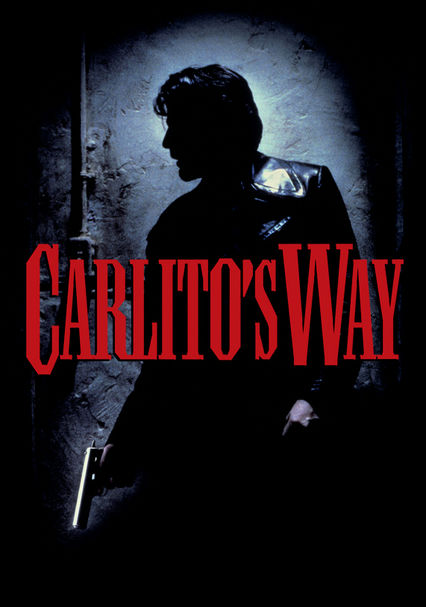
Carlito’s Way-1993

Carlito’s Way-1993

Director Brian De Palma

Starring Al Pacino, Sean Penn

Scott’s Review #1,224

Reviewed January 29, 2022

Grade: B

Brian De Palma would be firmly planted in my Top 10 favorite directors of all time- maybe even the Top 5.

His daring and juicy Dressed to Kill (1980) and horrific Carrie (1976) are still visually mesmerizing to me.

Carlito’s Way (1993) takes De Palma into New York mobster territory, similar in vein to his 1983 disappointment, Scarface (1983).

The latter is set in Miami, while the former offers many reminders of its New York City setting, like street signs and other exterior trimmings of the Big Apple, especially in Spanish Harlem.

Sequences also occur on Long Island, New York, and Rikers Island.

The film is based on two novels written in the 1970s, when the events are supposed to be set. This doesn’t work as well as you might think, but more about that later.

Carlito’s Way itself is a solid mobster film that borrows from many others, including Scarface, The Godfather (1972), and Goodfellas (1990).

If I were to take ten mobster films, it might get lost somewhere in the middle.

But it’s still an above-average watch and sprinkles pleasant De Palma familiarities like slow-motion dreamlike sequences and a terrific chase through the subway and Grand Central Station that will bring a smile to Dressed to Kill fans.

It’s just not one of the best Brian De Palma films nor one of the best mobster films.

Released on a technicality after years in prison, Carlito Brigante (Pacino) swears to give up his criminal ways. Still, it’s not long before the ex-con is sucked back into the New York City underworld thanks to his shady lawyer and friend Dave Kleinfeld (Sean Penn).

All he wants to do is save enough money to leave town and retire in paradise.

Carlito reconnects with his aspiring actress/dancer girlfriend, Gail (Penelope Ann Miller), while young and dangerous gangster Benny Blanco (John Leguizamo) plots revenge on Carlito and Kleinfeld after being slighted.

Kleinfeld has also stolen money from a dangerous convict, so that’s an added stressor for both him and Carlito.

The time is very odd. It’s supposed to be the 1970s, as the musical score suggests, as disco party music blasts during club scenes. The clothes and hairstyles somewhat align, but there is a strange 1980s feel, which is even stranger given the film was shot in the 1990s.

The chemistry between Pacino and Miller is okay, but nothing terrific either, although it grows during the film.

At first, I wondered what they saw in one another, but the pair slowly won me over. By the end, I was rooting for them to ride off into paradise together.

The best part of Carlito’s Way is the final thirty minutes or so. On the run from the bad guys, Carlito and Gail decide to meet on a late-night train bound for Florida. There, they will forget their troubles and live happily ever after on the beach.

Oh, and by the way, Gail is now pregnant.

De Palma, as he usually does, creates a dazzling climax. I was mesmerized by the cat-and-mouse chase scenes and what Grand Central looked like in the early 1990s when the film was shot.

And there’s also the terrific running-from-subway-car-to-subway-car chase scene, just like in Dressed to Kill.

As an aside, Pacino, who is Italian, is playing a Puerto Rican character. One character comments that Carlito could almost pass for an Italian. Given Pacino’s heritage in the very Italian Godfather films, this anecdote made me chuckle.

Penn and Pacino give it their all and craft unusual characters, especially Penn, and it’s a delight to see great actors play off one another.

Carlito’s Way (1993) has some hits and some misses and borrows heavily from similar films, including De Palma’s films. This too often makes it a comparison film rather than one with its own identity.