Tag Archives: Mykelti Williamson

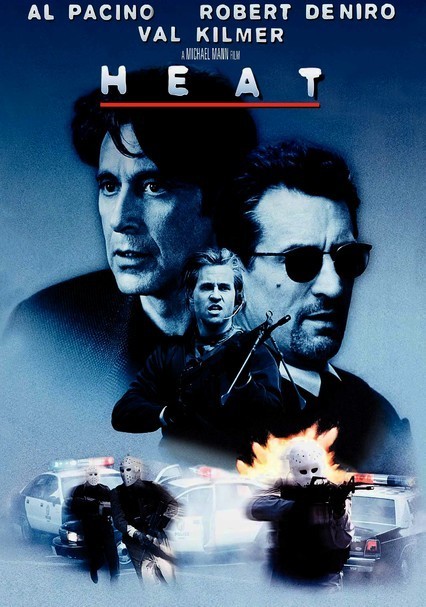
Heat-1995

Heat-1995

Director Michael Mann

Starring Al Pacino, Robert De Niro, Val Kilmer

Scott’s Review #1,228

Reviewed February 12, 2022

Grade: A-

Fans of the popular 1980s NBC television series, Miami Vice will recall that Michael Mann was the Executive Producer of the show during its run.  He has a distinctive crime thriller style that goes perfectly well with Heat, a sizzling 1995 offering starring two film greats-Al Pacino and Rober De Niro.

The fact that the pair do not appear too often on screen together can be forgiven because when they are the stars align and the power of quiet scenes cannot be outdone. I savored over the moment when they first appeared together. Quality over quantity.

De Niro plays Neil McCauley, a lifelong criminal who is trying to handle damage control caused by one of his men, while also planning one last big heist before retiring to parts unknown. He meets a lovely young Los Angeles-based artist played by Amy Brenneman in a diner and the two plan to relocate abroad.

Meanwhile, Lieutenant Hanna (Al Pacino) is a seasoned officer attempting to track down McCauley and his cohort while dealing with the chaos in his own life, including the infidelity of his wife (Diane Venora) and the unhinged mental health of his stepdaughter (Natalie Portman).

McCauley and Hanna discover mutual respect, even as they try to thwart each other’s plans. The two characters become doppelgangers of one another. The situation comes to a cat-and-mouse-based conclusion on the tarmac of LAX airport.

To say that Heat is a by-the-numbers 1990s thriller is a fair assessment although it’s way better than that classification and it’s of that genre.

For starters, the acting is superior, and obviously, De Niro and Pacino bring a level of professionalism to the film in the lead roles. My favorite scene is not the one you’d most expect me to say but rather a quiet and powerful chit-chat in a small coffee shop. They are rivals, having lived opposite lives, and yet have troubled lives that mirror each other.

Without a doubt, Hanna wants to bring McCauley to justice, and yet he admires him and sees parts of himself in the man. The feeling is mutual and the two actors relay this revelation without actually speaking the words. Viewers immerse themselves into the characters pivoting from this powerful scene.

There are a ton of characters in Heat but each one feels like he or she has much to offer. Juicy storylines are introduced but never forgotten even if not part of the main canvas. Hanna’s wife and stepdaughter play a central part in the final act even though they mainly appear during the first chapter.

In supporting roles, Val Kilmer and Ashley Judd share beautiful chemistry and a melancholy storyline as a damaged couple trying to survive surrounded by a life of crime.

At two hours and fifty-two minutes, there is plenty of time for each character to make their mark.

I love the rich character development that Heat offers but sometimes it’s admittedly tough to keep track of the motivations of the characters and how they tie into the main action.

Mann’s style is all over the place and even the musical score brought me back to the episodic song intervals that Miami Vice created. The moody and dark atmosphere of dingy and crime-infested Los Angeles is perfectly placed against glossy and glamorous high-rise and sprawling estate scenes. The bright and luminous city skyline is a feast for the eyes.

The cop/criminal dynamic is the main draw as Heat flexes its masculine muscles scene after scene. A bloody bank heist gone wrong at the beginning of the film cements what Mann is trying to create here. A guy’s film with enough juice to hook the introspective film viewer too.

Not remembered as well as it probably should be, Heat holds up surprisingly well when put up against similar but hokey 1990s action films like Lethal Weapon and the Die Hard films.

Though there’s not a whole lot that is new in Heat (1995), rich writing and powerful acting win out every time, and of course, Pacino and De Niro are worth the price of admission.

Fences-2016

Fences-2016

Director Denzel Washington

Starring Denzel Washington, Viola Davis

Scott’s Review #652

Reviewed June 11, 2017

Grade: B+

Denzel Washington and Viola Davis both give dynamic performances in Fences (2016), a film directed by Washington himself and based on a stage play written by August Wilson.

The film reunites several actors from the stage version, and while compelling, Fences does not translate as well onto the screen as hoped. Throughout the movie, I surmised how much better Fences would be on the live stage.

Still, a tremendous acting tour de force transpires, which is well worth the price of admission.

Set in 1950s Pittsburgh, Troy Maxson (Washington) is a struggling fifty-three-year-old black man who works as a trash collector alongside his best friend, Jim Bono.

Troy is married to Rose (Davis). They have a teenage son, Cory (Jovan Adepo), an aspiring high school football player. Troy’s younger brother, a mentally impaired World War II veteran, and Troy’s older son, Lyons, a fledgling musician, are also in the mix.

Everyone lives in a close-knit community, and there is a sense of comradery, though the principal characters are frequently at odds with each other as dramatic situations slowly arise.

Troy is an irate man, frequently going on rants about his time playing in the Negro baseball league and complaining about the unfairness of the world, specifically the racial injustice of the time.

The friction between Troy and Cory is thick. Cory wants to dedicate his life to football, while Troy feels his son will ultimately be disappointed. When Troy drops a startling bomb on Rose, their lives are forever changed, and they work to mend the damage inflicted between them.

At its core, Fences is a family drama, and the story offers conflict. Almost all the action is set in the Maxson family home, a two-story brick house. Scenes frequently play out in the backyard.

The film stays very true to its roots as a stage production, which is good and evil.

The film feels like a play, so I fantasized about how good the production would be on the stage rather than on the screen, especially since some actors (Washington and Davis) starred in that version.

What a blessing and a curse.

The film feels limiting and has a glossy “Hollywood look.” This is good, but the stage version would undoubtedly be more bare-bones, giving the production a raw feel, substantial in several key dramatic scenes between Troy and Rose.

Despite other opinions, I did not find Troy to be a likable character. Washington infuses power and good acting grit into the character, but I found few redeeming qualities. To say nothing of the situation with Rose, he does not treat his son Cory with much respect.

After a while, I found Troy’s repeated verbal rampages and stories irritating and wondered, “Why should we root for this man?”

Viola Davis deserved the Best Supporting Actress award she received for her turn as Rose. Dutiful, loving, and woefully underappreciated, her character rises well above a traditional homemaker, as during one pivotal scene, she explodes with rage.

Davis, a fantastic “crier”, saves her best tears, in a weepy portrayal. But more than that, she exudes a strong woman during a time when black women had it particularly tough.

I would have preferred an edgier film than Fences (2016) brings to the big screen, but the excellent performances more than compensate for what the film otherwise lacks in darkness.

Sometimes, it is too safe and slightly watered down; the stage version may be the best option.

Oscar Nominations: 1 win- Best Picture, Best Actor-Denzel Washington, Best Supporting Actress-Viola Davis (won), Best Adapted Screenplay

The Final Destination-2009

The Final Destination-2009

Director David R. Ellis

Starring Bobby Campo, Shantel VanSanten

Scott’s Review #587

Reviewed January 7, 2017

Grade: B

The Final Destination (2009) is a fun, entertaining film, and exactly what one might expect from a film of this nature, of the horror genre, and by this time the fourth in the series.

The 3-D effects are a nice and needed addition to the franchise as a way of keeping it modern and fresh.

The film has the expected additives- an attractive cast, mediocre acting, and ridiculous situations, which inevitably lead to the fated kills- in typical grisly fashion.

As audiences of the Final Destination films know, characters cannot tempt fate, and there is a specific order to the deaths. The only aspect that sets The Final Destination apart from its predecessors is the 3-D effects.

The story is reminiscent of the original version of Final Destination, made in 2000, only instead of an airport, the action begins at a raceway, where the main character of the film, Nick O’Bannon, has a premonition of a grisly accident at the racetrack.

After he saves some folks from their deaths, they believe they have “cheated” “death”, but before long, fate has other plans for them.

Some fun kills include decapitation by a flying tire, a sharp rock emitted from a lawnmower, a crushing tub, and a speeding ambulance.

The novel concept of the film, originally fresh and unique, has become to be expected and rather redundant. The fun part is the creative kills.

The film is the perfect movie to sit back, relax, have fun, see some interesting deaths, and be entertained by.

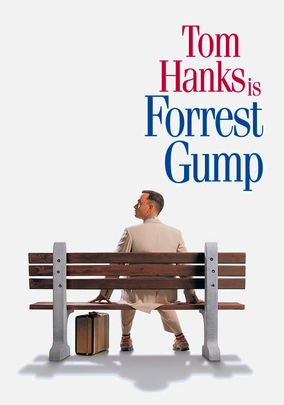
Forrest Gump-1994

Forrest Gump-1994

Director Robert Zemeckis

Starring Tom Hanks

Scott’s Review #362

60000724

Reviewed January 9, 2016

Grade: A

Awarded a bevy of Academy Awards in 1994, Forrest Gump is a film that is ingrained in many people’s memories, as it was a monster hit in the mid-1990s.

Some complained that the film’s unrealistic nature was silly and the story too saccharine. Still, it is an innocent, sweet piece about a simple-minded man’s journey through life and the insurmountable success he achieves.

I adore the film largely from a sentimental standpoint and for the memories it conjures up when I watch it years later.

I find the film to be a comfort.

Zemeckis, a feel-good film director (Back to the Future, 1985, Who Framed Roger Rabbit?, 1988), carves a whimsical tale of a fellow, Forrest Gump (played brilliantly by Tom Hanks), a slow-witted, but gentle soul, from Alabama, and his decades-long journey through life.

His lifelong love is Jenny (played by Robin Wright), a troubled girl who relies on Forrest throughout their decades-long friendship.

Forrest is always in the right place at the right time and influences historical events in his innocent way.

Forrest Gump is unique in its clever use of editing to incorporate Forrest into real-life historical events, which is a big part of the film’s appeal.

In one instance, Forrest meets with Richard Nixon and reveals the Watergate scandal. He also met President John F. Kennedy after winning a football scholarship.

And who can ever forget the numerous lines made famous from the film- “Stupid is as stupid does”, and “Life is like a box of chocolates. You never know what you are going to get.”, to name just two.

What I love most about the film is its heart, and the relationships Forrest shares with the central characters in his life are rich in depth. Forrest’s haggard but kind mother (Sally Field) loves her son, and they share a tender, emotional relationship.

When Forrest enlists in the Army during the Vietnam War, his grizzled commanding officer, Lt. Dan Taylor (an Oscar-nominated performance by Gary Sinise), surprisingly becomes one of Forrest’s closest friends.

The film takes a darker turn when we begin to see a more human side to Taylor after a horrible accident, which leaves him without legs. To counterbalance this tragedy, Forrest is comically wounded in the buttocks.

I am not sure whether I love or loathe Jenny as a character.

Wright is perfect at giving her some vulnerability, and her terrible upbringing can excuse some of her actions and lead her to take advantage of Forrest, arguably for her own gain.

Still, she has Forrest’s heart, so she cannot be all that bad.

A favorite scene takes place in Washington, where Forrest speaks at an anti-war rally. Jenny, in the crowd, recognizes Forrest, and their reunion is sweet. Jenny, now a hippie and expelled from school, returns to Forrest’s life.

The fates of both Jenny and Mrs. Gump are scenes that will undoubtedly require tissues to get through, as they are tender and emotional as can be.

Zemeckis’s Forrest Gump (1994) has emotion, sweetness, and heart, and those are nice qualities for a film to have.

It is not too sappy, overwrought, or manipulative; instead, it provides an honest story.

Oscar Nominations: 6 wins-Best Picture (won), Best Director-Robert Zemeckis (won), Best Actor-Tom Hanks (won), Best Supporting Actor-Gary Sinise, Best Screenplay Based on Material Previously Produced or Published (won), Best Original Score, Best Sound Effects Editing, Best Sound, Best Art Direction, Best Cinematography, Best Makeup, Best Film Editing (won), Best Visual Effects (won)