Tag Archives: Erik Palladino

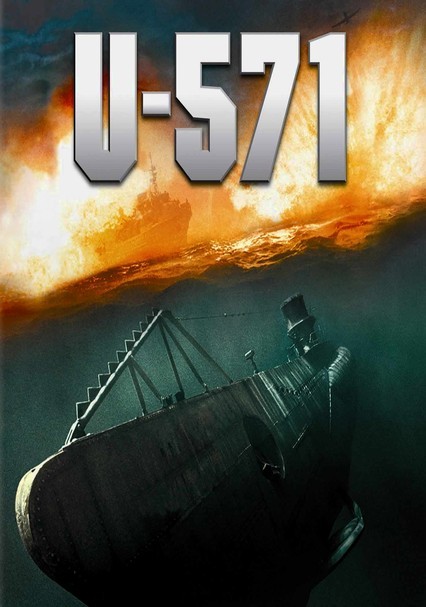
U-571-2000

U-571-2000

Director Jonathan Mostow

Starring Matthew McConaughey

Scott’s Review #1,126
Reviewed March 25, 2021

Grade: B-

U-571 (2000) is a entertaining film. It’s got excellent cinematography, some thrills, and a clear good-guys vs.-bad-guys mentality with machismo for days.

It’s an American film if there ever was one, and will please American audiences seeking cookie-cutter material with loud noise and a satisfying ending.

It’s also got some scenes of guy peril that will please a certain type of audience demographic- think blue-collar males.

The modus operandi is that all the Americans are good and the Germans are bad. It is World War II after all. It wasn’t that simple, folks, but according to the film, it’s pretty cut-and-dried.

But that’s entertainment and a box-office hit.

It’s not a bad film at all, but a beer-and-pizza-style film, not a martini-and-avocado-dip film.

For those seeking something more authentic versus formulaic and riddled with cliches, U-571 will disappoint. It’s also shamefully inaccurate and severely muddies the waters.

The film does not portray a historical event, so it gets away with a lot.

But it’s a fictional film meant to entertain, so my suggestion is to sit back, grab some popcorn (or beer and pizza), and enjoy it for what it is. Please don’t look for any rationale beyond the studio wanting to make a lot of money.

And there is the exceptional cinematography and cool locales to keep us marginally happy. The story is inane, but the trimmings work.

When a German U-571 submarine (hence the title of the film!) with a sophisticated encryption machine onboard is presumed lost and buried during a World War II battle at sea, the Allies send an American Navy force led by Lieutenant Andrew Tyler (Matthew McConaughey) to retrieve it for study.

Boarding the German ship, the Americans’ cover as a rescue force is quickly blown. Forced to take the crew hostage, the Americans lay their explosives and prepare to destroy the German vessel before the Nazis can send naval backup.

It’s a race-against-time routine frequently seen in masculine thrillers.

About those historical inaccuracies.

The American portrayal is skewed and slanted to be pro-American, and this point offended many of the British military and public. Even Prime Minister Tony Blair got involved.

The Allies captured Enigma-related codebooks and machines about fifteen times during the War; all but two of these by British forces.

Watching the film, one would think the Americans did everything and the British were incompetent.

Let’s ponder for a moment why filmmakers, especially screenwriter David Ayer and director Jonathan Mostow, would embrace such inconsistencies. My hunch is that they were attempting to target their film to male American moviegoers.

The tactic worked, and the film was a hit.

A cool tidbit is the casting of rock star Jon Bon Jovi in the supporting role of Lieutenant Pete Emmett. At this time, launching an acting career that included a role on television’s Ally McBeal, it’s impressive to see him on the big screen and not playing himself.

I’m not sure he pulls it off, but as a fan of the 1980s hitmaker, I enjoyed this aspect.

McConaughey carries the film well and is his usual dashing and charismatic self. Before the actor started doing more quality, character-driven films nearly a decade later, he would later state that he disliked several roles he took on and did them solely for the cash payday.

One wonders if U-571 is one of those films.

Bill Paxton and Harvey Keitel have little more to do than act tense and play second fiddle to McConaughey.

From an inclusive perspective, and I kid because there is nary a strong female to be found, there are no strong female characters. It’s a shame that, given the year 2000, Mostow should have known better.

Couldn’t one of the high-ranking majors or lieutenants have been a woman? If nothing else, it could have added some sexual tension—or perhaps a same-sex relationship.

The film does nothing for diversity.

It’s a very intense and exciting war film that accomplishes what it sets out to do. It’s well-executed and a crowd-pleaser, U-571 (2000) doesn’t contain much more than that and will be remembered as a slick, entertaining thriller with a big movie star.

Oscar Nominations: 1 win-Best Sound Editing, Best Sound (won)

Latter Days-2003

Latter Days-2003

Director C. Jay Cox

Starring Steve Sandvoss, Wes Ramsey

Scott’s Review #679

Reviewed September 7, 2017

Grade: B

In the now-saturated genre of LGBT film, a novel little more than a decade old, Latter Days, released in 2003, tells a story with an interesting religious spin and is, to my knowledge, the first LGBT film to depict a clash of religious values, which deserves kudos.

The film was popular among film festivalgoers, yet critically, it received only mixed reviews

There are both positives and negatives to this film.

When rigid Mormon innocence meets plastic Los Angeles Playboy, anything is bound to happen as a surprisingly sweet romance develops between them.

While the overall feeling of the film is rather “cute”- not exactly a rallying cry of cinematic excellence- Latter Days suffers mostly from some sophomoric acting and an odd combination of a soft-core porn film and a wholesome Hallmark channel television movie quality.

This, in turn, allows the film to achieve only a slightly above-average final score.

Young Mormon missionary, Aaron Davis, just out of Idaho, is sent to Los Angeles with three fellow missionaries to spread the word of faith.

Soon, he meets an openly gay waiter, Christian, promiscuous, brazen, and proud of it.

After a silly bet with friends predicting how long it will take Christian to “deflower” Aaron, the young men become enamored with each other as Aaron’s secret desires for men are exposed.

This leads to a test of faith for Aaron, especially with his religious and rigid parents, waiting with fangs drawn as he is banished back to small-town Mormon territory.

The romance and chemistry between the lead actors are the best part of Latter Days. Though Aaron and Christian could not be more opposite, there is warm chemistry that actors Sandvoss and Ramsey successfully bring to the screen.

Sandvoss’s “aww shucks” handsome, innocent looks complement Ramsey’s extroverted, pretty-boy confidence, and the film succeeds during scenes containing only the two actors.

Much is gained from a throwaway laundry scene as the young men chat and get to know one another’s backgrounds, as well as during the brilliant soft-porn scene as the nude men thrash around a hotel bed making love.

Though admittedly, neither actor is the best in the acting department.

The nudity in the film is handled well- explicit, yes, but never filmed for a cheap or trashy effect. While the nudity is sometimes sexual, the men also lounge around nude in bed while chatting about life and their various ideals.

Also positive is the casting of Jacqueline Bisset as the motherly Lila.

Suffering from her drama (an unseen, gravely ill romantic partner, and admittedly an unnecessary add-on to the story), she is the sensible, liberal-minded owner of Lila’s restaurant, where Christian and his friends work and socialize.

The film creates a “family unit” in this rather nice way. Bisset and her British sophistication add much to the film.

In contrast to Bisset’s character, the fine casting of Mary Kay Place as Gladys, Aaron’s rigid mother, stands out.

Hoping to “pray the gay away”, she and her husband banish Aaron to a garish rehabilitation facility to turn him straight after a suicide attempt.

The character does show unconditional love for her son, but refuses to accept his sexual preferences.

There is no question that director C. Jay Cox slants the film in a clear direction, portraying the Mormon characters as stodgy and bland.

Latter Days slips when the focus is on the other supporting characters.

I tend to champion large casts and neat, small roles, but Christian’s friends are largely self-centered, bantering about either their sexual escapades or their career aspirations as they wait tables, hoping to get a big break.

Worse yet, a silly side story is introduced focusing on a misunderstanding between Christian and his best friend Julie.

I could have done well without many of these secondary characters.

In the final act, the film goes the safe route with a brief red herring about a character’s death, only to quickly wrap up with a nice, happy ending featuring a Thanksgiving dinner at Lila’s restaurant.

Latter Days (2003) contains a good romantic story between two men that does fine without the added trimmings that occasionally bring the film down.

All in all, a decent effort.