Tag Archives: John Savage

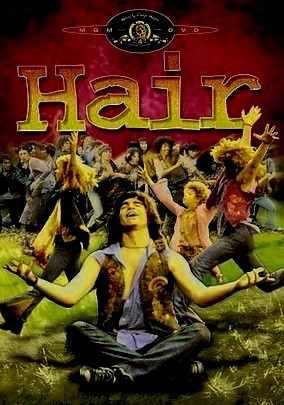
Hair-1979

Hair-1979

Director Miloš Forman

Starring John Savage, Treat Williams, Beverly D’Angelo

Top 250 Films #200

Scott’s Review #664
Reviewed July 14, 2017

Grade: B+

Hair is a 1979 musical film that, in addition to catchy singing and dance numbers, explores a serious theme: the Vietnam War.

This film is not your typical Metro-Goldwyn-Mayer-style musical from the 1950s. Rather, the entire experience is a unique, with an underlying dark tone, and is presumably a message film with a liberal slant.

Made in 1979, set in the late 1960s, Hair centers primarily on two young men and a bevy of hippie friends, with most of the action in New York City.

Despite the time, the film does not always succeed in the authenticity category- many of the costumes and hairstyles scream the late 1970’s.

The film also has the late 1970s “look”, on the cusp of the 1980s, with poofy hair associated with the times.

This forces the viewer to escape into a world largely of make-believe.

Claude (John Savage) is a naïve young man from folksy Oklahoma, having lived a sheltered, religious life, proper and away from big-city living.

He is drafted and sent to the Big Apple, where he will await his assignment.

Charismatic Berger (Treat Williams) and company befriend Claude after he gives them spare change, soon becoming the best of friends. Claude falls in love with socialite Sheila Franklin (Beverly D’Angelo), who is in town from neighboring Westchester County, NY, and a love story ensues.

When Claude, Berger, and company interrupt a lavish dinner party hosted by Sheila’s parents, a hilarious yet informative scene develops.

While Sheila is secretly gleeful at the arrival of her new friends, her parents are none too pleased, resulting in a standoff between Berger and Sheila’s family.

Partly comical, this scene also reveals the stark class distinctions among many of the characters.

The rest of the film centers on the friend’s antics involving drug use, relationship trials and tribulations, and culminates in a cross-country drive to see Claude before he is shipped to Vietnam desperately.

Multiple scenes involve songs concerning the turbulent race issues of the times- my personal favorites are the opening number, “Aquarius”, and the scandalous, “Black Boys” and “White Boys”, performed by Nell Carter.

Never one to be disappointed with a film set in Manhattan, Hair is a film basking in fantasy, and the entire production seems to be one big dream as the carefully crafted musical numbers are interspersed with the more dramatic elements.

Still, much of the film consists of the group prancing around Manhattan, with wonderful areas such as Washington Square Park featured, as well as several changes of season, giving the film a slice-of-life feel.

My favorite performance is that of Treat Williams as Berger. Part showman, part jokester, and part earnest, he fills the role with dynamic energy that comes full circle in the last act when he drastically changes his appearance for the sake of a friend.

The film’s ending is melancholy and an inevitable reminder of the coldness and finality of war in human life.

The encompassing song is “Let the Sunshine In”, a powerful and worthy conclusion to the film as the gang visits Arlington National Cemetery, to join an anti-war peace rally and say goodbye to a friend.

The film version of Hair (1979) may be drastically changed from the stage musical version,  a version I shamefully have yet to see. Still, on its own merits, the film is a poignant, powerful, and wholly entertaining musical adventure.

Do the Right Thing-1989

Do the Right Thing-1989

Director Spike Lee

Starring Danny Aiello, Spike Lee

Scott’s Review #746

Reviewed April 21, 2018

Grade: A

Do the Right Thing is one of the few great films to come out of 1989, not remembered as a fantastic year in cinema when most mainstream films were as glossy as tin foil- and barren of quality substance.

Here we have a small, independent gem that made people have discussions about current race relations in the United States and also became a monumental, influential film.

Filmmaker (and star) Spike Lee carves a controversial story of racial tensions in a Brooklyn neighborhood one hot summer day.

Beginning rather light and comedic, then turning violent and dark, the action is set in a largely black neighborhood, Bedford-Stuyvesant, Brooklyn, where twenty-five year old, Mookie (Spike Lee) works delivering pizzas at an Italian pizzeria owned by Sal (Danny Aiello).

With a toddler at home and a nagging girlfriend Tina (Rosie Perez) always in his face, Mookie is unmotivated yet still a decent guy and loyal friend.

Sal has two sons who work at the pizza place- Pino (John Turturro), who is angry and racist, and nice guy Vito, who is a friend of Mookie’s.

When conflicts erupt over whether Sal’s restaurant should celebrate black celebrities and white on a wall in the dining room, tensions reach their breaking point as the intense heatwave makes matters much worse.

What makes Do the Right Thing a marvel is both the overall tone of the film and the atmosphere relayed by Spike Lee, who does an incredible job of writing, producing, and starring in the film.

The elements having little to do with the actual story immediately impress as big, bright colors, in comic book style scream at the big screen in bold fashion, eliciting both a warm, inviting feeling and an angry, contemptuous vibe.

The loud rap and hip-hop beats are exceptionally instrumental in portraying a certain feeling and emotion in the film. Made independently, with little budget, the film feels raw and intense from the get-go.

Brooklyn, and New York City, in particular, are the perfect settings as Sal and his family are white folks living in a predominantly black neighborhood, so, in turn, are the minorities in the story.

Additionally, the viewer sees the friendly neighborhood and feels a sense of belonging regardless of race- the humorous drunk, the kindly, grandmotherly type people-watching from her stoop, and the boombox music kid all form a sense of community and togetherness.

This point is tremendously important to the overall plot of the film.

The relationship between Mookie and Sal and his sons is very important and the centerpiece of the entire film, which I found quite interesting as a character study.

Open-minded, Sal is a decent man and fine with the diversity in his neighborhood- yet still true to his Italian roots. Aiello does a fantastic job of portraying this complex, conflicted character.

His two sons could not be more different from each other- Vito, who is a close friend of Mookie’s, is sympathetic and sweet- with nary a racist bone in his body.

Pino, on the other hand, is angry and resentful of the black community taking over what he feels is his territory. Finally, while lazy, Mookie is also a sympathetic character as he is conflicted once tension reaches its boiling point.

These diverse characters make the film so dynamic.

Revered director Spike Lee carves out a story and brings it to the big screen telling an important topic that is as vital in modern times as it was when Do the Right Thing was released in 1989.

The film is intelligent and timely without being condescending to either black or white races, nor preachy- instead of telling a poignant story that is angry and sometimes painful to watch, but more importantly, is empathetic and real.

Oscar Nominations: Best Supporting Actor-Danny Aiello, Best Screenplay Written Directly for the Screen

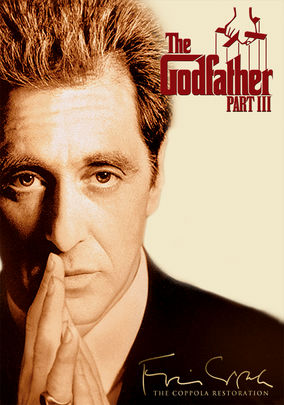
The Godfather: Part III-1990

The Godfather: Part III-1990

Director Francis Ford Coppola

Starring Al Pacino, Diane Keaton, Andy Garcia

Scott’s Review #533

60011153

Reviewed December 3, 2016

Grade: B+

The Godfather: Part III, released in 1990, has traditionally been met with unwavering criticisms for not being as great as the two preceding epics.

Sofia Coppola, who plays Mary- daughter of Michael Corleone, in particular, has bared the brunt of the attacks.

No, The Godfather: Part III is not on the level of the others, but is pretty damned good based on its own merits and is a capable mob epic to conclude the franchise satisfyingly.

The central theme is Michael’s continued desire to leave the mafia and religion, and the Catholic Church are central themes of the film.

Some backstory to the making of the film; Coppola had a non-expiring offer to create a third installment to the saga ever since 1974 when Part II was released.

Having had a financial crisis, 1990 was the time Coppola agreed to do the follow-up.

The ever-crucial role of Mary (now a coming-of-age young lady) was to be played by Julia Roberts, who dropped out. Winona Ryder was then cast and bailed at the very last minute.

Out of necessity, Coppola’s daughter Sofia was cast and had little time to prepare or much acting experience (she would later become an acclaimed director, which better suited her talents).

In a similar fashion to the other epics, a big event launches the film, as Michael (Pacino) is named Commander of the Order of Saint Sebastian in a lavish ceremony at St. Patrick’s Old Cathedral.

It is revealed that Michael is approaching age sixty and semi-retired, leaving his business dealings mainly to Joey Zasa in New York, who has ravaged what the Corleone family had once built.

Many characters- Kay, Mary, Tony, and Connie, are re-introduced, and new characters such as Vincent Mancini (Andy Garcia) and Don Altobello (Eli Wallach) are introduced, in a flurry of new storylines.

It is like a big, grand, soap opera, with wonderful, rich, writing.

I was immediately impressed by the neat cinematography- the camera captures wind-swept leaves and an artistic introduction to the film, as well as either mentioned or appearing in cameo roles, small characters from the first two films- a great touch in continuity and history.

Coppola does a fantastic job of providing little updates on these characters during a party. For example, we learn that Vincent is the deceased, illegitimate son of Sonny, his mother being Lucy Mancini, who appears in a scene. (Clever viewers will remember Sonny and Lucy’s torrent affair in the bathroom during The Godfather-it is suggested that this produced Vincent).

It is mentioned that Tom Hagen (Robert Duvall) has died, though his wife and son appear, and Coppola treats us to a myriad of flashbacks (Apollonia, a young Michael, and Kaye).

These nuances make The Godfather: Part III filled with cool little aspects that fill the loyal viewer with warmth.

The main story- Michael takes Vincent under his wing- and strives to steer the family clear of criminal ties- is interesting, if not spectacular. Connie rises from a battered mafia wife, raising kids, to a major player in the family, just as women progressed from the 1940s to the 1980s when the story takes place.

She even feeds her godfather a poisoned cannoli!

Michael, Vincent, and Connie involve themselves with the Catholic Church, bailing them out (the real-life Papal banking scandal is linked to the story) and making a deal with them for major shares of a real estate company, Immobiliare.

In-fighting between the major crime mob bosses leads to several bloody massacres throughout the film, on the streets, in Atlantic City, and finally, in the Sicilian Opera house.

The pairing of cousins and lovers, Vincent and Mary, never really works, nor does Bridget Fonda’s one-two-scene appearance as Grace Hamilton, a brief dalliance for Vincent. Also, the exclusion of the character of loyal family attorney Tom is a glaring omission.

So the film does contain a few negatives.

In a nutshell, The Godfather: Part III (1990) is a very good, epic, crime drama even without the Godfather name. To measure up to the glory of Parts I and II are impossible.

With the bonus of having the rich Corleone family history and the intricate relationships between the characters, this makes for a treat for fans.

There has not been a Part IV, nor should there ever need to be as the conclusion of the film is a satisfying wrap-up to the saga.

Oscar Nominations: Best Picture, Best Director-Francis Ford Coppola, Best Supporting Actor-Andy Garcia, Best Original Song-“Promise Me You’ll Remember”, Best Art Direction, Best Cinematography, Best Film Editing