Category Archives: Biography

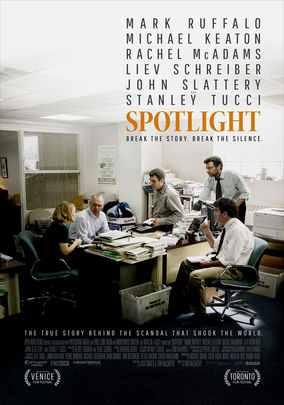
Spotlight-2015

Spotlight-2015

Director Thomas McCarthy

Starring Michael Keaton, Mark Ruffalo, Rachel McAdams

Scott’s Review #294
80061341

Reviewed December 9, 2015

Grade: B+

Spotlight (2015) is a film with an important story to tell.

A telling of true events that occurred within the Catholic Archdiocese for ages, Spotlight’s focus is specifically on the Boston scandals, as a team of reporters working for the Boston Globe uncovered and exposed a multitude of child molestation cases committed by priests.

They were subsequently covered up, leaving victims paid off to keep quiet. The number of proven cases in Boston alone is staggering.

Starring are a plethora of talents including Michael Keaton, Mark Ruffalo, and Rachel McAdams, who lead the pack.

They make up the “Spotlight” team at the newspaper,  an investigative unit that works on special stories as they arise.

Their new boss, Marty Baron (ironically a Jewish man), played compellingly by Liev Schrieber, takes over as head of the department. He quizzically asks why the story is not already a priority. Suddenly it is a hot-burner issue and the film delves into an investigation to uncover the facts.

Spotlight is a minimalist film. There is nothing cinematically unique or razzle-dazzle about it, but somehow that is okay.

In some aspects, the film reminds me of the 1975 thriller All The Presidents Men, starring Dustin Hoffman.

For instance, the bleak, bare news rooms-sterile in their look, are similar- cubicle after cubicle,  harsh lighting, and generic conference rooms.

This is the filmmaker’s intent.

Also, the fast, energetic pacing, successfully emitting the tight deadlines newspaper folks face, transfers perfectly on film.

The sexual abuse scandal is a cold, harsh reality and the film introduces several victims, who, now as adults, are forever scarred. Some attend support groups, some take drugs, one is sadly not “all there”. Another, now a gay man, was singled out by a priest during a vulnerable period in the then-young boy’s, life.

It is a heartbreaking reality that many victims in the film are based on real cases.

Let’s focus on Schrieber’s character for a minute.  He gives such an understated yet compelling performance there is a risk it will wind up being overlooked. He calmly, yet passionately initiates the case. It is not a showy performance and subdued but a compelling one if enough attention is paid to it. He is a standout.

Unfortunately, the film does not delve much into the defense (if any) of the Catholic church. Did they do anything but deny the allegations? Why were the victims paid off? Not much is noted from the church’s point of view.

In real life, the Catholic church did hide the abuse that transpired for decades.

A slight negative is that the film does not delve into the characters’ personal lives.

Michael Keaton’s character, Robby Robinson, is arguably the lead character, spearheading the case,  though very little is known about him.

Is he married? happily? Yes, he is a workaholic, but what else?

Ruffalo’s Michael Rezendes is separated from his wife, but little is known to the reasons.

Finally, McAdam’s Sacha is probably the most fleshed-out. She is happily married, close with her religious grandmother, and hurt by the scandal. But we do not know her in-depth either.

I found myself wanting to know more about these people.

All in all, Spotlight (2015) is a superior film deserving of the recognition it is receiving. Intense, gritty, and filled with honesty, it is a story that needed to be told and has been told well.

Oscar Nominations: 2 wins-Best Picture (won), Best Director-Tom McCarthy, Best Supporting Actor-Mark Ruffalo, Best Supporting Actress-Rachel McAdams, Best Original Screenplay (won), Best Film Editing

Independent Spirit Award Nominations: 5 wins-Best Feature (won), Best Director-Tom McCarthy (won), Best Screenplay (won), Best Editing (won), Robert Altman Award (won)
Steve Jobs-2015

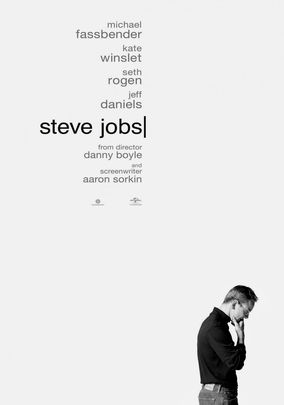
Steve Jobs-2015

Director Danny Boyle

Starring Michael Fassbender, Kate Winslet

Scott’s Review #288

80049358

Reviewed November 25, 2015

Grade: B+

Steve Jobs is a name that almost everyone has heard of. Most associate him with Apple products or at least know that he is some technological genius who has influenced the modern world in some fashion.

His name is a household one.

The film Steve Jobs (2015) presents a slice of his life, mostly focusing on his professional leap to success, his damaged personal life, and his inability to stay close to people within his circle.

Michael Fassbender plays the title role. He looks nothing like Steve Jobs, but this did not bother me.

It is quickly revealed that Steve Jobs is a competitive, cut-throat, and sometimes unkind man. He is driven, ambitious, and willing to do what it takes to succeed in business. He is also complex and as the film rolls along we witness the complexities of this man, arguably deemed a “genius”.

But where he has flaws is in his personal life as the film makes abundantly clear.

Kate Winslet is excellent in the supporting role she plays. Joanna Hoffman, Jobs’s loyal marketing executive, stays in his corner through the years, enduring ups and downs, yet their relationship never goes beyond the platonic. They are colleagues and both are absorbed in their creations.

Her character is a bit under-explored as we never are exposed to much of her personal life. Winslet in a rare “dowdy” role, makes the most of Joanna as she is the type of woman who throws herself into her work at the expense of her private life.

The film is primarily set during the three important software launches and, predictably, all are filled with issues and stress.

The bulk of the first act occurs in 1984 when Jobs and Hoffman struggle and fret during an Apple Macintosh launch in front of an auditorium filled with industry types eager to see the new technology.

The scene is tense as the new computer will not say “hello” as advertised and Jobs demands lead engineer, Andy Hertzfeld, fix it.  The scene escalates in its intensity.

We immediately bear witness to the fact that Steve Jobs is a shark. He is demanding and unlikable and the film is not afraid to stress that fact as the action continues.

We are next introduced to Jobs’s personal life. A beautiful young woman arrives at his office with a young girl. They are both on the brink of being destitute and thrown out of their home, yet Jobs refuses to help them and coldly calculates the probability that the young girl (Lisa) is biologically not his.

As the film chugs along Steve Jobs has a turbulent relationship with Lisa as the film spans the period from 1984-1998.

The film is a character study of sorts and we learn the complexities of Jobs. Fassbender gives a nuanced performance allowing the audience to absorb these character traits and ultimately feel emotional sympathy for him.

I admire this character study of Steve Jobs and feel that I know him quite a bit more, on a human level, than I once did.

Perhaps the supporting characters might have been fleshed out a bit more, but in large part, Michael Fassbender’s portrayal of a real-life person makes this film successful.

Oscar Nominations: Best Actor-Michael Fassbender, Best Supporting Actress-Kate Winslet

Black Mass-2015

Black Mass-2015

Director Scott Cooper

Starring Johnny Depp

Scott’s Review #278

Black_Mass_(film)_poster

Reviewed September 28, 2015

Grade: B+

A dark tale of crime, corruption, and Irish mob ties encompass Black Mass (2015), a drama based on the life and times of infamous Boston crime lord Whitey Bulger.

Set primarily in Boston, with a segue to sunny Miami during the 1970s and 1980s, the film mainly focuses on the intricate dealings between Bulger and childhood friend John Connelly. Now FBI, he uses Bulger as an “informant” to secretly bring down an Italian mafia figure, but slowly becomes more involved in Bulger’s sinister world.

Beginning in 1975, the film is authentic in its use of the styles, cars, and looks of the times in Boston during that period. Plausibility is apparent, and powerful acting is shown from top to bottom.

The stellar cast of Black Mass and the hefty cast features an array of well-known and capable actors, adding realism.

Led by Johnny Depp as Whitey, Depp gives an eerie, hypnotic performance as his bright blue eyes sparkle in a devious way.

Whitey is ruthless and will do whatever is needed to keep power and control. Like Connelly, Joel Edgerton is arguably the film’s lead character, though Depp gets top billing. Edgerton, in real life handsome, appears frumpy, and as a regular Joe type.

Supporting turns by Benedict Cumberbatch, as Whitey’s powerful Senator brother, is crafty and sleek, but corruption shrouds him.

Kevin Bacon, Dakota Johnson, Peter Sarsgaard, and Julianne Nicholson portray smaller yet pivotal roles and all do a fine job.

The screenplay is intelligently written. The story is quite dark and there are no laughs or light moments.

There are numerous deaths, the victims shot at point-blank range, but also two deaths in particular, where the victim’s suffering is prolonged and the scenes are cringe-worthy. The film is very violent and given the subject matter, is riddled with foul language.

One impressive aspect of Black Mass is the character-driven tale and that it is based on a real-life person adds to this.

Not only is Bulger fleshed out, but John Connelly is written very well. Gradually becoming immersed in the crime world as opposed to the world of law, we see Connelly sink deeper and deeper into Bulger’s world, and not so unwillingly either.

He loses his wife Marianne (Nicholson) along the way as she tires of the danger and corruption surrounding her. A chilling scene occurs when Bulger confronts Marianne in her bedroom, after observing negative vibes from her, and warns her in a flirtatious way, never to cross him.

As he caresses her face and slowly firms his grip, it is a rather frightening scene.

The dialogue is crisp. When Bulger is invited to a steak dinner at Connelly’s house, there is awkward tension at the dinner table. Jovial small talk over the preparation of the delicious marinated steak everyone is eating comes to the forefront as Bulger asks Connelly’s partner to reveal his family secret recipe for the favorite steak he has ever eaten.

When the partner eagerly confesses the recipe, he is coldly quizzed whether he would give up Bulger’s secrets as easily.

This is one of the best scenes in the film.

Comparisons to Goodfellas (1990) are evident but without the fun. I thought of The Departed (2006) throughout the viewing as well.

I think director Scott Cooper goes for and successfully achieves, good straight-forward, dark story-telling. Take the number of killings. The organized crime world is dirty, intense, and unkind and Black Mass portrays this well.

Black Mass (2015) is a success on many levels. The superior acting, detailed writing, and truthfulness create a good film. Just be sure to remember it’s a heavy one.

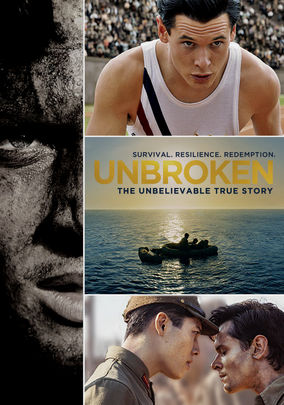
Unbroken-2014

Unbroken-2014

Director Angelina Jolie

Starring Jack O’Connell

Scott’s Review #260

70305949

Reviewed August 1, 2015

Grade: B

Unbroken (2014) tells the true story of Olympic athlete Louis Zamperini, a runner during World War II, who also served in the military during this tumultuous time in history.

His story is one of bravery, courage, and endurance, as he survives a hellish experience in a Japanese prisoner-of-war camp after having crashed in the Pacific Ocean, stranded for forty-seven days as if that were not enough to break a man.

Mainstream Hollywood fare to the hilt, this film is surprisingly directed by Angelina Jolie (a woman) and written by the Coen brothers, who usually deliver less traditional, quirkier fare than this.

Jolie directs what is arguably a “guys movie” that contains very few women in the cast, and the ones who do appear are either loving mothers or giggling schoolgirl types, so the big names associated with Unbroken surprise me.

I would have taken this work as a Clint Eastwood film.

Unbroken, expected to receive several Oscar nominations, was shut out of the major categories.

Visually, Unbroken is slick, glossy, and shot very well- it looks perfect. The cinematography, sound effects, and costumes look great.

The cast of good-looking young men looks handsome even when battered, bruised, and half-starved. While that is a compliment in a way, it’s not.

Unbroken lacks any grittiness and plays it quite safe. Even the scenes of abuse and beatings lack an edge to them.

This isn’t to say the film isn’t good. It is good.

I found myself inspired by the lead character, Louis, played by Jack O’Connell, for his resilience during his ordeals.

O’Connell gives a very good performance as his motto, “If I can take it, I can make it,” is repeated throughout, and who will not cheer at his accomplishments?

Zamperini, who has traditional Italian parents who relocated to the United States, is strict but fair. Louis’s older brother, Peter, is his best friend and is the person who has the most faith in him.

At first, Louis is on the verge of becoming a punk and getting into trouble with the law, if not for his brother’s interference, which gets him interested in running.

As the years go by and war erupts, Louis embarks on a tour of duty in the military, and his plane crashes in the water, providing yet another test of courage and stamina. Louis is strong and always leads the group he’s with.

The scenes of the three survivors stranded on the raft for days become slightly tedious, but perhaps this is the intention, as they eat raw fish and raw birds to survive.

Much of the remaining action is set in two Japanese war camps as Louis (and others) struggle to survive until the massive war has ended- they do not know if they will live or die.

The central antagonist- a vicious Japanese sergeant named “Bird”- perplexed me.

Blatantly targeting Louis and administering cruel beatings and heaping tests of strength upon Louis, presumably out of jealousy because Louis was an Olympic athlete, why did Bird not simply kill him?

His motivations were also odd- in one scene, Bird tearfully tells Louis that he knew they would be friends from the beginning and seems to admire him. Bird’s father, going by a photo, seems a hard, mean man.

Is this why Bird is so vicious? Bird’s character is not well thought out.

Also, the film portrays every Japanese character in a very negative light, which, sadly, is common in war movies. Surely, despite being a war, there had to have been a few Japanese people who were not cruel.

Character development and depth are not this film’s strong suit.

Unbroken is a good, solid war drama with an inspiring message of triumph, faith, and determination.

It’s a positive message for viewers of all ages.

The abuse/torture scenes are tough to watch, but the result is a feel-good story.

The snippets of the real Louis Zamperini are wonderful to watch.

Oscar Nominations: Best Sound Editing, Best Sound Mixing, Best Cinematography

Love and Mercy-2015

Love and Mercy-2015

Director Bill Pohlad

Starring John Cusack, Paul Dano

Scott’s Review #258

80017274

Reviewed July 17, 2015

Grade: B+

The life and times of the Beach Boys’ famous and troubled lead singer, Brian Wilson, is finally played out on the big screen (apparently many attempts were made to make a film) as Love and Mercy (2015) chronicles his difficult upbringing, unrivaled success, and his interesting life in later years.

He suffered from schizophrenia, traveled down a paranoid, nervous path, and was manipulated by a family friend who served as his doctor and main caregiver.

Thankfully, he weathered the storm due to his future wife, and remarkably still performs and entertains in 2015.

His musical career began in the 1960s.

The biopic features many well-known Beach Boys tunes to hum along to and be entertained by. It’s not a happy film nor a downer either.

It’s somewhere in the middle of the two and the life story of a rock star.

There is a risk in this. If the film is too sentimental it will fail. Love and Mercy do it correctly.

The film is not a sing-along, trip-down-memory lane film for lighthearted film fans. Rather, it is dark, murky, and troubling at times (the psychedelic scene when a young Brian is imagining different voices and noises in his head is rather frightening).

Wilson is played by two actors, first in the 1960s and later in the 1980s.

Paul Dano stars as a young Wilson in the early stages of his career, filled with passion for life, art, music, and talent beyond belief, but clearly in the onset stages of paranoia, thanks to his critical father. He is a demanding, angry man, possibly envious of Brian’s talents as a songwriter, who always wanted more from Brian.

Wilson’s father managed Brian and his brothers success but at a huge cost, and was ready to bail when the “next big thing” came along.

Miraculously, through conflict with his father and other members, Wilson completed the Beach Boys masterpiece, Pet Sounds, a groundbreaking album from the late 1960s. The film shows the struggles faced to achieve this success.

In later years John Cusack takes over the role of Brian. By this point in his life, he is damaged and he is a full-blown neurotic, insecure, and dependent on his psychotherapist, Dr. Landy, brilliantly played by Paul Giamatti.

Landy has control of Wilson’s assets and will destroy anyone who interferes in this.

The scenes in which he screams at and berates a drugged-out Brian Wilson to create music are tough to stomach. When Wilson romances their future wife Melinda Ledbetter, played by Elizabeth Banks, she ultimately saves his life as she is determined to rescue Brian from the wicked abuse and adjust the toxic levels of medications he was kept on.

I left the movie theater unsure of the factual accuracy and pondered the following questions.

Did Brian’s wife swoop into his life and “save” him as neatly as the film explains? How instrumental was the maid in this process? Was the Wilson brothers’ father as much a monster as the movie portrayed him? Was Giamatti’s vicious psychotherapist role true to life or were the aspects of Love and Mercy embellished ever so slightly for moviemaking magic?

One wonders, but from a film perspective, Love and Mercy (2015) works well as a work that takes risks, does not go for softness or niceness, and gives a character study that is quite admirable.

Independent Spirit Award Nominations: Best Supporting Male-Paul Dano

Wild-2014

Wild-2014

Director Jean-Marc Vallee

Starring Reese Witherspoon

Scott’s Review #249

80013281

Reviewed June 21, 2015

Grade: B+

Wild (2014) is a personal story of a young woman’s 1995 challenge to hike the 2,650-mile Pacific Crest Trail as a form of therapy for her divorce and her recovery from drug addiction.

The film stars Reese Witherspoon in a thoughtful biography of a real-life figure, Cheryl Strayed, and is adapted from a novel entitled Wild: From Lost to Found on the Pacific Trail.

The film depicts Cheryl’s struggles to survive in remote northern California through harsh weather and her encounters with strangers.

The film is a showcase for Witherspoon as she takes center stage, appearing in almost every frame of the film.

Her producing the project undoubtedly contributes to this. Regardless, it is a winning turn for Witherspoon as she is excellent.

She portrays the role with vigor, emotional rawness, and vulnerability, which comes across on-screen.

She deserved her Oscar nomination for this part.

What sets her apart from other actresses who may have played this role is that Witherspoon is a small, which makes her physical struggle to navigate trails and wilderness while hauling a large backpack of necessities believable.

Through flashbacks of Cheryl’s life before the enormous hike, we are introduced to her and the challenges she faced. We know that she is a recovering addict, but we do not know what led to these events.

Living in Minneapolis, she is very close to her mother, Bobbi, played by Laura Dern, who tragically dies.

This leads Cheryl down a path of destructive behavior and ultimately to her divorce from her husband, Paul, who periodically sends her care packages along the way.

Cheryl’s bond with her mother, a struggling woman herself, is deep. Bobbi struggles to raise a family and improve her education and life, which the flashback scenes featuring Cheryl as a teenager explore.

I love the encounters Cheryl faces along the trail, and I feel they add depth to the film.

Few and far between are these gems of interchange since she is mostly alone with nature, and the characters are interesting. Alone in the dark and desperate for a meal, she flags down a farmer named Frank.

At first, Frank seems dangerous and wields a gun, so Cheryl is wary as she goes home with him for dinner. Happily, Frank is married to a kindhearted woman named Annette, and the three of them enjoy a lovely feast.

Later, she encounters a young boy whose mother has died. They bond as the boy sings a song his mother used to sing to him, and when he leaves, Cheryl sobs with emotion for her mother.

These small snippets of real-life conversations and togetherness make the film feel happy, and we root for Cheryl to accomplish her enormous feat.

Thanks to a bravura performance by Witherspoon, Wild (2014) is much more than a woman surviving on her own in the wilderness. It is encased in quiet emotion and understated supporting performances that give layers to a human story.

Oscar Nominations: Best Actress-Reese Witherspoon, Best Supporting Actress-Laura Dern

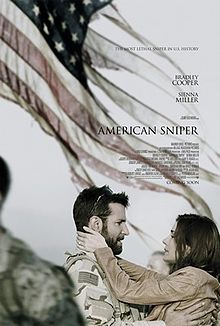
American Sniper-2014

American Sniper-2014

Director Clint Eastwood

Starring Bradley Cooper

Scott’s Review #223

American_Sniper_poster

Reviewed February 22, 2015

Grade: A-

American Sniper (2014), directed by Clint Eastwood, is a war film told from the viewpoint of a soldier- or a sniper.

A character study, if you will.

Starring Bradley Cooper as Chris Kyle, deemed the deadliest marksman in U.S. military history, he has 255 kills.

The film begins pre-9/11 as Kyle views coverage of the 1998 U.S. Embassy attacks and enlists in a grueling training program to become a Navy SEAL sniper.

Flashbacks show Kyle as a child, taught by his demanding father to hunt deer and shoot a rifle. He is eventually sent to Iraq following the 9/11 terror attacks, and the film continues to showcase Kyle’s military career and multiple tours of duty, ending years later.

Sienna Miller plays his wife, Taya.

I am not sure the controversy American Sniper has stirred is warranted. I see the film simply as a very good mainstream action movie.

Yes, it has overdone Americana machismo and Texas swagger, but it is an Eastwood film! This masculinity is at the heart of many of his films.

I do not view the film as politically charged.

The film leans neither Republican nor Democratic and seems to take a middle-of-the-road viewpoint.

It is a tale of a war hero, but it questions the wars fought and the casualties involved, both American and otherwise. Sure, Kyle is a good ol’ red-blooded American, but as he and Taya watch the 9/11 attacks on television, they are watching CNN, not Fox News.

His close military buddy asks, “Why are we here?” referring to Afghanistan, and Eastwood implies a question about what this is all about.

I hope audiences keep this in mind.

One concern I do face as I ponder the film is whether American Sniper will send some audience members back to a time when the world was fearful of Muslims and at risk of the recent ISIS terror situations; I hope that people are smart enough to realize that NOT all Muslims are terrorists.

Only a minuscule portion is evil-inspired.

The major terrorist in American Sniper, known simply as The Butcher, is despicable, but plenty of other Muslims are innocent and victims of The Butcher’s brutality.

I love how deep the film is.

Cooper is as resilient as the troubled sniper. He is portrayed as human, a nice, all-American guy. He wrestles with the choice of shooting a woman and a young boy who died at the risk of them carrying a bomb and killing members of his squad- he does not want to kill them, but rather is excellent at his job.

He is a perfect shot.

In the heat of the moment, under extreme pressure, he must ask himself, “Should I pull the trigger and end their lives”? “What if they are innocent pedestrians?”

He becomes, in a sense, addicted to his duty of going overseas to Iraq and Afghanistan and justifies his service as “protecting Americans”.

This leads to a troubled personal life as Taya grows frustrated with his frequent tours of duty, which he readily accepts. He has Post-Traumatic Stress Disorder but refuses to acknowledge this.

He almost kills the family dog in a fit of uncontrolled rage; he temporarily confuses sounds from an auto shop as military warfare.

My admiration for Bradley Cooper’s acting grows with each role I see him in. He is a marvel.

From recent dynamic performances in American Hustle (2013) and The Place Beyond the Pines (2012) to this role, I am convinced he can play any part successfully and convincingly.

He has sure come a long way from The Hangover (2009).

American Sniper (2014) is an enormously creative and commercial success and deserves to be. Layered and character-driven, it is worlds above the typical male-driven action film.

Oscar Nominations: 1 win-Best Picture, Best Actor-Bradley Cooper, Best Adapted Screenplay, Best Sound Editing (won), Best Sound Mixing, Best Film Editing

Big Eyes-2014

Big Eyes-2014

Director Tim Burton

Starring Amy Adams, Christoph Waltz

Scott’s Review #216

70095129

Reviewed January 18, 2015

Grade: B

Big Eyes (2014) tells the true story of Margaret Keane, a talented artist famous for the “big eyes” waif collection, whose husband manipulated her and took credit for her works during the 1950s and 1960s.

A con artist, he passed himself off as a talented artist, but in truth, he scammed other artists and had no artistic talent of his own.

He was also mentally unstable.

Thanks to his charisma, ability to wine and dine influential people, and marketing skills, he made millions from his wife’s art.

Amy Adams and Christoph Waltz portray Margaret and Walter Keane.

Tim Burton directs the film.

Adams and Waltz are the film’s main appeal. They share tremendous chemistry as they court one another, then despise each other as they fight a bitter divorce battle over the rights to Margaret’s paintings.

I love Christoph Waltz in whatever he appears in, as his charisma and acting ability astound me.

Adams is quite effective and believable as the passive, loyal, and talented Margaret Keane.

As compelling as Adams’s performance is, one issue with the film is that I didn’t feel as sympathetic toward Margaret Keane as the film probably intended.

I liked the character very much and rooted for her in the courthouse scenes to win the rights to her paintings, and I cheered when she escaped to Hawaii with her daughter to start a new life.

But she willingly went along with her husband’s plot, as they both decided a female artist wouldn’t sell as well as a man could (it was the 1950s), and they made millions from her art.

They lived in a gorgeous house, had wonderful dinners, and maintained an extravagant lifestyle, not so bad.

It was not as if Walter stole all of her money and left her homeless. She enjoyed a nice lifestyle.

So, my sympathy for her was affected.

A positive of Big Eyes is how Margaret continues to uncover Walter’s deceptions. She first learns he took credit for her work, then finds out he isn’t even an artist and conned another painter into giving him credit for their work.

The buildup to these reveals is excellent.

The film is a change of pace for Tim Burton. Big Eyes is not a dark film and is quite bright and colorful. Some interesting sets and art direction echo his other works, Edward Scissorhands (1990) and Beetlejuice (1988).

Big Eyes (2014) is an enjoyable film largely made successful by the talents and appeal of its two stars.

Independent Spirit Award Nominations: Best Screenplay

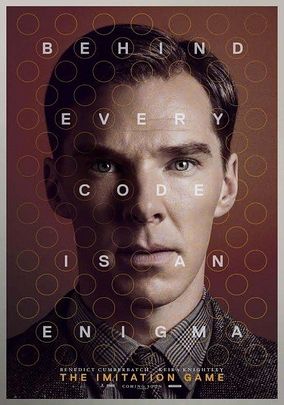
The Imitation Game-2014

The Imitation Game-2014

Director Morten Tyldum

Starring Benedict Cumberbatch

Scott’s Review #213

70295172

Reviewed January 15, 2015

Grade: A

The Imitation Game (2014) follows Alan Turing, a confident, brilliant British mathematician who cracked Nazi Germany’s Enigma code and helped the Allies win World War II.

The film also delves into Turing’s complex, sad personal life, and the audience learns about his upbringing, largely through flashbacks a his childhood at boarding school.

The film is tragic yet wonderfully made, and it’s a powerful human story.

The film has two storylines.

The first is the hiring of Turing by the Government Code and Cipher School at Bletchley Park to crack the code and the numerous struggles faced in accomplishing this feat.

Turing is not easy-going. He is arrogant, quick-witted, and even smug. However, through his friendship with Joan (Keira Knightley), an intelligent woman on the team of scholars, we see a human side to him as they forge a lifelong bond.

The other is his personal life, which is a bit more mysterious and comes into play during the second half. Keeping a secret about his personal life, he is homosexual, which, in the time the film is set (1940’s England), is illegal.

Alan and Joan agree to marry, largely to appease her parents, but circumstances change their plans.

Benedict Cumberbatch, who portrays Turning, deserves praise for his impressive portrayal. He gives the character depth and a wide range of emotions.

He begins as a self-centered man but becomes layered, guarded, and protective because of his private life, which he is forced to hide a great deal.

Keira Knightley’s character supports Cumberbatch’s Alan as she becomes engaged to him and, later in life, becomes his biggest champion. Besides being quite intelligent, her character is also kind and giving.

The ending will bring many tears and make viewers reflect on the enormity of World War II and its vast number of casualties. The facts listed just before the credits roll are awe-inspiring and gut-wrenching.

The Imitation Game is not a war movie per se because it doesn’t show battle scenes. It is more of a drama dealing with the effects of war. It presents many figures, and some characters are affected.

For instance, in one scene, the group (led by Turing) must make a heartbreaking decision not to stop an impending attack, which will cause many deaths- including a character’s brother- instead of choosing to keep mum to save thousands more.

It is a powerful scene.

The Imitation Game (2014) successfully and heartbreakingly tells the story of a heroic figure who received no accolades in life, was ostracized, and only posthumously received his due.

Sadly, this was too little too late.

Oscar Nominations: 1 win-Best Picture, Best Director-Morten Tyldum, Best Actor-Benedict Cumberbatch, Best Supporting Actress-Keira Knightley, Best Adapted Screenplay (won), Best Original Score, Best Production Design, Best Film Editing

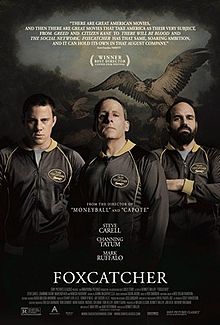
Foxcatcher-2014

Foxcatcher-2014

Director Bennett Miller

Starring Steve Carell

Scott’s Review #210

220px-Foxcatcher_First_Teaser_Poster

Reviewed January 2, 2015

Grade: A

Foxcatcher (2014) is a dark, disturbing psychological thriller that succeeds through its bleak look and strong performances.

It is a superb, character-driven story based on true events, led by Steve Carell, Channing Tatum, and Mark Ruffalo, all of whom are excellent.

It is a sports film, but hardly as predictable as many in the genre.

The film is set in 1987. Brothers Mark and Dave Schultz (Tatum and Ruffalo, respectively) are former Olympic gold-medal-winning wrestlers preparing to compete in the 1988 Olympics.

Despite winning a gold medal, Mark (Tatum) lives in squalor and is reduced to giving pep rallies at elementary schools, jobs meant for Dave (Ruffalo), for very little money.

Dave is the more successful brother, a family man living a happy existence. He is more talented and more driven than Mark.

One day, wealthy philanthropist John du Pont (Carell) contacts Mark and invites him to live with him at his expansive estate in Pennsylvania and train with other aspiring Olympic wrestlers.

John’s initial attempts to woo Dave also fail.

From this point in the story, the film delves into psychologically dark territory, mainly the controlling, disturbing behavior of John, as he attempts to control Mark and woo Dave.

John has a damaged relationship with his mother, Jean, wonderfully played by Vanessa Redgrave. Jean feels that John’s obsession with the wrestling world is far beneath him, and their relationship is tense and unloving.

The three principal actors in the film are worth discussing, as the film wouldn’t be as complex or compelling without them.

Let’s begin with Channing Tatum- known primarily as a hunky movie star with questionable acting ability- he proves the naysayers wrong.

I cannot help but compare him to a younger Brad Pitt. It took years and many films for him to be recognized as more than a pretty face and abs to die for.

His performance is understated and calm, but his laid-back demeanor is nuanced. Sometimes anger bubbles under the surface.

Carell is downright creepy as the affluent yet insecure Du Pont.

Throughout the film, the character seems off. Known mostly for silly comedies, he delivers a breakout performance that, I hope, leads to similar meaty roles. Carell shows he has what it takes to appear in quality films.

Lastly, Mark Ruffalo, who always plays interesting, everyman-type characters, again brings strong emotion to Dave Schultz, a successful, driven athlete who is also a dedicated husband and father.

With a different cast, Foxcatcher wouldn’t have been as interesting.

Questions will arise at the end of the film. What were John du Pont’s motivations? What effect did his mother have on his actions? How could a man with all his power and wealth end up this sad? Did John make inappropriate sexual overtures toward the wrestlers?

Foxcatcher (2014) excels at portraying a dark, layered, moody true story and shows that wealth does not equal happiness; in many cases, the opposite occurs.

The film is an immense success.

Oscar Nominations: Best Director-Bennett Miller, Best Actor-Steve Carell, Best Supporting Actor-Mark Ruffalo, Best Original Screenplay, Best Makeup and Hairstyling

Independent Spirit Award Nominations: 1 win-Special Distinction Award (won)

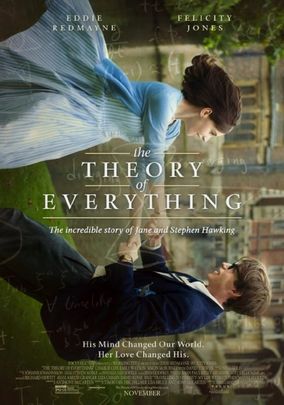
The Theory of Everything-2014

The Theory of Everything-2014

Director James Marsh

Starring Eddie Redmayne, Felicity Jones

Scott’s Review #199

80000644

Reviewed December 2, 2014

Grade: A-

The Theory of Everything (2014) tells the uplifting true story of renowned theoretical physicist Stephen Hawking (played by Eddie Redmayne) and his lifelong battle with a debilitating illness- motor neuron disease, which he was diagnosed with in college.

He and his future wife, literature student Jane Wilde (played by Felicity Jones), meet in 1963 at the prestigious Cambridge University in England and fall madly in love.

From there, the film follows their lifelong love affair and Stephen’s subsequent health battles.

Redmayne is wonderful in the lead role.

Portraying a character with both speech and mobility deterioration is not an easy task, especially as the problems become worse and worse over time, forcing the actor to express varying levels of disability.

Redmayne rises to the occasion with both believability and conviction, making his portrayal as real as possible.

The performance fondly reminded me of another great physical performance, Daniel Day-Lewis in My Left Foot from 1989.

Redmayne is a rising star in Hollywood.

Felicity Jones is also good, though I feel many actresses could have handled the role, and her part has less meat than Redmayne’s.

The rest of the cast is British, which makes the film feel authentic. Emily Watson, who plays Jane’s mother, shamefully receives only one scene. Was this talented actress’s role cut?

I get the sense the filmmakers had Oscar in mind, as the film is geared toward mainstream audiences with a wholesome slant.

The film skims past the complex theories and mathematical aspects and focuses more on the inspirational tale of a person overcoming an immense challenge.

Furthermore, the subsequent quadrangle between Hawking, Jane, Jane’s choir leader (Jonathan), and Hawking’s nurse (Elaine) is toned down and sanitized.

Hawking’s family accused his nurse of abusing him, which is never mentioned in the film.

The film presents their relationship as wonderful, so some facts have clearly been softened or omitted altogether, for a more moral feel.

The situation involving the four real-life characters is messy, but the film makes it seem sweet. Presumably, this is because all the characters are still alive.

This is an interesting aspect of the film and is less a criticism than a perception. Many films embellish reality for entertainment value.

The pairing of Jane and Jonathan seemed inevitable from the moment they met. They had much in common (religion), whereas Stephen and Jane were complete opposites- she was catholic, he was an atheist.

The sexual chemistry between Stephen and Elaine was evident from the moment they met. Elaine’s energetic sexiness contrasts sharply with Jane’s haggard, weary look at that point in the film.

The film isn’t designed to be a downer, as it could have been. The focus might have been sadder. Rather, it is sentimental and empowering.

The Theory of Everything (2014) is a heartwarming, conventional human story about a man rising above adversity, and at its center is a dynamic performance by Eddie Redmayne.

Oscar Nominations: 1 win-Best Picture, Best Actor-Eddie Redmayne (won), Best Actress-Felicity Jones, Best Adapted Screenplay, Best Original Score

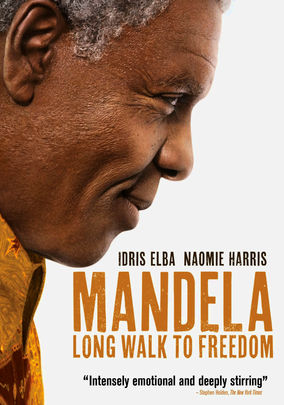
Mandela: Long Walk to Freedom-2013

Mandela: Long Walk to Freedom-2013

Director Justin Chadwick

Starring Idris Elba

Scott’s Review #169

70278999

Reviewed September 13, 2014

Grade: B

Mandela: Long Walk to Freedom (2013) recounts the true story of South African leader Nelson Mandela, chronicling fifty-plus years of his life from 1942 to 1994.

It shows his passion for freedom and dedication to anti-apartheid; his battles with the government; and his struggles to survive in prison.

The film is shot beautifully; the cinematography is gorgeous, and the South African landscape is breathtaking.

I enjoyed the chemistry between Idris Elba and Naomie Harris, who plays Nelson Mandela and his second wife, Winnie, respectively, and Elba, in particular, is very well cast.

He is charismatic, handsome, calm, and perfectly encompasses the famous leader’s mannerisms.

It was interesting to watch a biopic that spanned such a long period and, in a way, served as a history lesson, especially for viewers young enough not to remember the details of Mandela’s life.

I was too young to know of all of Mandela’s trials and tribulations.

For example, I knew he was imprisoned and released, but I did not know how long he had spent in prison and away from his wife and family.

I got the sense that factually, some details were either embellished or skipped over entirely.

I’ve heard this criticism from moviegoers regarding Mandela: Long Walk to Freedom.

A few drawbacks- this film is VERY Hollywood. It has a glossy feel. I would have preferred a bit more grit.

Was there any sexual abuse while Mandela was imprisoned? Was Winnie abused while she was in prison? Why was the lack of sexuality in Mandela’s and Winnie’s marriage in later years alluded to, but never explored?

This is a negative for the film.

Since the film is rated PG-13, it tones down aspects a feels very safe.

Also, for such a perfect shot and well-designed film, the makeup is dreadful! It was apparent that Idris Elba was wearing a glued-on, unflattering grey wig.

Furthermore, the woman playing Mandela’s mother was clearly the same age as, if not younger than, Elba, with dyed grey hair. This aspect feels poorly produced.

Overall, Mandela: A Long Walk to Freedom (2013) is a good film, largely because of its acting and look, but it is not a great one.

Oscar Nominations: Best Original Song-“Ordinary Love”

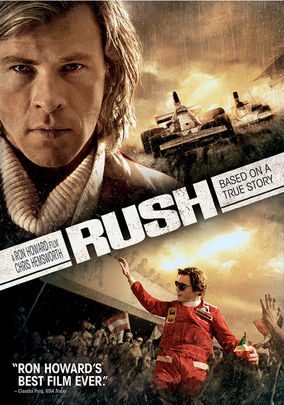
Rush-2013

Rush-2013

Director Ron Howard

Starring Chris Hemsworth, Daniel Brühl

Scott’s Review #162

70253165

Reviewed August 31, 2014 

Grade: B+

Rush (2013), a film directed by Ron Howard, delves into the world of auto racing through the true story of the 1970s rivalry between racing superstars James Hunt and Niki Lauda.

The film mainly focuses on 1970-1976 and the races and championships between the two, with some of their life trials and tribulations thrown in.

From bitter enemies, they slowly build respect and friendship over the years.

Chris Hemsworth and Daniel Brühl give excellent performances as Hunt and Lauda, respectively.

Ron Howard, a very mainstream, Hollywood-style director, carves out a nice film that isn’t edgy or particularly risk-taking. Still, it’s a solid biopic that works and keeps the viewer interested.

The film isn’t gritty and has a definite safe feel, but that is unsurprising since Ron Howard directed it and that’s characteristic of his films.

Reportedly, the feud between Hunt and Lauda is slightly embellished from the low-key real-life feud, and some events are created for effect.

Hunt never beats up a reporter in Lauda’s defense.

The racing sequences are compelling and don’t feel overdone or detract from the film’s human side. I loved seeing the real-life Hunt and Lauda at the end of the film, as is quite common these days when telling a true-life story.

Brühl, an unknown to me, received a deserving Golden Globe nomination for Best Supporting Actor.

Rush (2013) isn’t a movie to go down in history, nor will it leave you thinking about it or asking questions days after you watch it, but it is a slick, competent, entertaining story with impressive performances from the two leads.

Lovelace-2013

Lovelace-2013

Directors Rob Epstein, Jeffrey Friedman

Starring Amanda Seyfried

Scott’s Review #133

70241594

Reviewed July 24, 2014 

Grade: B

Lovelace (2013) is an account of famous 1970s porn star, Linda Lovelace, and her rise to stardom and inevitable fall from the spotlight.

Her difficult family life, abusive relationships, and her attempt to escape the porn world for good are explored.

The film tells the story from Lovelace’s point of view, based on her tell-all autobiography, and portrays her in a very sympathetic way.

Whether all of the abuse and struggles that Lovelace claimed are to be believed is up to the viewer.

Lovelace, the film, comes across as similar to Boogie Nights (1997)- even the 1970s soundtrack is eerily alike, but inferior to that masterpiece.

The only character whose past is fully explored is Linda Lovelace, the sole focal point; the others are simply extensions of her character.

One major issue I found with the film is Amanda Seyfried’s casting as Linda Lovelace.

Seyfried does not have the plain-Jane or girl-next-door characteristics that the real Lovelace had. She comes across as soft and gentle, much too much for this particular role.

Conversely, the casting of Sharon Stone and Peter Sarsgaard is excellent, as each is dynamic in their respective roles. Stone should have received much more acclaim for her role.

As Lovelace’s mother, she is gritty, steely, and unsympathetic.

The film contains a who’s who of Hollywood names involved in small roles.

Another issue is that the film seems like a made-for-television movie, and considering the subject matter is the porn industry, it seems awfully watered down and not harsh enough.

Lovelace (2013) is entertaining enough to keep one’s interest but is not riveting or in-depth enough to be a major success.

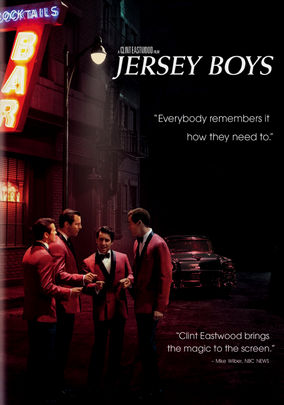
Jersey Boys-2014

Jersey Boys-2014

Director Clint Eastwood

Starring John Lloyd Young

Scott’s Review #95

70299748

Reviewed July 5, 2014

Grade: B+

Jersey Boys (2014) is a film version of the hit Broadway show of the same name, directed by Clint Eastwood.

It follows Frankie Valli and his friends (who later become the Four Seasons) as they grow up in 1950s mob-laden New Jersey and move from hardship and petty crime to musical success.

The film is mainly a feel-good experience, as the songs alone resonate with the audience and stick in your head because they’re so catchy.

Sherry, Walk Like a Man, Big Girls Don’t Cry, and Can’t Take My Eyes Off You are prominently featured throughout the film, making it tough not to toe-tap along with the musical numbers.

Most of the boys grow up in a heavily Italian neighborhood, which is a delight, and Eastwood’s authenticity is impressive: the food, the fights, the gangster mob ties.

Admittedly, I found the first thirty minutes a bit slow, but then the film takes off.

The cast is good; John Lloyd Young is excellent as Frankie Valli, a role he also played on Broadway, and it’s nice to see Christopher Walken as a kindly mob boss who looks out for the kids.

The film is wonderfully shot, and the 1950s nostalgia shows in the set pieces, costumes, and more.

Is this film edgy? Not in the least. Is it a safe crowd-pleaser? Absolutely!

It is a fun musical experience that doesn’t lean into schmaltz.

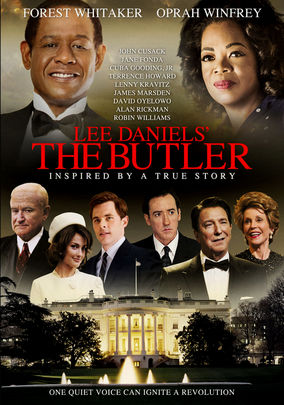
Lee Daniels’ The Butler-2013

Lee Daniels’ The Butler-2013

Director Lee Daniels

Starring Forest Whitaker

Scott’s Review #81

70266686

Reviewed June 30, 2014

Grade: A

Director Lee Daniels is a recent favorite of mine (Precious-2009, The Paperboy-2012), and his latest, The Butler (2013), is an excellent, true-story undertaking.

While the trailer looked appealing, I was concerned that the film might be overwrought or have a Hollywood sappiness.

While it’s a Hollywood film, it is also a powerful, emotional experience.

The viewer is taken on a journey from 1926 through the current president from the viewpoint of White House butler Cecil Gaines (Whitaker), who serves several presidents and is privy to the goings-on in the White House.

Forest Whitaker plays him, and Oprah Winfrey plays his boozy, troubled wife.

Both give tremendous performances.

The Butler is a political journey through time and I love the authenticity of each decade from the sets to the costumes to the hairstyles.

The casting of the Presidents is curious (Robin Williams as Eisenhower and John Cusack as Nixon), but works nonetheless.

The rivalry between Cecil Gaines and his rebellious son is interesting, as the viewer sides with each of them at different times.

The film is more emotional than I anticipated and much of the audience was teary during scenes of heartbreak and triumph.

I feel The Butler (2013) is a must-see for everyone.

Fruitvale Station-2013

Fruitvale Station-2013

Director Ryan Coogler

Starring Michael B. Jordan

Scott’s Review #64

70267488

Reviewed June 24, 2014

Grade: B+

Without knowing all the details of this incident, and only considering what the film presents, Fruitvale Station (2013) is a good film.

Most of the film is in the lead-up to the big incident.

While not perfect, the victim is presented as a good guy who helps strangers and stray dogs, loves his daughter, and has a great heart.

He lives a tough life, has been in and out of prison, and is forced to sell drugs to make a living.

But he has a strong family unit (mother, grandmother, girlfriend, friends), so he lives a decent life.

The cops in question are presented very negatively (intense, racist, and brutal).

Again, I don’t know what happened, but obviously, the filmmakers are on the victim’s side (as they should be). The police’s reasons are revealed at the end of the film.

It’s a heartfelt, good, solid portrayal.

Independent Spirit Award Nominations: 1 win-Best Male Lead-Michael B. Jordan, Best Supporting Female-Melonie Diaz, Best First Feature (won)

Diana-2013

Diana-2013

Director Oliver Hirschbiegel

Starring Naomi Watts

Scott’s Review #63

70291112

Reviewed June 24, 2014

Grade: C+

Assuming all the details of Diana (2013) are accurate, this film offers an interesting account of Princess Diana’s last two years of life and her transition from married royalty to a single woman, all while remaining the most famous woman on earth.

While the film is interesting, I felt something was missing, and it was not as gripping as I had hoped.

I also did not quite buy Naomi Watts as Diana. Her mannerisms were off to me, and the real Diana was taller.

Also, I didn’t quite believe that Diana could throw on a brown wig and walk freely around London unrecognized.

There was no chemistry between Watts and Naveen Andrews (TV’s Lost), who played a successful heart surgeon with whom Diana begins a romance.

These criticisms do not mean the film was a total failure (there was a sincere likability and charisma that Watts brought to the role), but it was not as good as one would have hoped.

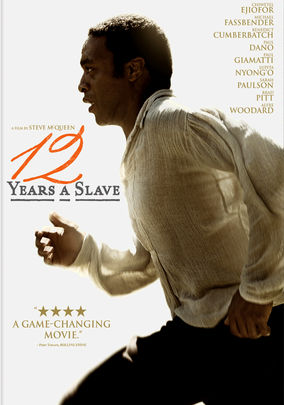
12 Years a Slave-2013

12 Years a Slave-2013

Director Steve McQueen

Starring Chiwetel Ejiofor

Scott’s Review #62

70284282

Reviewed June 24, 2014

Grade: A

At the time of 12 Years a Slave’s (2013) release, a ton of buzz began circulating. Was it that good?

Considered the front-runner to win the Best Picture statue, it did go on to win the top honor.

The film is not easy to watch. It is brutal and heart-wrenching at times. I will spare the details, but the most intense scene involves a whip.

There are scenes of torture, degradation, and cruelty against the slaves by the slave owners.

While tough to watch, I applaud the film for not glossing over the atrocities of slavery. Some have criticized it for being a retread of similar films, but I disagree. It is worlds more intense than watered-down versions.

However, the film is not a downer.

Yes, a class of people is beaten down and victimized, but they also rise above and never give up hope. The fact that it’s a true story, and that the real Solomon Northup wrote a book about it, makes it all the more powerful.

The performances are outstanding (Ejiofor, Fassbender, Paulson, and Nyong’o).

The look and cinematography are sharp, and I love the distinctiveness of the North and South scenes. The setting is stifling hot and dreary.

There are at least two scenes where the camera pans on a shot and holds for what feels like an eternity until something happens, which makes the scenes effective.

While difficult to watch, 12 Years a Slave (2013) should be viewed by everyone to see how far society has come, not forgetting how far we still need to go to eliminate discrimination and victimization.

Oscar Nominations: 3 wins-Best Picture (won), Best Director-Steve McQueen, Best Actor-Chiwetel Ejiofor, Best Supporting Actor-Michael Fassbender, Best Supporting Actress-Lupita Nyong’o (won), Best Adapted Screenplay (won), Best Production Design, Best Costume Design, Best Film Editing

Independent Spirit Award Nominations: 5 wins-Best Feature (won), Best Director-Steve McQueen (won), Best Male Lead-Chiwetel Ejiofor, Best Supporting Male-Michael Fassbender, Best Supporting Female-Lupita Nyong’o (won), Best Screenplay (won), Best Cinematography (won)

The Snowtown Murders-2011

The Snowtown Murders-2011

Director Justin Kurzel

Starring Daniel Henshall, Lucas Pittaway

Scott’s Review #57

70230149

Reviewed June 23, 2014

Grade: C+

The Snowtown Murders (2011) is an Australian film based on a true story about a charismatic, manipulative man who influences a family of misfits to follow his murderous streak.

The film is helped by a group of very talented actors (unknown to me) who successfully convey a sense of bleakness and despair in their lives, and some fine, emotional acting makes this film slightly above average.

The entire look of the movie is dreary, raw, and hopeless, from the lighting to the camera shots.

The details of the film are impressive- from the confined, dismal house the family lives in to the unhealthy meals consumed, all are filled with a sense of chaos.

The Snowtown Murders pushes the envelope with the explicitness of the murders and torture scenes, so the viewer is left feeling uncomfortable.

The downside is that the movie drags at times and meanders at a plodding pace, which adds to the discomfort.

I’m not sure whether this is intentional.

Dallas Buyers Club-2013

Dallas Buyers Club-2013

Director Jean-Marc Vallee

Starring Matthew McConaughey

Scott’s Review #54

70275751

Reviewed June 24, 2014

Grade: A-

While Dallas Buyers Club (2013) is a well-written screenplay based on the true story of a straight Texas man who contracted AIDS circa 1985.

The film’s main appeal is the brilliant performances by Matthew McConaughey and Jared Leto.

1985 was a different period as far as the deadly virus goes- people did not know then what they do now.

The fear and judgment featured in the film must be kept in mind for the time and location (Bible Belt Texas).

McConaughey’s physical transformation is an amazing feat, to begin with, a normally handsome, well-built actor, turned gaunt and hollow-eyed, but he completely encompasses this role with an intense, character, rich and flawed.

His body language and mannerisms are mesmerizing.

Leto’s performance as a transsexual, also stricken with the disease, is equally amazing.

The character is immediately sympathetic and vulnerable- a wounded bird you would like to take under your wing and save.

Despite the subject, the film itself is not a downer, nor does it attempt to be preachy. Rather, it is a tale of friendship, human growth, and survival in bleak times.

The film is dark, yet inspirational at the same time.

McConaughey and Leto deserve their Oscar wins for these roles.

Oscar Nominations: 3 wins-Best Picture, Best Actor-Matthew McConaughey (won), Best Supporting Actor-Jared Leto (won), Best Original Screenplay, Best Makeup and Hairstyling (won), Best Film Editing

Independent Spirit Award Nominations: 2 wins-Best Male Lead-Matthew McConaughey (won), Best Supporting Male-Jared Leto (won)

Saving Mr. Banks-2013

Saving Mr. Banks-2013

Director John Lee Hancock

Starring Tom Hanks, Emma Thompson

Scott’s Review #36

70283202

Reviewed June 18, 2014

Grade: A-

Saving Mr. Banks (2013) is a movie that transports you back to the wonders of childhood.

It is a delightful, whimsical tale of how the story of “Mary Poppins” made it to the silver screen as a Walt Disney production in the 1960s and there were many challenges.

Emma Thompson and Tom Hanks (as author P.L. Travers and Walt Disney, respectively) prevent this film from being overly sentimental and even sappy, by their character portrayals.

Travers is a difficult, demanding woman, but Thompson adds layers to her so the viewer feels attached and sympathetic.

Tom Hanks portrays Disney to the hilt as patient and understanding. Travers’s backstory is heartfelt and interesting.

Saving Mr. Banks (2013) is a mainstream, Hollywood feature, but one that reeled me in from the get-go and never let up.

Oscar Nominations: Best Original Score

The Wolf of Wall Street-2013

The Wolf of Wall Street-2013

Director Martin Scorsese

Starring Leonardo DiCaprio

Scott’s Review #33

70266676

Reviewed June 17, 2014 

Grade: A

Martin Scorsese’s latest offering, The Wolf of Wall Street (2013), is a tale of overindulgence, chaos, and debauchery in the world of stockbroking during the 1980s.

The film is superb.

It is a drug-filled, sex-filled, over-the-top, loud, testosterone-fueled, frenetic extravaganza that works on so many levels.

Humorous, jaw-dropping scenes occur throughout the film.

The casting is flawless- Leonardo DiCaprio and Jonah Hill deserve the praise and Oscar nominations heaped on them.

The supporting actors are perfect- Rob Reiner, Matthew McConaughey, Jean Dujardin, and Kyle Chandler.

With Scorsese, you get an intelligent film, though it’s very R-rated.

It’s similar in style to another of his masterpieces, Goodfellas (1990), as it is narrated by the main character (DiCaprio).

Comparisons to the 1987 film Wall Street are silly. This film is much deeper, grittier, and frankly, much better.

Do not let the unfathomable running time of three hours discourage you- the time goes by very fast.

Oscar Nominations: Best Picture, Best Director-Martin Scorsese, Best Actor-Leonardo DiCaprio, Best Supporting Actor-Jonah Hill, Best Adapted Screenplay

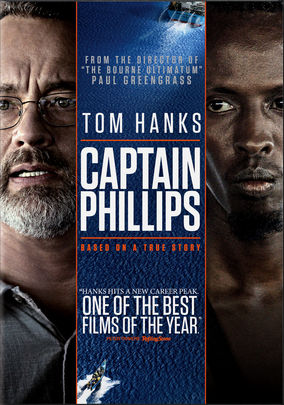
Captain Phillips-2013

Captain Phillips-2013

Director Paul Greengrass

Starring Tom Hanks

Scott’s Review #28

70243460

Reviewed June 17, 2014

Grade: B

Captain Phillips (2013) is an intense, gripping action thriller nominated for Best Picture.

As much as I enjoyed the film, I do not think a nomination for the top honor is warranted.

I have seen this type of film many times before, and the underlying tone of “USA- good, other countries- bad”, whether intentional or unintentional, distracted me.

Another distraction was that all the protagonists are white, whereas all the antagonists are African.

This is based on a true story, but it seems glorified.

The target audience must have been older, white, conservative men, who would revel in this type of film.

Tom Hanks is great, and his performance during the final fifteen minutes of the movie should have cemented him an Oscar nod instead of the film.

The main villain, played by a complete unknown, Barkhad Abdi, was excellent, especially considering the actor had no acting experience.

What a big break!

Overall, an interesting, exciting experience, but short of the Oscar glory.

Oscar Nominations: Best Picture, Best Supporting Actor-Barkhad Abdi, Best Adapted Screenplay, Best Sound Editing, Best Sound Mixing, Best Film Editing