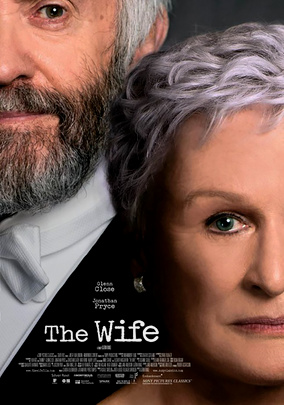
The Wife-2018
Director Björn Runge
Starring Glenn Close, Jonathan Pryce
Scott’s Review #809
Reviewed September 8, 2018
Grade: A
Swedish director Björn Runge crafts a nearly flawless film in The Wife (2018), which elicits a perfect performance from its star, Glenn Close.
The film may be a standard drama, but the performances are the star attraction here. Along with Close, Jonathan Pryce, along with many of the supporting players, deserves his share of kudos.
But the film unquestionably belongs to Close, who plays an overlooked wife with subtle intelligence and enough simmering fury and resentment to astound and compel audiences.
Professor Joe Castleman (Pryce) and his wife, Joan (Close), live charmingly in upscale Connecticut. Joe is an acclaimed author and has just been notified that he will soon be awarded the Nobel Prize in Literature.
As Joe and Joan excitedly jump up and down on the bed in celebration, there is something not altogether joyous about Joan.
Parties are thrown, and Joe and Joan, along with their son David (Max Irons), an aspiring author himself, fly to Stockholm, Sweden, for the coveted ceremony.
Joe is flocked with attention while Joan is cast on the sidelines—secrets eventually bubbling to the surface through a nosy reporter, Nathaniel Bone (Christian Slater), who digs into Joe and Joan’s past.
Stockholm as the main setting is a great plus, adding a cultural, cold vibe to the story. The snowy, blustery Scandinavian locale, with some characters of European descent, adds richness to the film.
Scenes of characters sipping brandy or other warming spirits while a roaring fireplace burns in the background add texture.
Close is one of the finest actresses of our time and portrays Joan with refined restraint at every turn. Yes, we know that something is bothering Joan, but we do not know what that is.
Close is one of those talents whose face tells so much while she can utter so little, and for a good one-third of the film, this is all we have.
What is wrong with her? Why does she act happy for her husband and do her tasks seamlessly, but harbor rage bubbling beneath the surface?
Slowly, with the help of numerous flashback scenes, we learn how Joe and Joan met- he a young professor in the early 1960s, and she a naive student with delusions of grandeur of becoming a female novelist.
She quickly learns how difficult it will be to achieve, as she babysits Joe’s young kids and slowly falls in love with the married man.
From flashbacks, we learn more about Joe and Joan’s emotions, aspirations, and limitations. We also learn that Joe has always had a wandering eye for other women—after all, wasn’t Joan “the other woman”?
Back in the present day, a restless Joan needs a day to herself in the bustling city before she explodes at Joe. Before she can head out, she is talked into a drink by Nathaniel, who cagily reveals much of what he knows to Joan.
The scenes between Close and Slater crackle with passion. Is he flirting with her or attempting to get her to buckle under from compliments and booze? Close is purely in control of Joan’s emotions here, but so much is written on the actress’s face.
It is mesmerizing to watch her calm demeanor border on cold and calculated in her responses to Nathaniel’s questions.
Joe and Joan’s son David plays a key role in all of this. Like Joan, David harbors resentment toward his father, but his rage is more blatant. He yearns for his father’s approval of a newly written story and is angry with every comment his father makes.
Is he simply experiencing jealousy over his father’s talents?
When David learns a secret, events get good, culminating in a fantastic blowup scene between the three characters in a hotel room, at simply the worst possible time.
Pryce must be given props for playing Joe with much complexity. Partially sympathetic and partially unforgivable, he elicited a mixed reaction from me. Not one to mistreat Joan, he sings her praises from one toast to another.
A cad, he is also a narcissist, yet he does adore and think the world of Joan, so they share a complex love.
The Wife (2018) is an excellent film that appreciates the talents of its cast.
Stalwarts such as Pryce, Slater, and newcomer Max Irons flesh out the supporting roles, which only enhances Queen Bee Close’s bravura performance.
I have always thought there would never be any way Close could rival her breathtaking portrayal of dastardly Alex in Fatal Attraction (1987), but she sure comes close in The Wife.
Oscar Nominations: Best Actress-Glenn Close
Independent Spirit Award Nominations: 1 win- Best Female Lead-Glenn Close (won)